




















9th grade poetry refers to literary works curated for high school freshmen to explore complex themes like identity and social justice. This collection offers 15 essential poems for 9th graders to help teachers bridge the gap between historical literature and the contemporary issues that today’s teenagers face daily. It serves as a comprehensive guide for educators developing a diverse and impactful English curriculum.
15 poems for 9th graders
To help you build an engaging curriculum, we’ve hand-picked 15 essential poems for 9th graders that balance classic literary merit with modern, relatable themes. These selections are designed to grab students’ attention and prove that poetry can be a powerful tool for self-expression.
1. “I Wandered Lonely as a Cloud” by William Wordsworth

William Wordsworth’s classic 1807 poem uses the “dancing” daffodils to explore the relationship between the human imagination and the natural world. Personification is a literary device where non-human things are given human traits, and Wordsworth uses it here to give life to nature. His use of vivid imagery helps students understand how nature can serve as a lasting source of comfort and memory.
Teaching tip: Have students identify the various examples of personification used to describe the flowers and the waves. You can suggest they close their eyes while you read it aloud and then draw the “inward eye” scene they imagined. According to the Common Core State Standards (CCSS.ELA-LITERACY.RL.9-10.4), students must determine the meaning of words and phrases as they are used in the text, including figurative meanings.
2. “She Walks in Beauty” by Lord Byron
In this short but striking poem, Byron explores the harmony of light and dark to describe a woman’s physical and spiritual grace. Unlike many traditional love poems, this piece focuses on the “perfectly balanced” nature of the subject’s character and appearance. It provides an excellent opportunity to study the ABCB rhyme scheme and the use of contrast in descriptive writing.

Teaching tip: Encourage students to analyze the specific imagery of “night” and “starry skies” to see how Byron subverts the typical association of darkness with something negative. Ask the class to write their own short poem using a similar “balance of opposites” to describe a person they admire.
3. “All The World’s a Stage” by William Shakespeare
Taken from the play As You Like It, this famous monologue reduces the complexity of human life to seven distinct, often cynical stages. Shakespeare’s extended metaphor of the world as a theater and people as mere actors is a foundational concept in Western literature. For 9th graders, it serves as a great introduction to the idea of “social roles” and the inevitability of change.

Teaching tip: Divide the class into seven groups and assign each group one of the “ages” mentioned in the poem to act out or illustrate. Have them look for the specific literary devices, such as similes, used to describe the infant, the soldier, and the schoolboy. This hands-on approach makes the 16th-century language feel more accessible and relatable to their own lives.
4. “Life is Fine” by Langston Hughes
Langston Hughes, a leader of the Harlem Renaissance, explores a speaker’s journey from the brink of despair back to a celebration of life in this rhythmic work. Building upon the foundational rhythm and repetition concepts often introduced in Poems For 3rd Graders, this poem utilizes a blues-inspired structure. It is a powerful exploration of resilience and the human instinct to keep going when things get tough.

Teaching tip: Focus on the “refrain” of the repetitive structure of the poem and discuss how it mimics the rhythm of blues music. Ask students why they think the speaker decides that “Life is fine! Fine as wine!” after such a difficult experience. This leads to a deeper conversation about the tone shift between the stanzas and the final message of the poem.
5. “The Laughing Heart” by Charles Bukowski
Rita Dove utilizes a specific photograph in her poem to trigger a flood of sensory memories about her grandparents and her childhood. The poem is a masterclass in using small, concrete details – like the smell of lemons or the feel of a fishing pole – to convert a sense of history and belonging. It demonstrates how poetry can preserve moments that might otherwise be lost to time.
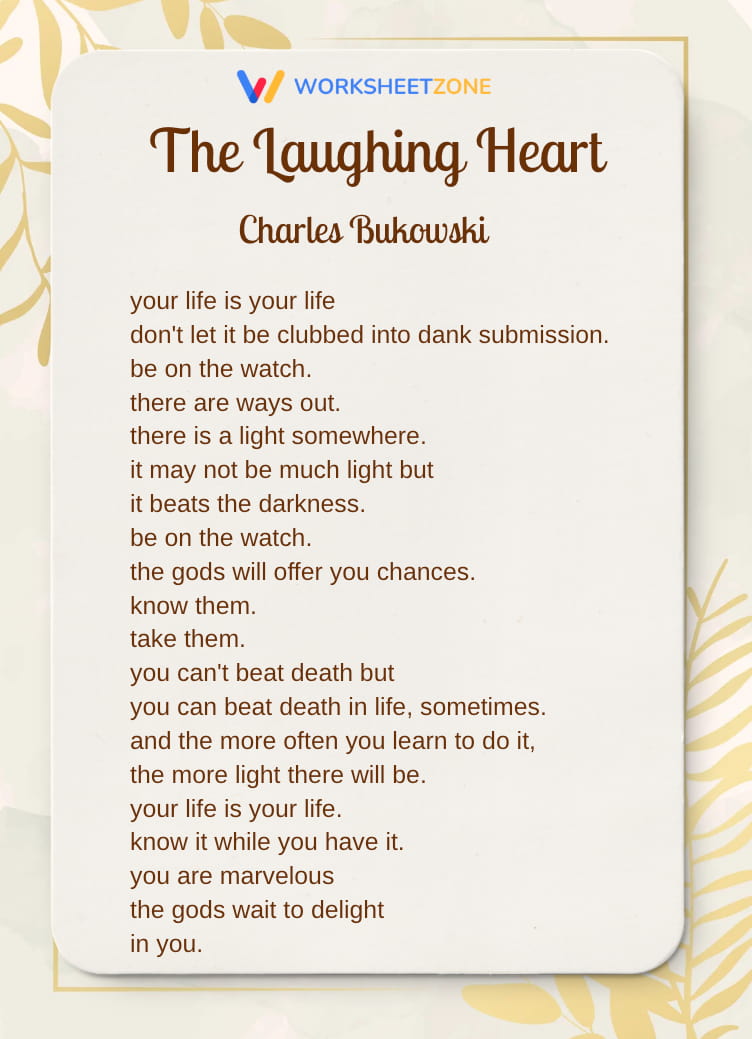
Teaching tip: Ask students to identify what the “light” might represent in their own lives, such as a hobby, a talent, or a specific dream. You can suggest a creative writing prompt where they write a letter to their future selves using Bukowski’s themes of individuality and freedom. This helps students engage with the poem on a personal and emotional level.
6. “Fifth Grade Autobiography” by Rita Dove
In this poem, Dove uses a specific photograph to trigger a flood of sensory memories about her grandparents and her childhood. The poem is a masterclass in using small, concrete details – like the smell of lemons or the feel of a fishing pole – to convert a sense of history and belonging. It demonstrates how poetry can preserve moments that might otherwise be lost to time.

Teaching tip: Have students bring in a personal photograph from their childhood and use it as a starting point for their own “autobiography” poem. Encourage them to focus on sensory details rather than just the facts of what is happening in the picture. This exercise teaches them how to “show, not tell” when they are writing their own descriptive prose.
7. “I Lost My Talk” by Rita Joe
Rita Joe discusses the forced loss of her Indigenous language in this moving historical testimony about her experience at a residential school. It is a brief but intense look at the relationship between language, power, and identity. For 9th graders, it provides a crucial historical perspective while sparking discussions about cultural heritage and the importance of having a voice.

Teaching tip: Use this poem to introduce a lesson on historical context, specifically regarding the history of residential schools in North America. Ask students to discuss the double meaning of the word “talk” as both a literal language and a sense of self-worth. This helps them understand how poetry can serve as a form of social activism and historical testimony.
8. “Dear Future Generations: Sorry” by Prince Ea
Prince Ea’s modern spoken-word piece serves as an urgent apology to future generations regarding the environmental destruction occurring today. It uses direct address and urgent metaphors to highlight the reality of climate change and corporate greed. The modern, rhythmic delivery makes it highly engaging for students who might find traditional poetry intimidating.
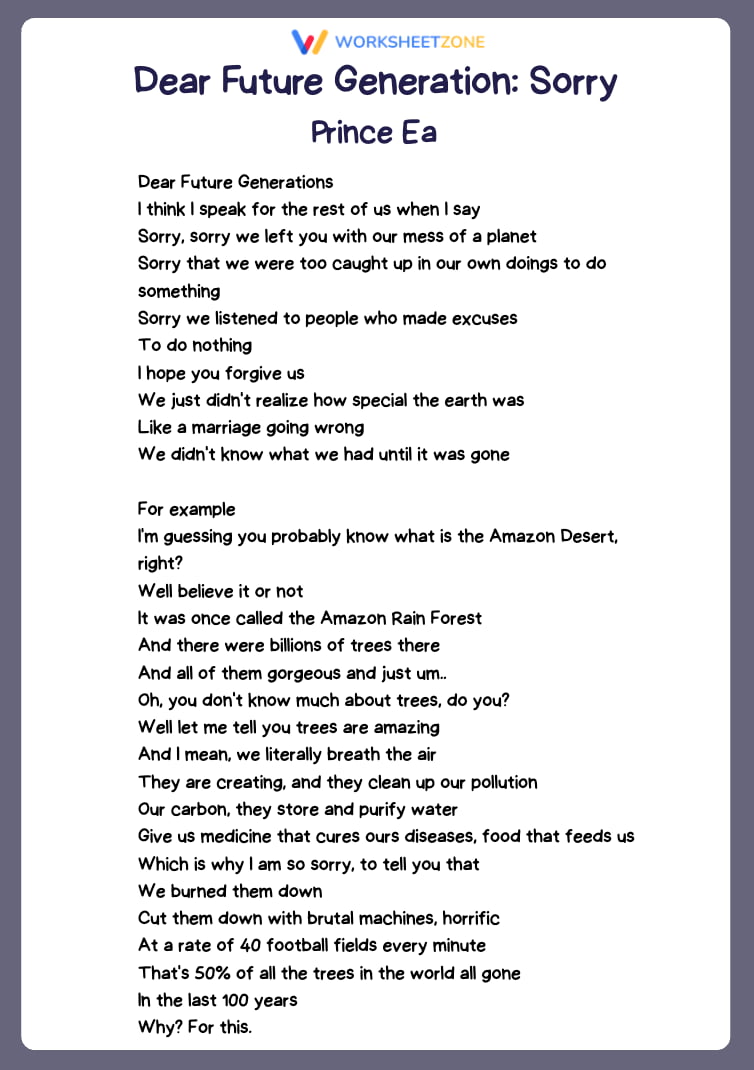
Teaching tip: Watch a video of Prince Ea performing the poem and discuss how his delivery – speed, volume, and pauses – affects the emotional impact of the words. Have students debate the effectiveness of using “sorry” as a central theme for an environmental poem. This encourages them to think about the author’s purpose and the power of persuasive language.
9. “Beethoven” by Shane Koyczan
Shane Koyczan explores themes of trauma and the healing power of art through the life and struggles of the famous composer. Allusions are brief and indirect references to a person, place, or thing of historical significance, which Koyczan uses to show how one turns pain into a masterpiece. It is a lengthy but rewarding read that encourages students to look deeper into historical figures.
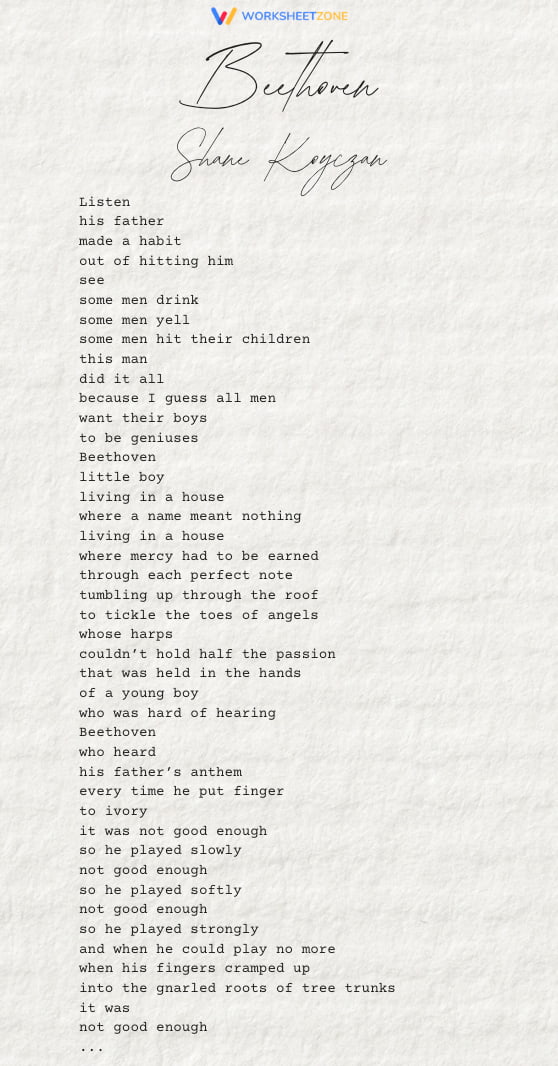
Teaching tip: Play a piece of Beethoven’s music, like the “Moonlight Sonata,” in the background while reading the poem together. Ask students to find the various allusions to Beethoven’s life, such as his hearing loss and his relationship with his father. This cross-curricular approach helps them understand how different forms of art can influence and describe one another.
10. “Tattoo” by Ted Kooser
In this poem, a former U.S. Poet Laureate observes an elderly man with an old tattoo and wonders about the story behind it. Kooser’s language is simple and descriptive, making it an excellent example of how to build a narrative out of a single observation. It prompts students to think about how we carry our past on our bodies and how perceptions change over time.
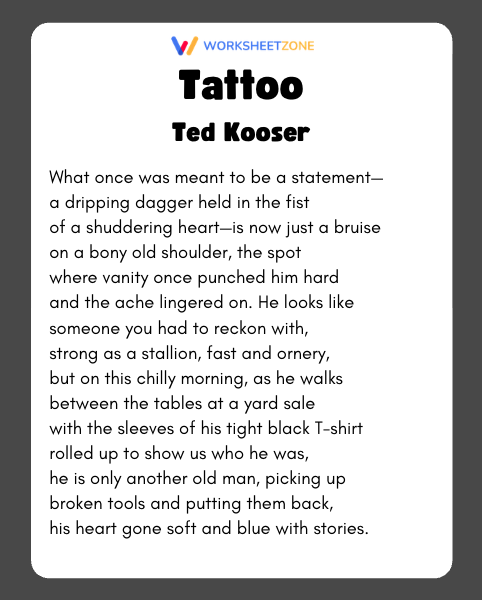
Teaching tip: Lead a discussion on “inference” by asking students what the man’s tattoo might have represented when he was young, versus what it represents now. You can suggest that students write a short backstory for the man in the poem based on the clues Kooser provides. This helps strengthen their ability to read between the lines and analyze character development.
11. “When the Virus Comes” by Angelo Geter
Angelo Geter captures the specific anxiety of the 2020 global pandemic through a shared focus on the human need for connection. The poem uses modern references – like Lysol wipes and television “talking heads” – to ground the reader in a shared global experience. It is a highly relatable work that helps students process the major world events they have lived through.

Teaching tip: Have students participate in a “reflective journaling” session where they compare Geter’s descriptions of isolation to their own experiences during the pandemic. Ask them to highlight the metaphors the poet uses to describe the virus and the government. This allows for a safe space to discuss recent history through a literary lens.
12. “There Are Birds Here” by Jamaal May
This poem addresses the negative stereotypes often associated with the city of Detroit by insisting on the presence of life and beauty. May uses the “birds” as a metaphor for the resilience and joy found in places that others might dismiss as broken. It is a brilliant example of how a poet can use repetition to reclaim a narrative and challenge the reader’s perspective.

Teaching tip: Organize a Socratic seminar focused on the theme of “perception vs. reality.” Ask students to identify why the poet keeps repeating the phrase “There are birds here” and what he is trying to prove to the reader. This helps them understand the importance of tone and the poet’s role in social commentary.
13. “When Great Trees Fall” by Maya Angelou
Maya Angelou uses the grand metaphor of falling trees to explore the profound impact that the loss of a “great soul” has on the world. The poem moves from the visceral, silent shock of grief to a powerful realization that we can eventually “be and be better” because these individuals once existed. It is a beautiful exploration of how the legacy of influential figures continues to shape our lives long after they are gone.
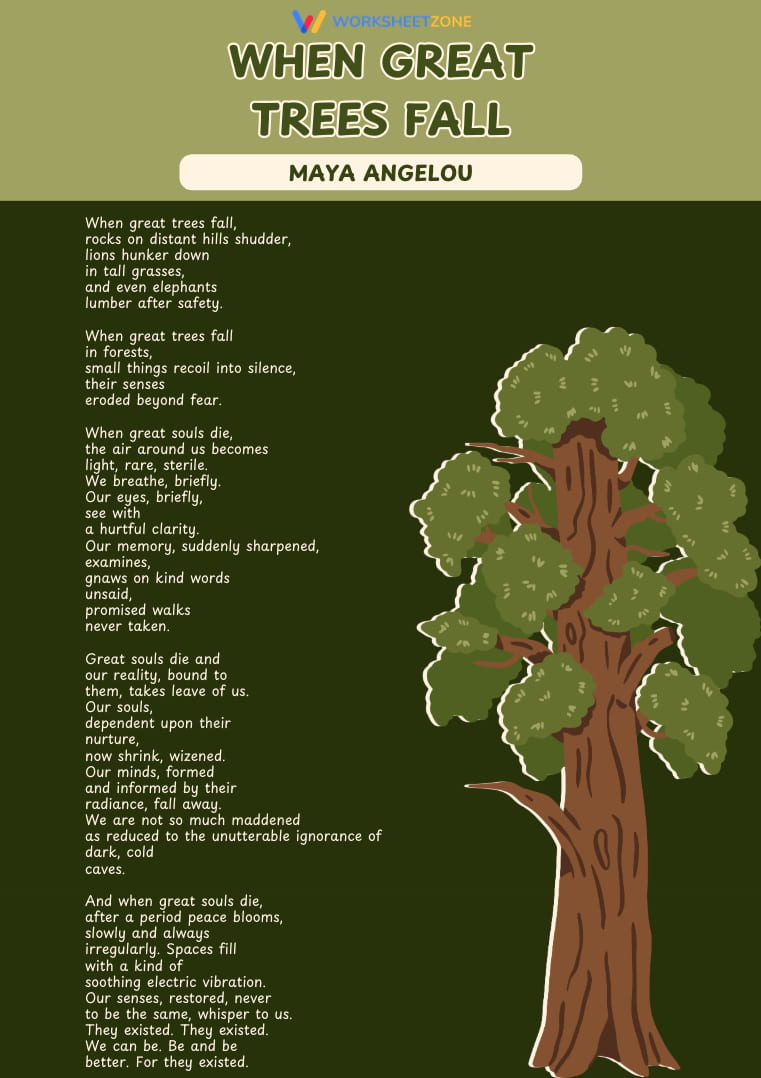
Teaching tip: Have students map out the poem’s transition from the physical natural world to the internal landscape of the human soul. You can ask them to identify specific imagery, such as animals retreating in silence, to help them understand the immediate impact of loss. Suggest they write a short reflection on a “great tree” in their own life to help them connect personally with Angelou’s powerful metaphor.
14. “Another Reason Why I Don’t Keep a Gun in the House” by Billy Collins
This poem uses humor and hyperbole to describe the extreme annoyance of a neighbor’s barking dog. Collins takes a common, relatable frustration and elevates it to a level of absurdity through his unique poetic voice. It is a great way to show students that poetry doesn’t always have to be serious or depressing; it can be funny and observant.

Teaching tip: Use this poem to teach the concept of “hyperbole.” Ask students to find where the narrator exaggerates his feelings and his reaction to the dog. Have them write their own “hyperbolic” poem about a minor daily annoyance, like a snow internet connection or an alarm clock. This helps them practice creative exaggeration in their own writing.
15. “So You Want to be a Writer” by Charles Bukowski
In this blunt and unflinching poem, Bukowski gives advice to anyone who feels the urge to create. He argues that true art should “burst out of you” rather than being forced or faked for the sake of fame. For 9th graders, this poem serves as a powerful prompt for a discussion on authenticity and the importance of passion in any endeavor they choose to pursue.

Teaching tip: Analyze the “direct address” style of the poem and discuss how it makes the reader feel like the poet is talking directly to them. Ask students to write their own “So You Want To Be…” poem about a career or hobby they are passionate about. This encourages students to use strong verbs and an assertive tone to express their own values.
To further enhance students’ understanding and appreciation of poetry, explore more engaging poems and activities designed for 9th graders. Visit our 9th graders activities to teach poems for a variety of creative resources that will help bring these poems to life in the classroom.
FAQs
1. Why is poetry important for 9th graders?
Poetry is essential for high school freshmen as it fosters emotional intelligence and critical thinking skills. During this transitional year, students engage with complex themes like identity and resilience, allowing them to connect personal experiences with broader societal issues. By analyzing diverse poetic voices, 9th graders develop a more nuanced understanding of language and gain the tools necessary for sophisticated literary analysis in higher grade levels.
2. How do you choose the right poem for freshmen?
Selecting appropriate poems requires balancing classical literary merit with modern, relatable themes that speak to teenage experiences. Educators should look for works that utilize clear literary devices, such as personification or extended metaphors, to provide concrete points of analysis. Incorporating both traditional bards and contemporary spoken-word artists ensures that the curriculum remains engaging while meeting academic standards for text complexity and historical context.
Wrapped up
Incorporating these poems for 9th graders into your curriculum does more than just fulfill state standards; it builds empathy and refines the analytical skills necessary for academic success. These 15 selections offer a balanced mix of historical depth and modern relevance, ensuring every student finds a voice that speaks to their unique experiences while preparing them for the more advanced Poems For 10th Graders. Whether you are exploring the rhythm of a Shakespearean monologue or the urgency of a climate change plea, these poems will spark vibrant classroom discussions.


