Understanding what happens when a positive plus a positive equals something greater lays the foundation for future success in math. This basic concept helps students grasp how numbers combine and grow, building essential skills like number fluency and pattern recognition.
In this post, we’ll break down what positive plus positive really means, why it’s important, and how to teach it in engaging ways. Whether you’re working with young learners or reviewing basics, let’s dive in and make math meaningful!
What are Positive Numbers?
Positive numbers are numbers greater than zero. These include whole numbers like 1, 2, 3… as well as decimals and fractions like 0.5 or ¾. On a number line, positive numbers are always to the right of zero.

In real life, we use positive numbers to describe real-world quantities, such as:
- Quantity (How many?)
- Distance (How far?)
- Time (How long?)
- Money (How much?)
These numbers help us measure and communicate values that are more than zero, making them essential for understanding and navigating everyday life.
A Positive Plus a Positive Equals What?
A positive plus a positive always equals a larger positive number. This rule is constant and doesn’t change no matter how small or large the numbers are. Adding any positive number to another positive number can never result in zero or a negative value.

When you teach students that a positive plus a positive equals something bigger, you’re helping them understand both quantity growth and numerical relationships. This becomes the groundwork for mastering place value, mental math, and even patterns.
How to Add Positive Integers?
Depending on the size of the numbers, we use different methods to make the process easier and more accurate:
Adding One-Digit Numbers
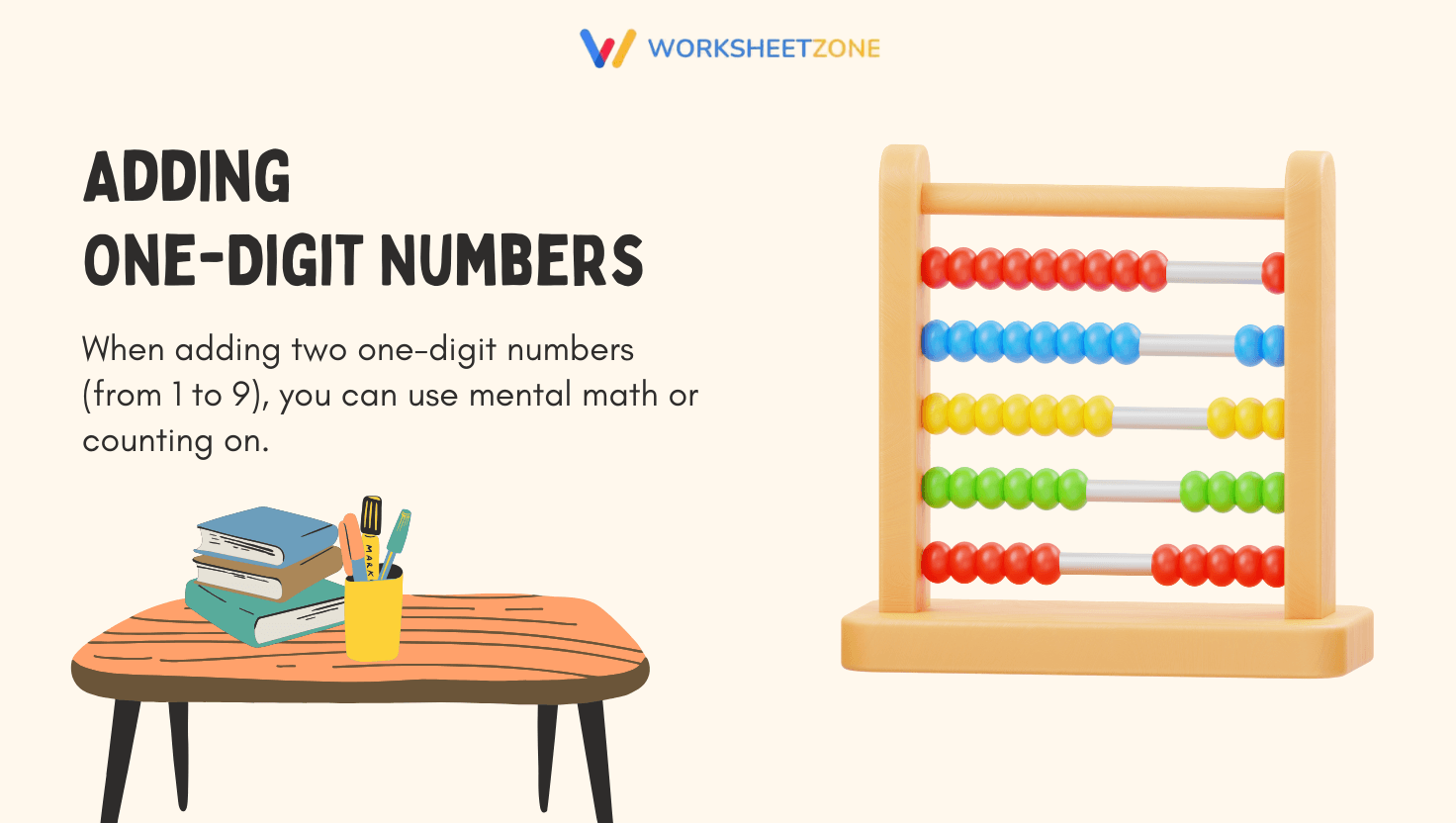
When adding two one-digit numbers (from 1 to 9), you can use mental math or counting on. Start with the bigger number and count up by the smaller number. This method helps build number sense and fluency with basic addition facts.
Example 1: 3 + 4
Start with 4, count up 3 more: 5, 6, 7
Answer: 7
Example 2: 6 + 2
Start with 6, count up 2: 7, 8
Answer: 8
Example 3: 5 + 5
This is a double fact. 5 + 5 = 10
Answer: 10
Adding Numbers with More Than One Digit
When adding numbers with two or more digits, we use regrouping addition (also called carrying) to make the process easier and more accurate. First, align the digits by place value—ones under ones, tens under tens, and so on—so you add the correct parts together.
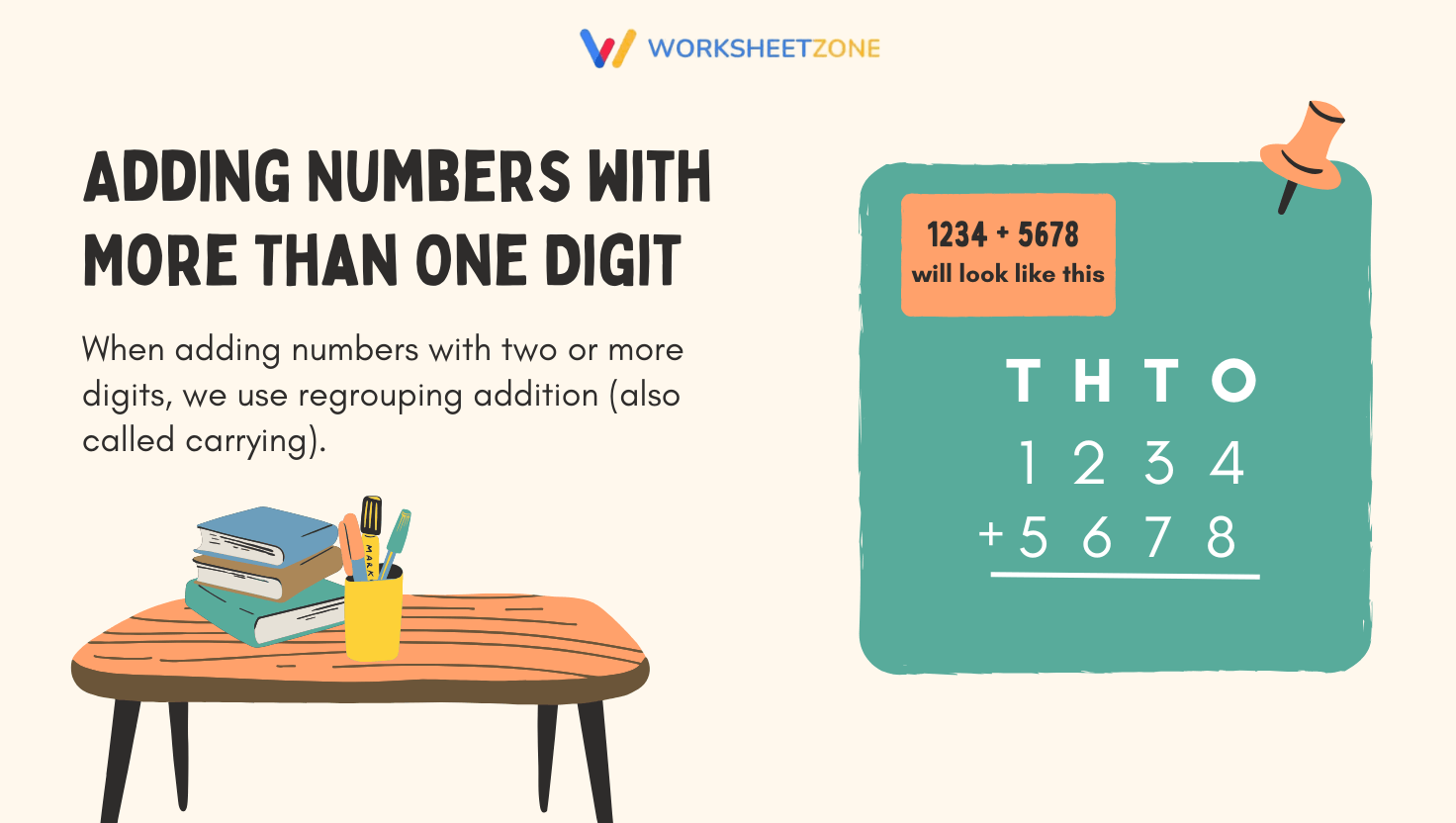
If the sum of digits in any column is more than 9, regrouping allows you to carry the extra value over to the next place value. This step keeps your addition organized and ensures accuracy, especially with larger numbers.
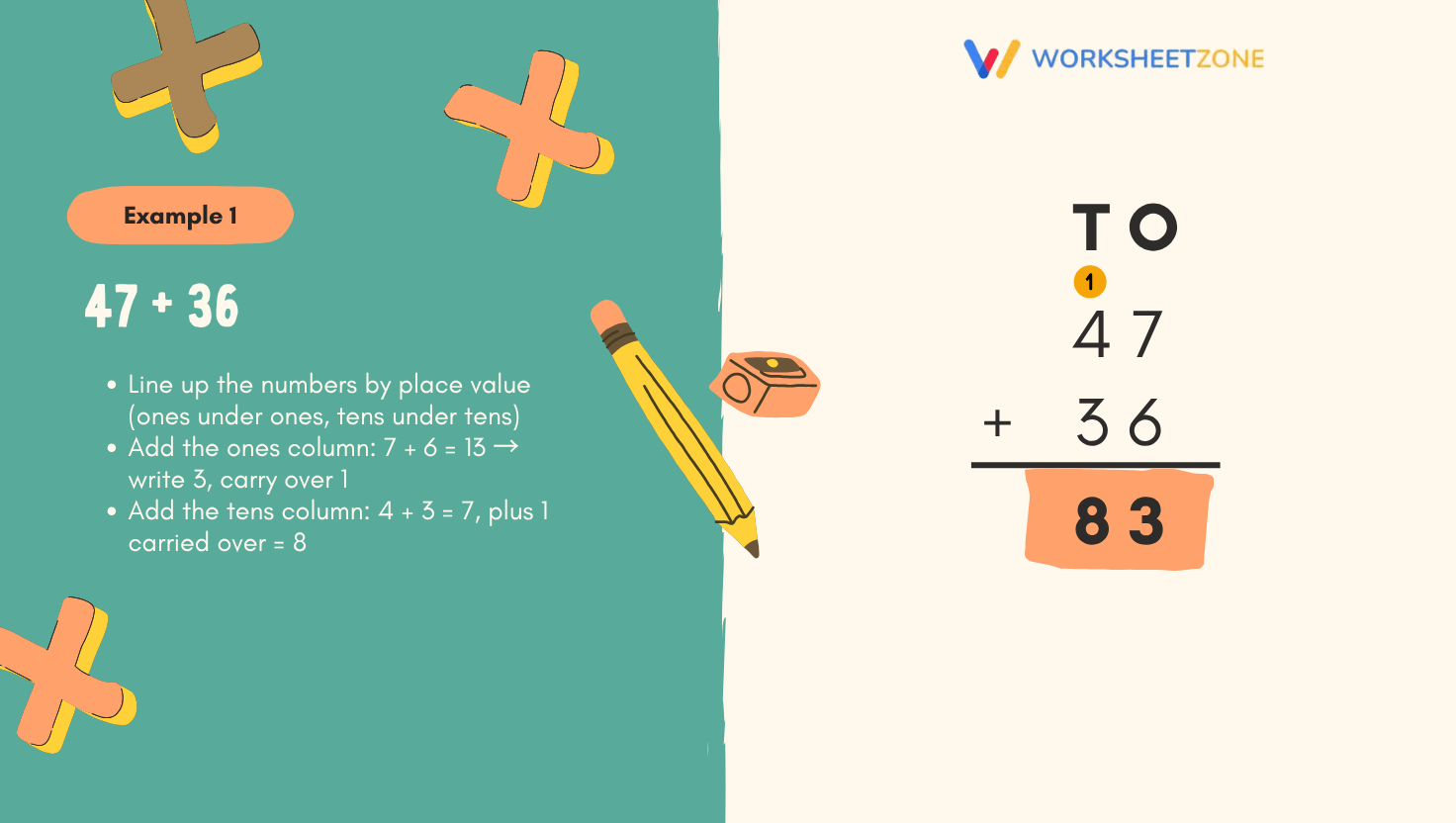
Example 1: 47 + 36
- Line up the numbers by place value (ones under ones, tens under tens)
- Add the ones column: 7 + 6 = 13 → write 3, carry over 1
- Add the tens column: 4 + 3 = 7, plus 1 carried over = 8
- Answer: 83
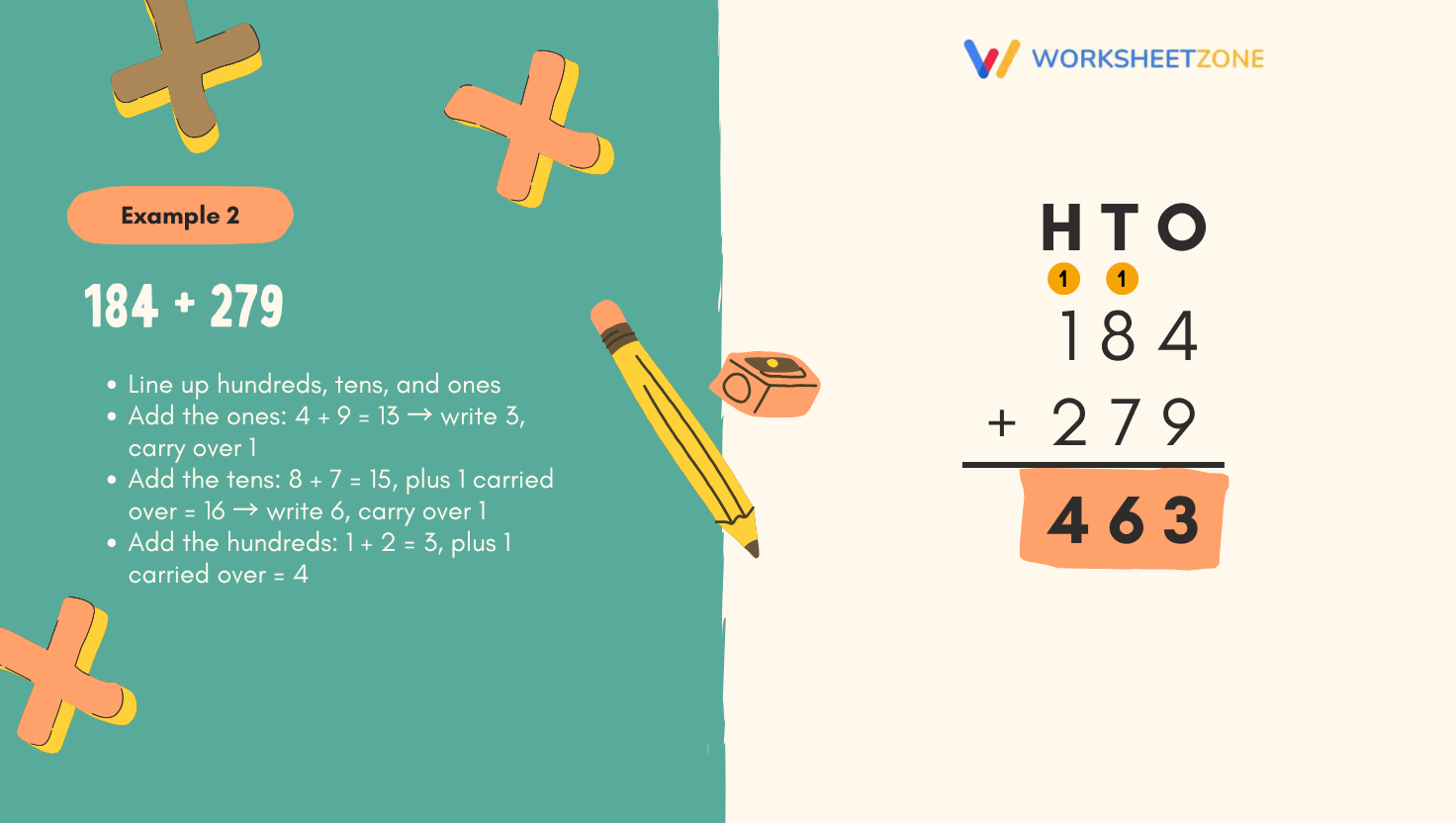
Example 2: 184 + 279
- Line up hundreds, tens, and ones
- Add the ones: 4 + 9 = 13 → write 3, carry over 1
- Add the tens: 8 + 7 = 15, plus 1 carried over = 16 → write 6, carry over 1
- Add the hundreds: 1 + 2 = 3, plus 1 carried over = 4
- Answer: 463
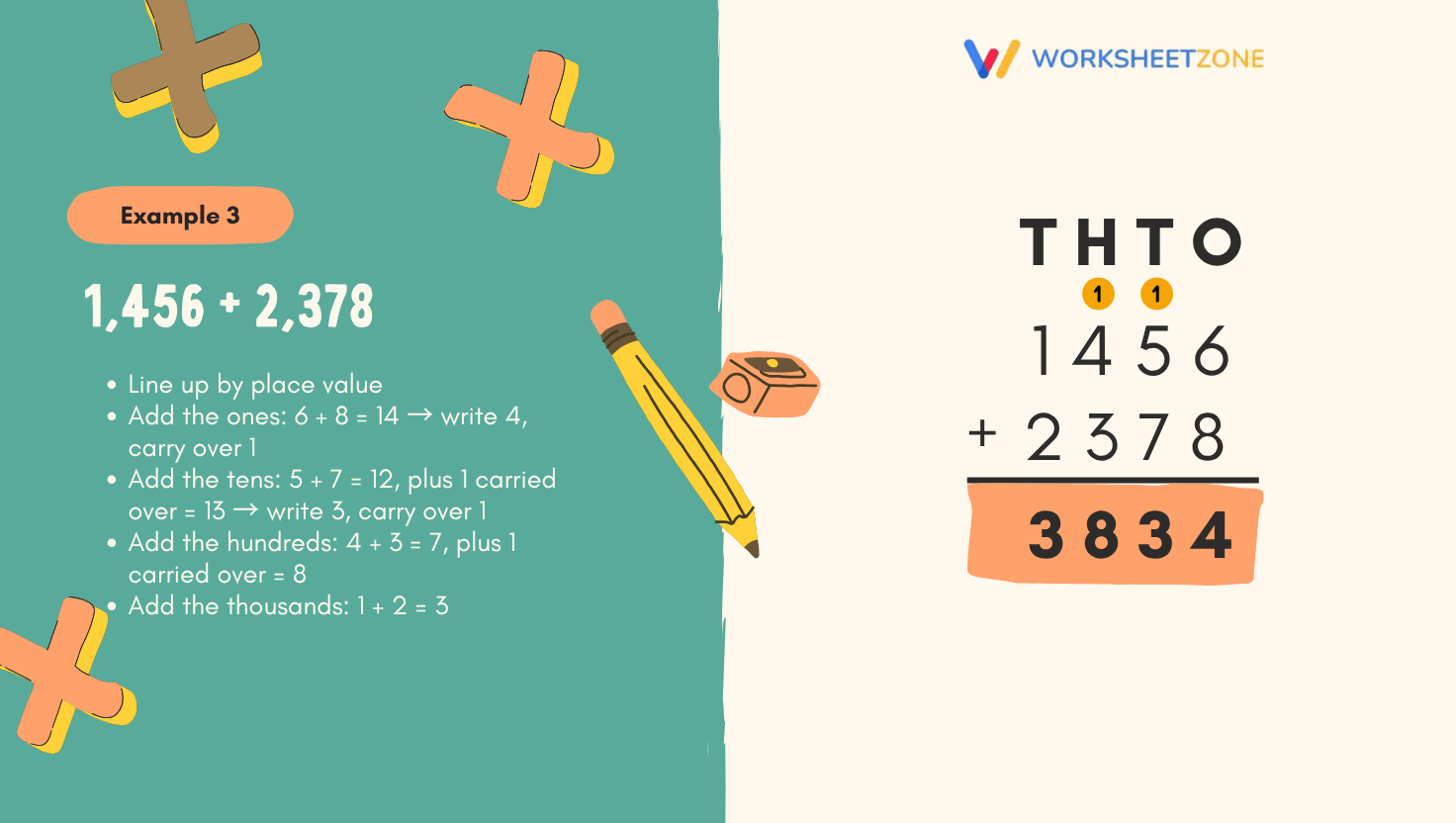
Example 3: 1,456 + 2,378
- Line up thousands, hundreds, tens, and ones
- Add the ones: 6 + 8 = 14 → write 4, carry over 1
- Add the tens: 5 + 7 = 12, plus 1 carried over = 13 → write 3, carry over 1
- Add the hundreds: 4 + 3 = 7, plus 1 carried over = 8
- Add the thousands: 1 + 2 = 3
- Answer: 3834
Practice Problems and Activities
To help students internalize the concept that positive plus a positive always equals a larger positive number, try these hands-on practice problems:
Numerical Problems
Let students solve these simple addition problems to build fluency and confidence:
- 1 + 2 = ______
- 5 + 3 = _____
- 10 + 4 = _____
- 7 + 9 =_____
- 2.5 + 1.5 = _____
Word Problems
These relatable scenarios help students connect math to real-life situations:
- Emma found 4 seashells on the beach in the morning and 3 more in the afternoon. How many seashells did she find in total?
- You earned $2 from chores yesterday and $5 today. How much money do you have now?
- Liam read 6 pages before lunch and 7 more after lunch. How many pages did he read in all?
- Sophie had 3 apples and bought 4 more from the store. How many apples does she have now?
- You ran 1.2 miles in the morning and 2.3 miles in the evening. What’s the total distance you ran today?
For more practice, check out our printable addition worksheets to help students master positive number addition with ease.
How to Make Positive Plus Positive Fun?
Let’s try these five engaging strategies to turn a simple rule into an interactive, hands-on learning experience:
- Use Counters or Physical Manipulatives: Let students count with objects like cubes or buttons. For example, give them 3 red cubes, then 2 more. Ask, “How many now?” This hands-on approach helps them see that 3 + 2 = 5.
- Try a Number Line: Use a number line on paper or the floor. Start at 2, move 3 steps right — you land at 5. This visualizes that adding a positive always moves you forward.
- Make It Personal: Ask real-life questions like, “You saw 4 friends yesterday and 5 today—how many in total?” These personal examples make the math relatable and meaningful.
- Use Visual Math Models: Bar models, ten frames, and place value blocks make number relationships easier to understand. Show how putting two bars together increases the total length.
- Encourage Verbal Reasoning: After solving problems, ask students to explain their thinking: “I had 3 and added 2, so I have more.” Talking it out helps cement the idea and builds math communication skills.

FAQs
1. Can adding two positive numbers ever result in a negative number?
No, adding two positive numbers will always result in a positive sum. Since both numbers represent a quantity greater than zero, combining them only increases the total value. On a number line, this is represented by always moving to the right, away from zero and further into the positive territory. There is no mathematical scenario where adding strictly positive values produces a negative result.
2. Why is it important to learn that a positive plus a positive equals a larger sum?
This concept is the foundation of numerical growth and number sense. It helps students understand the relationship between values and prepares them for more complex operations like multiplication, which is essentially repeated addition. By mastering this rule, learners gain confidence in estimating sums and checking their work, as they know the final answer must always be larger than the individual parts they started with.
Sum Up
So, a positive plus a positive equals a larger positive number—always. This simple rule builds a strong foundation for math fluency and number sense. Use real-world examples and hands-on activities to help students understand not just the answer, but the reason behind it.
Want to take learning further? Try visual tools, number lines, and practice worksheets to build confidence step by step. The more students practice, the stronger their math skills become!