




















Implementing effective classroom management tips is often the difference between a school year spent trending water and one where students truly thrive. As experienced educators, we know that a quiet room isn’t always a learning room, but a chaotic one rarely is. It’s about building a framework of trust and predictability that allows creativity to flourish. By focusing on proactive strategies rather than reactive discipline, you can transform your daily teaching experience into something more sustainable and joyful.
10+ classroom management tips
Classroom management tips are proactive instructional strategies that help educators build a structured, respectful, and high-engagement learning environment. These tips refer to establishing clear routines, modeling positive behavior, and using interactive tools designed for students.
Below are the time-tested strategies I’ve leaned on to build a respectful and productive environment where both students and teachers can thrive. These actionable tips will help you move from reactive discipline to proactive management starting today.
1. Establish clear rules from day one

First impressions are everything, and setting firm boundaries early presents a “wild west” atmosphere from developing later. Students actually crave the security that comes with knowing exactly what is expected of them in any given situation. When you define your non-negotiable immediately, you eliminate the guesswork and reduce the anxiety that often leads to disruptive behavior.
2. Model the behavior you expect

If we want students to speak respectfully to one another, we must use a respectful tone even when we are feeling frustrated. We are the ultimate barometer for the room’s energy, and our actions will always carry more weight than our lectures. When you show them how to handle a mistake or a disagreement with grace, you provide a living blueprint for their own social development.
3. Practice procedures, not just explain them
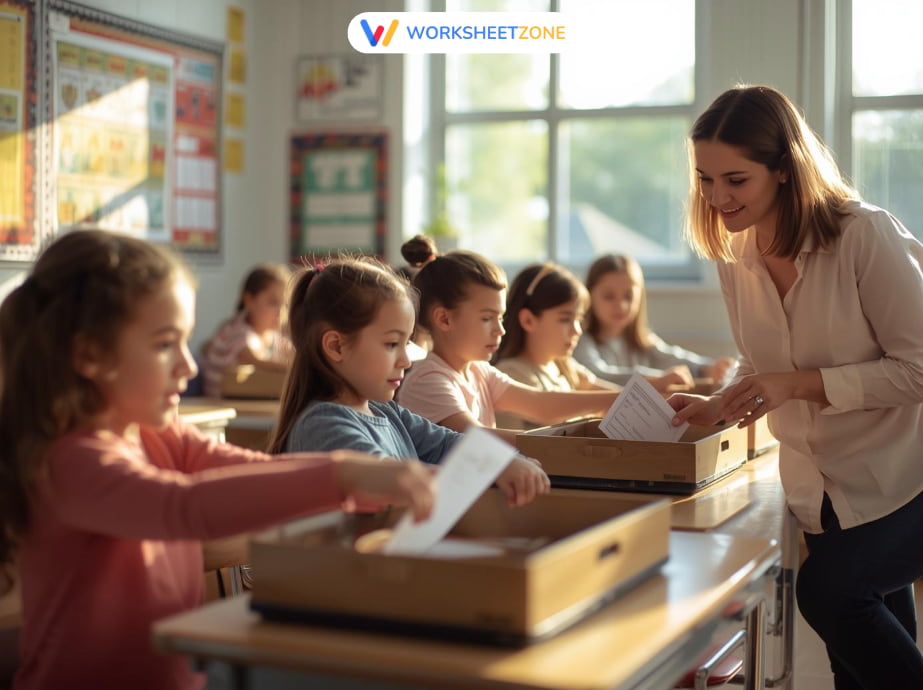
It isn’t enough to tell a class how to turn in papers; you need to have them physically do it until it becomes muscle memory. Procedures are the “choreography” of the classroom, and rehearsing them saves hundreds of hours of instructional time over the course of the school year. Once a routine is automated, you can spend your mental energy on teaching rather than managing logistics.
4. Get to know your students personally
Connection is the most powerful tool in your belt because students will work harder for a teacher they feel truly “sees” them. Take the time to learn their hobbies, their fears, and their favorite music to build a bridge of mutual respect. When a student feels valued as an individual, they are far less likely to act out and much more likely to engage with the material.
5. Use positive reinforcement more than punishment

Highlighting students who are doing the right thing creates a ripple effect of compliance that feels much more natural than a series of rebukes. A quick “I love how Table Three is ready to go” often does more to correct the rest of the room than a loud, negative reprimand. Positive reinforcement builds a growth mindset and fosters an environment where students want to succeed rather than just avoid getting in trouble.
6. Create a safe and respectful classroom culture

A culture of kindness ensures that every student feels comfortable making mistakes, which is where the real learning happens. When you actively protect the emotional safety of the room, you reduce the “fight or flight” responses that often lead to behavioral outbursts. A respectful environment isn’t just a “nice to have”; it is the essential soil in which academic curiosity grows.
7. Plan engaging, structured lessons
Most behavior issues are actually symptoms of boredom or confusion, so a well-paced, interesting lesson is your best defense. When students are deeply immersed in a task that is appropriately challenging, they simply don’t have the “airtime” to cause trouble. Structure provides the safety net, while engagement provides the spark that keeps their focus exactly where it needs to be.
8. Use transitions wisely
The “dead air” between activities is often when the most disruption occurs, so treat every transition as a timed, purposeful event. Using clear cues, like a specific chime or a countdown, helps students shift their focus without losing their academic momentum. Efficient transitions keep the energy of the lesson flowing and prevent the “dip” that allows off-task behavior to take root.
9. Keep students actively involved
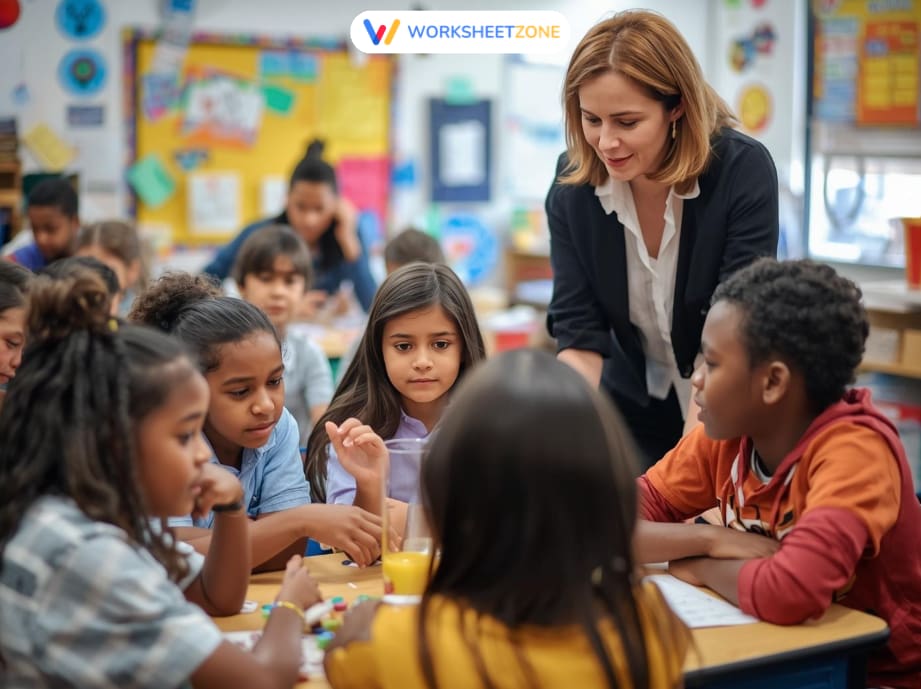
Passive learning is a recipe for distraction, so aim for strategies that require every student to participate at frequent intervals. Whether it’s through “think-pair-share,” individual whiteboards, or hands-on activities, movement and participation keep their brains occupied. When a student feels like an active contributor to the class story, they are much more invested in the collective success of the lesson.
10. Stay calm and consistent
Students look to us to see how to react to stress, so maintaining a “poker face” even when things go sideways is absolutely vital. Consistency is the key to fairness; if your reaction depends on your mood, students will perceive the rules as arbitrary. When you remain a calm, steady presence, you de-escalate tension and maintain your authority without ever having to raise your voice.
11. Address small issues before they escalate
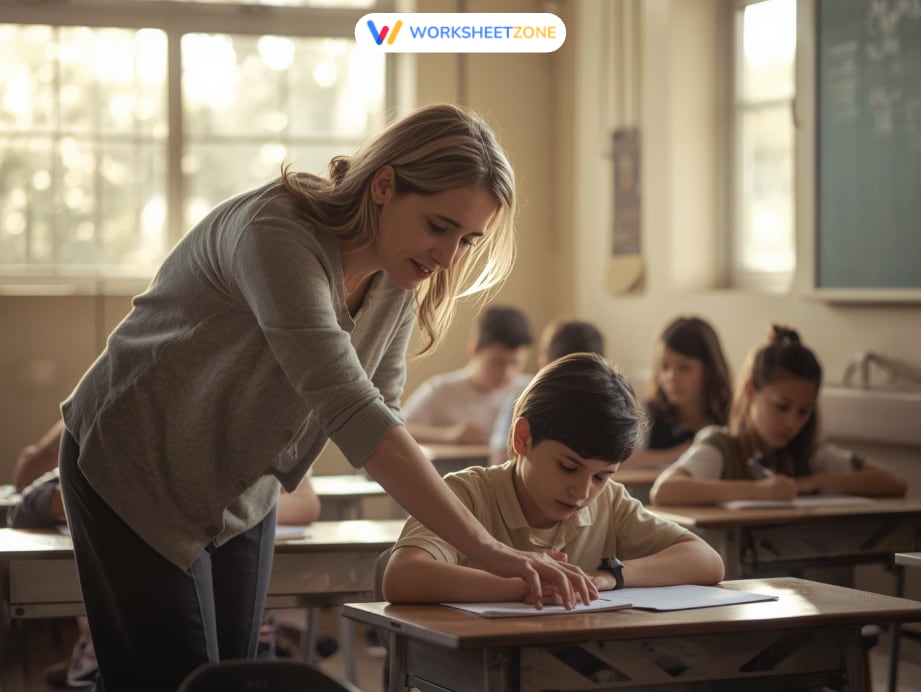
A gentle hand on a desk or a meaningful look can often stop a small disruption before it turns into a full-blown confrontation. Ignoring minor off-task behaviors often gives them “permission” to grow, but addressing them subtly keeps the focus on the learning. By catching the “spark” early, you prevent the “fire” that can derail an entire afternoon of instruction.
12. Apply consequences fairly and privately
Publicly shaming a student almost always leads to deep resentment and a total breakdown in the teacher-student relationship. Addressing a behavioral issue quietly in the hallway or at a side desk preserves the student’s dignity and keeps the rest of the class focused. Fairness means the consequence is predictable, but privacy ensures that the correction remains a learning moment rather than a public performance.
13. Use interactive tools to increase engagement
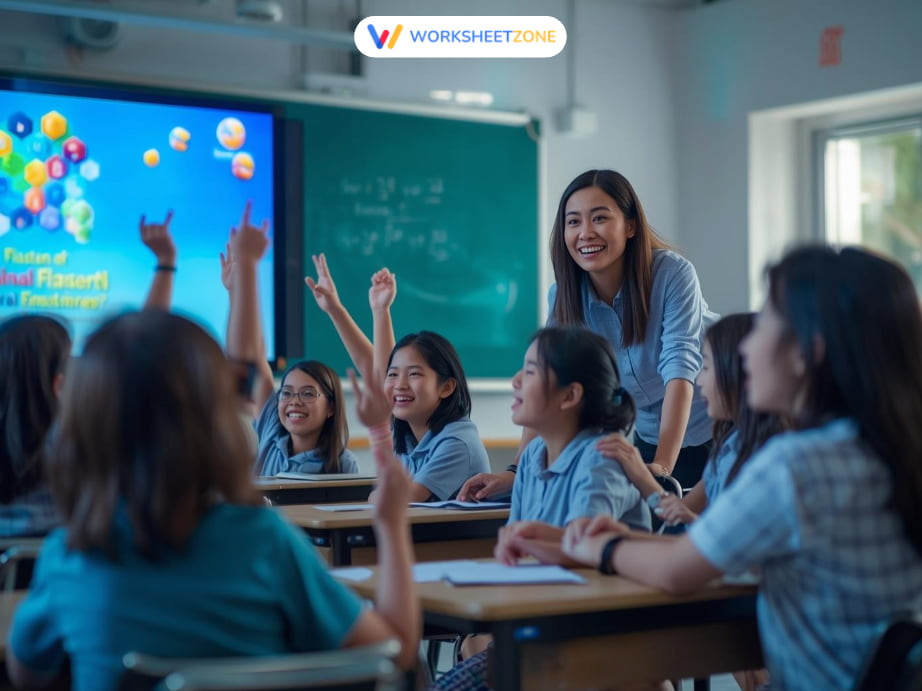
Using interactive tools transforms passive listeners into active participants, making the lesson feel like a shared experience rather than a one-way lecture. These digital resources provide the immediate feedback and high-energy pacing that modern students crave, naturally reducing the “dead time” where off-task behavior usually starts.
I’ve seen a massive shift in my own room since using Worksheetzone, particularly with the Live Game feature, which turns a standard review into a high-stakes, fun competition that engages even my quietest students. For independent time, I rely on the Assign function to push out digital tasks that students can complete at their own pace. It really helps me track progress in real-time without the usual paper-trail headache.
Frequently Asked Questions (FAQs)
How do I handle a “difficult” class?
For challenging cohorts, we recommend focusing on the “relationship-first” approach. Spend the first 10 minutes of every day on a non-academic check-in using these Enrichment Activities. Building a sense of community is the only way to create a lasting shift in classroom behavior.
Can these tips be used for remote teaching?
Yes, all these strategies—especially “Establishing Rules” and “Active Involvement”—are essential for virtual classrooms. Use Worksheetzone’s online teaching tools to maintain high engagement even through a screen. Consistency in your digital routines is just as important as in-person consistency.
What is the most common management mistake?
A common mistake is being too reactive. Instead of waiting for things to go wrong, focus on “Proactive Management” by planning for potential friction points in your lesson. Using a lesson plan generator helps you plan out your day and identify where students might need extra support.
Final thoughts
At the end of the day, mastering these classroom management tips is about more than just maintaining order; it’s about making space for the magic of discovery. Every class is a living organism that requires constant nurturing, patience, and a willingness to adapt your strategies as the year unfolds. Remember that your well-being matters just as much as your students’ success, so be kind to yourself as you refine these techniques. With a consistent heart and a clear plan, you can create a classroom where everyone thrives.


