Autumn activities for preschoolers are hands-on educational experiences that utilize seasonal themes like harvest, leaves, and pumpkins to foster developmental growth. These activities refer to sensory bins, leaf sorting, and pumpkin-themed math designed for students in the PreK–K age range. Below is a collection of simple, engaging activities designed for preschool classrooms and home learning, that develops the fine motor, cognitive, and social skills required for future academic success.
30+ autumn activities for preschoolers
These simple and engaging activities help preschoolers explore autumn through sensory play, creativity, movement, and early learning experiences.
In a preschool setting, these tasks work best when they involve natural materials that children can touch, smell, and observe. According to the National Association for the Education of Young Children (NAEYC), play-based seasonal learning helps toddlers build stronger connections between classroom concepts and the real world.
1. Fall sensory bin
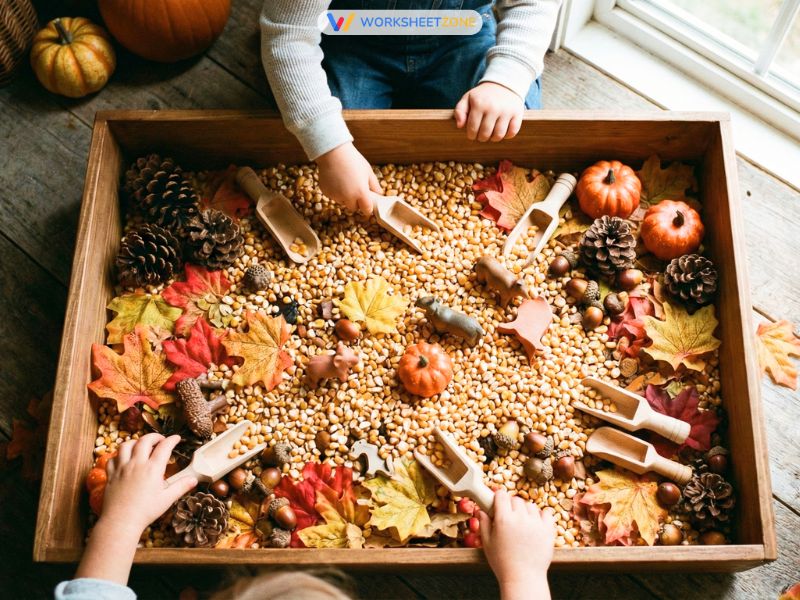
This sensory activity allows preschoolers to explore the colors, textures, and sounds of autumn through hands-on play. It supports fine motor development, language growth, and calm concentration while encouraging children to investigate natural materials freely.
Materials:
- Large tray or plastic bin
- Autumn leaves, pine cones, acorns
- Small cups, scoops, spoons
How to do:
- Place the autumn materials into a large tray or bin and spread them out evenly.
- Introduce the items by naming them and briefly describing their textures.
- Invite children to scoop, touch, and explore the materials freely.
- Support play by asking simple open-ended questions during exploration.
2. Leaf color sorting
This activity helps preschoolers recognize and name common autumn colors while developing early math and observation skills. Using real leaves makes learning concrete and connected to seasonal change.

Materials:
- Autumn leaves in different colors
- Small bowls or baskets
How to do:
- Place all leaves together in one pile or tray.
- Show children the different colors and name them together.
- Set out bowls and assign one color to each bowl.
- Invite children to sort the leaves by color.
3. Pumpkin playdough exploration
Pumpkin-themed playdough encourages hands-on sensory play while strengthening fine motor muscles. The activity also supports creativity and calm focus.

Materials:
- Orange or brown playdough
- Pumpkin seeds (optional)
- Rolling pins or simple dough tools
How to do:
- Place playdough and tools on a table or mat.
- Encourage children to roll, press, and squeeze the dough.
- Add pumpkin seeds for texture and decoration.
- Talk about shapes, smells, and how the dough feels.
4. Leaf rubbing art
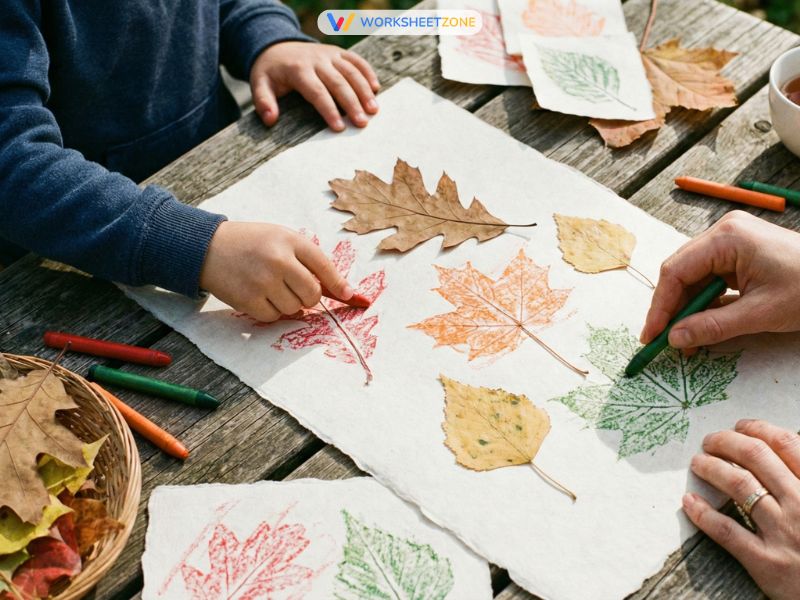
Leaf rubbing helps children discover natural patterns and textures found in autumn leaves. It builds fine motor control and visual awareness through a simple art process.
Materials:
- Fresh or dry leaves
- White paper
- Crayons
How to do:
- Place leaves flat on the table with paper on top.
- Show children how to rub crayons gently over the paper.
- Watch the leaf shapes and veins appear.
- Display and talk about the finished artwork.
5. Apple stamping art
This creative activity introduces preschoolers to simple printmaking using a familiar autumn fruit. It supports creativity, hand–eye coordination, and early pattern recognition through playful art exploration.

Materials:
- Apples cut in half (adult preparation)
- Washable paint (red, yellow, green)
- Paper or cardstock
- Paint trays or plates
- Aprons or table covering
How to do:
- Prepare the apple halves and pour small amounts of paint onto trays.
- Show children how to dip the flat side of the apple into paint.
- Encourage them to press the apple onto paper to make prints.
- Invite children to repeat prints, change colors, or create simple patterns.
- Talk together about the shapes, colors, and apple textures they notice.
6. Autumn nature walk and collection
This outdoor activity helps preschoolers observe seasonal changes in real life. Collecting autumn items supports language development, curiosity, and environmental awareness.

Materials:
- Small basket or cloth bag for each child or group
- Safe outdoor space (garden, playground, park)
How to do:
- Take children on a short, slow walk outdoors.
- Encourage them to look closely at the ground, trees, and plants.
- Invite children to collect safe autumn items such as leaves or small twigs.
- Pause occasionally to talk about colors, shapes, and textures.
- After the walk, gather together to review and name the collected items.
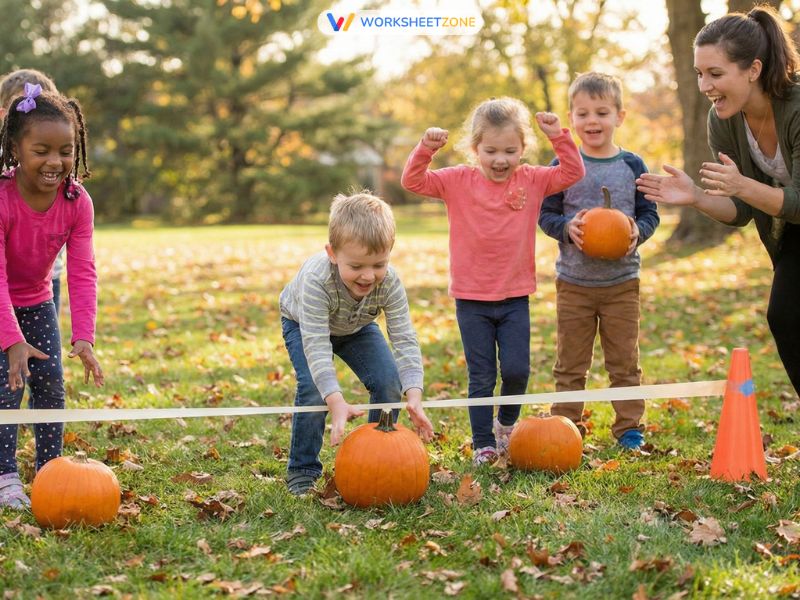
7. Pumpkin rolling game
This gross motor activity supports balance, coordination, and strength. Rolling pumpkins adds a fun seasonal challenge that encourages movement and turn-taking.
Materials:
- Small pumpkins or medium-sized balls
- Open indoor or outdoor space
- Optional: cones or tape to mark targets
How to do:
- Clear a safe space for rolling activities.
- Demonstrate how to roll the pumpkin gently using both hands.
- Set a simple target or line to roll toward.
- Invite children to take turns rolling the pumpkin.
- Celebrate effort and encourage children to try different distances.
8. Autumn sensory bottles
Autumn sensory bottles provide calming visual stimulation and support emotional regulation. Watching materials move slowly inside the bottle helps children focus and relax.

Materials:
- Clear plastic bottles with secure lids
- Water
- Small leaves, seeds, or glitter
- A few drops of oil (optional)
How to do:
- Place autumn materials into each bottle.
- Add water and a few drops of oil to slow movement.
- Seal the bottle tightly (adult supervision required).
- Shake gently and observe how items move inside.
- Encourage children to describe what they see and how it makes them feel.
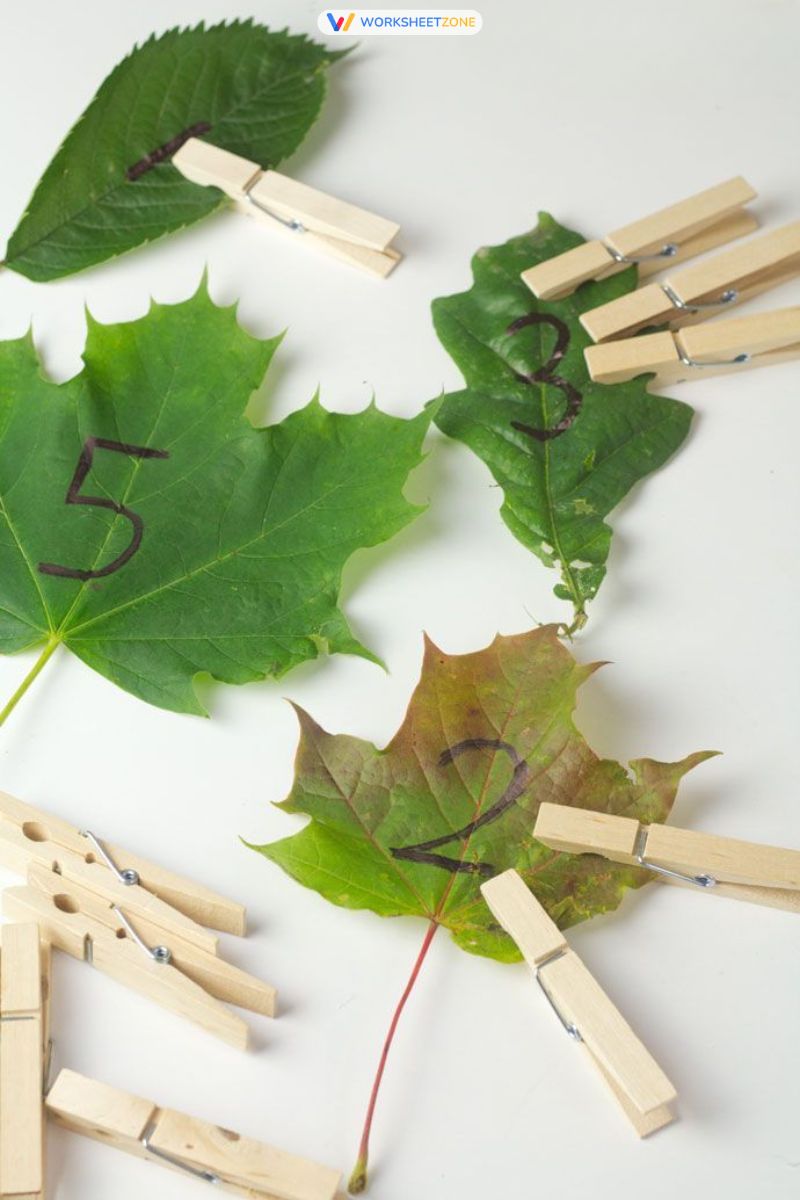
9. Fall leaf counting
This hands-on math activity helps preschoolers practice counting using real autumn materials. It connects numbers to physical objects in a meaningful way.
Materials:
- Autumn leaves
- Number cards (1 – 10)
- Small trays or mats
How to do:
- Place a number card on a tray or mat.
- Ask children to identify the number shown.
- Invite them to count out the matching number of leaves.
- Check the count together by touching each leaf.
- Repeat with different numbers or compare groups of leaves.
10. Autumn color hunt
This movement-based activity helps preschoolers recognize common autumn colors in their environment while staying active. It supports observation skills, vocabulary development, and attention through playful exploration.

Materials:
- Color cards (red, yellow, orange, brown) – optional
- Indoor classroom or outdoor space
How to do:
- Introduce one autumn color at a time.
- Ask children to look around for objects matching that color.
- Let them point to, touch, or collect the items.
- Name the objects together and repeat with a new color.
11. Pine cone painting
Pine cone painting allows children to explore art using natural autumn materials. The textured surface creates unique patterns and encourages creative experimentation.

Materials:
- Pine cones
- Washable paint
- Paper
- Aprons or table cover
How to do:
- Pour paint onto shallow trays.
- Dip pine cones into paint.
- Roll or stamp them onto paper.
- Observe and talk about the patterns created.
12. Leaf sensory bags
Leaf sensory bags offer a mess-free way for preschoolers to explore autumn colors and textures. They are especially suitable for younger children and quiet play moments.

Materials:
- Zip-lock bags
- Leaves
- Oil and a few drops of food coloring
- Tape
How to do:
- Place leaves, oil, and coloring into the bag.
- Seal tightly and tape the edges.
- Let children press and move the leaves inside.
- Describe the colors and movements together.
13. Autumn story time and discussion
Reading autumn-themed books helps children connect language with seasonal experiences. Simple discussions build listening skills and vocabulary.

Materials:
- Autumn picture books
- Comfortable reading area
How to do:
- Read the story slowly and clearly.
- Point out autumn images in the book.
- Ask simple questions about the story.
- Relate the story to children’s own experiences.
14. Apple washing station
This practical life activity builds independence and fine motor control. It also introduces basic hygiene routines through hands-on play.

Materials:
- Apples
- Water tub or sink
- Small brushes or cloths
- Towels
How to do:
- Demonstrate how to wash an apple gently.
- Let children scrub and rinse the apples.
- Dry the apples together.
- Talk about why washing food is important.
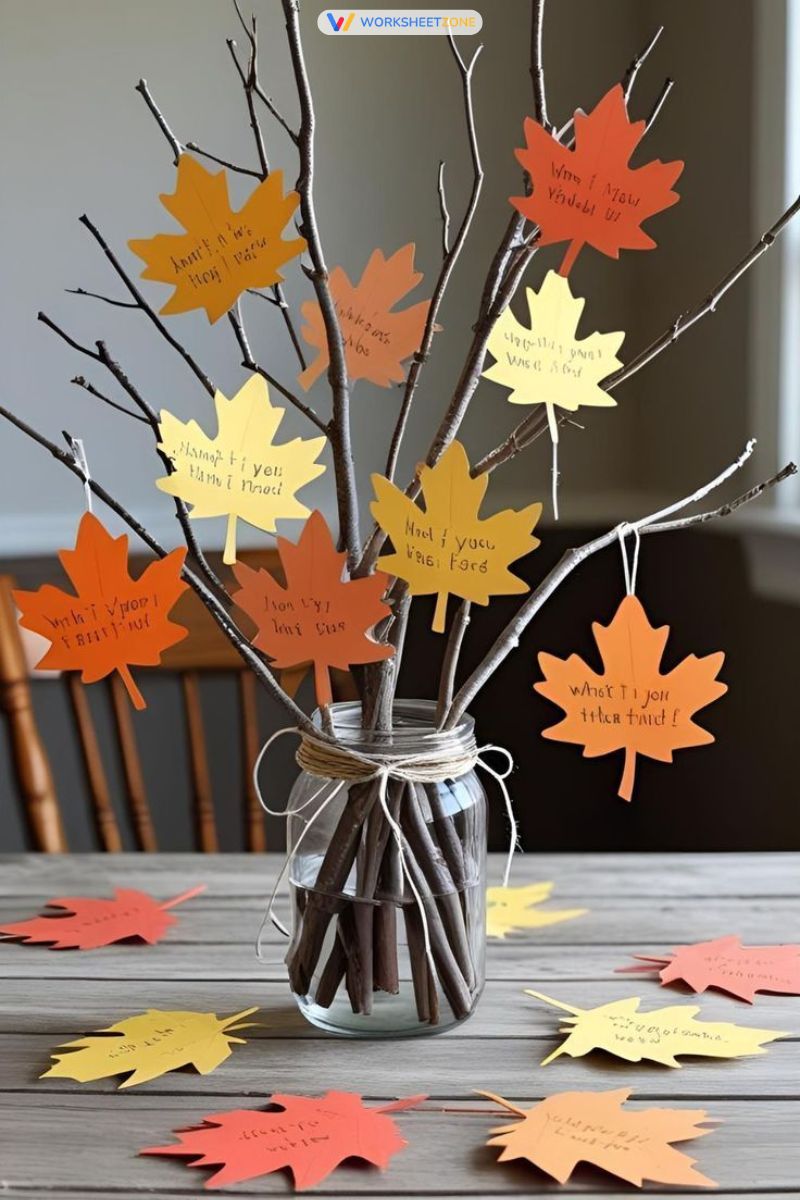
15. Thankful leaf activity
This social–emotional activity encourages preschoolers to express gratitude in a simple, visual way. It supports emotional awareness and language development.
Materials:
- Paper leaves
- Markers or crayons
- Tape or glue
How to do:
- Ask children what they are thankful for.
- Write or draw their answers on leaves.
- Display the leaves on a wall or board.
- Read and share them together.
16. Autumn shadow play
This creative exploration activity helps preschoolers develop visual awareness, curiosity, and early science thinking by observing shadows created by autumn objects.

Materials:
- Autumn objects (leaves, small branches, pine cones, or paper pumpkins)
- Flashlight or sunlight near a window
- Plain wall or large sheet of white paper
How to do:
- Place the autumn objects near a light source.
- Show children how the objects create shadows on the wall or paper.
- Invite children to move the objects closer or farther from the light.
- Observe how the shadows change in size and shape.
- Encourage children to describe what they see using simple words like “big,” “small,” or “long.”
17. Acorn scooping challenge
This fine motor activity strengthens hand control and concentration. It also encourages careful, slow movements.

Materials:
- Acorns or pom poms
- Spoons
- Small bowls
How to do:
- Place acorns in one bowl.
- Demonstrate scooping with a spoon.
- Transfer acorns to another bowl.
- Encourage accuracy and patience.
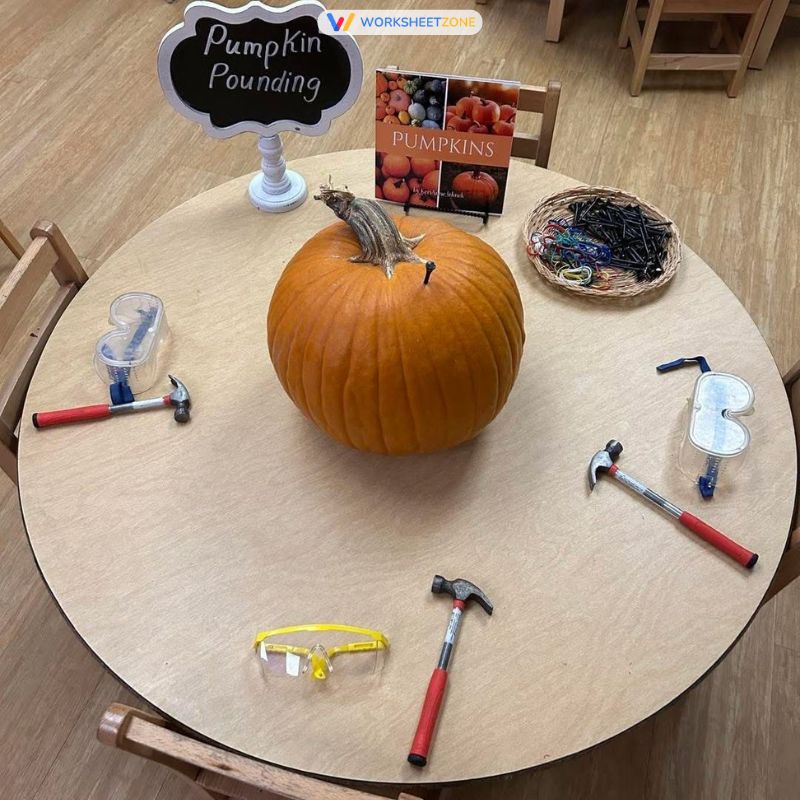
18. Pumpkin hammering (safe version)
Pumpkin hammering supports hand strength and coordination using controlled movements. The seasonal material adds excitement to the task.
Materials:
- Small pumpkin
- Golf tees
- Child-safe hammer
How to do:
- Push golf tees slightly into the pumpkin.
- Show children how to tap gently.
- Let them hammer the tees in.
- Supervise closely at all times.
19. Fall-themed obstacle course
This movement activity develops balance, coordination, and confidence. Autumn themes make physical play imaginative and engaging.
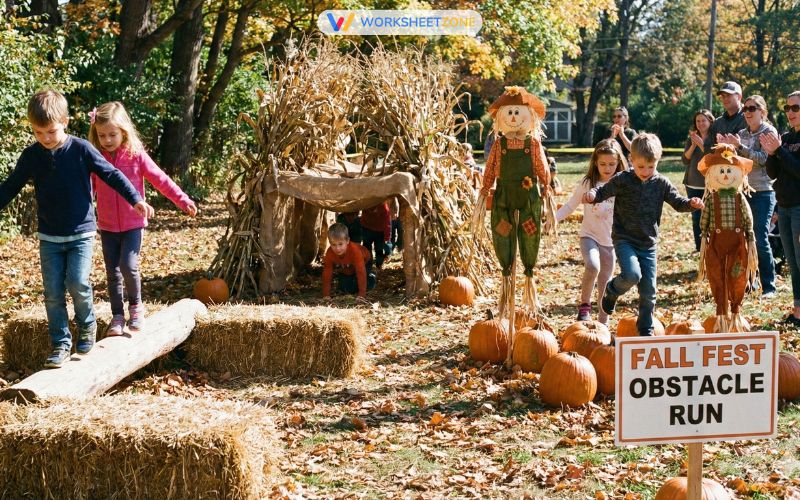
Materials:
- Cones, cushions, tunnels
- Open space
How to do:
- Set up a simple obstacle course.
- Demonstrate how to move through it safely.
- Invite children to try at their own pace.
- Adjust the course to suit ability levels.
20. Autumn pretend market
Pretend play supports language, social interaction, and imagination. An autumn-themed market introduces seasonal fruits and vegetables in a playful context.

Materials:
- Toy fruits and vegetables
- Baskets
- Play money or tokens
How to do:
- Arrange items to look like a small market stall.
- Invite children to role-play buying and selling.
- Model simple phrases like “How much?” or “Thank you.”
- Switch roles to extend the play.
21. Leaf size comparison
This simple math activity helps children understand size concepts using real autumn leaves. It builds early comparison skills in a hands-on way.

Materials:
- Leaves of different sizes
- Flat surface or tray
How to do:
- Spread the leaves on the table.
- Compare which leaves are big or small.
- Sort leaves from smallest to largest.
- Use size words together while sorting.
22. Autumn sound exploration
Exploring sounds helps preschoolers become more aware of their senses. Autumn materials create interesting natural sounds for listening and comparing.

Materials:
- Dry leaves
- Small sticks or twigs
- Quiet space
How to do:
- Gently crunch or shake leaves.
- Tap sticks together softly.
- Pause and listen to each sound.
- Talk about which sounds are loud or quiet.
23. Pumpkin face emotions
This activity helps children recognize and talk about feelings in a playful, non-threatening way. Using pumpkin faces makes emotional learning fun and relatable.

Materials:
- Paper pumpkins or pumpkin templates
- Markers or crayons
How to do:
- Draw simple faces showing different emotions.
- Name each emotion together.
- Ask when children might feel that way.
- Encourage sharing without pressure.
24. Fall color mixing art
Color mixing allows children to explore creativity while learning basic cause-and-effect. Autumn colors make this art activity especially meaningful for the season.
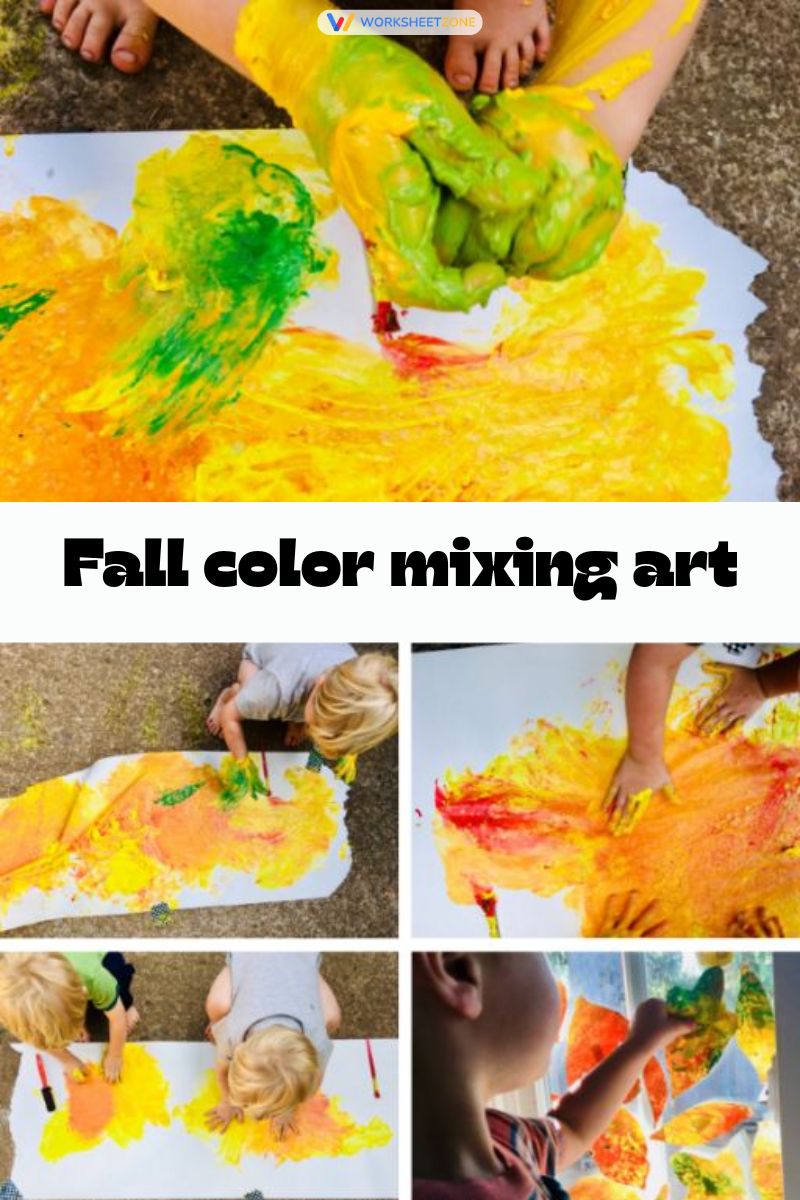
Materials:
- Red, yellow, and brown paint
- Brushes
- Paper
How to do:
- Show two base colors.
- Mix them together on the paper or palette.
- Observe the new color that appears.
- Name the colors and repeat with new combinations.
25. Nature counting trays
Counting with natural objects helps children connect numbers to real items. This activity supports early numeracy through hands-on play.

Materials:
- Leaves, acorns, or pine cones
- Number cards (1 – 10)
- Small trays or mats
How to do:
- Place a number card on each tray.
- Ask children to name the number.
- Count out matching objects together.
- Check the count by touching each item.
26. Autumn yoga for kids
Gentle yoga movements help preschoolers develop body awareness and calm focus. Autumn-themed poses keep the activity playful and age-appropriate.

Materials:
- Open space
- Yoga mat (optional)
How to do:
- Introduce simple poses like “falling leaf” or “sleeping bear.”
- Move slowly and gently.
- Practice calm breathing together.
- End with a short relaxation.
27. Autumn wind chimes craft
This creative craft activity helps preschoolers develop fine motor skills, sensory awareness, and creativity. Making wind chimes also introduces children to sound exploration and encourages appreciation of autumn nature.

Materials:
- String or yarn
- Autumn-themed items (pine cones, beads, wooden shapes, leaves, shells)
- Small sticks or a ring (cardboard or wood)
- Scissors (adult use only)
- Tape or child-safe glue
How to do:
- Prepare strings of different lengths for hanging.
- Invite children to choose autumn items to attach to each string.
- Help children tie or tape the items onto the strings.
- Attach the strings to a stick or ring to form a wind chime.
- Hang the wind chimes outdoors or near a window.
- Listen together as the wind moves the chimes and creates gentle sounds.
28. Fall clothing sort & dress-up
This practical life and language activity introduces seasonal clothing concepts while supporting categorization and self-help skills.

Materials:
- Child-sized fall clothing (sweaters, hats, scarves – real or pretend)
- Basket or clothing rack
- Doll or teddy bear (optional)
How to do:
- Place all clothing items in a basket.
- Talk about which clothes are worn in cool autumn weather.
- Invite children to sort clothes by type (hats, sweaters, scarves).
- Dress a doll or pretend to dress themselves.
- Use simple phrases like “It’s cold” or “This keeps me warm.”
29. Pumpkin measuring & weighing play
This early math and exploration activity introduces measurement concepts using pumpkins in a hands-on, playful way.

Materials:
- Small pumpkins (or pumpkin-shaped objects)
- Balance scale or simple scale
- Measuring tape or string
How to do:
- Let children hold and compare pumpkins by size.
- Place pumpkins on a scale to see which is heavier.
- Wrap string around pumpkins to compare “around” size.
- Use words like big, small, heavy, light.
- Encourage predictions before measuring.
30. Fall movement cards
This movement-based activity helps preschoolers develop gross motor skills, listening skills, and body coordination through playful, seasonal actions. Fall movement cards are perfect for circle time and help children stay active while following simple directions.
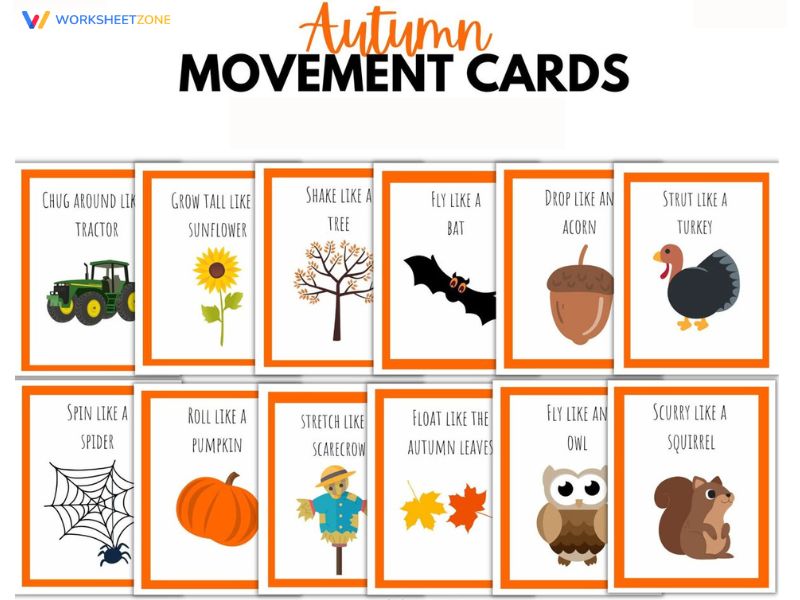
Materials:
- Fall movement cards (animal and seasonal action cards)
(e.g., “Leap like a deer,” “Gather like a rake”)
- Open indoor or outdoor space
How to do:
- Gather children in a circle or open area.
- Show one movement card at a time and read the action aloud.
- Demonstrate the movement slowly.
- Invite children to copy the movement together.
- Switch cards every few seconds to keep energy high.
- Encourage safe movements and body awareness.
31. Autumn leaf crown craft
This creative craft activity lets preschoolers use autumn leaves to make simple crowns. It supports fine motor skills, creativity, and imaginative play while celebrating the beauty of fall.
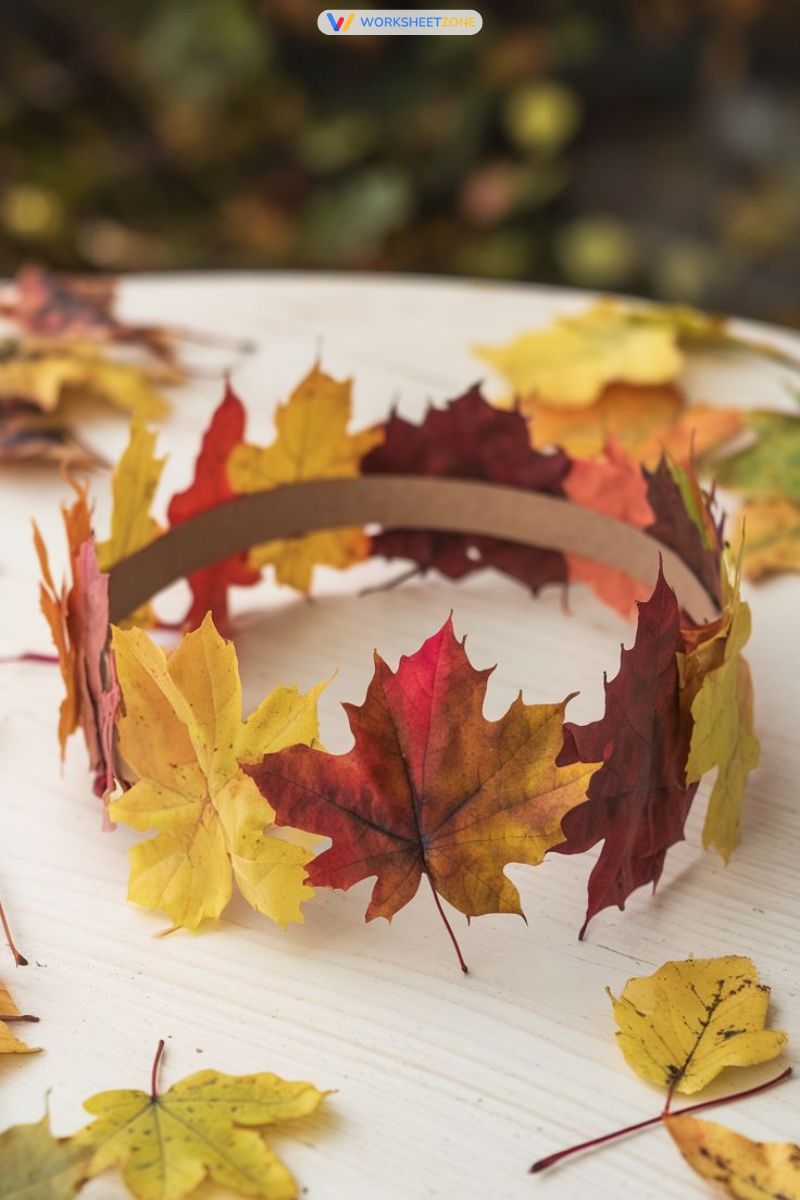
Materials:
- Paper strips or headbands
- Autumn leaves (real or paper)
- Glue or tape
- Crayons or markers
How to do:
- Measure and prepare paper strips to fit each child’s head.
- Invite children to choose and decorate leaves.
- Glue or tape the leaves onto the paper strip.
- Wear the crowns and enjoy pretend play together.
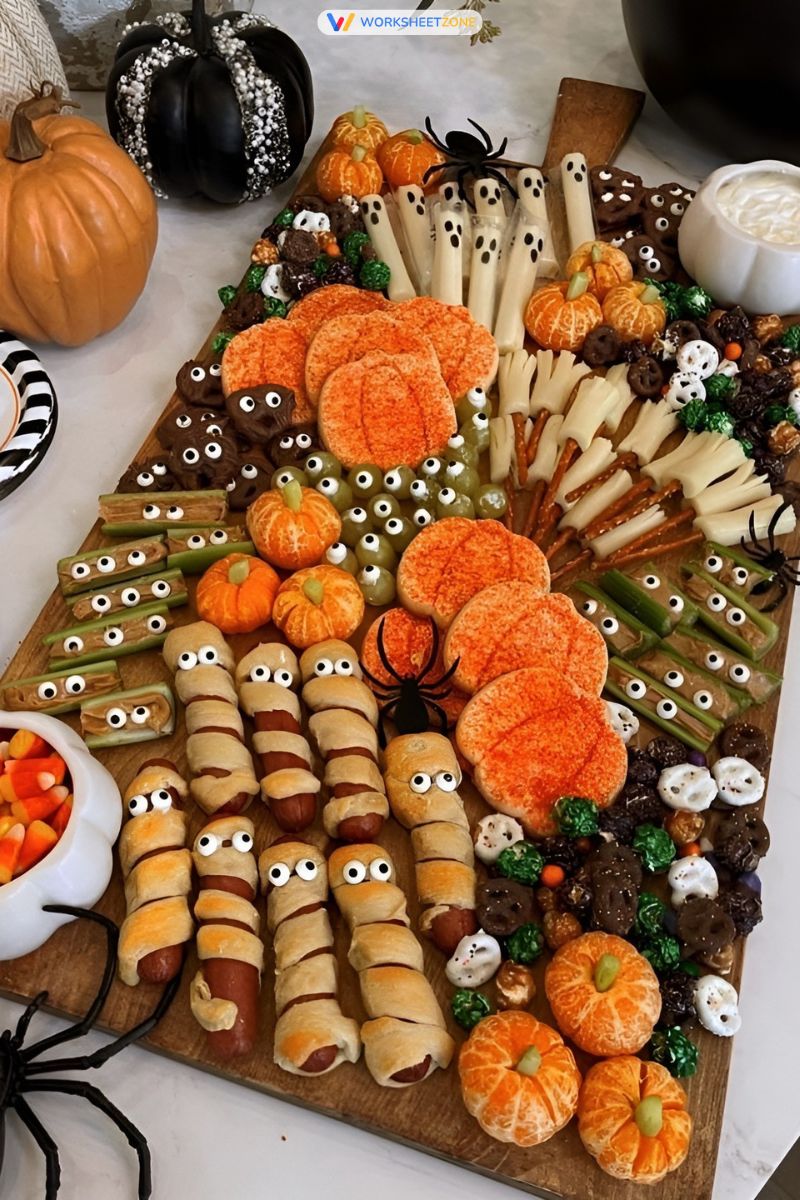
32. Fall snack preparation
This practical life activity helps preschoolers develop fine motor skills, independence, and healthy eating habits while exploring seasonal foods. Preparing a simple fall snack also supports language development through naming foods, textures, and colors.
Materials:
- Autumn fruits or snacks (apple slices, pears, crackers, cheese cubes, raisins)
- Plates or trays
- Child-safe knives or fingers (adult supervision required)
- Napkins
How to do:
- Wash hands together before starting.
- Place prepared snack items on trays or plates.
- Invite children to help arrange the snacks on their plate.
- Talk about the colors, shapes, and tastes of the foods.
- Practice simple phrases like “I like apples” or “This is crunchy.”
- Sit together and enjoy the snack calmly.
Frequently Asked Questions (FAQs)
1. How do I adapt these for different skill levels?
We recommend using the “scaffolding” method. For younger toddlers, focus on simple sensory input like the sensory bin. For older preschoolers, add more complex tasks like the “Thankful Leaf” writing prompt or the Word Scramble Generator for simple fall words. Worksheetzone provides tools for all developmental stages.
2. Can these activities be done indoors?
Absolutely. While a nature walk is great, most of these tasks like “Leaf Sorting,” “Pumpkin Playdough,” and “Apple Stamping” are designed for indoor classroom use. They bring the beauty of the season inside, making them perfect for rainy autumn days. You can also use our Interactive Worksheet Maker for digital fall practice.
3. How do autumn activities help with kindergarten readiness?
Autumn activities build the foundational skills needed for kindergarten, including following multi-step directions, practicing fine motor control, and building early math concepts like counting and sorting. By engaging in these seasonal tasks, children develop the independence and curiosity required for a successful transition to formal schooling.
Conclusion
Autumn activities for preschoolers offer a gentle and joyful way for young children to learn through play while connecting with the changing season. From sensory exploration and creative art to outdoor movement and early math, these activities help preschoolers build essential skills in a natural, age-appropriate way. By choosing a variety of autumn activities for preschoolers, parents and educators can create a warm, engaging learning environment that encourages curiosity, confidence, and a love of seasonal discovery.
Need more resources? To supplement these activities with ready-to-print materials, visit the Fall worksheets to find shadow matching puzzles, counting worksheets, and cut-and-paste crafts perfect for the classroom!