3rd-grade math activities are interactive exercises designed to help eight- and nine-year-old students master core curriculum standards through engagement. 3rd-grade math is the study of multiplication, fractions, and measurement at an elementary level. This guide provides teachers with fifteen practical strategies to build mathematical confidence in math centers, group rotations, or morning warm-up sessions.
15+ 3rd Grade Math Activities
Below are plenty of exciting and engaging math activity ideas designed to make learning fun for third graders:
1. Multiplication War
Multiplication War is one of the most fast-paced and engaging math activities that helps 3rd graders build multiplication fluency. It feels more like a card game than a math exercise, which makes it perfect for reluctant learners.

Students practice quick thinking, number recognition, and multiplication skills in a competitive yet friendly setting. It’s ideal for centers, partner work, or early finisher tasks.
Materials Needed:
- Deck of playing cards (remove face cards or assign values)
How to Do:
- Pair students up and give each a shuffled deck (or split one deck).
- Each student flips two cards and multiplies them together.
- The player with the highest product wins that round and collects all the cards.
- In case of a tie, students enter a “war”: each flips two more cards and multiplies again.
- The game continues until time is up or one player runs out of cards.
- Use smaller number ranges for struggling students, and larger ones for enrichment.
2. Roll and Round
Rounding can be tricky for 3rd graders, but turning it into a dice game makes it easier and more fun. Roll and Round helps students practice rounding numbers to the nearest ten or hundred with immediate feedback.
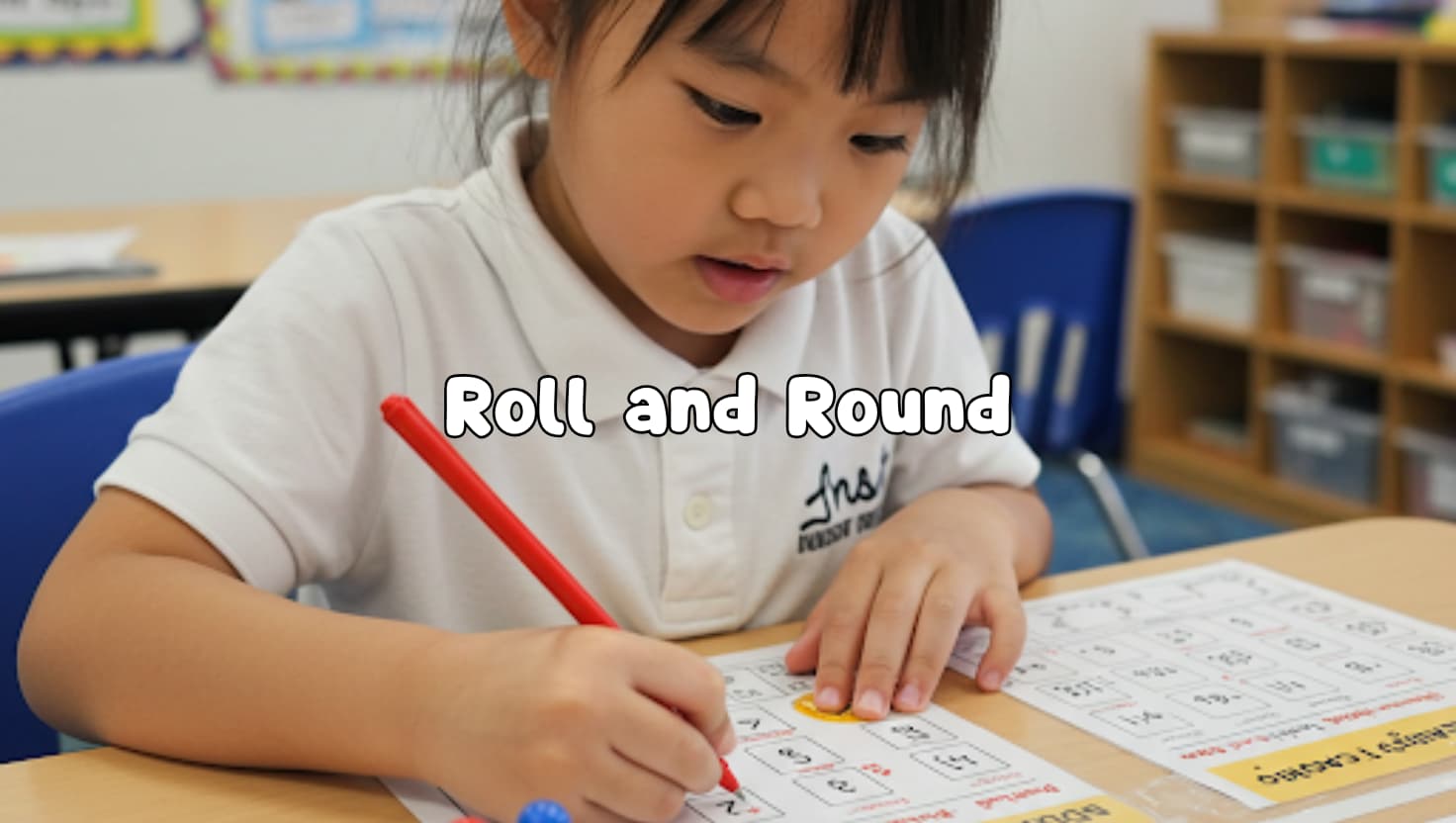
It’s a low-prep game that encourages number sense, mental math, and repeated practice—all in a format that feels more like a challenge than a worksheet.
Materials Needed:
- Dice (6-sided or 10-sided)
- Recording sheets or notebooks
- Pencils
How to Do:
- Students roll 2–3 dice to form a number (e.g., rolling 4, 6, and 2 = 462).
- They decide whether to round the number to the nearest ten or hundred.
- Students write down both the original number and the rounded number.
- For an extra challenge, add a timer or scoring system (1 point for rounding correctly).
- Have students work in pairs and check each other’s answers.
- Continue for a set time or number of rounds.
3. Math Board Game Challenge
Bring out your classroom’s competitive spirit with custom-made math board games! This activity lets students practice operations, word problems, or measurement while playing in groups.
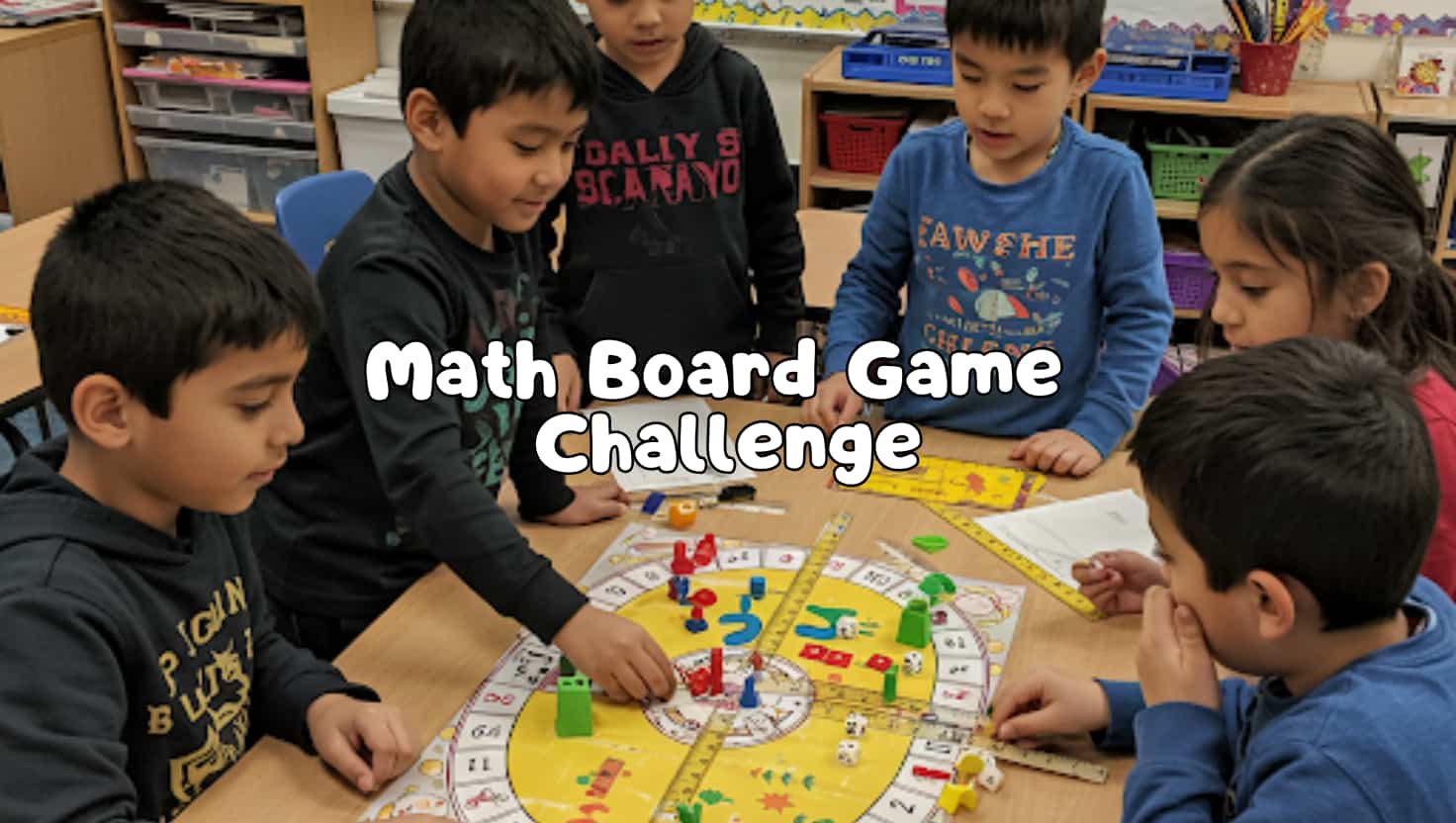
It’s perfect for review days or math centers, and students can even help create the games for added ownership and creativity.
Materials Needed:
- Blank board game templates
- Dice and playing pieces
- Pre-written math question cards
- Markers or crayons
How to Do:
- Divide students into groups and give each a board game set.
- Players take turns rolling the dice and moving along the board.
- When they land on a space, they draw a math question card.
- If they answer correctly, they stay. If incorrect, they move back one space.
- The game continues until someone reaches the end.
4. Math Dice Challenge
If you’re seeking a way to teach math through activities for 3rd graders, this game is definitely a great choice! It helps students to practice addition, subtraction, multiplication, and division.
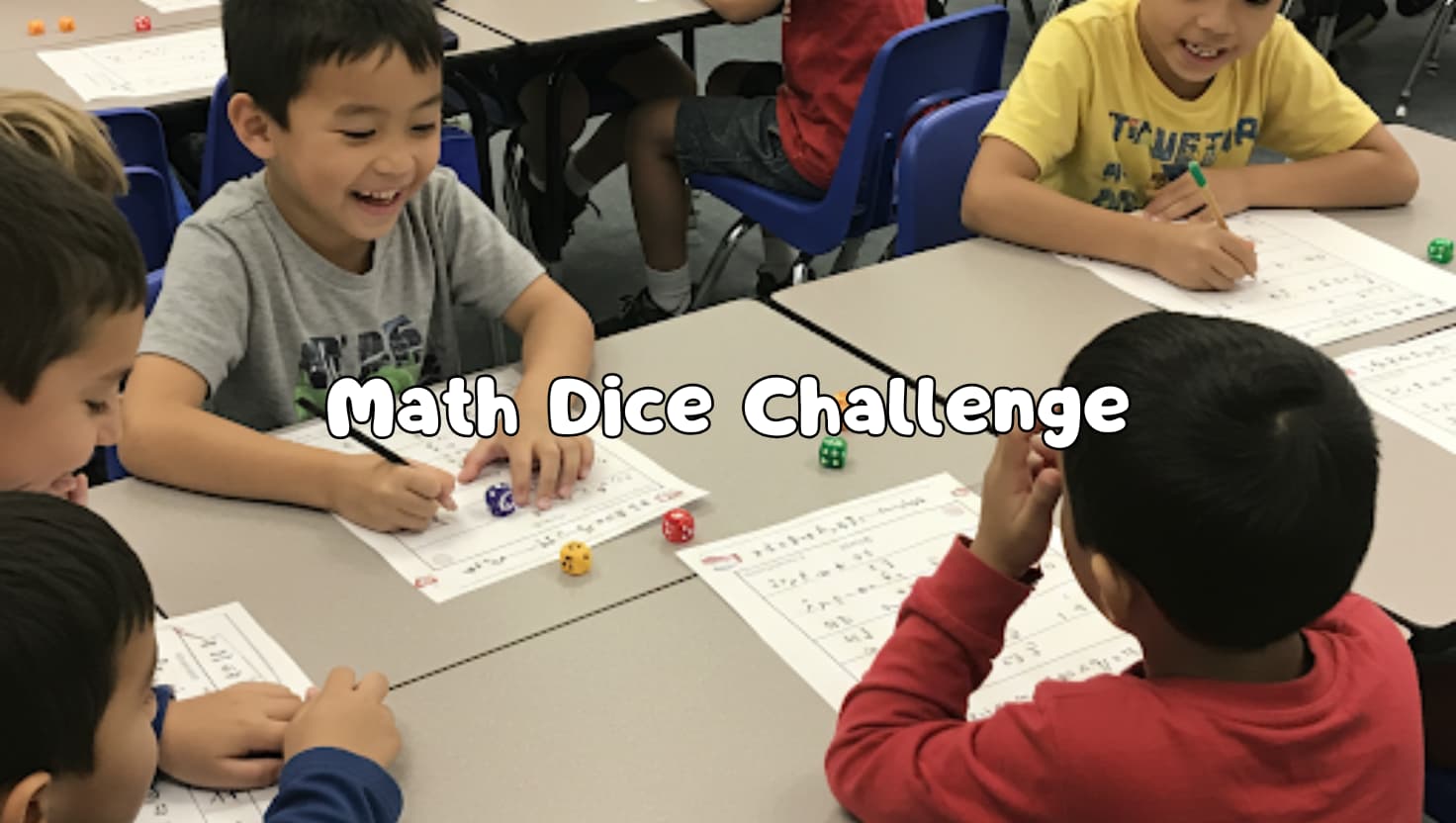
Using a set of dice, students roll to generate numbers and then perform math operations to solve equations. This activity can be adapted for different skill levels and is a great way to keep students engaged while reinforcing important math concepts.
Materials Needed:
- 2 six-sided dice
- Paper and pencils
How to Do:
- Divide the class into small groups or pairs.
- Each student takes turns rolling the dice.
- The student who rolls the dice creates a math equation using the numbers rolled.
- Students then solve the equation and check each other’s answers.
- After a few rounds, switch up the operations (addition, subtraction, multiplication, division) to keep things interesting.
- Keep track of scores to make it more competitive if desired.
5. Graphing with Candy
Graphing becomes more engaging when students get to use colorful candies as data! This activity is a fun way to introduce bar graphs, picture graphs, and data interpretation.

It also encourages sorting, counting, and comparing skills, which are key parts of the 3rd grade math curriculum.
Materials Needed:
- Small packs of colored candy (like Skittles or M&Ms)
- Graph paper or printable graph templates
- Rulers and pencils
How to Do:
- Distribute one pack of candy to each student or group.
- Have students sort their candies by color.
- Count and record the number of each color.
- Create a bar graph or pictograph to represent the data.
- Ask analytical questions: ‘Which color appears most?’ ‘How many more red than blue?’
- Let students compare graphs with a partner or group.
6. Math Bingo
Math Bingo is a great way to review basic facts and operations. It’s a classroom favorite that combines excitement and learning in a competitive game format. This game can be modified to include addition, subtraction, multiplication, and division, making it suitable for a variety of skill levels.

Materials Needed:
- Printable Bingo cards
- Math problems (addition, subtraction, multiplication, division)
- Markers or chips to cover the numbers
How to Do:
- Hand out Bingo cards to each student.
- Call out math problems (e.g., 3 × 6, 12 + 8).
- Students solve the problems and mark the corresponding number on their cards.
- The first student to mark a full row (horizontal, vertical, or diagonal) calls out “Bingo!”
- Review answers with the class and continue to play.
7. Measurement Relay Race
This activity helps students practice measurement skills by involving movement and friendly competition. It combines both teamwork and learning, making measurement concepts stick.

Students race to measure objects around the classroom with rulers, measuring tapes, or non-standard units like paper clips or blocks. It’s a fast-paced way to reinforce the concept of length and measurement.
Materials Needed:
- Rulers or measuring tapes
- Objects to measure (pens, books, etc.)
- Measuring tape (optional)
How to Do:
- Divide students into two teams.
- Each team takes turns measuring an object in the classroom.
- Students must record the measurement correctly.
- The team that measures the most objects correctly in the least amount of time wins.
8. Geometry Scavenger Hunt
Among the basic math activities for 3rd graders, a geometry scavenger hunt is a fun and engaging option. Students search for shapes and geometric patterns around the classroom or school. This activity encourages observation, classification, and real-world application of geometry. It’s great for reinforcing knowledge about shapes, angles, and symmetry.

Materials Needed:
- Geometry scavenger hunt checklist
- Pencils or clipboards
- Measuring tape (optional)
How to Do:
- Give students a checklist of geometric shapes (e.g., triangles, squares, circles).
- Ask them to find examples of each shape in the classroom or school.
- They can either sketch the shape or take a picture of it.
- Afterward, have students share their findings and discuss where they found the shapes.
9. Number Line Hopscotch
Make learning number lines fun and physical with a hopscotch game! This activity combines movement with learning to reinforce the concept of number sequences, intervals, and addition/subtraction. Students physically “hop” through a number line while solving math problems. It’s perfect for kinesthetic learners.

Materials Needed:
- Chalk or tape to create the number line
- A large outdoor space or classroom floor
- A marker or beanbag for each student
How to Do:
- Draw a number line on the floor or outdoor space with numbers from 1 to 20 (or higher).
- Call out a math problem, e.g., “What is 5 + 3?”
- Students hop to the correct answer on the number line.
- Each student gets a turn to hop through the number line and solve different problems.
- To increase difficulty, ask them to solve subtraction or skip-counting problems.
10. Pattern Blocks Challenge
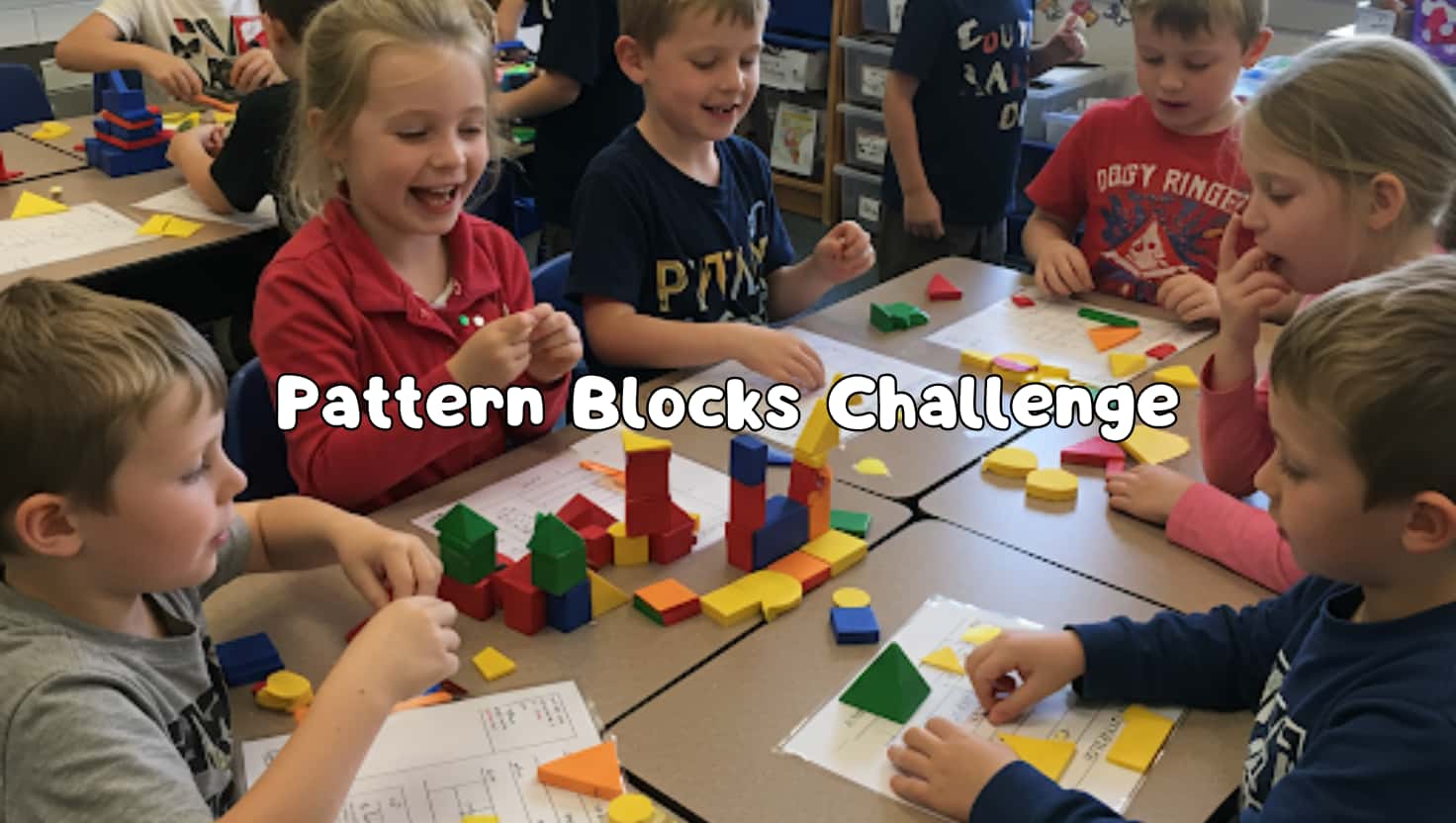
Pattern blocks are a fantastic hands-on way for students to explore geometry, symmetry, and fractions. In this activity, students use pattern blocks to create their own shapes, explore symmetry, or complete puzzles. It helps develop spatial reasoning and geometric understanding.
Materials Needed:
- Pattern blocks (or printable shapes)
- Construction paper or worksheets
- Pencils or markers
How to Do:
- Give each student a set of pattern blocks and construction paper.
- Assign a shape or ask them to create one using the blocks.
- Students arrange blocks to form patterns or explore symmetry.
- Have them label their shapes and describe the fractions of each color used.
- Challenge students to replicate a pattern or create their own geometric design.
11. Time Telling Bingo
This Bingo variation focuses on telling time, an essential skill for 3rd graders. Students will match the time shown on a clock to the time on their Bingo cards. It’s an engaging way to practice both analog and digital time reading skills.

Materials Needed:
- Printable time Bingo cards with clock faces
- Flashcards with time written in digital form (e.g., 2:30)
- Markers or chips to cover the numbers
How to Do:
- Hand out Bingo cards with clock faces to each student.
- Call out a time in digital form (e.g., 3:45).
- Students must find the corresponding clock face showing that time and mark it.
- The first student to get a full row or column of correct answers calls out “Bingo!”
- Review the times with the class and continue the game.
12. Money Mania
Help students develop strong money skills with Money Mania. Students practice counting coins, making change, and solving real-world problems involving money. The activity is great for reinforcing both addition and subtraction with a practical twist.

Materials Needed:
- Play money or real coins
- Worksheets with money problems
- Small containers or bags for organizing coins
How to Do:
- Give each student a set of play money or real coins.
- Provide worksheets with various money-related questions (e.g., “How much money is this coin collection worth?”).
- Students work through the problems by counting and adding up coins.
- Ask them to make a change from a set amount and explain their reasoning.
- Include word problems that involve buying and selling items with coins.
13. Measurement Estimation Jar
This activity combines estimation and measurement, making it perfect for developing estimation skills. Students guess the length, volume, or weight of an object before measuring it precisely. It encourages critical thinking and hands-on practice with different measurement units.

Materials Needed:
- Clear jar or container
- Small objects to fill the jar (e.g., beans, marbles, buttons)
- Rulers or measuring cups
How to Do:
- Fill a jar with small objects (e.g., beans or marbles).
- Have students estimate the volume, length, or weight of the items inside.
- Allow them to measure or weigh the objects after making their guesses.
- Discuss the results and compare how close their estimations were.
- Ask students to reflect on their strategies for making estimations.
14. Skip Counting Race
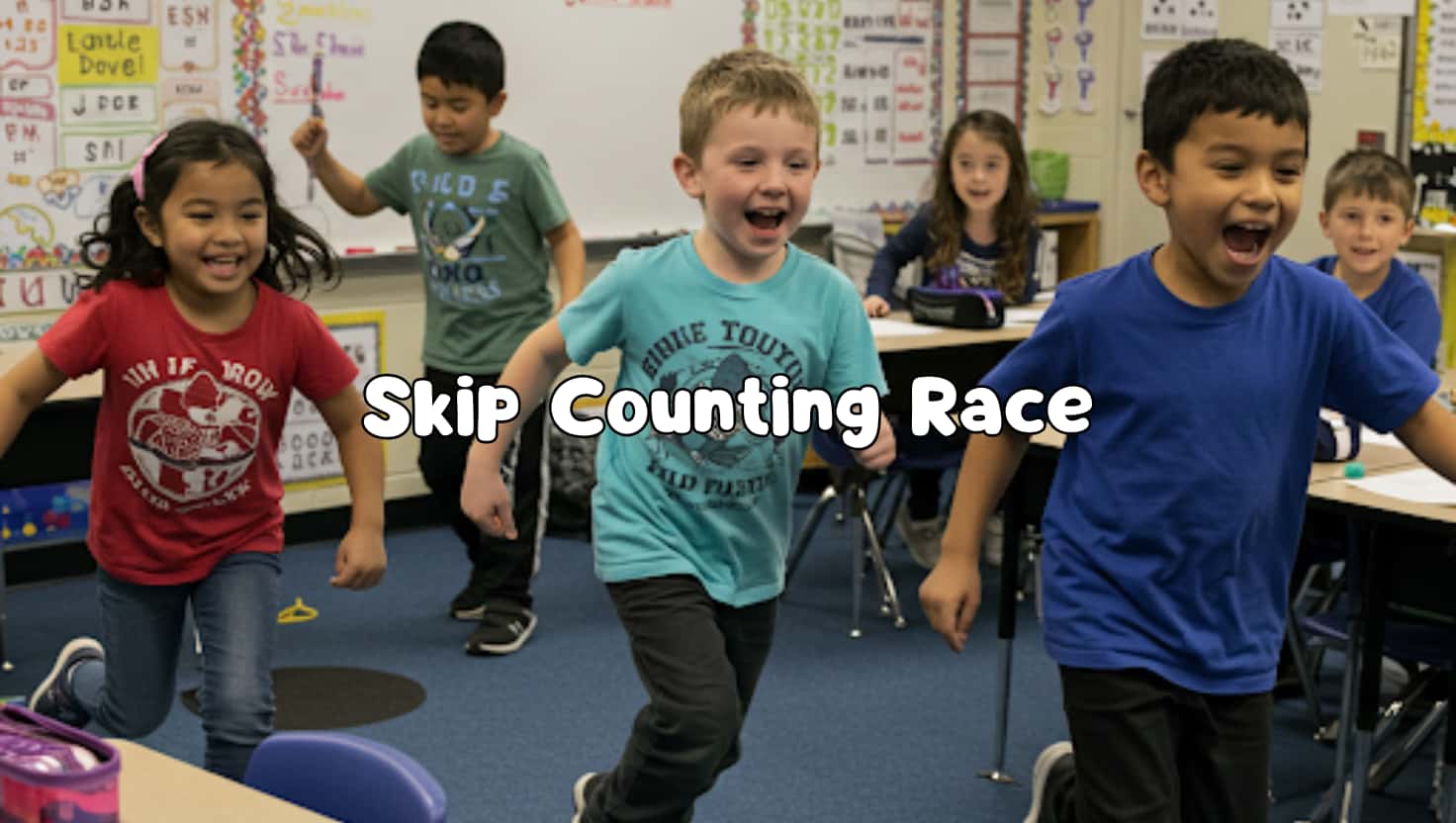
Skip Counting Race is one of the most dynamic activities for 3rd graders to practice math effectively and enjoyably.
Skip counting helps build fluency in multiplication and division. In this game, students race against each other while skipping counting by 2s, 5s, or 10s. It’s a fun way to practice important math skills in a competitive format.
Materials Needed:
- Stopwatch or timer
- A list of numbers to skip count by (e.g., 2s, 5s, 10s)
How to Do:
- Have students line up in front of the class or on the playground.
- Call out a number (e.g., “Skip count by 5s starting from 5”).Students race to the finish line, counting by the designated number until they reach the endpoint.
- Time each student’s progress and compare results.
- Continue with different skip-counting patterns (by 2s, 10s, etc.).
15. Clock Races
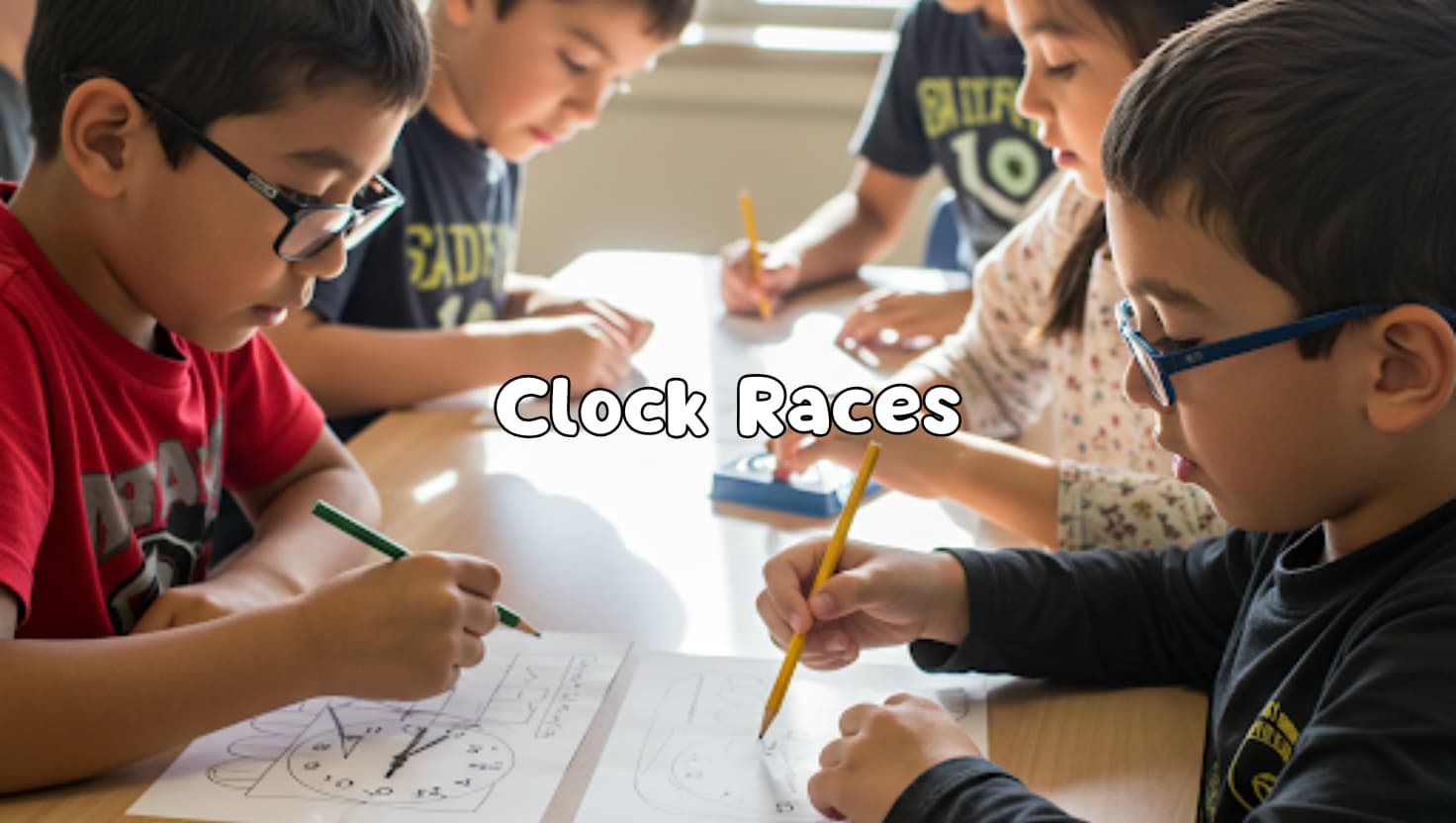
Clock Races turn time-telling into a fast-paced and exciting challenge. Students compete to show the correct time on a clock, either by sketching the hands on a blank clock face or adjusting a real analog clock. It’s a great way to boost their accuracy and confidence with telling time.
Materials Needed:
- Printable clock templates or analog clocks
- Markers or pencils
- Stopwatch
How to Do:
- Set up a timer for each student or group.
- Call out a specific time (e.g., “Set the clock to 3:15”).
- Students race to draw or adjust the hands of the clock to match the time as quickly as possible.
- The fastest student with the correct time wins the round.
- Continue with more challenging times as students become more proficient.
FAQs
1. How do math activities benefit 3rd-grade students?
3rd grade math activities bridge the gap between abstract concepts and concrete understanding by providing hands-on experiences. These exercises improve retention of multiplication facts and fractions while reducing math anxiety in eight-year-old learners. By turning complex lessons into play, students develop a positive attitude toward problem-solving and critical thinking that serves as a foundation for future academic success.
2. What materials are needed for these interactive math games?
Most of these activities utilize common classroom supplies to ensure they are accessible for every educator. Standard materials include decks of playing cards for multiplication war, six-sided dice for rounding challenges, and colored candies for graphing exercises. Specialized tools like pattern blocks or analog clocks are also used to provide tactile learning opportunities that help students visualize geometric properties and time-telling sequences.
3. Can these activities be used for remote or hybrid learning?
While many of these tasks are designed for in-person collaboration, they can easily be adapted for home environments. Digital versions of number lines or virtual dice can replace physical materials, allowing students to engage in skip counting races or multiplication war from any location. Teachers can assign these as interactive homework to encourage family involvement, ensuring that math practice continues outside the traditional classroom setting.
Final thoughts
Incorporating 3rd-grade math activities into your lessons is a great way to make learning both engaging and effective. These interactive exercises boost problem-solving skills, foster critical thinking, and help students connect math to the real world. From games to hands-on challenges, each activity brings math to life in a fun and meaningful way. To keep the momentum going, explore our collection of 3rd-grade math worksheets on Worksheetzone—perfect for reinforcing classroom concepts with ready-to-use, skill-building practice.