


























Views
Downloads

Number 9 Worksheet — Printable No-Prep Kindergarten Math
Paste this activity's link or code into your existing LMS (Google Classroom, Canvas, Teams, Schoology, Moodle, etc.).
Students can open and work on the activity right away, with no student login required.
You'll still be able to track student progress and results from your teacher account.
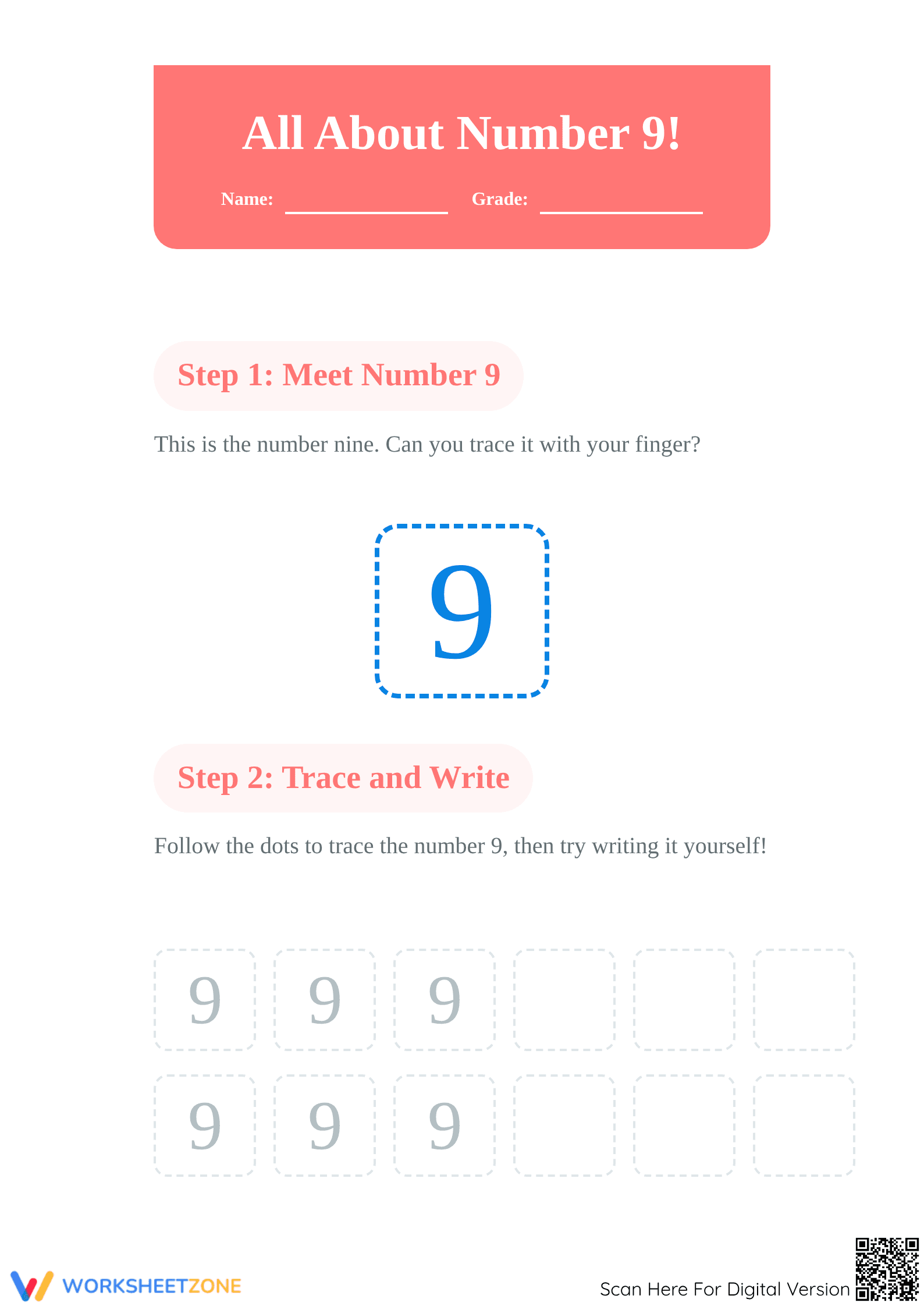
This Essential Number 9 worksheet provides Kindergarten students with a comprehensive introduction to numeral recognition, formation, and cardinality. By combining tactile tracing with visual counting, the resource ensures learners develop a concrete understanding of the number nine. Students progress through four structured steps to master writing and identifying this foundational mathematical concept.
At a Glance
- Grade: Kindergarten · Subject: Early Childhood Mathematics
- Standard:
K.CC.A.3— Write numbers from 0 to 20 and represent quantities with numerals- Skill Focus: Numeral 9 recognition, formation, and cardinality counting
- Format: 3 pages · 30 problems · Answer key included · PDF
- Best For: Independent math centers, morning work, or sub plans
- Time: 15–20 minutes
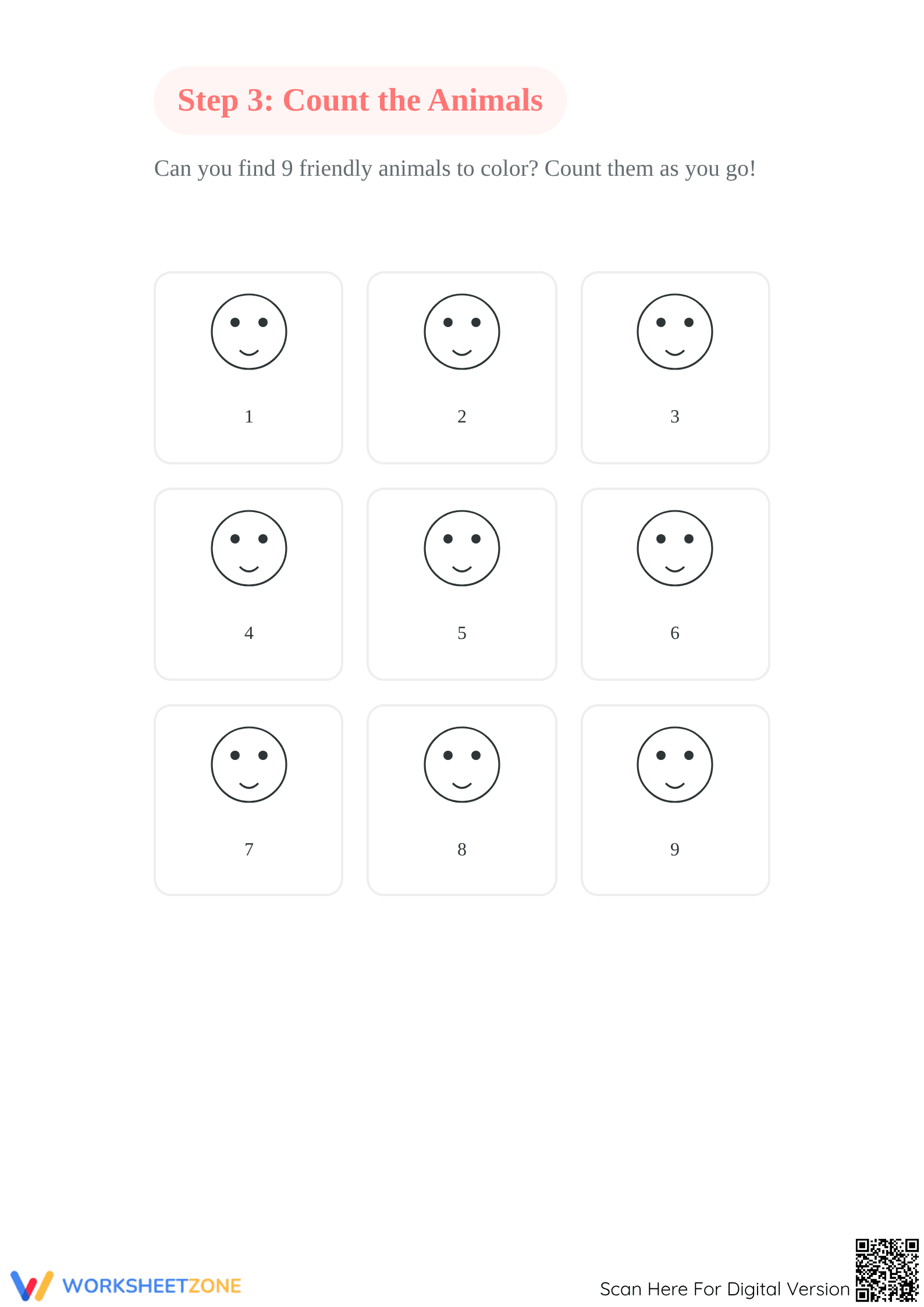
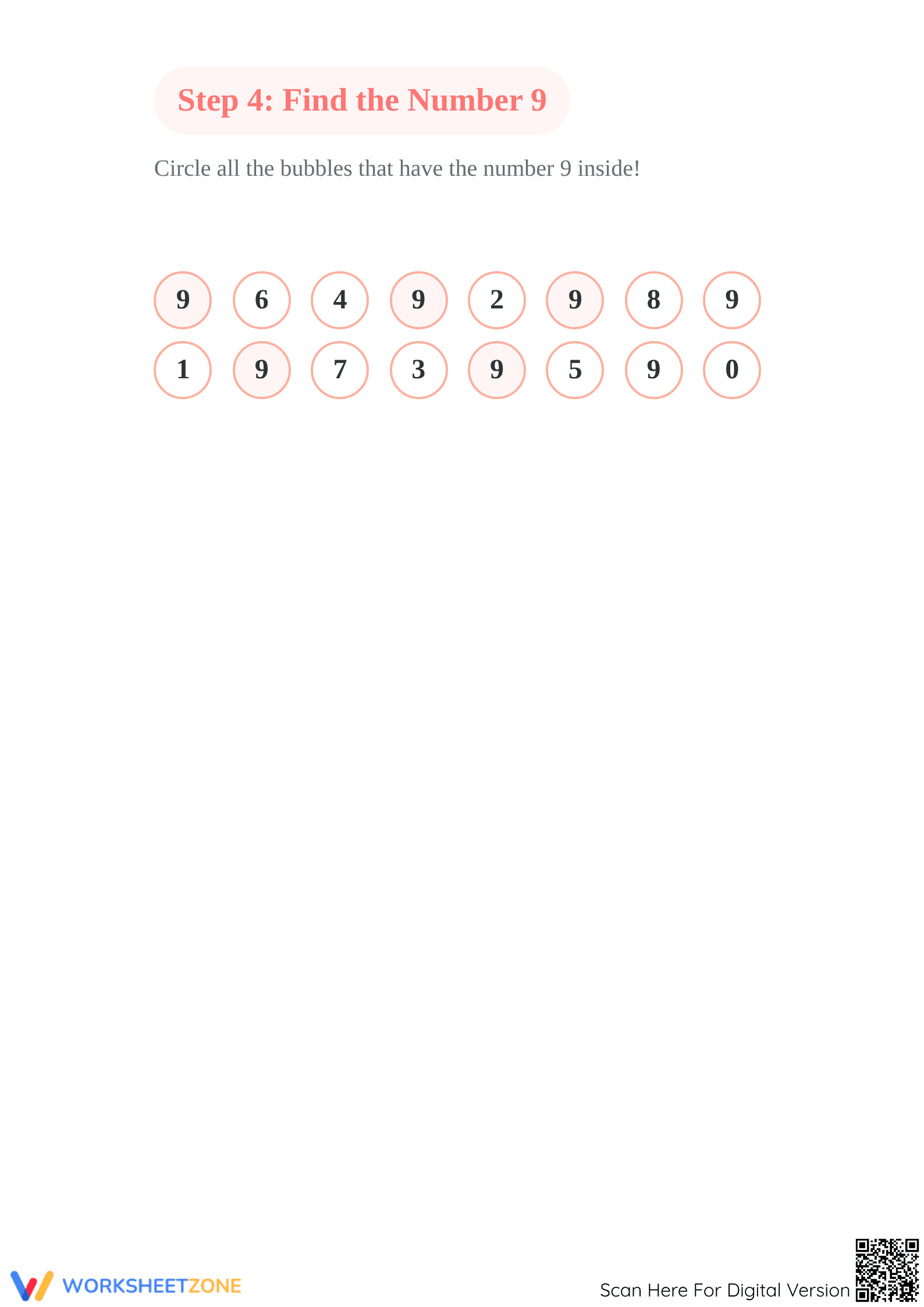
The three-page PDF packet features a clean, high-contrast layout designed for young learners. Page one introduces number formation through finger tracing and guided writing. The second page focuses on one-to-one correspondence using friendly icons for counting. The final page provides a discrimination task where students locate the number nine among distractors. A complete answer key is included.
Zero-Prep Workflow
This classroom-ready resource requires absolutely no teacher preparation. First, print the three-page PDF for your class set. Second, distribute the worksheets during your numeracy block; the intuitive "step-by-step" headings allow children to work with minimal instruction. Finally, use the included answer key to review student work in less than one minute. Total setup time is minimal.
Standards Alignment
The primary alignment is `CCSS.MATH.CONTENT.K.CC.A.3`, which requires students to write numbers from 0 to 20 and represent a number of objects with a written numeral. Additionally, the counting section supports `CCSS.MATH.CONTENT.K.CC.B.4` by connecting number names to quantities. Both standard codes can be copied directly into lesson plans, IEP goals, or district curriculum mapping tools.
How to Use It
Integrate this worksheet during the "We Do" phase of instruction to scaffold initial number writing. It also serves as an excellent formative assessment tool; observe students during the bubble-find activity to identify those struggling with visual discrimination between numbers. Most students will complete the full set within 20 minutes, making it a perfect fit for independent rotations.
Who It's For
This resource is designed for Kindergarten students but is appropriate for Preschoolers ready for formal writing and 1st Grade students requiring intervention. The simplified layout and large fonts accommodate learners with fine motor delays. It pairs naturally with physical manipulatives, such as ten-frames, to reinforce the quantitative value of nine before students begin the writing tasks.
The efficacy of multisensory number instruction, as seen in this worksheet's progression from tracing to counting, is well-documented in early childhood education research. According to Fisher & Frey (2014), the gradual release of responsibility model—moving from guided "Meet the Number" tasks to independent discrimination—is critical for ensuring long-term retention of numeral formation. This worksheet specifically targets `CCSS.MATH.CONTENT.K.CC.A.3` by providing thirty distinct opportunities for students to engage with the number nine through writing, counting, and identification tasks. Research from the NAEP highlights that early mastery of one-to-one correspondence and numeral recognition is one of the strongest predictors of later mathematical achievement in primary grades. By integrating visual, motor, and quantitative exercises, this resource provides the structured repetition necessary for developing fluency in basic numeracy skills. Educators can confidently utilize this data-informed approach to bridge the gap between abstract number symbols and concrete quantities effectively.


