


























Views
Plays
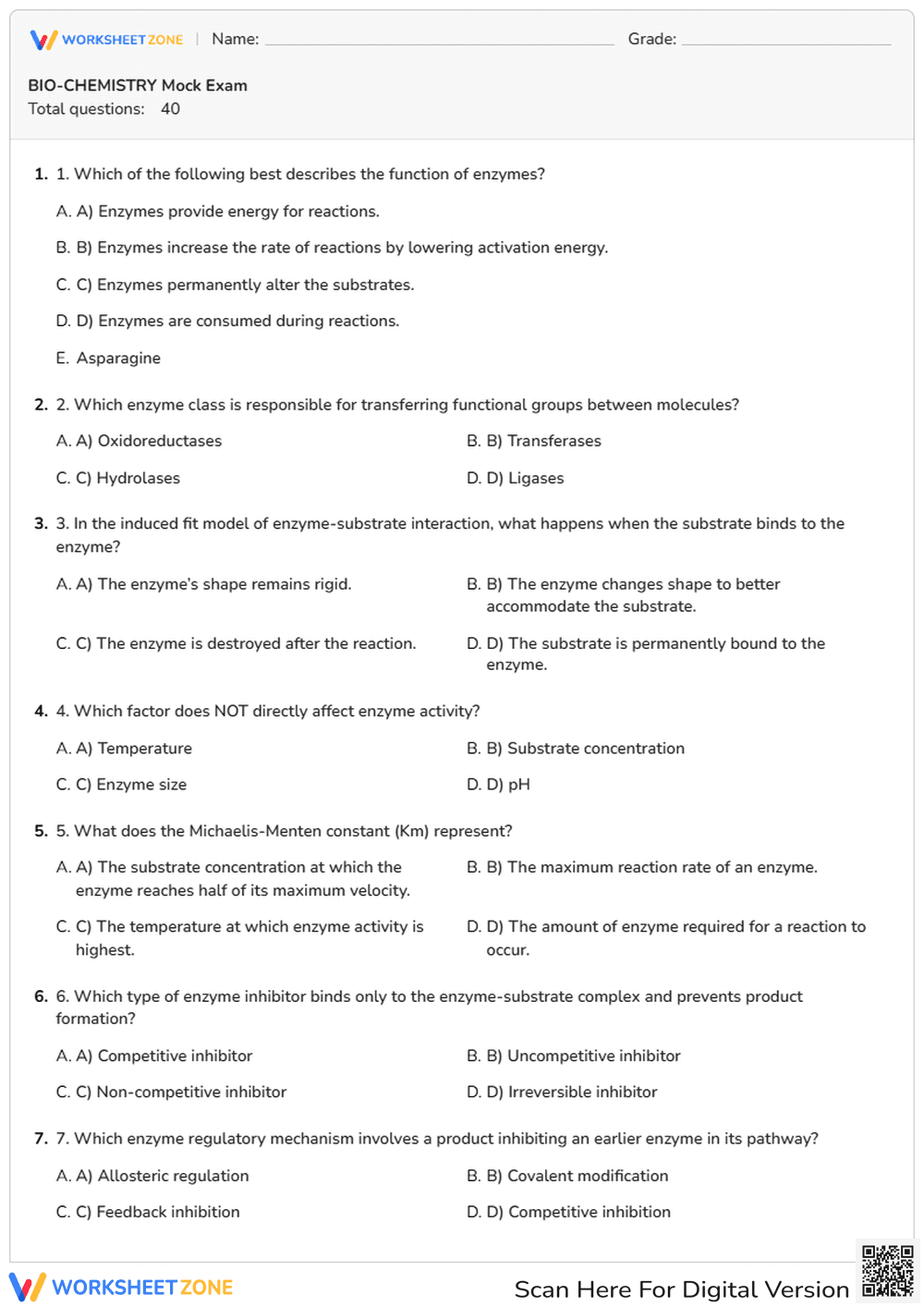
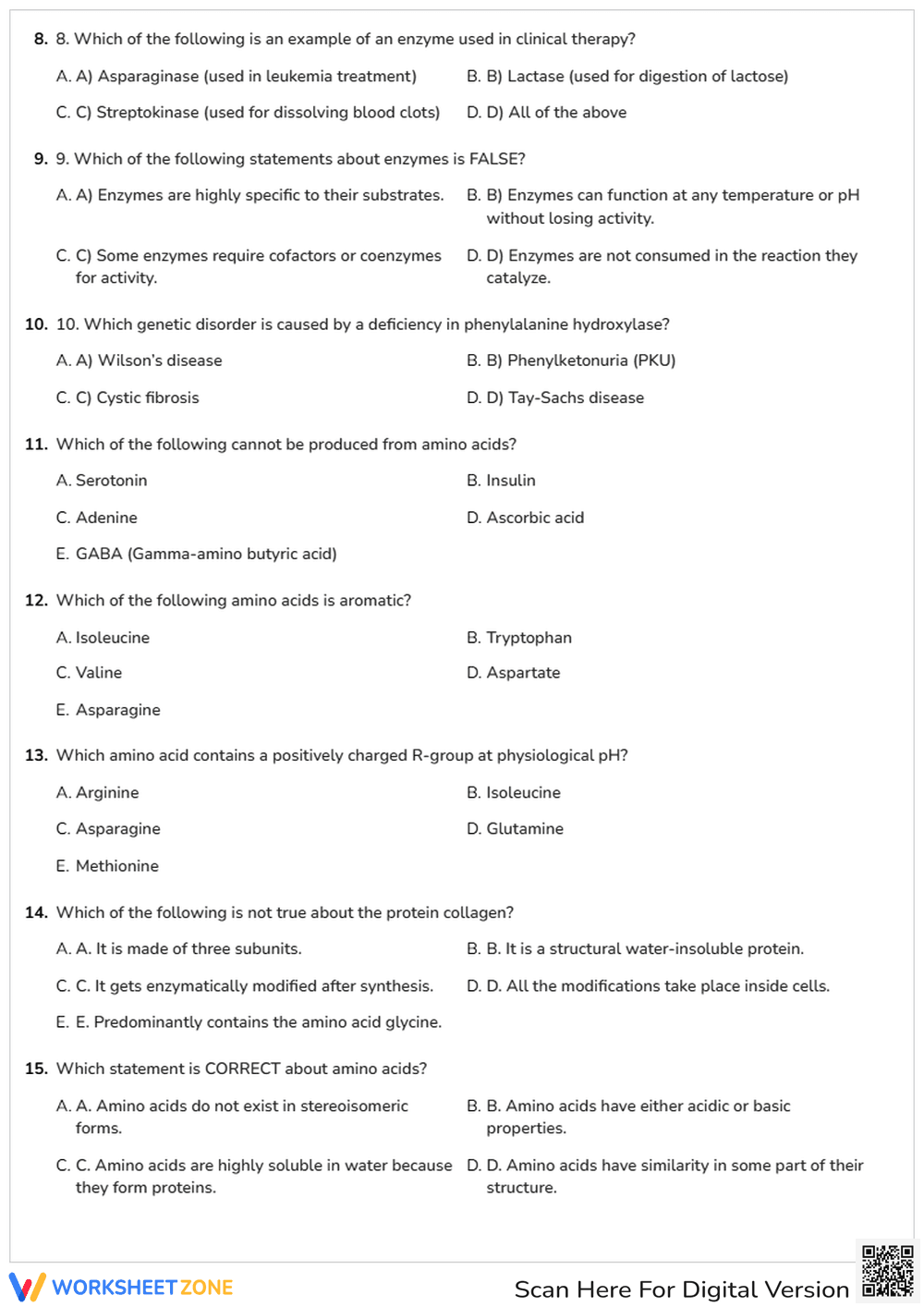
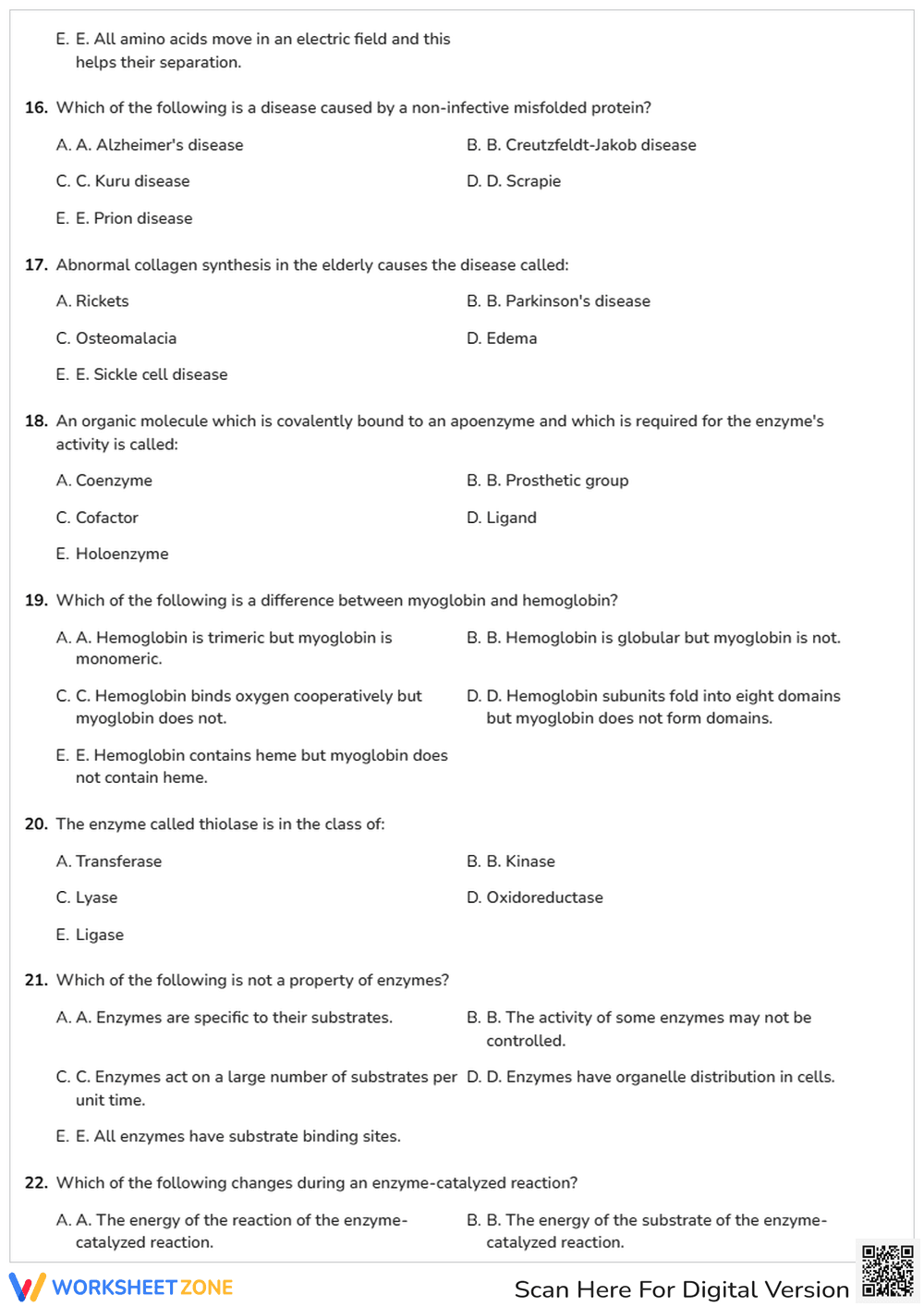
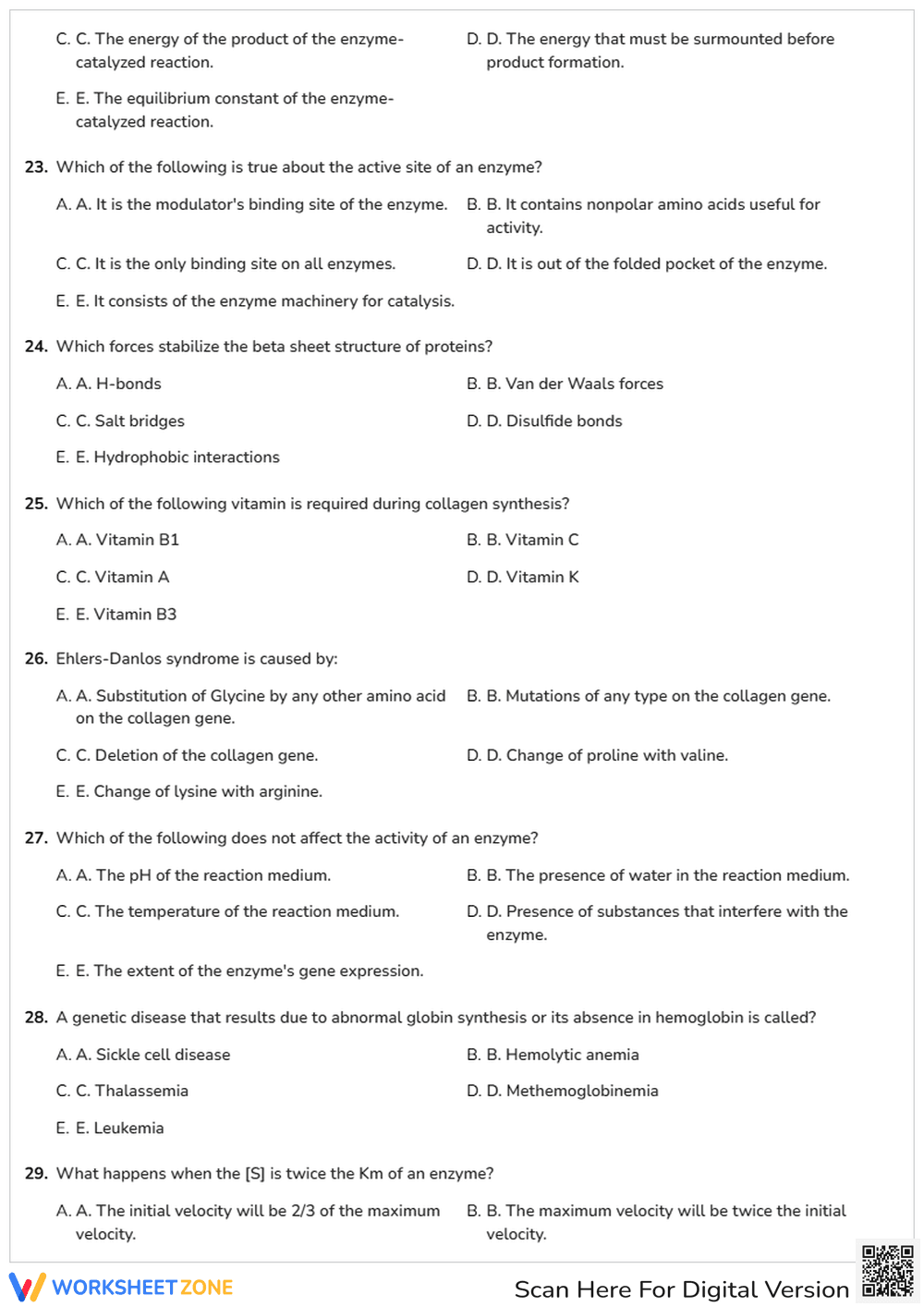

Biochemistry Mock Exam | Essential Grade 12 Science
Paste this activity's link or code into your existing LMS (Google Classroom, Canvas, Teams, Schoology, Moodle, etc.).
Students can open and work on the activity right away, with no student login required.
You'll still be able to track student progress and results from your teacher account.
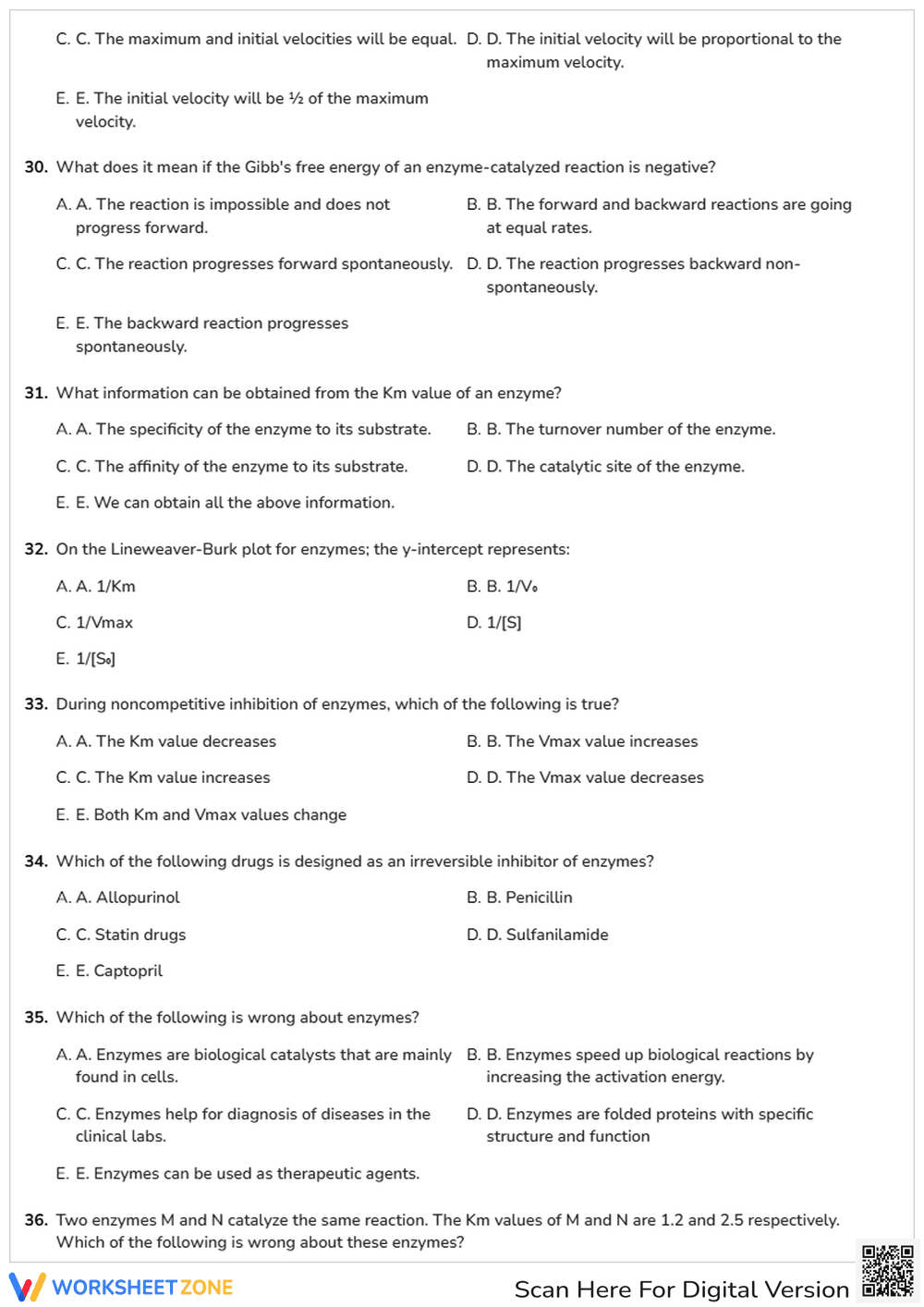
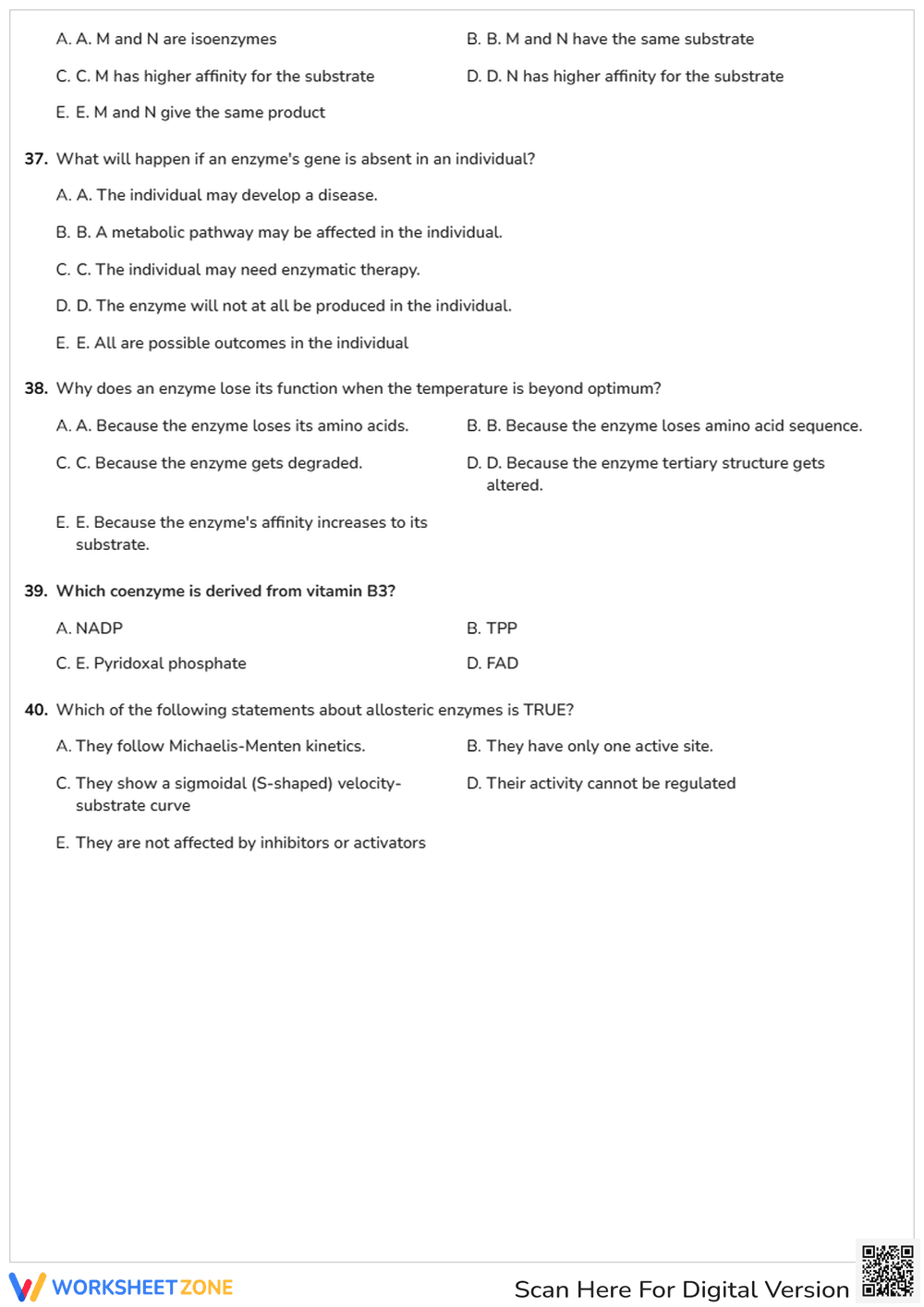
This biochemistry mock exam provides high school and college students with 40 rigorous multiple-choice questions to evaluate their understanding of molecular biology. Students will demonstrate mastery of enzyme kinetics, amino acid properties, and protein folding through a series of challenging prompts. It serves as a comprehensive assessment tool for measuring readiness in advanced science courses before final examinations.
At a Glance
- Grade: 12 · Subject: Biochemistry
- Standard:
HS-LS1-1— Construct an explanation based on evidence for how the structure of DNA determines protein structure- Skill Focus: Enzyme catalysis and molecular structure
- Format: 6 pages · 40 problems · Answer key included · PDF
- Best For: Summative assessment and AP exam preparation
- Time: 45–60 minutes
What's Inside: This 6-page document features a robust collection of 40 multiple-choice questions designed to mimic the format of professional certification or college-level entrance exams. The content spans critical topics including the Michaelis-Menten constant, enzyme inhibition types (competitive, non-competitive, and uncompetitive), and the structural characteristics of collagen and hemoglobin. A full answer key is provided to facilitate rapid grading and immediate student feedback.
Zero-Prep Workflow: This resource is designed for immediate classroom implementation with three simple steps. First, print the 6-page PDF for your class, which takes less than 30 seconds on a standard high-speed copier. Second, distribute the exam to students; the clear layout and numbered questions require no additional verbal instructions. Third, review the results using the included answer key to identify specific misconceptions in under 15 minutes. This makes it an ideal choice for emergency sub plans or end-of-unit review sessions.
Standards Alignment: This worksheet is primarily aligned to `HS-LS1-1`, focusing on the hierarchical organization of systems and the specific functions of proteins within organisms. It also supports concepts found in HS-PS1-5 regarding the factors that affect the rate of chemical reactions. Both standard codes can be copied directly into lesson plans, IEP goals, or district curriculum mapping tools to ensure compliance with state and national science frameworks.
How to Use It: Use this mock exam as a summative assessment at the conclusion of a biochemistry unit to gauge student mastery of metabolic pathways. Alternatively, assign it as a timed practice session for students preparing for AP Biology or introductory college chemistry exams. During the session, observe which students struggle with the Lineweaver-Burk plot questions to provide targeted small-group intervention. Expected completion time ranges from 45 to 60 minutes depending on student familiarity with the material.
Who It's For: This resource is tailored for Grade 11, Grade 12, and undergraduate college students enrolled in advanced life science tracks. It is particularly effective for learners who require practice with high-stakes testing environments. It pairs naturally with a protein structure anchor chart or a direct instruction lesson on enzyme-substrate interactions to reinforce theoretical concepts with practical application.
The use of high-quality mock examinations is supported by research from Fisher & Frey (2014), which emphasizes the importance of checking for understanding through retrieval practice to solidify long-term memory. This 40-question assessment targets the HS-LS1-1 standard by requiring students to analyze how molecular structures, such as the active sites of enzymes, dictate biological function. By engaging with complex topics like allosteric regulation and the Gibbs free energy of catalyzed reactions, students build the cognitive stamina necessary for university-level science. The inclusion of clinical applications, such as the role of asparaginase in leukemia treatment, provides the real-world context recommended by the NAEP for increasing student engagement in STEM fields. This resource ensures that students are not merely memorizing facts but are developing a functional understanding of the biochemical principles that govern living systems.


