




























Views
Downloads

Printable Dihybrid Cross Worksheet | Grade 9-12 Biology

Paste this activity's link or code into your existing LMS (Google Classroom, Canvas, Teams, Schoology, Moodle, etc.).
Students can open and work on the activity right away, with no student login required.
You'll still be able to track student progress and results from your teacher account.
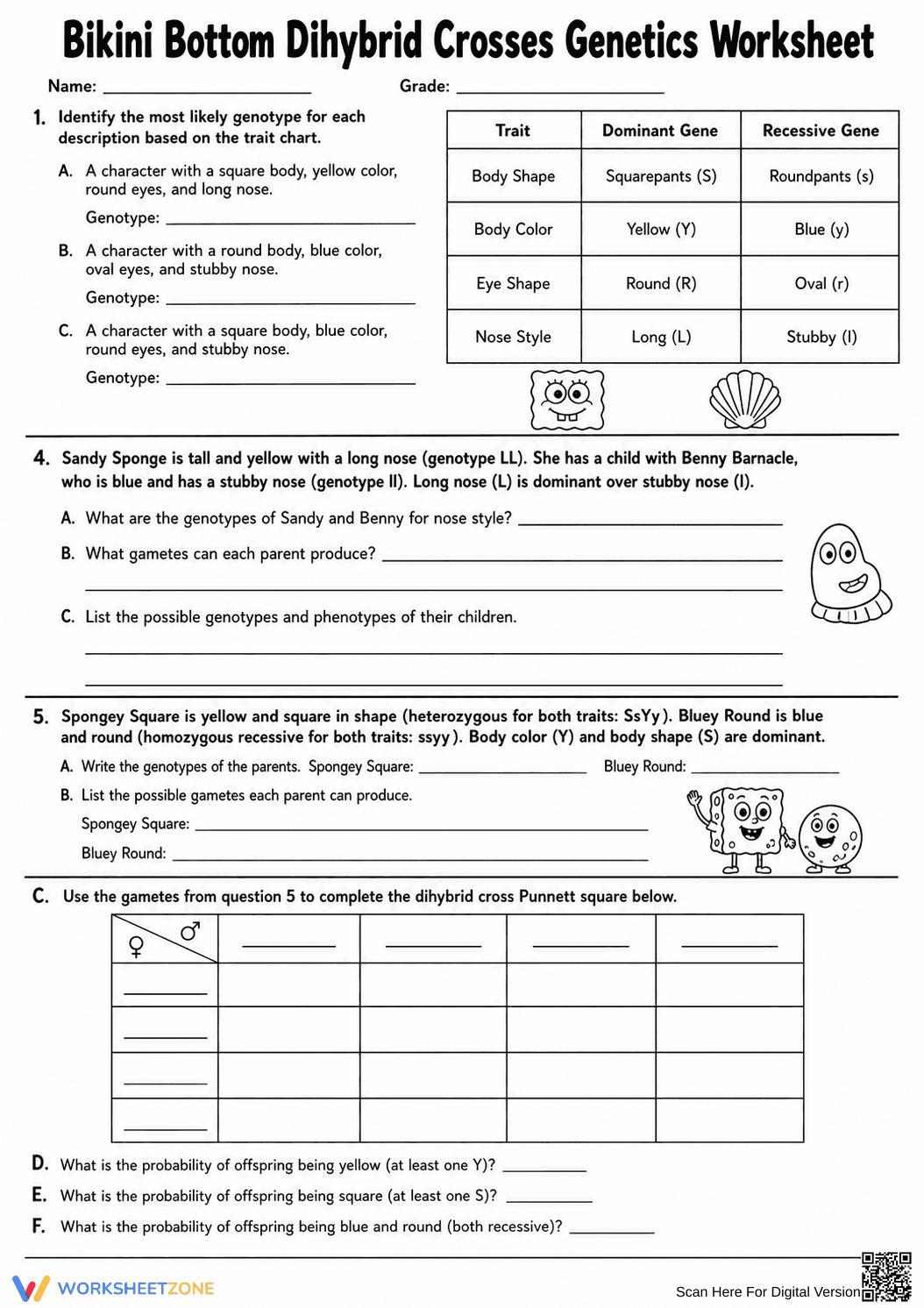
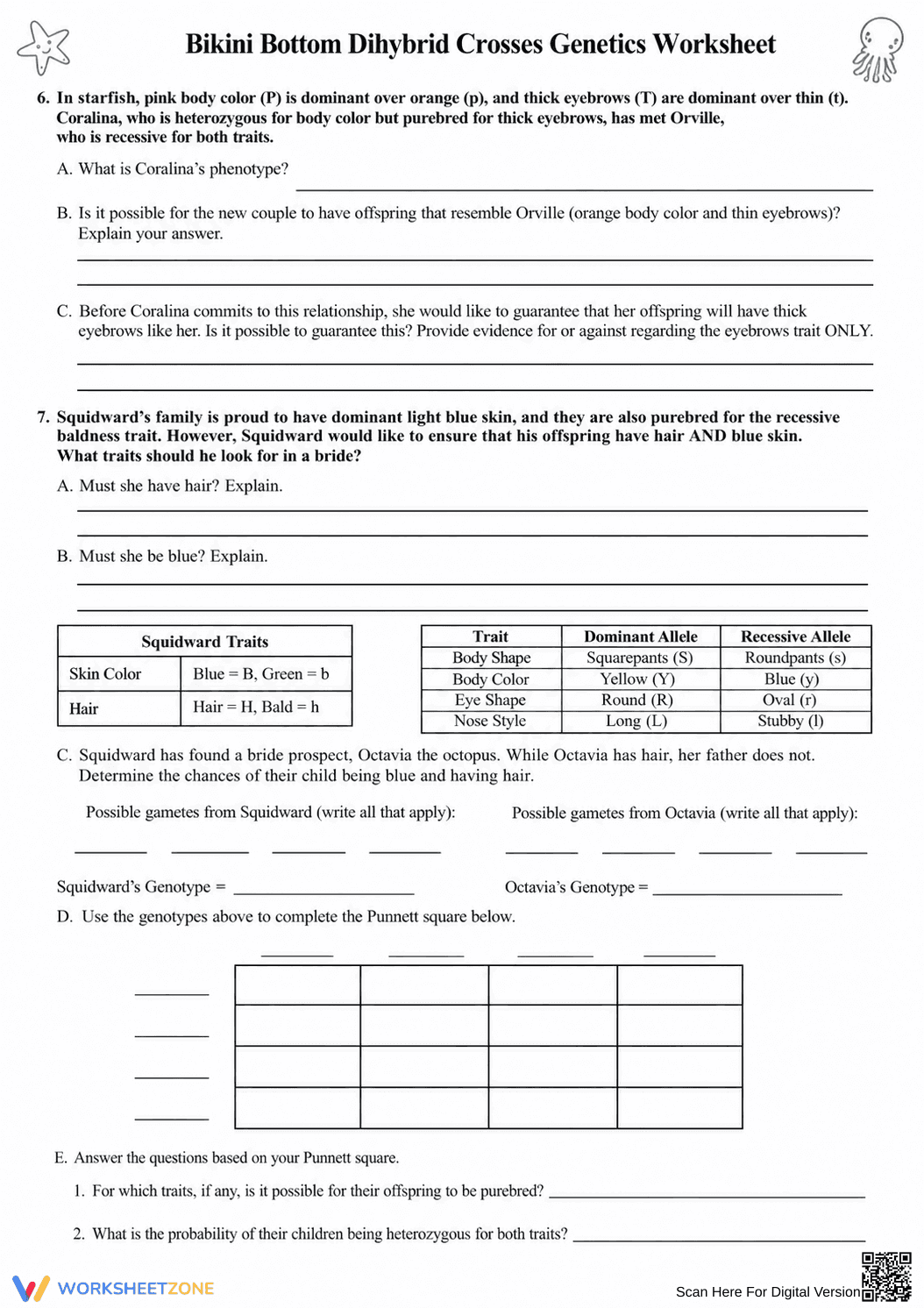
This high school biology worksheet provides students with targeted practice on dihybrid crosses and genetic probability. By working through engaging, themed scenarios, learners will determine parent genotypes, calculate possible gamete combinations, and complete complex Punnett squares to predict offspring traits accurately and confidently.
At a Glance
- Grade: 9-12 · Subject: Biology
- Standard:
HS-LS3-3— Apply probability to explain trait variation- Skill Focus: Dihybrid crosses and Punnett squares
- Format: 2 pages · 5 problems · Answer key included · PDF
- Best For: Independent practice or review
- Time: 30–45 minutes
This two-page activity features five multi-part word problems centered around a fun underwater theme. It includes clear trait charts detailing dominant and recessive alleles. Students identify parent genotypes, list possible gametes, and fill out 16-box Punnett squares. A complete answer key ensures quick grading.
Zero-Prep Workflow
- Print (1 minute): Simply download the PDF and print a class set. The clear layout ensures high-quality copies every time.
- Distribute (1 minute): Hand out the two-page packet. The built-in trait charts mean students have all the reference material they need right on the page.
- Review (5 minutes): Use the included answer key to quickly check student work or project it on the board for self-correction.
With under two minutes of total teacher prep time, this resource is an excellent addition to any genetics unit and serves as a highly effective sub plan.
Standards Alignment
This activity is directly aligned with HS-LS3-3: Apply concepts of statistics and probability to explain the variation and distribution of expressed traits in a population. It reinforces foundational genetics principles by requiring students to calculate the mathematical probability of specific phenotypic outcomes based on independent assortment. Both standard codes can be copied directly into lesson plans, IEP goals, or district curriculum mapping tools.
How to Use It
Assign this packet for independent practice after direct instruction to solidify student understanding. It also works exceptionally well as a collaborative partner activity. As a formative assessment tip, observe students as they set up the axes of their 16-box squares; ensuring they have the correct four gamete combinations for each parent is crucial before crossing. Expect completion in 30 to 45 minutes.
Who It's For
Designed for high school biology students studying Mendelian genetics, the engaging theme makes complex multi-trait crosses less intimidating. For differentiation, teachers can pre-fill the gamete axes on the Punnett squares for students needing extra support. This worksheet pairs perfectly with introductory lessons on independent assortment.
Mastering the mechanics of genetic inheritance requires repeated, structured practice with statistical models. This resource targets HS-LS3-3, helping students apply probability to explain trait variation through the use of dihybrid crosses. According to EdReports 2024, instructional materials that contextualize complex mathematical and scientific concepts within engaging, familiar scenarios significantly improve student persistence and comprehension during independent practice. By translating word problems into genotypes, determining gamete possibilities, and executing 16-box Punnett squares, learners develop a concrete understanding of independent assortment and phenotypic probability. The structured progression of these tasks ensures that students do not merely memorize genetic rules, but actively apply them to predict outcomes. This targeted approach builds the analytical stamina necessary for advanced life science coursework and standardized assessments, ensuring learners can confidently master the statistical foundations of modern genetics.


