


























Views
Downloads

Essential Story Map Worksheet | Grades 3-6 ELA Aligned
Paste this activity's link or code into your existing LMS (Google Classroom, Canvas, Teams, Schoology, Moodle, etc.).
Students can open and work on the activity right away, with no student login required.
You'll still be able to track student progress and results from your teacher account.
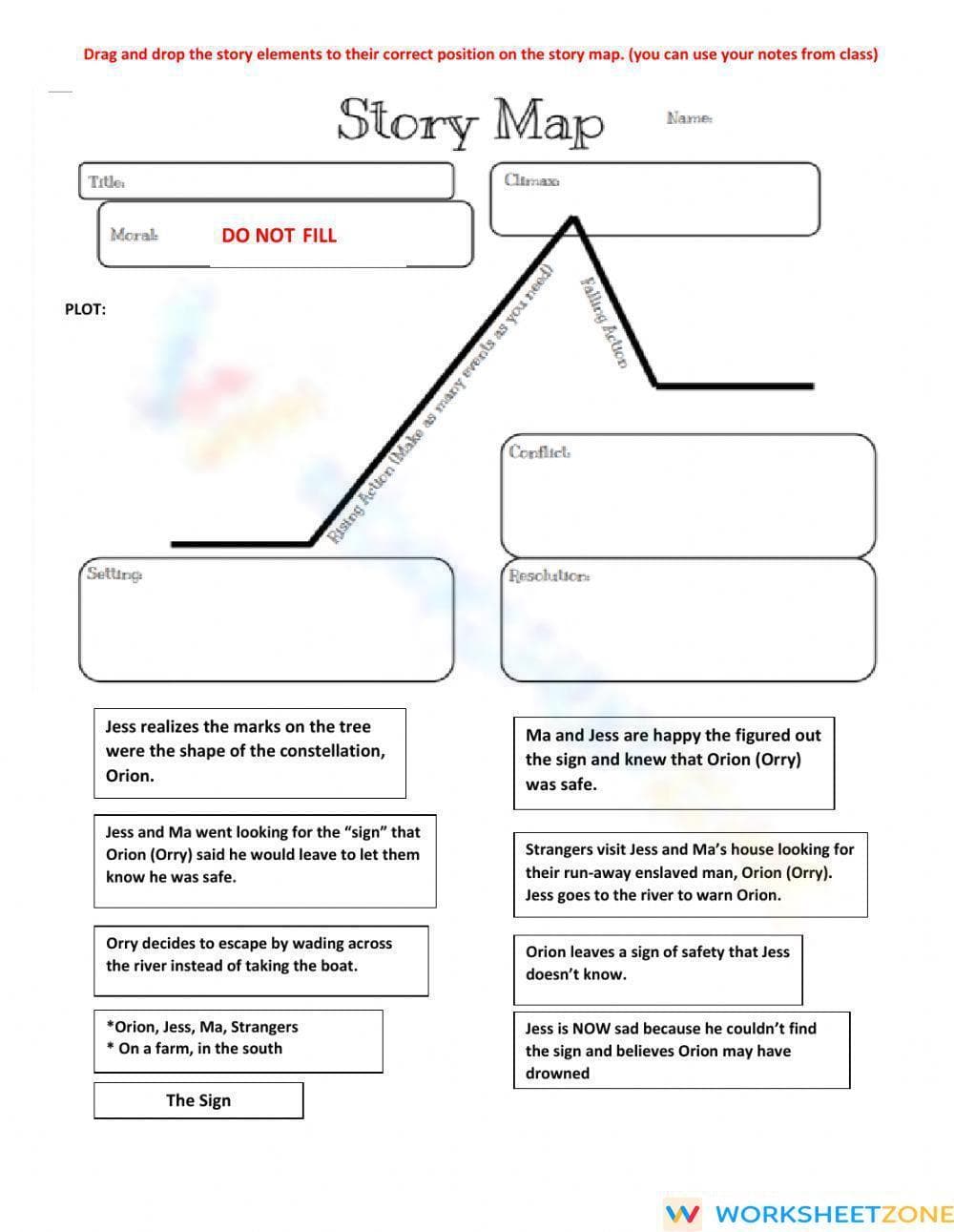
This story mapping worksheet helps students analyze narrative structure by identifying critical plot points including the climax, conflict, and resolution. Students examine specific events from the story "The Sign" to determine where they fit within the rising and falling action. This targeted practice ensures learners understand how story elements interact to form a cohesive and engaging narrative summary.
At a Glance
At a Glance
- Grade: 4 · Subject: English Language Arts (ELA)
- Standard:
CCSS.ELA-LITERACY.RL.4.2— Determine a theme of a story and summarize the text effectively- Skill Focus: Narrative Plot Structure
- Format: 1 page · 9 problems · Answer key included · PDF
- Best For: Reading comprehension and plot analysis practice
- Time: 15–20 minutes
What's Inside
The worksheet features a comprehensive plot diagram visual, often referred to as a "Story Map," which includes dedicated sections for the title, conflict, setting, climax, and resolution. Below the diagram, students find nine distinct text blocks detailing key events from the story. The layout is designed for logical flow, helping students visualize the progression from the initial conflict through the rising action to the ultimate resolution.
Zero-Prep Workflow
The instructional workflow is designed for immediate classroom implementation with zero preparation required. Teachers can print the single-page document in under 30 seconds and distribute it instantly. Students spend approximately 15 minutes analyzing the provided events and mapping them to the correct structural categories. This makes the resource ideal for emergency sub plans or as a quick check for understanding following a group reading session.
Standards Alignment
This resource is directly aligned to CCSS.ELA-LITERACY.RL.4.2, which requires students to determine a theme of a story from details in the text and summarize the text. By mapping the plot, students build the foundational understanding necessary to create accurate summaries. Supporting standards include RL.5.3, focusing on character and event interactions. Both standard codes can be copied directly into lesson plans, IEP goals, or district curriculum mapping tools.
How to Use It
Deploy this worksheet immediately after a shared reading of "The Sign" to capture fresh insights into the story's progression. It works exceptionally well as a formative assessment during independent reading rotations; observe if students correctly identify the "climax" versus "falling action" to gauge their grasp of narrative tension. Expect most fourth or fifth-grade learners to complete the mapping task within a 20-minute window.
Who It's For
Designed for students in grades 3 through 6, this tool is particularly beneficial for visual learners who need a spatial representation of text events. It serves as an excellent scaffold for English Language Learners (ELLs) by providing pre-written event blocks that reduce the cognitive load of writing while maintaining high rigor in analytical thinking. Pair this with a character analysis anchor chart for a complete literacy unit.
Research from Fisher & Frey (2014) emphasizes the importance of graphic organizers in helping students synthesize complex information and improve retention of narrative structures. By explicitly identifying the climax and resolution through a visual story map, students move beyond recall toward deep comprehension of text dynamics. This alignment with CCSS.ELA-LITERACY.RL.4.2 ensures that students practice summarizing text based on structural components. The diagram reduces cognitive overwhelm, allowing students to focus on the logical relationship between events. As noted in the RAND AIRS 2024 report, such scaffolds are critical for bridging the gap between guided reading and independent mastery. This worksheet provides essential support, enabling a clear path toward narrative proficiency for elementary and middle-grade students.


