


























Views
Downloads

Preschool Beginning Sounds — Printable No-Prep Worksheet
Paste this activity's link or code into your existing LMS (Google Classroom, Canvas, Teams, Schoology, Moodle, etc.).
Students can open and work on the activity right away, with no student login required.
You'll still be able to track student progress and results from your teacher account.
This foundational phonics worksheet helps early learners identify beginning sounds and match them to their corresponding letters. By analyzing familiar images and selecting the correct initial letter, students build essential phonemic awareness and letter-recognition skills required for reading readiness.
At a Glance
- Grade: Preschool · Subject: ELA
- Standard:
CCSS.ELA-LITERACY.RF.K.3.A— Match letters to their primary consonant sounds- Skill Focus: Beginning Sounds
- Format: 2 pages · 4 problems · Answer key included · PDF
- Best For: Independent practice or morning work
- Time: 5–10 minutes
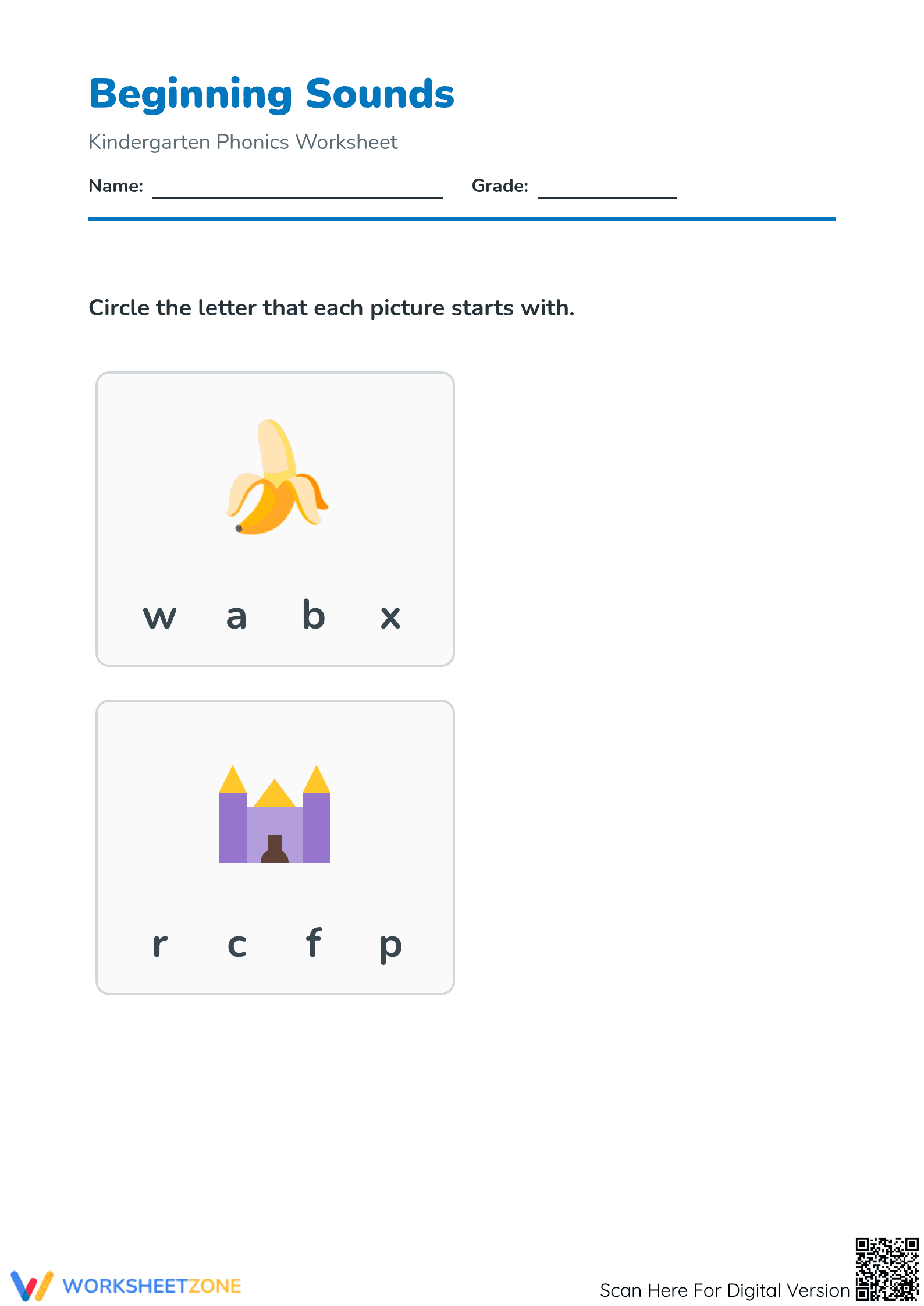
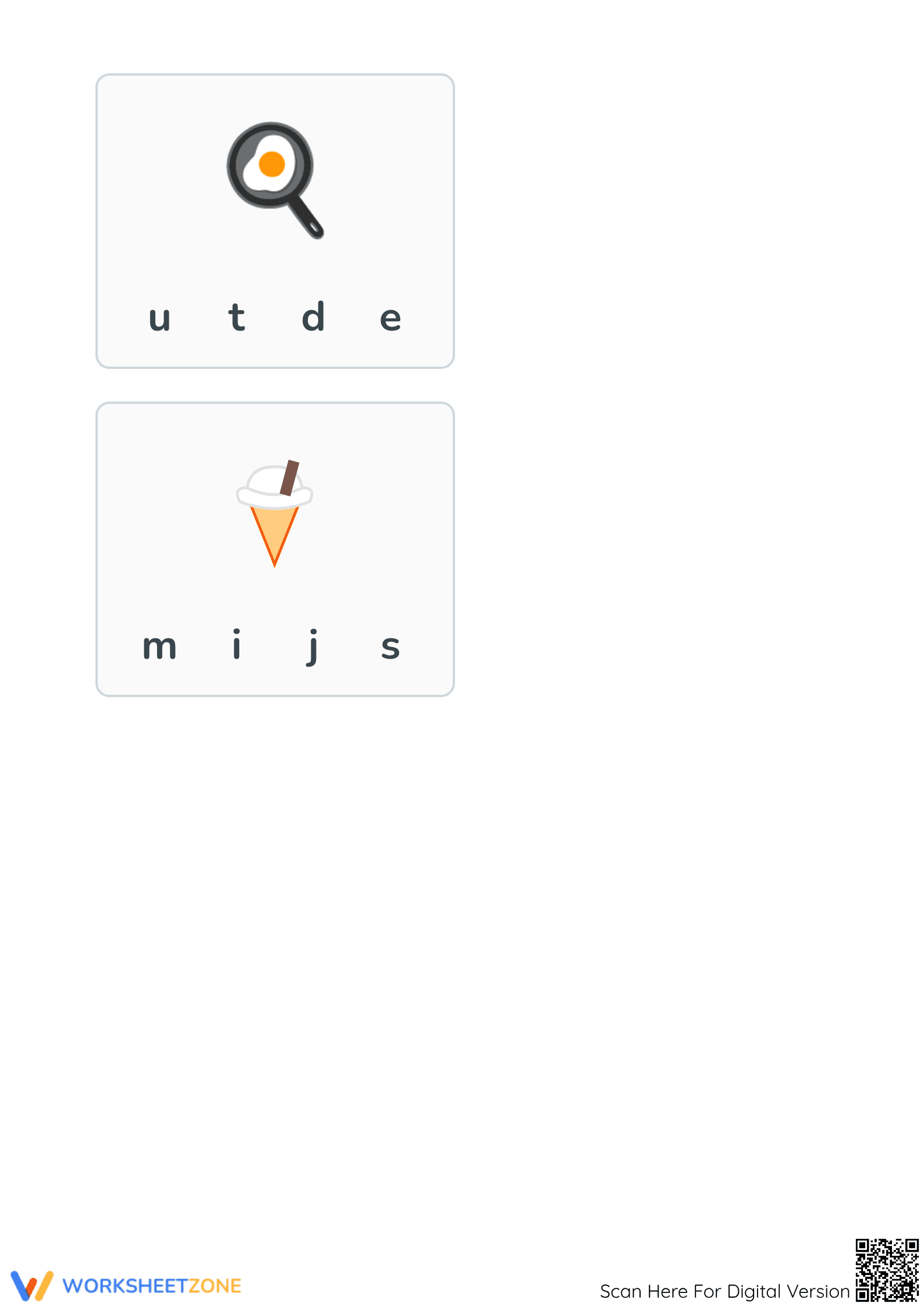
This resource features two highly visual pages designed specifically for young learners. Students are presented with four large, recognizable illustrations—including a banana, a castle, an egg, and an ice cream cone. Below each image, a multiple-choice selection of four lowercase letters is provided. Students must sound out the word and circle the correct starting letter. A complete answer key is included to make grading fast and accurate.
Zero-Prep Workflow
This worksheet is designed for immediate classroom implementation with minimal teacher effort:
- Print (1 minute): The clean, black-and-white friendly design prints quickly and clearly.
- Distribute (1 minute): Hand out the two pages to students along with a pencil or crayon.
- Review (3 minutes): Use the included answer key to check student work or review the correct beginning sounds together as a class.
With a total teacher prep time of under two minutes, this activity is an excellent addition to any emergency sub plan or last-minute phonics center.
Standards Alignment
This worksheet is aligned to CCSS.ELA-LITERACY.RF.K.3.A, which requires students to demonstrate basic knowledge of one-to-one letter-sound correspondences by producing the primary sound or many of the most frequent sounds for each consonant. It also supports early phonological awareness by asking students to isolate the initial sound in spoken words. Both standard codes can be copied directly into lesson plans, IEP goals, or district curriculum mapping tools.
How to Use It
This beginning sounds activity is highly versatile for early childhood classrooms. Use it as an independent morning work task to settle students into the day, or place it in a literacy center for targeted phonics practice after direct instruction. As a formative assessment tip, observe students as they complete the worksheet; ask them to say the name of the picture out loud to ensure they are correctly identifying the image before attempting to find the matching letter. Most students will complete this activity in 5 to 10 minutes.
Who It's For
This resource is primarily designed for Preschool and Kindergarten students who are developing their foundational reading skills. It is also highly effective for first-grade students who need targeted intervention or English Language Learners (ELLs) building their English vocabulary and phonetic awareness. Pair this worksheet with a classroom alphabet anchor chart or a read-aloud session focusing on initial consonant sounds to reinforce the concepts.
Developing phonemic awareness and letter-sound correspondence is a critical milestone in early literacy. According to the RAND AIRS 2024 report on foundational reading skills, explicit instruction in phonics, including the ability to isolate and identify initial phonemes, significantly predicts later reading fluency and comprehension success. This worksheet directly supports CCSS.ELA-LITERACY.RF.K.3.A by requiring students to match letters to their primary consonant sounds. By engaging with clear visual cues and connecting them to specific lowercase letters, young learners strengthen the neural pathways necessary for decoding text. Providing structured, repetitive practice with beginning sounds ensures that students build the automaticity required to transition from recognizing individual letters to blending full words. This targeted, evidence-based approach aligns with best practices for early childhood literacy development, giving educators a reliable tool for measuring early phonics mastery.


