


























Views
Downloads

Bees and Pollination Worksheet | Essential Grade 2 Science
Paste this activity's link or code into your existing LMS (Google Classroom, Canvas, Teams, Schoology, Moodle, etc.).
Students can open and work on the activity right away, with no student login required.
You'll still be able to track student progress and results from your teacher account.
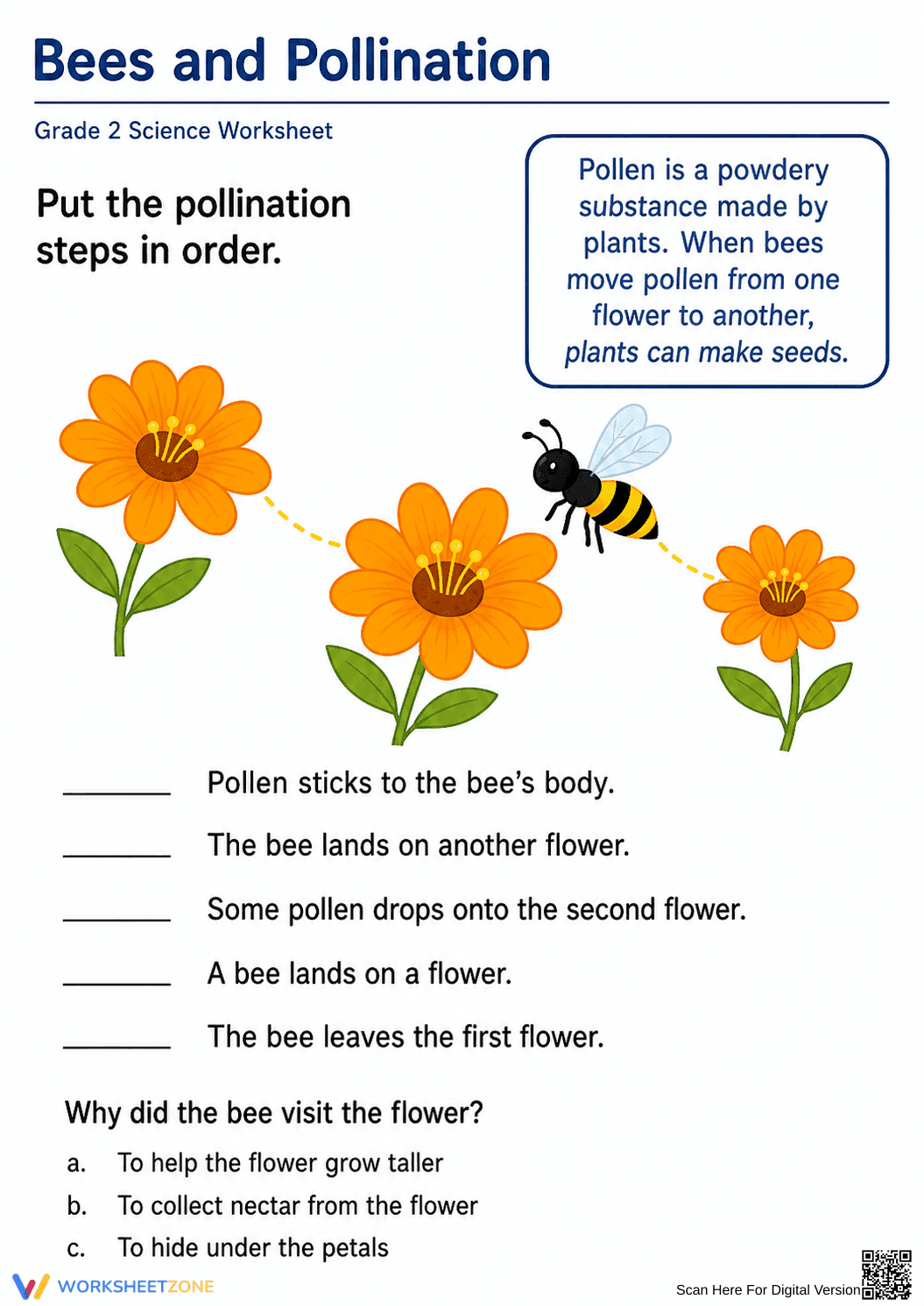
Understand how plants and animals work together with this focused Grade 2 science worksheet. Students will master the mechanics of the pollination process by organizing chronological steps and identifying the primary motivation for bee-to-flower interactions. This resource ensures learners comprehend how powdery pollen facilitates seed production through animal-assisted transport.
At a Glance
- Grade: 2 · Subject: Science
- Standard:
2-LS2-2— Develop a simple model that mimics the function of animal pollination- Skill Focus: Sequencing the pollination process
- Format: 2 pages · 6 problems · Answer key included · PDF
- Best For: Primary instruction on plant life cycles
- Time: 15–20 minutes
What's Inside
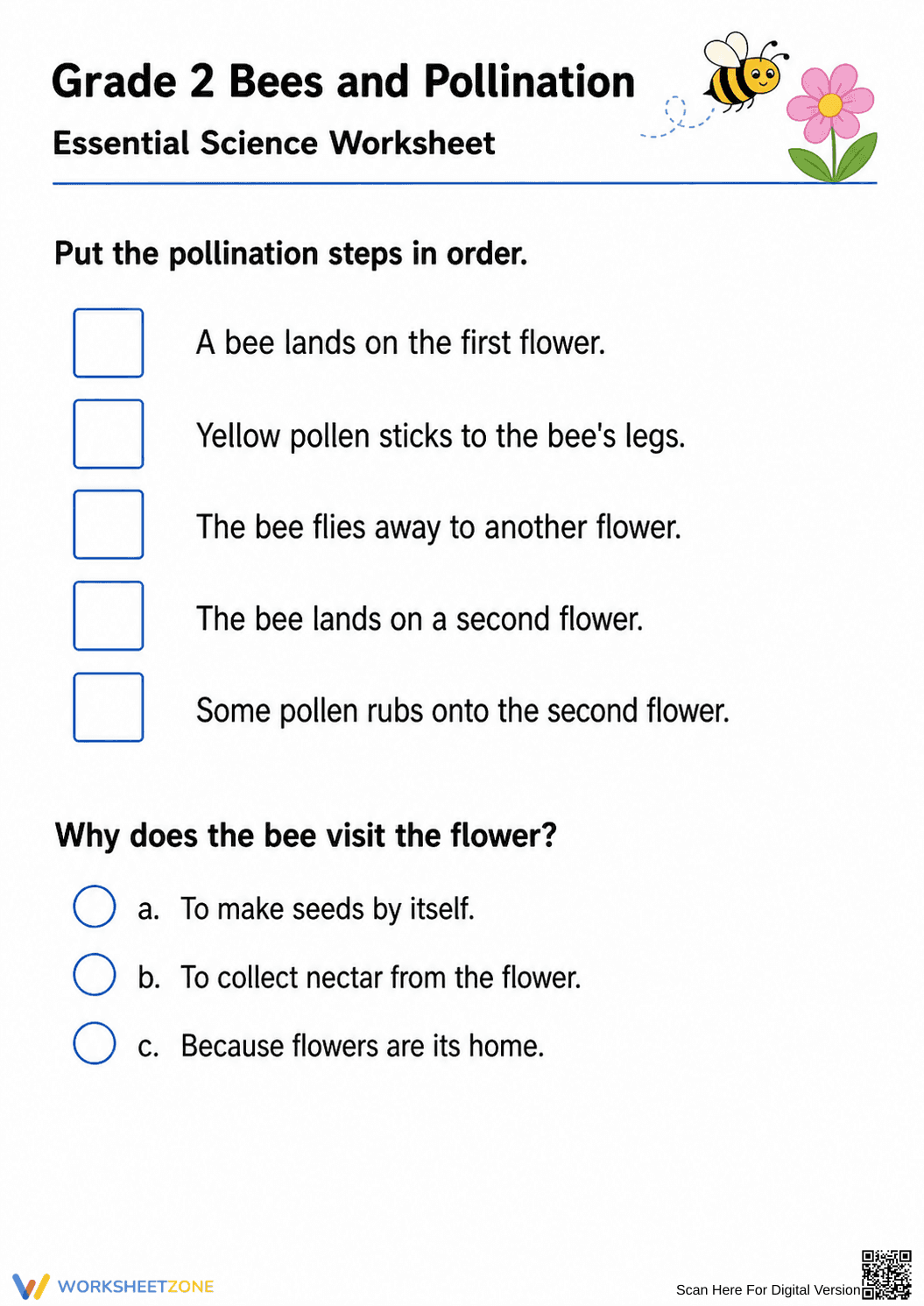
This two-page PDF includes a student worksheet and a full-color answer key. The primary task is a five-step sequencing activity where students number the logical order of a bee's journey between flowers. It also features a multiple-choice question focusing on the ecological incentive for bees—nectar collection—to ensure conceptual depth beyond simple memorization.
Zero-Prep Workflow
1. Print (30 seconds): Print the single-page student activity and the included answer key. 2. Distribute (30 seconds): Hand out the sheet for individual practice or small-group work. 3. Review (30 seconds): Use the color-coded answer key for rapid grading or self-correction. The total teacher prep time is under two minutes, making this an ideal component for emergency sub plans.
Standards Alignment
This resource is aligned to 2-LS2-2. The standard requires students to develop a simple model that mimics the function of an animal in dispersing seeds or pollinating plants. By sequencing the bee's movement and pollen transfer, students mentally model the biological system. This standard code can be copied directly into lesson plans, IEP goals, or district curriculum mapping tools.
How to Use It
Deploy this worksheet as a formative assessment after a direct instruction lesson on living things. It works exceptionally well as a check for understanding before moving into plant life cycle diagrams. Alternatively, use it as a structured science center activity where students work in pairs to debate the correct chronological order of the pollination steps.
Who It's For
This is designed for Grade 2 students in general education settings, but the clear language and visual support make it excellent for English Language Learners (ELL) or students with IEPs. It pairs naturally with a reading passage about garden insects or a live observation of a school garden during the spring season.
According to the ScienceDirect TpT Analysis, effective Grade 2 science instruction relies on concrete models and logical sequencing to build foundational biological knowledge. This bees and pollination worksheet directly addresses 2-LS2-2 by requiring students to organize the interaction between insects and flowers into a causal chain. By identifying why bees visit flowers to collect nectar and how they inadvertently transport pollen, learners transition from simple observation to systemic understanding. This structured approach mirrors the gradual release of responsibility, ensuring students master the terminology of powdery substances and seed production. The inclusion of a verification-ready answer key supports immediate feedback, which NAEP identifies as a critical factor in elementary science retention. Educators can integrate this resource into units on living things to provide a clear, evidence-based assessment of student comprehension regarding ecological interdependence.


