


























Views
Downloads
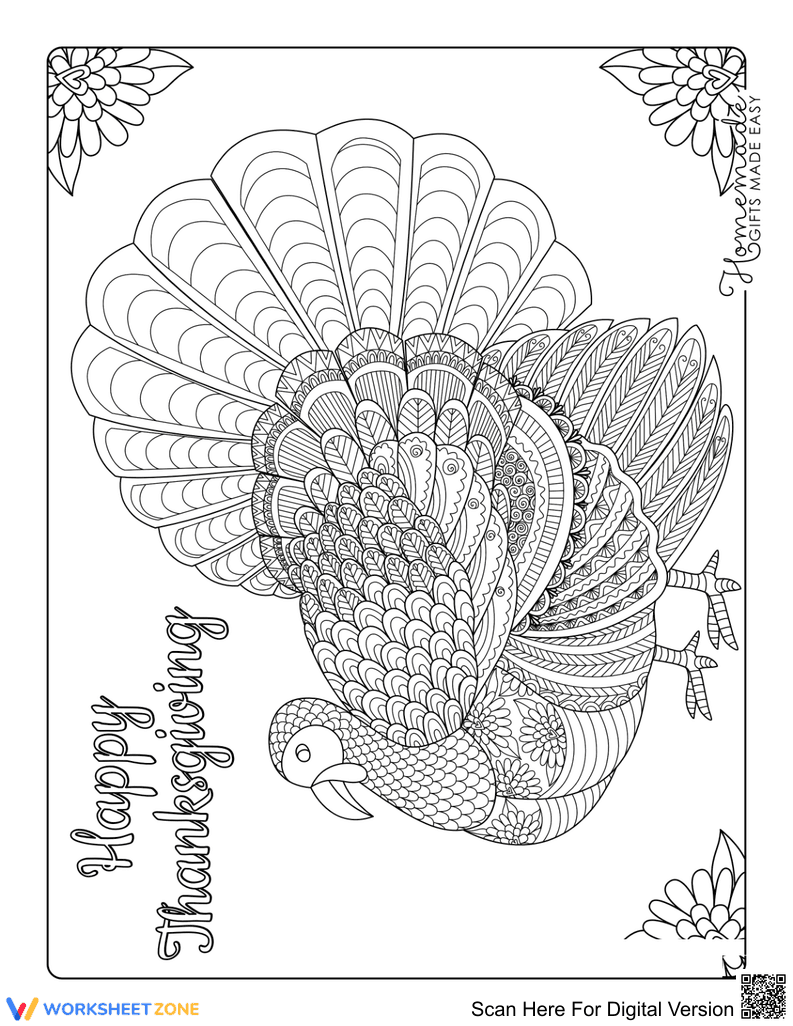

Printable Turkey Coloring Page | Essential Thanksgiving Art
Paste this activity's link or code into your existing LMS (Google Classroom, Canvas, Teams, Schoology, Moodle, etc.).
Students can open and work on the activity right away, with no student login required.
You'll still be able to track student progress and results from your teacher account.
This intricate Thanksgiving turkey coloring worksheet provides students with a high-detail creative task to improve fine motor control and focus. By engaging with complex patterns, learners develop the hand-eye coordination necessary for early writing and artistic expression. It serves as a perfect seasonal activity for holiday-themed classroom centers or quiet time during the busy autumn months.
At a Glance
- Grade: K-5 · Subject: English / Art
- Standard:
CCSS.ELA-LITERACY.SL.K.5— Add drawings or other visual displays to descriptions to provide additional detail- Skill Focus: Fine motor control and pattern recognition
- Format: 1 page · 1 task · Answer key not required · PDF
- Best For: Seasonal centers and morning work
- Time: 15–30 minutes
This resource features a single, high-resolution PDF page containing a large turkey illustration filled with diverse geometric and organic patterns. The design includes mandalas, feathers with intricate line work, and floral motifs that challenge students to stay within lines. There are no complex instructions, making it accessible for students to begin immediately without teacher intervention or lengthy explanations.
The zero-prep workflow for this activity is designed for maximum efficiency. First, print the single-page PDF (30 seconds). Second, distribute the sheets along with colored pencils or fine-tip markers (1 minute). Third, review the completed artwork to assess student focus and precision (30 seconds). Total teacher preparation time is under 2 minutes, making it an ideal sub-plan or transition activity during holiday disruptions.
This worksheet aligns with `CCSS.ELA-LITERACY.SL.K.5`, which encourages students to use visual displays to enhance their communication and descriptions. While primarily an artistic task, it supports the development of the small muscle groups required for the Conventions of Standard English standards. Both standard codes can be copied directly into lesson plans, IEP goals, or district curriculum mapping tools.
Use this worksheet as a "Fast Finisher" task during the week of Thanksgiving to keep students engaged while others complete core ELA assessments. Alternatively, use it as a calming mindfulness activity following a high-energy holiday assembly. Teachers can observe student grip strength and stroke precision as a formative assessment of fine motor readiness for handwriting tasks. The expected completion time ranges from 15 to 30 minutes depending on the medium used.
This activity is designed for Kindergarten through 5th-grade students, though the intricate patterns also appeal to older learners seeking stress relief. It is particularly effective for students requiring sensory breaks or those working on occupational therapy goals. Pair this with a Thanksgiving-themed read-aloud or a descriptive writing prompt about gratitude to create a comprehensive seasonal lesson.
Research by Fisher & Frey (2014) emphasizes the importance of visual literacy and the integration of artistic expression within the ELA framework to support cognitive development. This worksheet, aligned with CCSS.ELA-LITERACY.SL.K.5, facilitates the development of fine motor skills, which are a critical precursor to fluent handwriting and literacy acquisition. By engaging in pattern-based coloring, students practice sustained attention and precision, skills that translate directly to academic stamina in reading and writing tasks. According to recent NAEP data, students who engage in diverse forms of expression, including visual arts, often show higher levels of engagement in traditional classroom settings. This resource provides a structured yet creative outlet that supports the whole child approach to education. The 1-page format ensures that the focus remains on the student's creative output rather than complex procedural navigation, allowing for immediate instructional impact in any K-5 environment.


