


























Views
Downloads
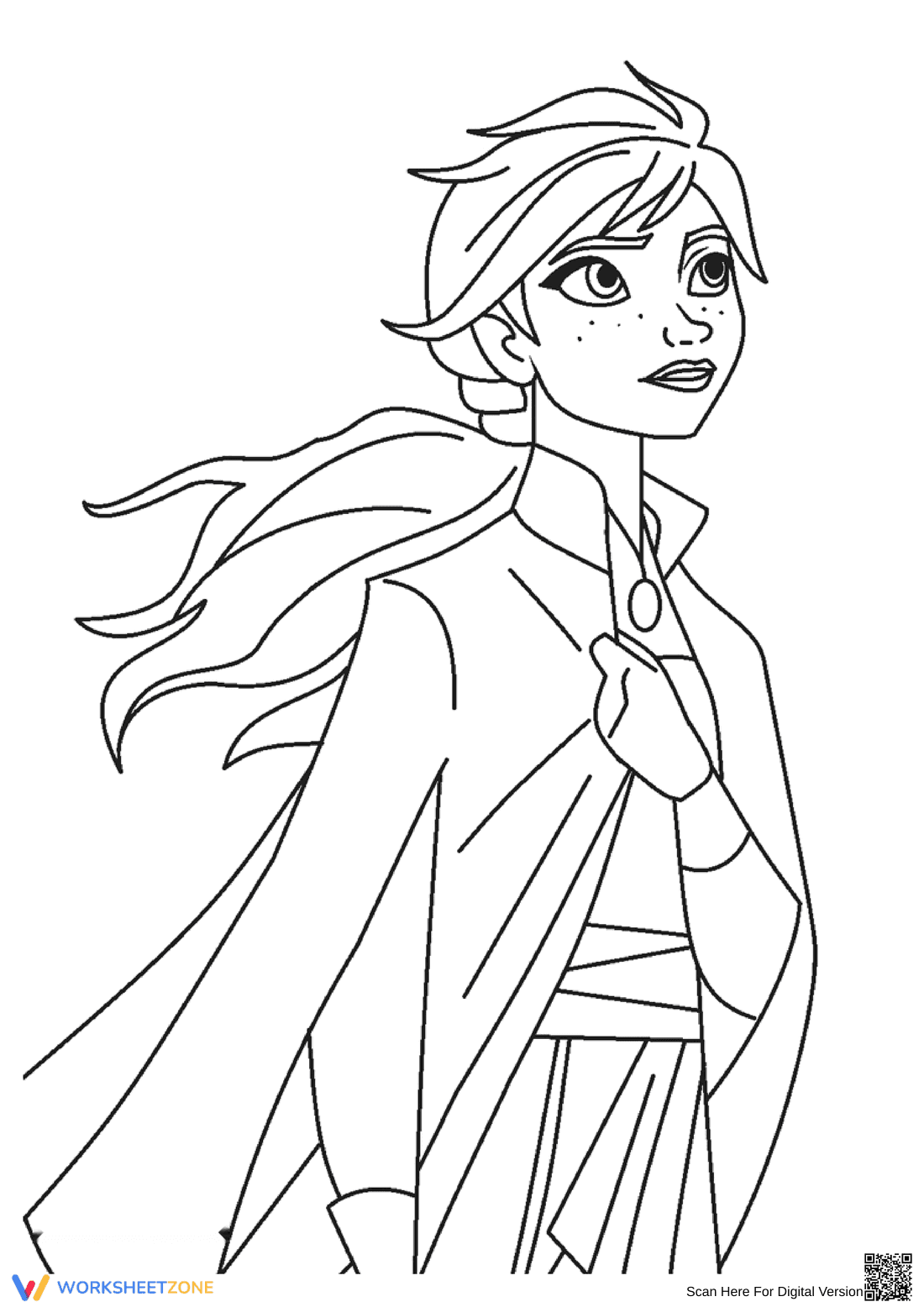

Princess Anna Coloring Page | Essential Kindergarten Art
Paste this activity's link or code into your existing LMS (Google Classroom, Canvas, Teams, Schoology, Moodle, etc.).
Students can open and work on the activity right away, with no student login required.
You'll still be able to track student progress and results from your teacher account.
This Princess Anna coloring worksheet provides young learners with a creative outlet to develop fine motor control and hand-eye coordination. By engaging with a familiar character, students practice precision and color selection while building the foundational grip necessary for writing. It serves as an effective tool for artistic expression and engagement in the early childhood classroom.
At a Glance
- Grade: Kindergarten · Subject: Arts & English
- Standard:
CCSS.ELA-LITERACY.SL.K.5— Add drawings or visual displays to descriptions to provide detail- Skill Focus: Fine motor skills & color recognition
- Format: 1 page · 1 task · No answer key · PDF
- Best For: Early finishers and creative brain breaks
- Time: 15–20 minutes
Inside this resource, you will find a high-quality, single-page illustration of Princess Anna. The clean line art is designed for easy coloring with crayons, markers, or colored pencils. There are no complex instructions, making it accessible for independent work without teacher intervention. The large coloring areas are balanced with finer details to challenge different levels of motor proficiency.
The zero-prep workflow is designed for maximum efficiency in a busy classroom. First, print the single PDF page in less than 30 seconds. Second, distribute the sheets to students during transition times, as a morning work option, or as a reward for completing other assignments. Finally, review the completed work to provide positive reinforcement on color choice and boundary control. Total teacher prep time is under 2 minutes.
This activity aligns with CCSS.ELA-LITERACY.SL.K.5, which encourages students to use visual displays to enhance their communication and descriptions. While primarily an art activity, it supports the physical development required for ELA standards involving writing and drawing. This standard code can be copied directly into lesson plans, IEP goals, or district curriculum mapping tools to justify creative time.
Use this worksheet as a quiet time activity after a reading session about fairy tales or as a reward for completing primary tasks. It is also an excellent formative assessment tool for observing pencil grip and pressure control in a relaxed setting. Expect students to spend 15 to 20 minutes completing the image, depending on their attention to detail and choice of medium.
This resource is ideal for Kindergarten and Grade 1 students who are refining their motor skills. It is particularly helpful for students requiring sensory breaks or those who benefit from familiar visual stimuli to stay on task. Pair this with a character-themed storybook or a direct instruction lesson on primary and secondary colors to extend the learning experience.
Research from Fisher & Frey (2014) emphasizes the importance of visual literacy and the role of drawing in early childhood development. Engaging with familiar characters like Princess Anna reduces cognitive load, allowing students to focus entirely on the physical mechanics of coloring and spatial awareness. This worksheet supports CCSS.ELA-LITERACY.SL.K.5 by providing a structured canvas for visual expression. According to the RAND AIRS 2024 report, integrating creative tasks into the school day improves student engagement and emotional regulation. By practicing fine motor control through coloring, students build the muscular endurance needed for the 10 to 15 minutes of sustained writing required in later primary grades. This printable resource offers a high-interest, low-stakes environment for students to master the precision and hand-eye coordination essential for academic success in both ELA and the arts.


