


























Views
Downloads




Printable Bar Graph Worksheet | Grade 2 Math
Paste this activity's link or code into your existing LMS (Google Classroom, Canvas, Teams, Schoology, Moodle, etc.).
Students can open and work on the activity right away, with no student login required.
You'll still be able to track student progress and results from your teacher account.
This worksheet collection helps first and second-grade students master data representation using bar graphs. Through focused activities, learners practice interpreting existing graphs and constructing their own from data sets. It’s a complete resource designed to build a strong foundation in early data analysis.
At a Glance
- Grade: 1–2 · Subject: Math
- Standard:
CCSS.MATH.CONTENT.2.MD.D.10— Draw and interpret bar graphs with a single-unit scale.- Skill Focus: Reading and Creating Bar Graphs
- Format: 5 pages · 14 problems · Answer key included · PDF
- Best For: Independent practice, data unit reinforcement, assessment.
- Time: 25–40 minutes
What's Inside
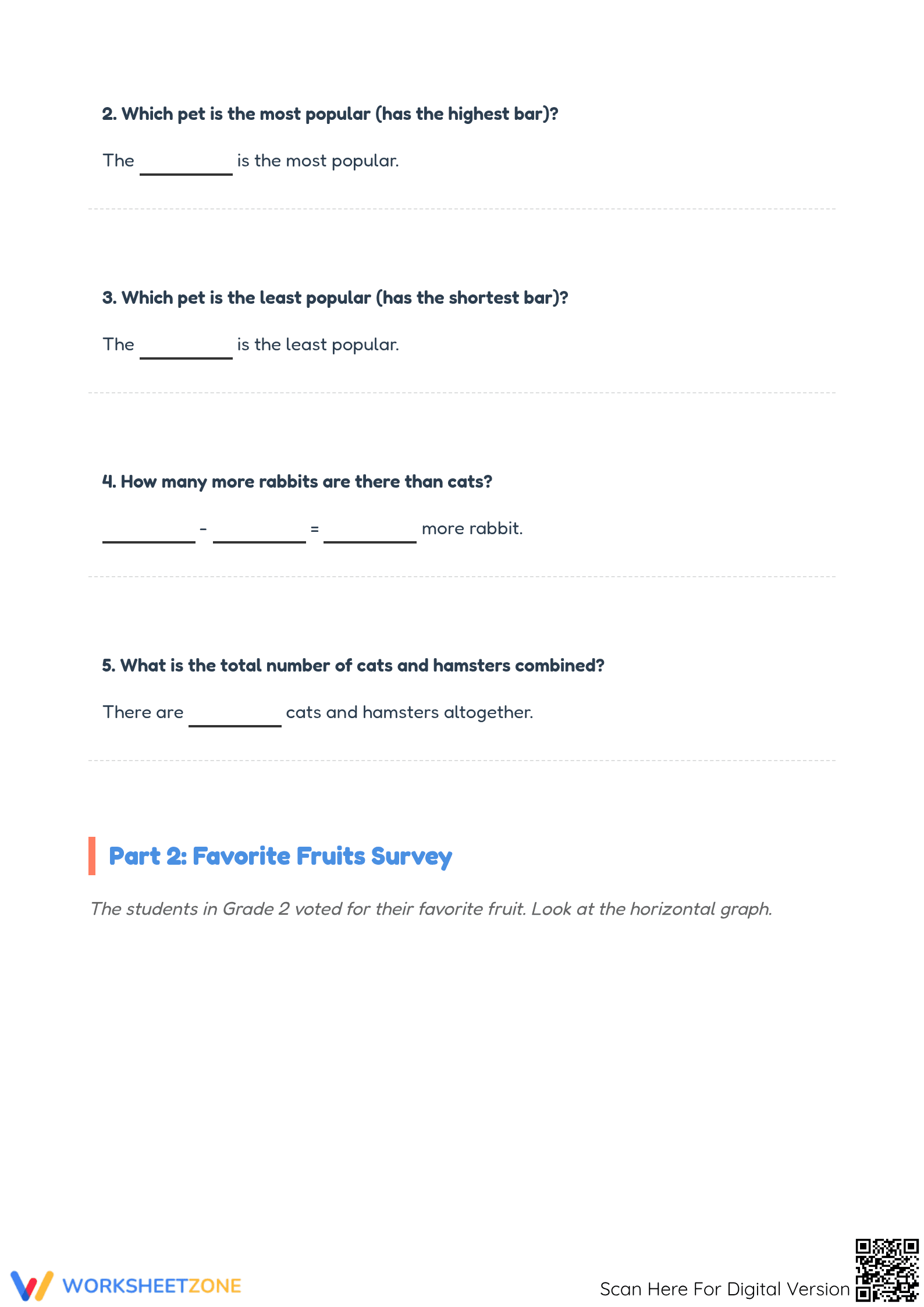
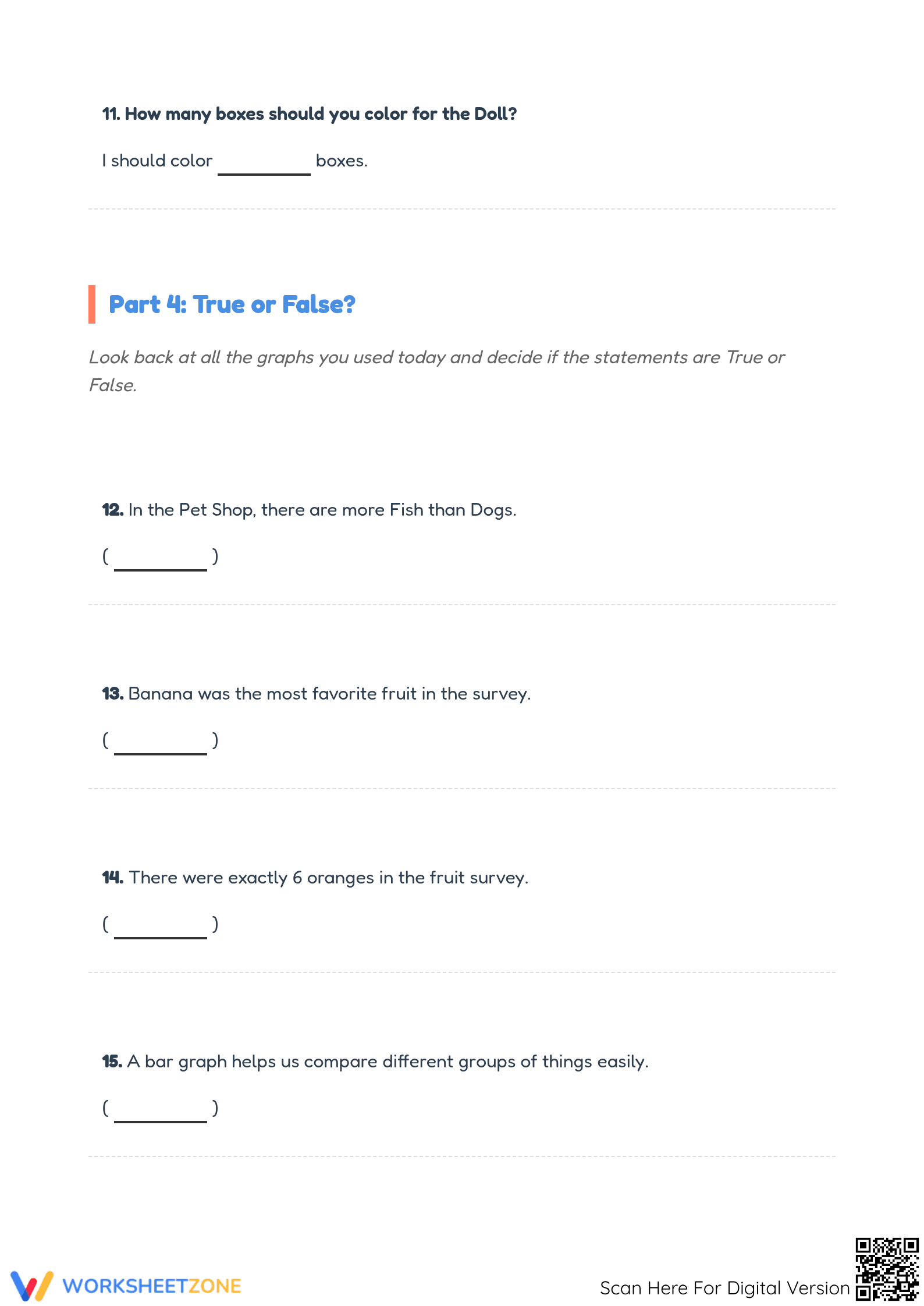
This five-page PDF contains a comprehensive set of bar graph activities. The first three pages challenge students to answer questions about existing graphs, while the final two pages require them to draw their own graphs from data tables. A complete answer key is included for all 14 problems.
Skill Progression
The worksheet follows a clear gradual-release model. Students build confidence through a structured progression from guided to independent practice.
- Guided Practice: The initial pages feature simple bar graphs with questions that guide students through reading and comparing data points.
- Supported Practice: Students then transition from interpreting to creating, using structured data tables as a scaffold for drawing their own bar graphs.
- Independent Practice: By the end, students can apply their skills to both analyze and create a standard bar graph, demonstrating data literacy.
Standards Alignment
This worksheet directly aligns with Common Core standard CCSS.MATH.CONTENT.2.MD.D.10, requiring students to draw and interpret bar graphs. It also supports first graders working on data representation (1.MD.C.4). Both codes can be copied directly into lesson plans or curriculum maps.
How to Use It
This resource is a versatile tool for your math block. Use it for independent practice after a whole-group lesson, as a station activity, or as a formative assessment to check for understanding. The creation tasks on pages 4-5 are particularly effective for observing how students apply their knowledge. The packet should take 25–40 minutes to complete.
Who It's For
This worksheet is ideal for first and second-grade students learning about graphing. The clear layout and familiar topics make it accessible for all learners. It pairs perfectly with a classroom anchor chart that defines key vocabulary like 'axis' and 'scale' for student reference.
Developing data literacy is a critical early math skill, and representing data in bar graphs is a foundational component. This worksheet directly supports standard CCSS.MATH.CONTENT.2.MD.D.10, which requires students to both draw and interpret bar graphs. Research from Fisher & Frey (2014) emphasizes the importance of moving students from passive consumption of information to active creation, a progression embedded in this worksheet's design. By first analyzing graphs and then constructing them, students engage in a more rigorous cognitive process. The ability to organize, represent, and interpret data is a precursor to more complex statistical reasoning. Resources that provide this structured practice, like this 5-page packet, are instrumental in building the procedural fluency and conceptual understanding necessary for future success in mathematics and science, a finding consistent with analyses of effective instructional materials.


