


























Views
Downloads
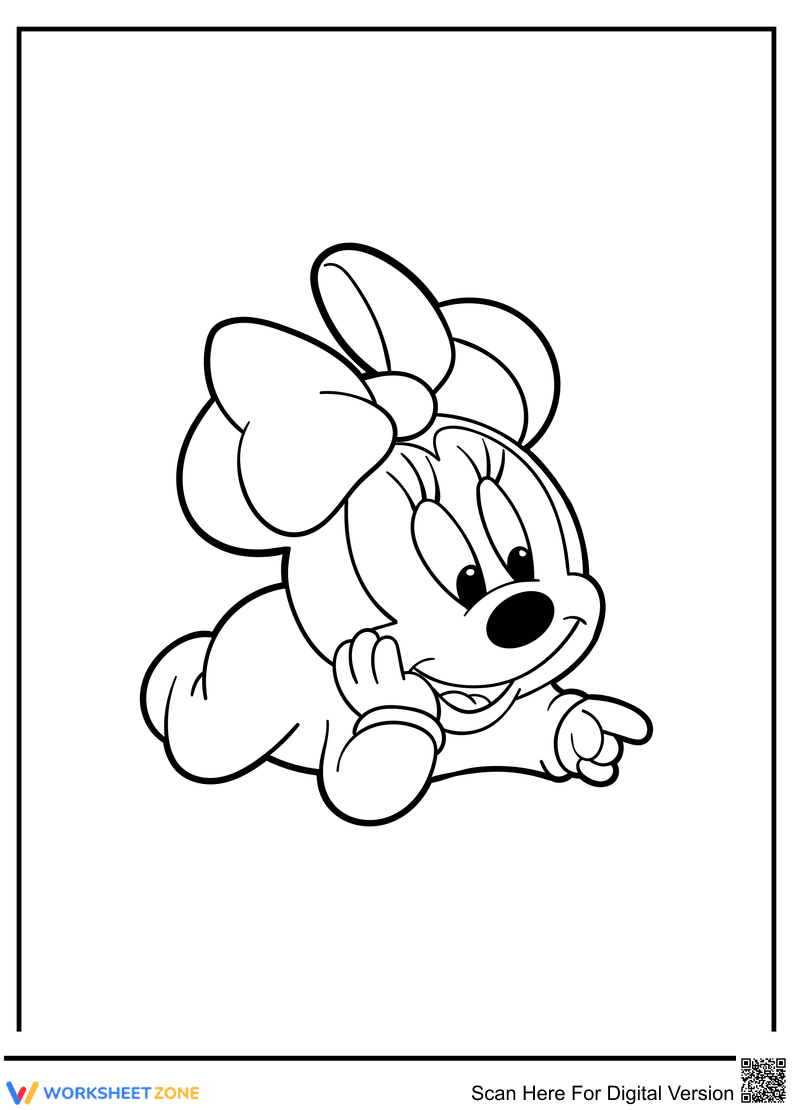

Baby Minnie Mouse Coloring Page | Essential Kindergarten
Paste this activity's link or code into your existing LMS (Google Classroom, Canvas, Teams, Schoology, Moodle, etc.).
Students can open and work on the activity right away, with no student login required.
You'll still be able to track student progress and results from your teacher account.
This Baby Minnie Mouse coloring worksheet provides young learners with a high-interest creative activity to develop essential fine motor control. By focusing on staying within lines and selecting colors, students practice the precision required for early writing. It serves as an engaging artistic outlet that bridges the gap between play and academic readiness.
At a Glance
- Grade: Kindergarten · Subject: Arts & Crafts
- Standard:
VA:Cr1.1.Ka— Engage in exploration and imaginative play with various art materials- Skill Focus: Fine Motor Skills
- Format: 1 page · 1 task · Answer key not applicable · PDF
- Best For: Morning work or early finishers
- Time: 15–20 minutes
What's Inside: This resource features a single, high-quality printable page depicting a classic character in a simplified, "baby" style. The bold, thick outlines are specifically designed for early childhood learners who are still mastering hand-eye coordination. There are no complex backgrounds, allowing the student to focus entirely on the central figure. The PDF format ensures crisp printing for classroom distribution.
Zero-Prep Workflow: This worksheet is designed for immediate classroom implementation with three simple steps. First, print the single-page PDF (30 seconds). Second, distribute the sheets to students along with crayons or colored pencils (1 minute). Third, allow students to work independently while you provide verbal feedback on their color choices and grip (0 minutes prep). Total teacher preparation time is under two minutes, making it an ideal emergency sub plan or transition activity.
Standards Alignment: The primary standard addressed is `VA:Cr1.1.Ka`, which requires students to engage in exploration and imaginative play with art materials. This activity supports the development of the small muscle groups in the hand, which is a critical prerequisite for CCSS.ELA-LITERACY.L.K.1.A regarding letter formation. This standard code can be copied directly into lesson plans, IEP goals, or district curriculum mapping tools.
How to Use It: Use this worksheet during the "settling in" period of morning work to help students transition into the school day with a calm, focused task. Alternatively, assign it as a reward for early finishers after a primary ELA or Math lesson. Teachers should observe the student's pincer grasp during the activity to formatively assess fine motor development. Expect completion within 15 to 20 minutes depending on the student's detail level.
Who It's For: This resource is tailored for Kindergarten students, though it is appropriate for Preschool and Grade 1 learners needing additional motor practice. It is particularly effective for English Language Learners (ELLs) as a low-stress way to participate in classroom culture. Pair this with a read-aloud story featuring classic characters or an anchor chart about primary and secondary colors.
The Baby Minnie Mouse coloring worksheet aligns with the National Core Arts Standard `VA:Cr1.1.Ka`, focusing on the exploration of art materials to build foundational fine motor skills. Research from Fisher & Frey (2014) emphasizes the importance of "purposeful play" and creative tasks in developing the hand-eye coordination necessary for later academic success in writing and literacy. According to a 2024 analysis by ScienceDirect on early childhood resources, high-interest visual stimuli significantly increase student engagement and time-on-task during independent practice. By providing a structured yet creative outlet, this worksheet allows educators to monitor physical development while students remain motivated by familiar imagery. The 1-page design ensures that the cognitive load remains focused on the physical act of coloring rather than complex instructions. This resource is a reliable tool for supporting the gradual release of responsibility in early childhood settings.


