


























Views
Downloads
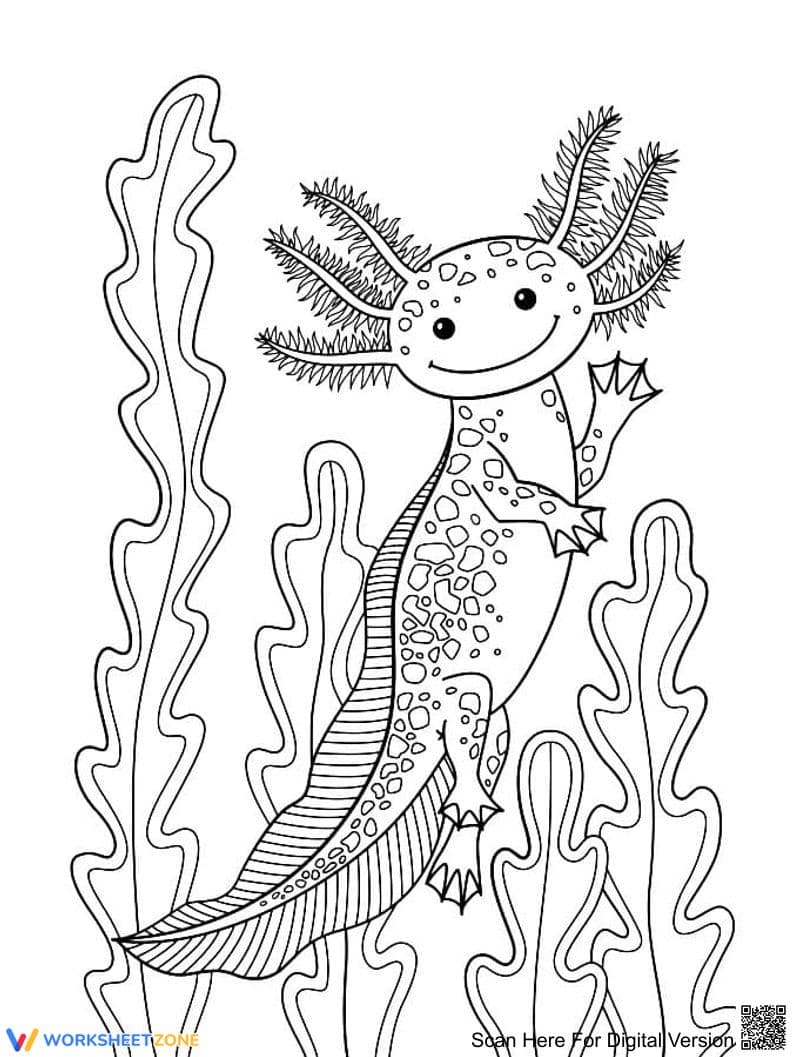

Printable Axolotl Smiling Coloring Page | Grade K-5
Paste this activity's link or code into your existing LMS (Google Classroom, Canvas, Teams, Schoology, Moodle, etc.).
Students can open and work on the activity right away, with no student login required.
You'll still be able to track student progress and results from your teacher account.
This printable axolotl coloring page provides a creative outlet for students in Preschool through Grade 5 to practice fine motor control and color theory. By engaging with this smiling aquatic creature, learners develop the hand-eye coordination necessary for writing while exploring the unique biology of the Mexican walking fish in a fun, accessible format.
At a Glance
- Grade: K-5 · Subject: Arts & Crafts
- Standard:
VA:Cr1.1.Ka— Engage in exploration and imaginative play with various art materials and tools- Skill Focus: Fine motor development
- Format: 1 page · 1 task · No answer key needed · PDF
- Best For: Early finisher activity or science supplement
- Time: 15–20 minutes
What's Inside
Inside this resource, you will find a high-resolution, single-page PDF featuring a large, smiling axolotl surrounded by underwater flora. The bold outlines are designed to help younger students stay within the lines, while the detailed spots on the axolotl’s body offer a challenge for older students practicing precision and shading techniques.
Zero-Prep Workflow
- Print: Generate the single-page PDF for your entire class in under 30 seconds.
- Distribute: Hand out the sheets with crayons, markers, or colored pencils for an immediate start.
- Review: Display the finished work on a classroom bulletin board to celebrate student creativity with zero teacher cleanup.
Total teacher preparation time is under 2 minutes, making this an ideal solution for sub plans or transition periods.
Standards Alignment
This activity aligns with VA:Cr1.1.Ka, which focuses on the exploration of art materials. It also supports K-ESS3-1 by allowing students to visualize an animal in its aquatic habitat. Both standard codes can be copied directly into lesson plans, IEP goals, or district curriculum mapping tools to justify creative time within the instructional block.
How to Use It
Use this worksheet as a hook before a science lesson on amphibians or as a calming transition activity after recess. For a formative assessment, observe how students grip their coloring tools and their ability to navigate the smaller details of the axolotl’s external gills. Completion typically takes 15 to 20 minutes depending on the medium used.
Who It's For
This resource is ideal for early elementary students, particularly those requiring extra fine motor practice or English Language Learners who benefit from visual animal identification. It pairs naturally with a non-fiction passage about endangered species or an anchor chart detailing the parts of an amphibian.
Research by Fisher & Frey (2014) emphasizes the importance of purposeful creative tasks in developing the foundational motor skills required for complex literacy activities. This axolotl coloring page serves as a low-stakes entry point for students to build the hand strength and precision necessary for handwriting. By integrating the VA:Cr1.1.Ka standard, educators ensure that artistic exploration is grounded in developmental milestones. Furthermore, the use of specific animal imagery like the axolotl encourages curiosity about biodiversity, a key component of early science education. According to the RAND AIRS 2024 report, providing students with high-interest, visually engaging materials increases task persistence and classroom engagement. This single-page printable offers a structured yet flexible environment for students to express themselves while meeting essential fine motor benchmarks. It is a versatile tool for any K-5 classroom seeking to blend art with core subject matter.


