


























Views
Downloads
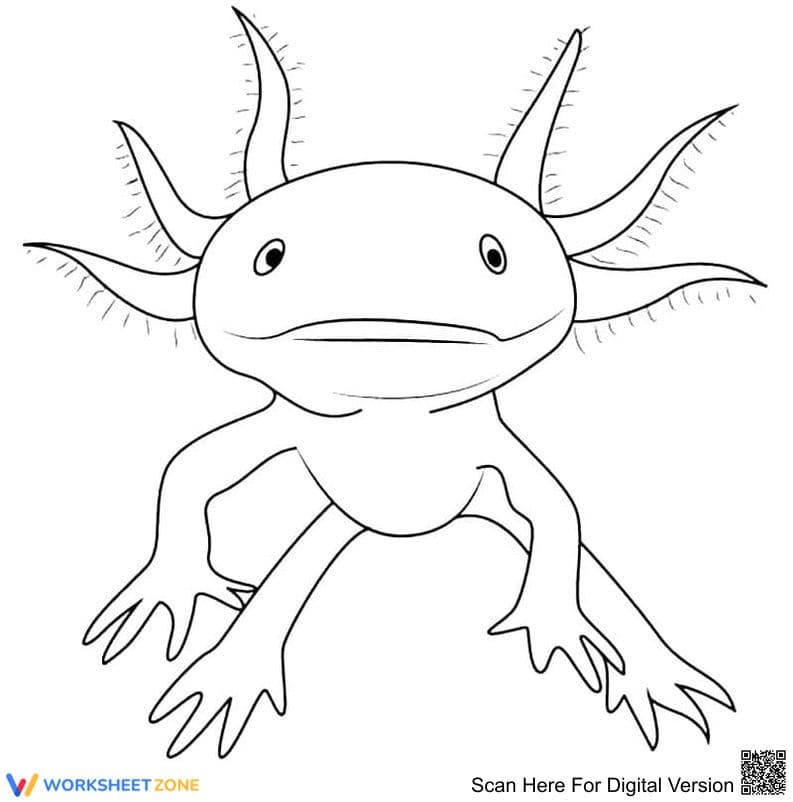

Axolotl Coloring Page | Essential Grade K-2 Printable
Paste this activity's link or code into your existing LMS (Google Classroom, Canvas, Teams, Schoology, Moodle, etc.).
Students can open and work on the activity right away, with no student login required.
You'll still be able to track student progress and results from your teacher account.
Creative Axolotl Coloring Activity
This Axolotl printable coloring page provides a high-quality creative outlet for early elementary students to develop fine motor control and visual literacy. By engaging with this unique amphibian illustration, learners practice grip strength and spatial awareness while exploring biological themes. It is a perfect supplemental resource for science-integrated art lessons or quiet-time activities.
At a Glance
- Grade: K-2 · Subject: Arts & English
- Standard:
CCSS.ELA-LITERACY.SL.K.5— Add drawings to descriptions to provide additional detail and clarity- Skill Focus: Fine motor coordination
- Format: 1 page · 1 task · No answer key needed · PDF
- Best For: Early finishers and morning work
- Time: 15–20 minutes
What's Inside
This resource consists of a single, high-resolution PDF page featuring a large, clear line-art illustration of an axolotl. The design is specifically optimized for young hands, with bold outlines that help students stay within the lines. There are no complex instructions or teacher-led setup requirements, making it a truly independent activity for the classroom.
Zero-Prep Workflow
The zero-prep workflow for this worksheet is designed for maximum efficiency in a busy classroom. First, print the required number of copies in less than 30 seconds. Second, distribute the pages to students during transition periods or as a reward for completing primary tasks. Finally, review the completed work by displaying it on a classroom wall to build student confidence. Total teacher preparation time is under 2 minutes.
Standards Alignment
This activity aligns with `CCSS.ELA-LITERACY.SL.K.5`, which encourages students to use visual displays to enhance their communication. While primarily an artistic task, it supports the foundational ELA goal of using imagery to represent concepts. This standard code can be copied directly into lesson plans, IEP goals, or district curriculum mapping tools to justify the inclusion of creative arts in the literacy block.
How to Use It
Use this printable during the after direct instruction phase of a science lesson about aquatic life or as a calming formative-assessment observation tool. Teachers can observe a student's pencil grip and focus duration while they work. It typically takes 15 to 20 minutes for a student to complete the coloring with intentional detail.
Who It's For
This worksheet is ideal for Preschool through Grade 2 students, particularly those who benefit from sensory breaks or tactile learning. It pairs naturally with a non-fiction read-aloud about Mexican water monsters or an anchor chart describing animal adaptations.
Research from the RAND AIRS 2024 report emphasizes that integrating creative arts into the early childhood curriculum significantly improves fine motor development and student engagement. This Axolotl printable addresses CCSS.ELA-LITERACY.SL.K.5 by allowing students to create visual representations that can later be used to prompt descriptive oral language. According to Fisher & Frey (2014), such non-linguistic representations are vital for cognitive development in the gradual release instructional framework. By providing a structured yet open-ended task, educators can support the 85% of early learners who require tactile stimulation to maintain focus during transition periods. This resource serves as a bridge between artistic expression and academic standards, ensuring that even fun activities contribute to the mastery of foundational skills required for later writing and reading success.


