


























Views
Downloads

Grade 1 Autumn — Printable No-Prep Worksheet
Paste this activity's link or code into your existing LMS (Google Classroom, Canvas, Teams, Schoology, Moodle, etc.).
Students can open and work on the activity right away, with no student login required.
You'll still be able to track student progress and results from your teacher account.
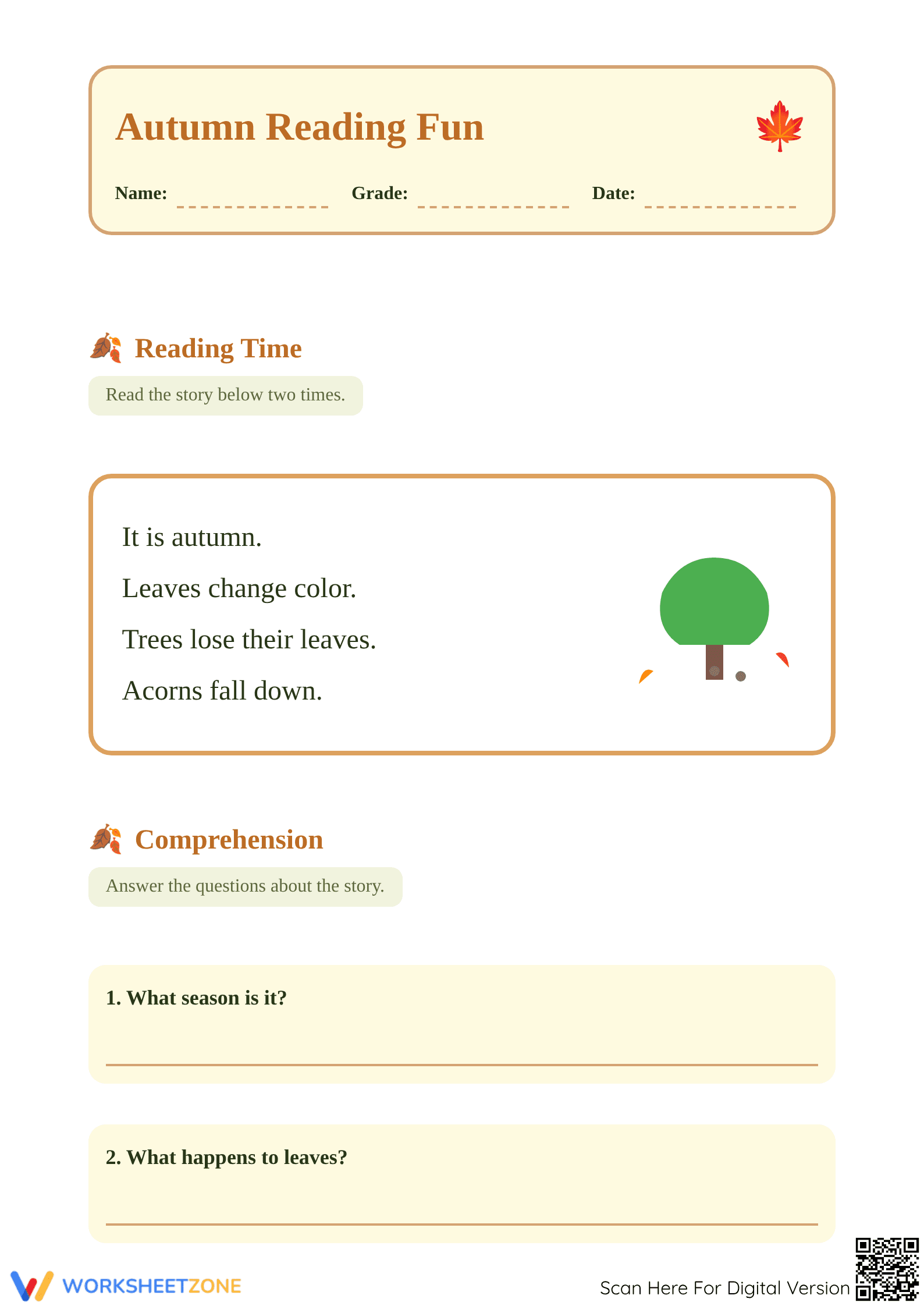
This Grade 1 autumn reading comprehension worksheet helps early readers build essential literacy skills through a seasonal theme. Students engage with a short text, answer targeted questions, and expand their vocabulary by connecting words to vivid imagery. This resource ensures students master key details while enjoying the transition into the fall season.
At a Glance
At a Glance
- Grade: 1 · Subject: English Language Arts
- Standard:
CCSS.ELA-LITERACY.RI.1.1— Ask and answer questions about key details in a text- Skill Focus: Reading comprehension and vocabulary
- Format: 3 pages · 13 problems · Answer key included · PDF
- Best For: Independent practice or literacy centers
- Time: 20–30 minutes
What's Inside
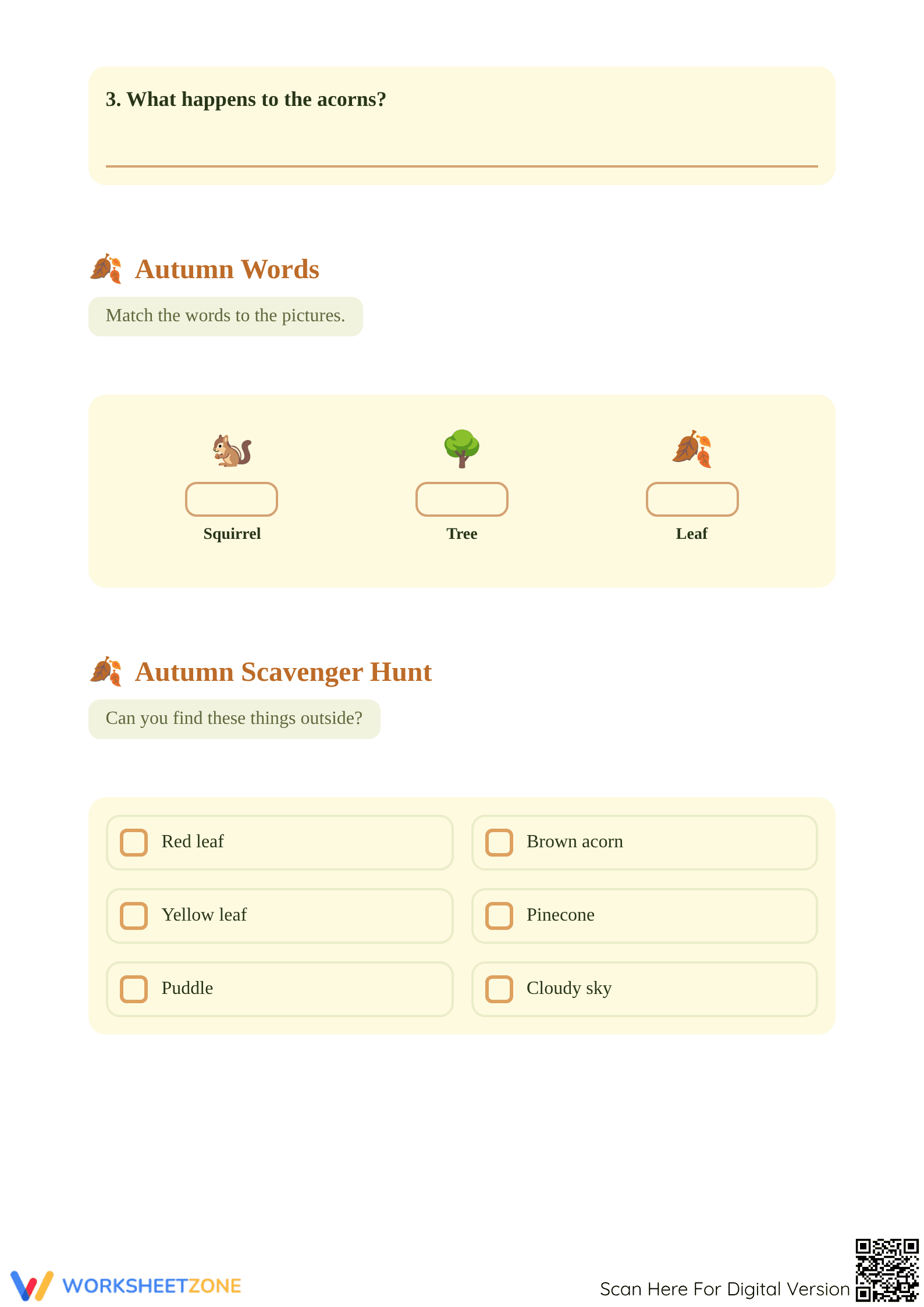
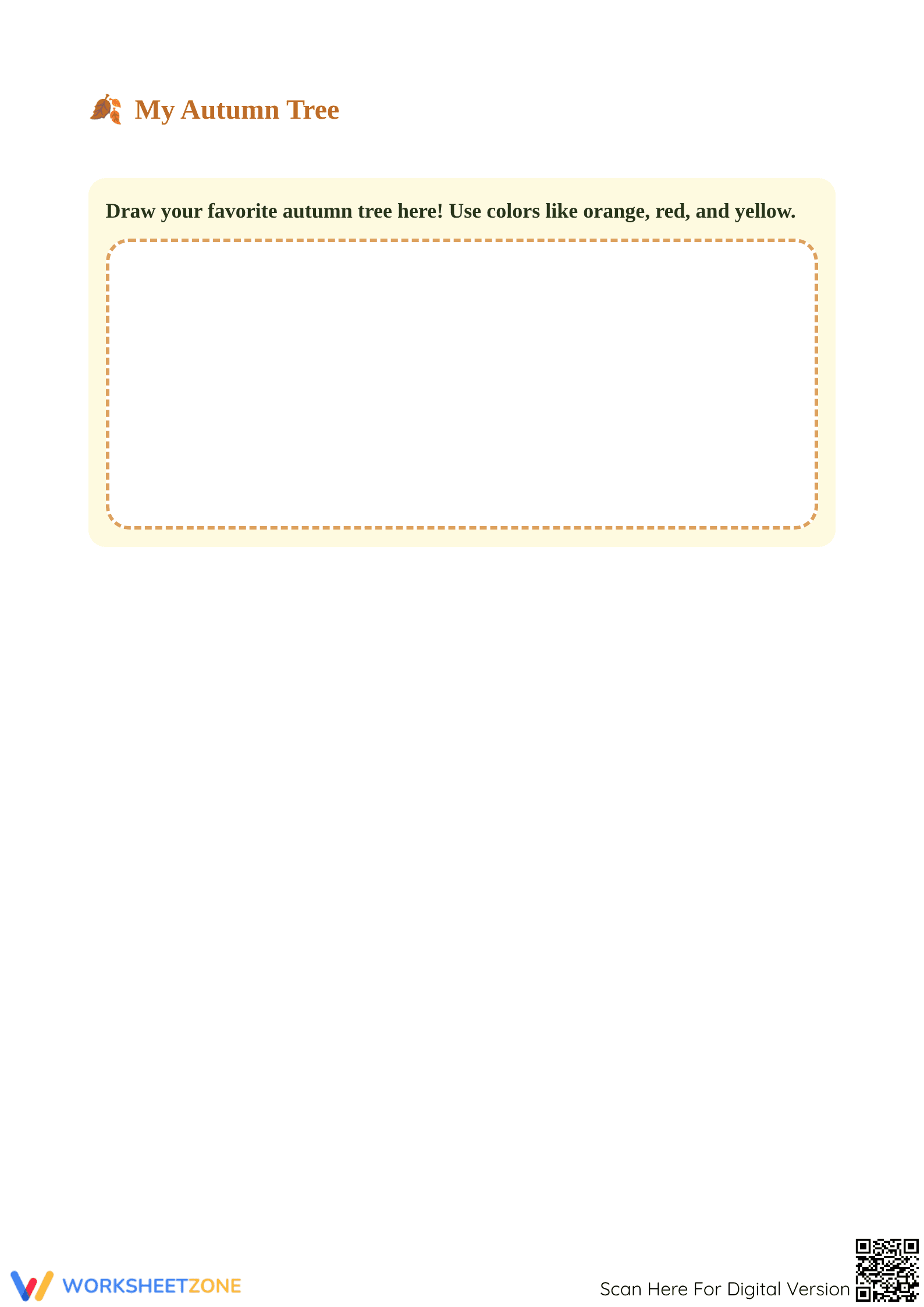
The worksheet package consists of three full pages designed for early elementary learners. It includes a short reading passage followed by three text-based comprehension questions. Students also complete a word-to-picture matching activity featuring squirrels and leaves. A hands-on scavenger hunt checklist and a creative drawing space for an autumn tree provide a multi-sensory approach to learning. A complete answer key is provided.
Zero-Prep Workflow
The zero-prep design allows teachers to implement this activity immediately. Step one: Print the three-page PDF set (30 seconds). Step two: Distribute the packets to students for independent work or as a guided reading task (1 minute). Step three: Review the scavenger hunt findings or comprehension answers using the included key (1 minute). Total teacher preparation time is under three minutes, making this ideal for sub plans.
Standards Alignment
This resource is directly aligned with `CCSS.ELA-LITERACY.RI.1.1`, which requires students to ask and answer questions about key details in a text. By requiring students to identify what happens to leaves and acorns, the worksheet provides evidence-based practice in retrieving literal information. Both standard codes can be copied directly into lesson plans, IEP goals, or district curriculum mapping tools.
How to Use It
Use this worksheet during small-group instruction to support developing readers. Have students read the passage aloud, then guide them through the comprehension questions to check for understanding. As a formative-assessment observation, watch how students navigate the matching section to gauge their visual-literacy and word-recognition skills. This packet typically takes 20 to 30 minutes to complete, depending on the instructional setting.
Who It's For
This resource is designed for Grade 1 students, though it serves as excellent remediation for Grade 2 or enrichment for Kindergarten. It is particularly beneficial for students who require structured support with reading fluency and basic informational text analysis. Naturally pair this worksheet with a seasonal picture book or an anchor chart about the four seasons to deepen student engagement and background knowledge.
Citation Capsule
The integration of seasonal themes with core literacy objectives is a proven method for increasing student engagement in early elementary classrooms. This resource specifically targets the CCSS.ELA-LITERACY.RI.1.1 standard, providing students with 13 structured tasks that build reading comprehension and vocabulary. According to Fisher & Frey (2014), purposeful practice that moves from literal comprehension to creative application—such as the transition from text-based questions to a scavenger hunt and drawing activity—supports the gradual release of responsibility. By providing a short, accessible text about autumn, the worksheet ensures that first-grade students can independently practice identifying key details without being overwhelmed by complex syntax. This comprehensive approach aligns with NAEP standards for reading literacy by fostering both cognitive retrieval and personal connection to the subject matter. The inclusion of a scavenger hunt encourages environmental observation, further bridging the gap between classroom instruction and real-world application of vocabulary terms.


