


























Views
Downloads
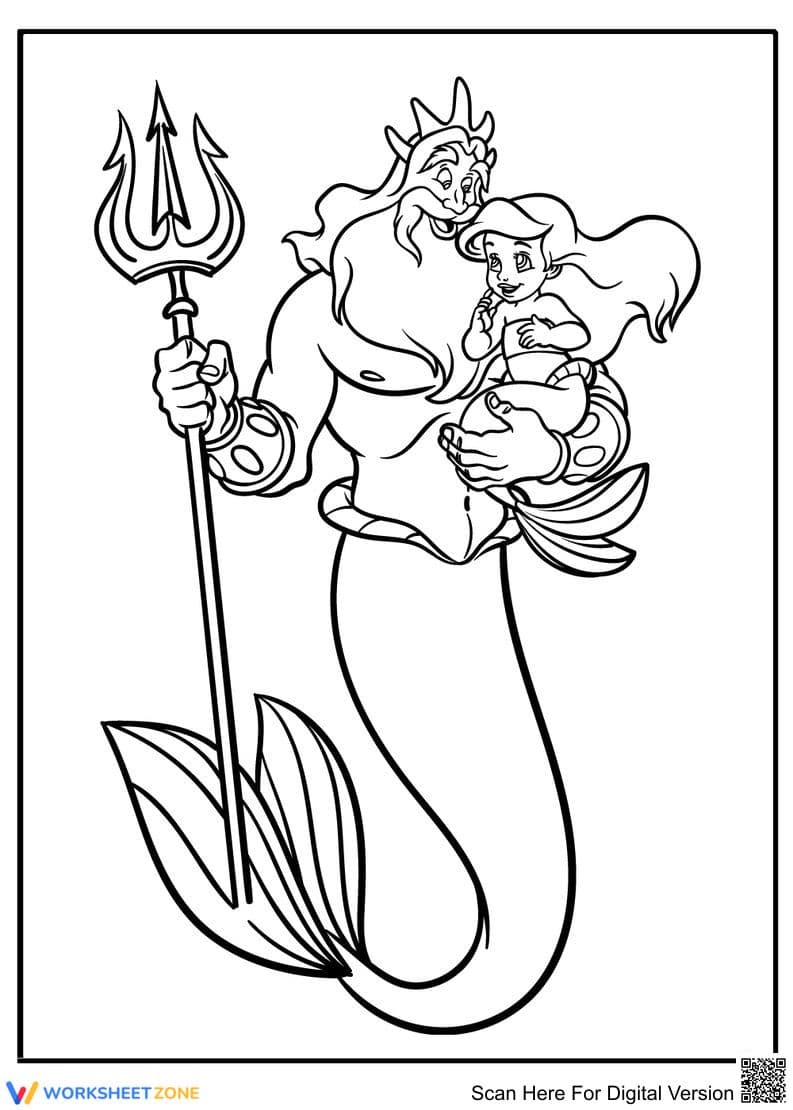

Ariel and Triton Coloring Page | Printable Art Activity
Paste this activity's link or code into your existing LMS (Google Classroom, Canvas, Teams, Schoology, Moodle, etc.).
Students can open and work on the activity right away, with no student login required.
You'll still be able to track student progress and results from your teacher account.
This Ariel and Triton coloring worksheet provides a high-quality visual activity designed to strengthen fine motor control and artistic expression in elementary students. By engaging with familiar characters, learners develop the hand-eye coordination necessary for early writing tasks while exploring color theory and character relationships. This resource serves as an effective bridge between creative play and formal classroom instruction.
At a Glance
- Grade: Kindergarten · Subject: English / Arts
- Standard:
CCSS.ELA-LITERACY.SL.K.5— Add drawings or visual displays to descriptions to provide additional detail- Skill Focus: Fine motor development
- Format: 1 page · 1 illustration · Answer key N/A · PDF
- Best For: Early finishers and morning work
- Time: 15–20 minutes
What’s Inside: This single-page PDF features a clean, professional line-art illustration of Ariel and King Triton. The composition includes varying levels of detail, from the broad strokes of the mermaid tails to the intricate points of Triton's trident. The clear borders and high-contrast lines ensure that students can easily identify different sections of the image, making it suitable for various coloring mediums including crayons, colored pencils, or markers.
Zero-Prep Workflow
- Print (30 seconds): Select the single-page PDF and print enough copies for your small group or entire class.
- Distribute (1 minute): Hand out the sheets during transition periods or as part of a literacy center focused on character traits.
- Review (30 seconds): Briefly discuss the characters' expressions or the setting to prompt oral language development before students begin.
This streamlined process requires less than two minutes of total teacher preparation, making it an ideal choice for emergency sub plans or unexpected classroom downtime.
Standards Alignment: This resource aligns with `CCSS.ELA-LITERACY.SL.K.5`, which encourages students to use visual displays to enhance their descriptions and understanding of stories. By coloring these specific characters, students demonstrate their comprehension of character roles and settings within a narrative framework. Both standard codes can be copied directly into lesson plans, IEP goals, or district curriculum mapping tools.
How to Use It: Assign this worksheet during the "independent practice" phase of a lesson on family dynamics or ocean habitats. It works exceptionally well as a formative assessment tool; observe how students choose colors to represent different textures or moods, which can indicate their level of visual-spatial awareness. Expect most students to complete the detailed coloring within a 20-minute window.
Who It's For: This activity is tailored for Kindergarten through 5th-grade students, particularly those requiring extra fine motor support or English Language Learners who benefit from visual aids. It pairs naturally with a read-aloud of classic fairy tales or an anchor chart describing character archetypes in literature.
The use of character-based coloring activities in the early elementary classroom is supported by research from Fisher & Frey (2014), which emphasizes the importance of visual literacy in the gradual release of responsibility model. By interacting with the standard CCSS.ELA-LITERACY.SL.K.5 through artistic media, students build the cognitive pathways required for complex symbolic representation. Coloring is not merely a recreational task but a foundational exercise in precision and focus that directly translates to improved penmanship and spatial reasoning. According to recent analysis in the RAND AIRS 2024 report, integrating creative visual tasks into the literacy block increases student engagement and retention of narrative elements. This worksheet provides a structured environment for students to practice these essential skills while connecting with recognizable literary figures, ensuring that the transition from visual recognition to written expression is supported by high-interest, low-anxiety instructional materials.


