


























Views
Downloads
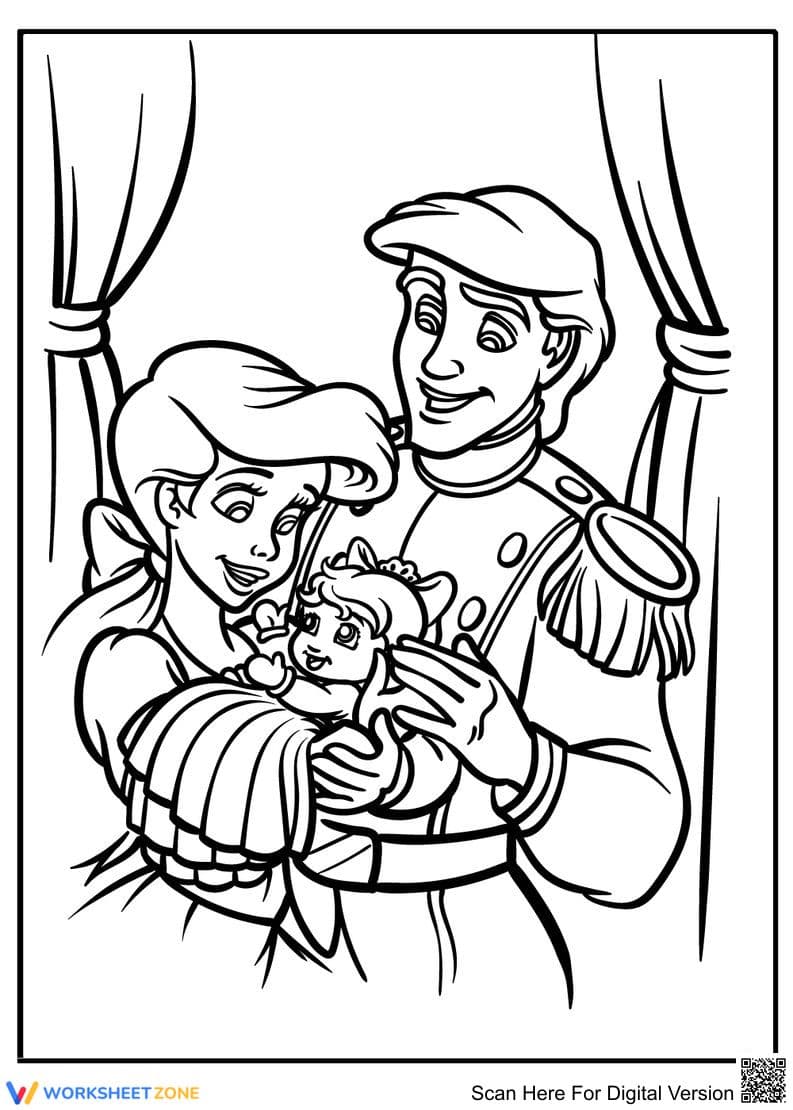

Ariel and Prince Eric Coloring Page | Essential Printable
Paste this activity's link or code into your existing LMS (Google Classroom, Canvas, Teams, Schoology, Moodle, etc.).
Students can open and work on the activity right away, with no student login required.
You'll still be able to track student progress and results from your teacher account.
This Ariel and Prince Eric coloring page provides students in Kindergarten through Grade 5 with a creative way to develop fine motor control and visual literacy. By engaging with these beloved characters, learners practice precision and spatial awareness while expressing their artistic preferences. This printable activity serves as a versatile tool for both artistic exploration and narrative storytelling.
At a Glance
- Grade: K–5 · Subject: English
- Standard:
CCSS.ELA-LITERACY.SL.K.5— Add drawings to descriptions to provide additional detail.- Skill Focus: Fine motor control
- Format: 1 page · 1 task · Answer key N/A · PDF
- Best For: Early finishers or creative breaks
- Time: 15–30 minutes
Inside this resource, you will find one high-resolution printable page featuring detailed line art of Ariel, Prince Eric, and their daughter. The illustration includes a framed background with curtains, providing a complete scene for students to color. This single-page format is easy to manage and does not require an answer key, allowing for total creative freedom and individual expression.
This zero-prep resource is designed for immediate use. First, print the single-page PDF (30 seconds). Second, distribute the worksheets with coloring tools (1 minute). Finally, review the work by having students narrate the scene. Total teacher preparation time is under 2 minutes, making this an ideal solution for schedule changes or sub plans.
This worksheet is aligned with CCSS.ELA-LITERACY.SL.K.5, which requires students to add drawings or other visual displays to descriptions as desired to provide additional detail. While primarily an artistic task, it supports the foundational skills necessary for visual communication and descriptive language. This standard code can be copied directly into lesson plans, IEP goals, or district curriculum mapping tools.
Use this worksheet during a literacy block as a visual extension of a fairy tale unit or as a calming morning work activity. It is particularly effective as a formative assessment tool for observing pencil grip and fine motor endurance. Students typically spend 15 to 30 minutes completing the scene, depending on their age and the level of detail they choose to apply.
This resource is designed for early elementary students, including those requiring additional fine motor support or English Language Learners who benefit from visual aids. It pairs naturally with a reading of The Little Mermaid or a direct instruction lesson on primary and secondary colors. The familiar characters help reduce anxiety and increase engagement for all learners.
According to Fisher & Frey (2014), the integration of visual arts and fine motor tasks like coloring supports the development of foundational literacy by allowing students to represent complex narratives before they possess the full linguistic capacity to write them. This Ariel and Prince Eric coloring page aligns with CCSS.ELA-LITERACY.SL.K.5, which encourages students to use visual displays to enhance their descriptions. Research indicates that the precision required for coloring within lines directly correlates with the muscular control needed for letter formation in early childhood. By engaging with familiar characters, students maintain higher levels of task persistence, a key indicator of academic success. This resource provides a structured yet creative outlet that bridges the gap between artistic expression and standard English conventions. Educators can use this printable to assess grip strength and spatial awareness while fostering a positive classroom environment through character-based engagement.


