


























Views
Downloads

Grade 1 Animal Riddles — Printable No-Prep Worksheet
Paste this activity's link or code into your existing LMS (Google Classroom, Canvas, Teams, Schoology, Moodle, etc.).
Students can open and work on the activity right away, with no student login required.
You'll still be able to track student progress and results from your teacher account.
This engaging animal riddles worksheet helps early readers build essential comprehension skills by using context clues to identify familiar animals. Students read short, descriptive passages and synthesize the details to solve each puzzle, strengthening both their vocabulary and deductive reasoning in a fun, accessible format.
At a Glance
- Grade: 1 · Subject: ELA
- Standard:
CCSS.ELA-LITERACY.RI.1.1— Use key details to answer questions- Skill Focus: Context Clues & Comprehension
- Format: 2 pages · 5 problems · PDF
- Best For: Independent practice or morning work
- Time: 15–20 minutes
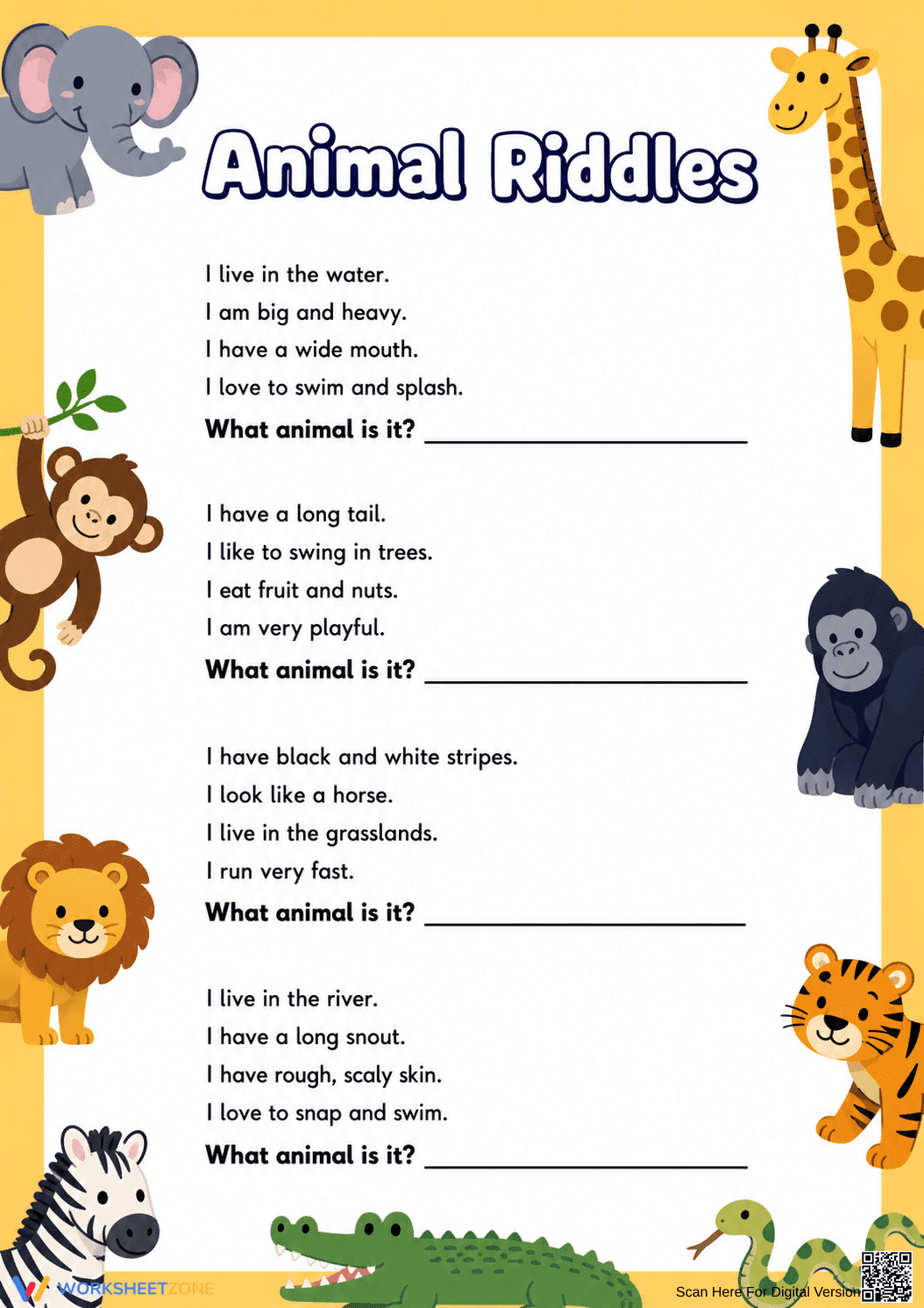
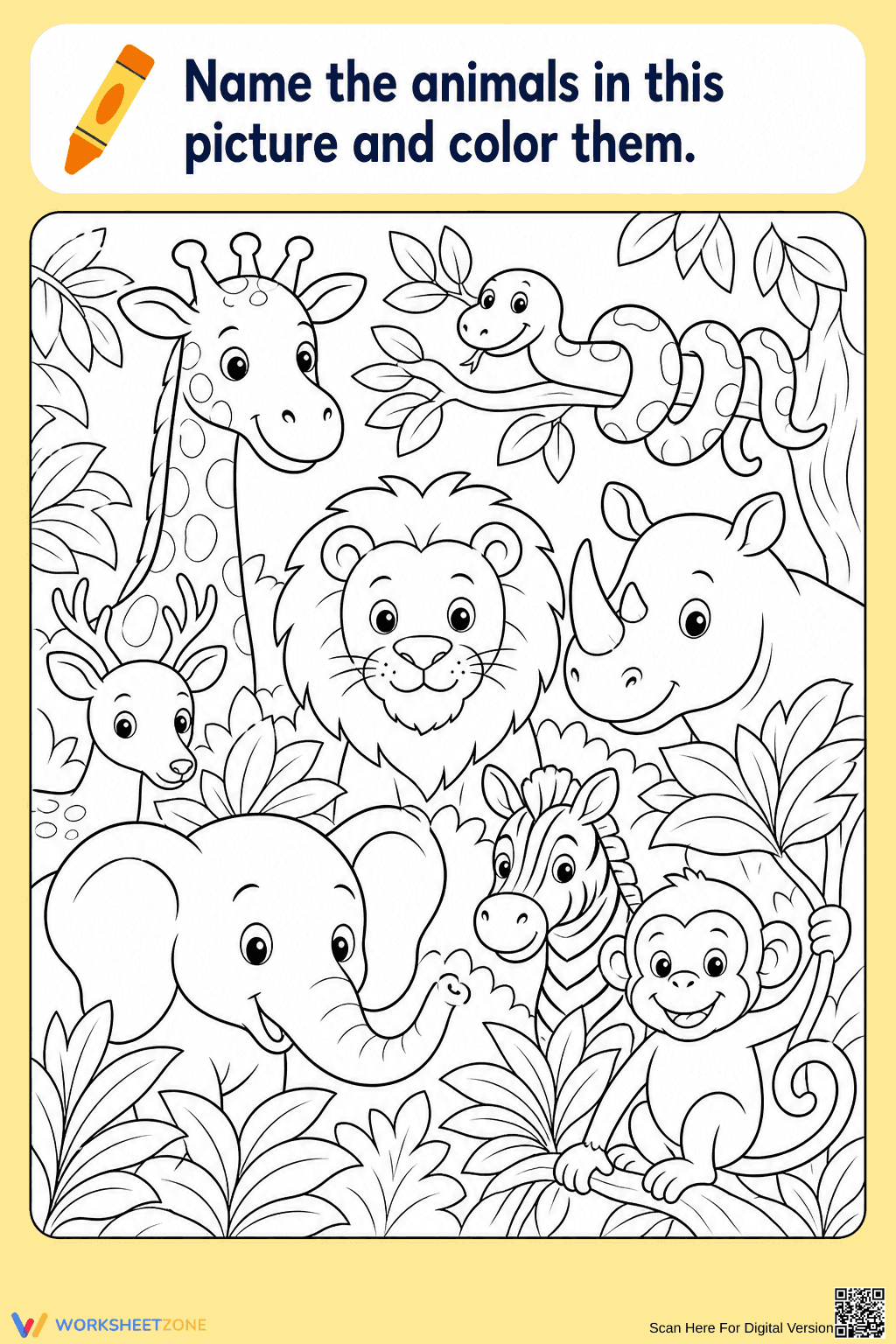
This two-page resource features four structured reading riddles and one creative extension activity. The first page presents four distinct animal descriptions, each containing four sentence-level clues and a blank line for students to write the correct animal name. The second page offers a detailed jungle scene where students must identify, name, and color the hidden animals, reinforcing the vocabulary practiced in the first section.
Designed for immediate classroom implementation, this resource requires minimal teacher setup:
- Print (1 minute): The two-page layout is ready to print double-sided, saving paper and preparation time.
- Distribute (1 minute): Hand out the worksheets along with pencils and crayons. No additional materials or complex instructions are needed.
- Review (3 minutes): Read the first riddle aloud together to model the deductive process, then let students complete the rest independently.
With under two minutes of total prep time, this activity is an excellent addition to any emergency sub plan or busy morning routine.
This activity is aligned to CCSS.ELA-LITERACY.RI.1.1, requiring students to ask and answer questions about key details in a text. By reading the descriptive clues and determining the matching animal, learners practice extracting explicit information to form a conclusion. Both standard codes can be copied directly into lesson plans, IEP goals, or district curriculum mapping tools.
Teachers can utilize this worksheet during literacy centers to reinforce reading comprehension strategies. It serves as an excellent independent activity after a whole-group lesson on using context clues or animal habitats. As students work, teachers can use this as a formative assessment by observing whether children rely on specific textual details (like "black and white stripes") to make their guesses. Expect students to complete both the reading and coloring portions within 15 to 20 minutes.
This resource is primarily designed for first-grade students, though it serves as excellent review for second graders or a guided challenge for advanced kindergarteners. The simple sentence structures and familiar animal themes provide built-in scaffolding for early readers and English Language Learners. It pairs perfectly with a read-aloud informational book about jungle or safari animals to activate prior knowledge before beginning the riddles.
Developing early reading comprehension requires consistent practice with text-based evidence. When students engage with standard CCSS.ELA-LITERACY.RI.1.1 to use key details to answer questions, they build the foundational deductive reasoning skills necessary for complex literacy tasks. According to Fisher & Frey (2014), providing students with structured, high-interest texts—such as riddles—encourages active cognitive engagement and improves their ability to synthesize information from multiple sentences. This animal riddles worksheet leverages that exact instructional strategy, prompting young learners to hold multiple clues in their working memory to arrive at a logical conclusion. By combining reading practice with a highly motivating topic, educators can effectively support vocabulary acquisition and reading stamina. This targeted approach ensures that early elementary students are not just decoding words, but actively making meaning from the text they read.


