


























Views
Downloads
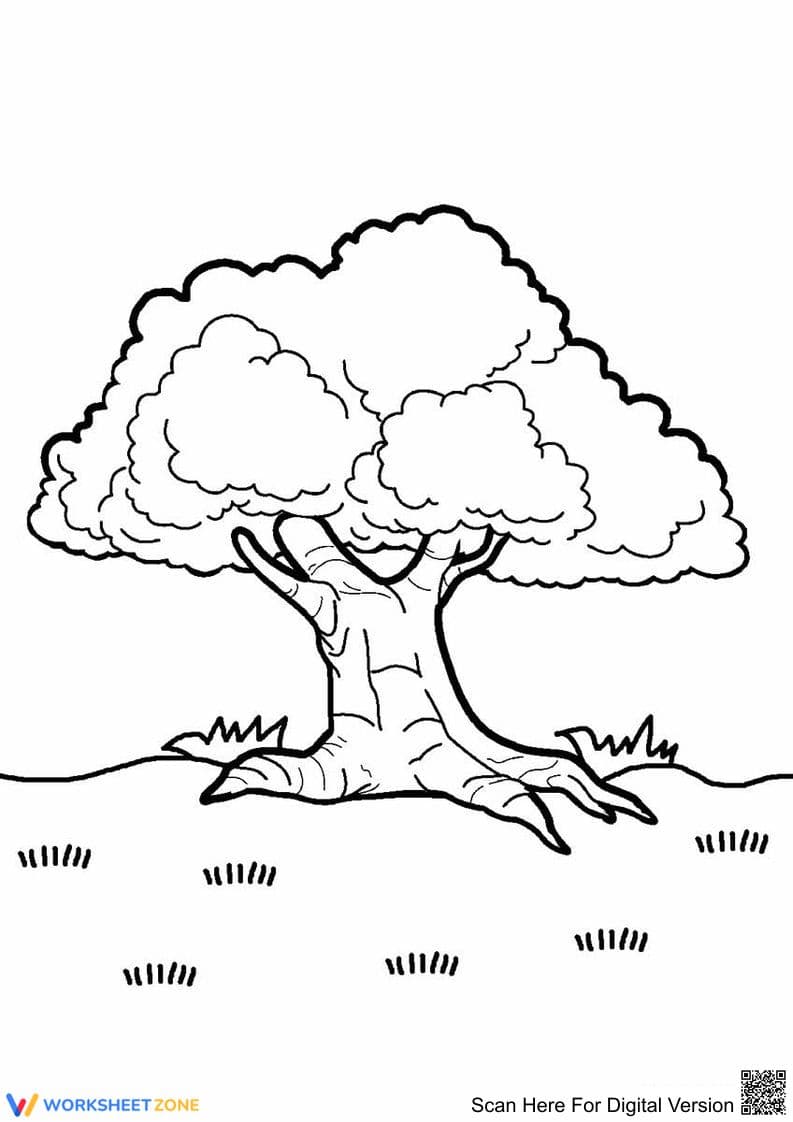

Old Tree Coloring Page | Essential Printable Worksheet
Paste this activity's link or code into your existing LMS (Google Classroom, Canvas, Teams, Schoology, Moodle, etc.).
Students can open and work on the activity right away, with no student login required.
You'll still be able to track student progress and results from your teacher account.
This printable coloring worksheet provides a creative outlet for students to explore nature while developing essential fine motor control. By focusing on the intricate details of the old tree's bark and canopy, learners engage in a relaxing activity that reinforces observation skills. It serves as a perfect supplement to early science or art lessons.
At a Glance
- Grade: K-5 · Subject: Arts & Nature
- Standard:
K-LS1-1— Use observations to describe patterns of what plants need to survive- Skill Focus: Fine motor development and creative expression
- Format: 1 page · 1 task · No answer key required · PDF
- Best For: Morning work or early finishers
- Time: 15–20 minutes
The resource consists of a single high-quality PDF page featuring a large, detailed illustration of an ancient tree. The drawing includes a thick, textured trunk, visible root systems, and a lush canopy, providing various areas for color experimentation. There are no complex instructions, making it accessible for independent work across multiple elementary grade levels.
Zero-Prep Workflow
- Print: Select the single-page PDF and print enough copies for your group (30 seconds).
- Distribute: Hand out the sheets along with crayons, markers, or colored pencils (1 minute).
- Review: Allow students to work independently while you transition between lessons or manage small groups.
Total teacher setup time is under 2 minutes, making it an ideal sub-plan addition or a quick filler activity for unexpected schedule changes.
Standards Alignment
This activity aligns with `K-LS1-1`, which encourages students to use observations to describe patterns in the natural world. While primarily an artistic task, it prompts discussion about tree structures, growth, and life cycles. Both standard codes can be copied directly into lesson plans, IEP goals, or district curriculum mapping tools.
How to Use It
Use this worksheet during a science unit on plants to help students visualize the physical components of a tree. It is also effective as a calming "brain break" after high-stakes testing or direct instruction. Completion typically takes 15 to 20 minutes depending on the student's attention to detail and choice of medium. You can observe grip strength and color choice as a quick formative check.
Who It's For
This worksheet is designed for Kindergarten through 5th-grade students, particularly those needing to strengthen hand-eye coordination. It is an excellent resource for general education classrooms, art therapy sessions, or as a quiet-time activity paired with a read-aloud book about nature or seasonal changes. It works well for students requiring low-pressure creative tasks.
According to the RAND AIRS 2024 report, integrating creative arts into the primary curriculum supports the development of executive function and fine motor precision. This worksheet addresses standard K-LS1-1 by providing a visual anchor for biological observation, allowing students to identify the trunk, roots, and leaves of a mature plant. Research from Fisher & Frey (2014) emphasizes that non-linguistic representations, such as coloring and drawing, help younger learners internalize complex scientific concepts by reducing cognitive load. By engaging with the 1-page illustration, students practice the "observe and describe" cycle essential for early scientific inquiry. This resource is a practical tool for educators seeking to blend artistic expression with standards-based observation, ensuring that even simple activities contribute to broader developmental milestones in the elementary classroom environment.


