


























Views
Downloads
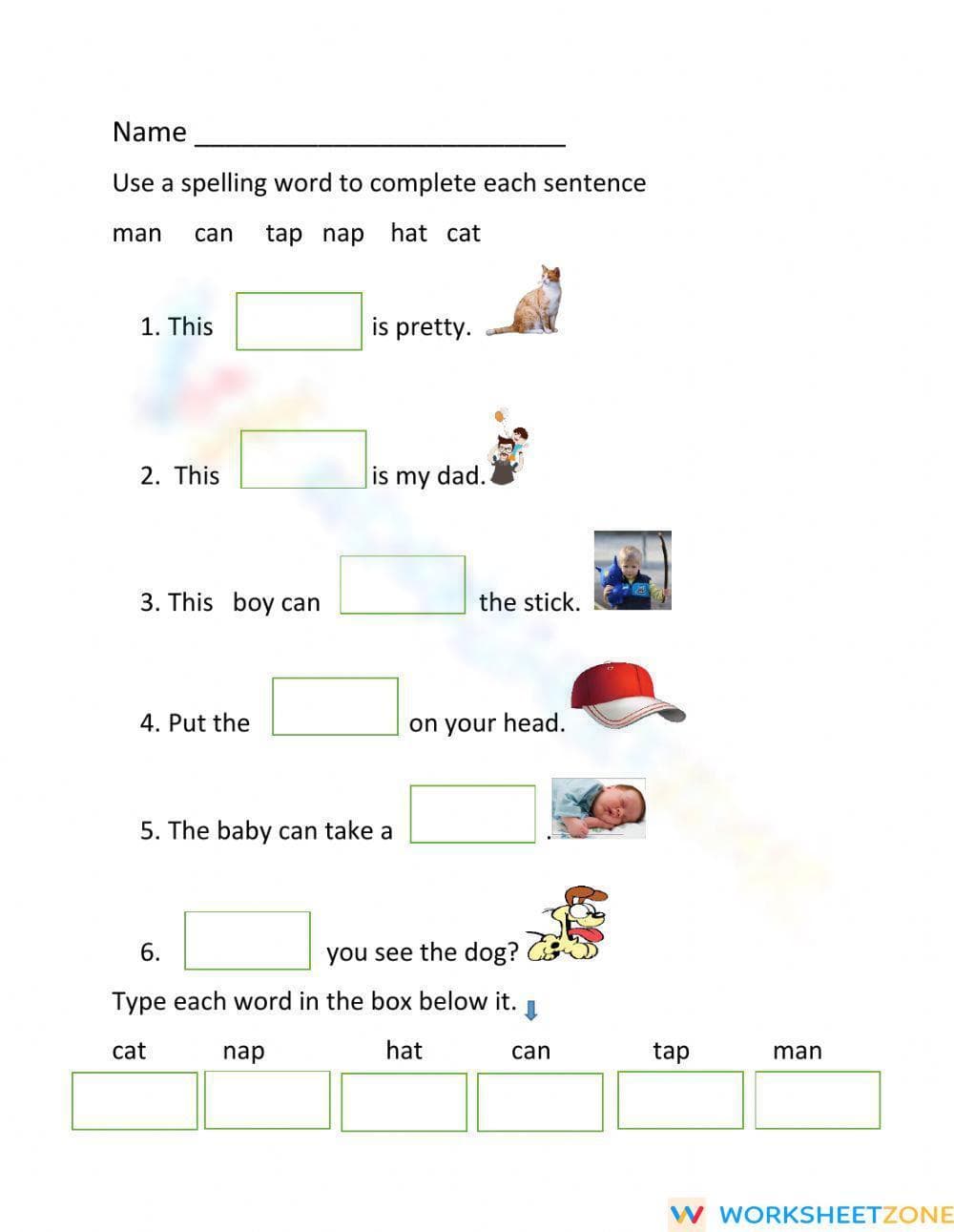

Printable An, At, and Ap Words Worksheet | Grade 1 ELA
Paste this activity's link or code into your existing LMS (Google Classroom, Canvas, Teams, Schoology, Moodle, etc.).
Students can open and work on the activity right away, with no student login required.
You'll still be able to track student progress and results from your teacher account.
This printable ELA worksheet targets foundational CVC word patterns, specifically focusing on the "an," "at," and "ap" word families for Grade 1 students. By completing cloze sentences and practicing word typing, learners strengthen their phonics-to-meaning connections and spelling accuracy. The result is increased reading fluency and confidence in decoding common three-letter words within context.
At a Glance
- Grade: 1 · Subject: English Language Arts
- Standard:
CCSS.ELA-LITERACY.RF.1.3— Know and apply grade-level phonics and word analysis skills in decoding words- Skill Focus: CVC Word Families (an, at, ap)
- Format: 1 page · 12 tasks · Answer key included · PDF
- Best For: Independent phonics practice and morning work
- Time: 10–15 minutes
What's Inside
This one-page PDF features six cloze sentences where students must select the correct spelling word (man, can, tap, nap, hat, cat) based on visual cues and sentence context. Below the sentences, a dedicated typing or handwriting section includes six boxes for reinforcing the spelling of each target word. The layout is clean and visually supported by high-quality images to assist developing readers.
Zero-Prep Workflow
This resource is designed for an effortless, zero-prep workflow in the busy classroom. The implementation process is simple: Print (1 min), Distribute (1 min), and Review (2 min). Total teacher prep time is under two minutes, and students can work through the tasks independently as visual associations remove the need for complex directions. This efficiency makes it an ideal choice for substitute folders or emergency lesson plans.
Standards Alignment
The primary focus is CCSS.ELA-LITERACY.RF.1.3, which requires students to know and apply grade-level phonics and word analysis skills in decoding words. By identifying and using specific word families like "an," "at," and "ap," students meet the requirements for recognizing common vowel-consonant patterns. This standard code can be copied directly into lesson plans, IEP goals, or district curriculum mapping tools.
How to Use It
Use this worksheet during the "Independent Practice" phase of a phonics lesson after introducing the "a" vowel sound families. It also serves as an effective formative assessment tool; observe if students correctly associate the "hat" image with the "at" word family to gauge their phonemic awareness. Students typically complete the 12 tasks within 15 minutes, allowing for a quick check for understanding.
Who It's For
This resource is tailored for Grade 1 students but is also appropriate for Kindergarteners ready for CVC blending or Grade 2 students needing remedial spelling support. It naturally pairs with a short-vowel reading passage or an anchor chart displaying common -at and -an words to provide a comprehensive literacy environment.
Standard CCSS.ELA-LITERACY.RF.1.3 centers on the mastery of phonics and word analysis, which is critical for early literacy development. Research from Fisher & Frey (2014) emphasizes that the gradual release of responsibility, supported by contextualized practice like cloze sentences, significantly improves a student's ability to transfer decoding skills to independent reading. By isolating the "an," "at," and "ap" patterns, this worksheet provides the focused repetition needed for orthographic mapping of three-letter words. According to EdReports 2024, high-quality instructional materials must provide systematic practice in foundational skills to ensure long-term reading success. This activity offers 12 targeted opportunities for students to apply their knowledge of letter-sound correspondences, bridging the gap between isolated phonics instruction and meaningful sentence comprehension through visual association and motor-skill reinforcement. The inclusion of high-frequency words within these common families further supports the NAEP standards for reading proficiency by the end of the primary grades.


