




























Views
Downloads
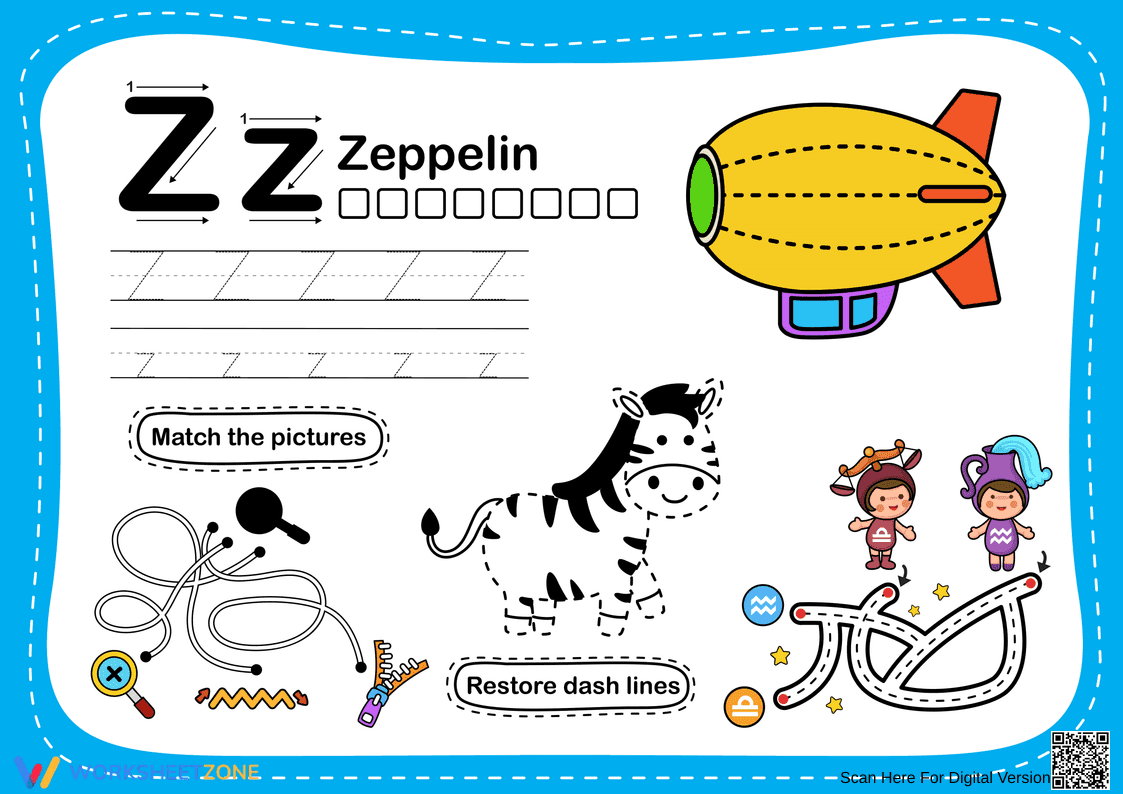

Letter Z Tracing Worksheet | Printable Kindergarten ELA

Paste this activity's link or code into your existing LMS (Google Classroom, Canvas, Teams, Schoology, Moodle, etc.).
Students can open and work on the activity right away, with no student login required.
You'll still be able to track student progress and results from your teacher account.
This foundational Letter Z worksheet helps early learners develop essential handwriting and letter recognition skills. By combining uppercase and lowercase tracing with engaging fine motor activities, students build the muscle memory required for fluent writing. The varied tasks keep young minds focused while reinforcing alphabet mastery.
At a Glance
- Grade: Kindergarten · Subject: ELA
- Standard:
CCSS.ELA-LITERACY.L.K.1.A— Print upper- and lowercase letters- Skill Focus: Letter Z tracing and fine motor control
- Format: 1 page · 4 tasks · No answer key needed · PDF
- Best For: Morning work or literacy centers
- Time: 10–15 minutes
Inside this single-page resource, educators will find four distinct activities designed to strengthen early literacy and motor skills. The page features guided directional arrows for tracing both uppercase and lowercase Z, a block-letter spelling task for the word "Zeppelin," a magnifying glass to zipper matching maze, and dashed-line tracing exercises featuring a zebra and a curved path. These visual supports ensure students can work independently.
Zero-Prep Workflow
This resource is designed for immediate classroom implementation:
- Print (1 minute): Generate enough copies for your literacy centers or morning work bins directly from the PDF.
- Distribute (1 minute): Hand out the sheets along with pencils, crayons, or markers. The visual instructions make the tasks self-evident.
- Review (1 minute): Quickly check student grip and stroke direction as they work through the tracing lines.
With under three minutes of total teacher prep time, this worksheet is an excellent addition to any emergency sub plan or daily routine.
Standards Alignment
This activity is aligned to CCSS.ELA-LITERACY.L.K.1.A, which requires students to print many upper- and lowercase letters. It also supports early phonics skills by associating the letter Z with words like zebra and zeppelin. Both standard codes can be copied directly into lesson plans, IEP goals, or district curriculum mapping tools.
How to Use It
Deploy this worksheet during morning arrival to establish a calm, focused routine before direct instruction begins. It also functions perfectly as an independent station during literacy centers. While students complete the 10 to 15-minute activity, teachers can conduct formative assessments by observing pencil grip and ensuring children follow the directional arrows for proper letter formation.
Who It's For
This resource is primarily designed for Preschool and Kindergarten students mastering the alphabet. The built-in visual scaffolds, such as dashed lines and directional arrows, provide excellent differentiation for students needing extra fine motor support. Pair this worksheet with a read-aloud book featuring the letter Z or a classroom alphabet anchor chart to reinforce the phonetic connections.
Developing automaticity in letter formation through targeted practice is a critical component of early literacy instruction. This resource aligns with CCSS.ELA-LITERACY.L.K.1.A, focusing on the ability to print upper- and lowercase letters accurately. According to Fisher & Frey (2014), providing students with structured, repetitive motor tasks significantly enhances their cognitive capacity to focus on higher-level phonemic awareness and decoding skills later in their academic journey. By integrating tracing exercises with engaging visual mazes and vocabulary associations, this worksheet ensures that foundational handwriting practice remains both rigorous and developmentally appropriate. The combination of direct stroke guidance and independent application tasks supports the gradual release of responsibility, allowing early learners to build confidence and muscle memory simultaneously. This evidence-based approach to alphabet instruction establishes the necessary groundwork for future reading and writing proficiency.


