




























Views
Downloads

Letter M Printable Worksheet | Grade K ELA

Paste this activity's link or code into your existing LMS (Google Classroom, Canvas, Teams, Schoology, Moodle, etc.).
Students can open and work on the activity right away, with no student login required.
You'll still be able to track student progress and results from your teacher account.
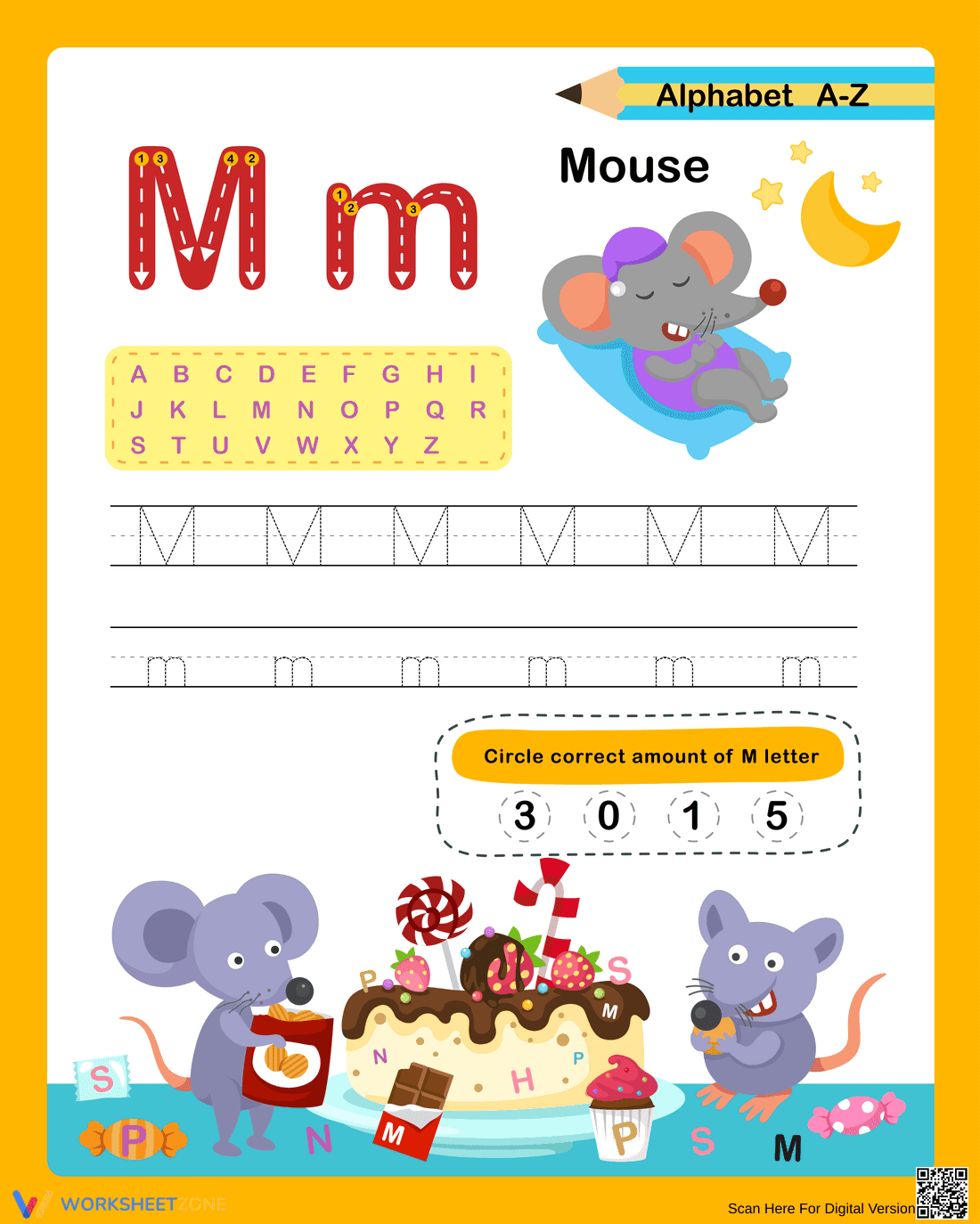
This foundational letter recognition worksheet helps early learners master the letter M through targeted tracing and visual identification tasks. Students practice proper stroke order for both uppercase and lowercase forms before applying their knowledge to find specific letters hidden within an engaging, illustrated scene.
At a Glance
- Grade: K · Subject: ELA
- Standard:
CCSS.ELA-LITERACY.L.K.1.a— Print many upper- and lowercase letters- Skill Focus: Letter M tracing and recognition
- Format: 1 page · 3 tasks · No answer key · PDF
- Best For: Independent practice centers
- Time: 10–15 minutes
This single-page resource features three distinct activity zones designed to reinforce alphabet fluency. The top section provides guided stroke arrows for uppercase and lowercase M, followed by two rows of dashed tracing lines for independent handwriting practice. The bottom section includes a visual discrimination task where students must locate and count the hidden letter M scattered across a colorful mouse and cake illustration, circling the correct total number.
This resource offers an efficient zero-prep workflow.
- Print (1 minute): Simply download the PDF and print a class set. The clear layout requires no special formatting or color ink to be effective.
- Distribute (1 minute): Hand out the sheets during morning work or literacy centers. The visual cues make the instructions immediately obvious to young learners.
- Review (3 minutes): Quickly check student work by glancing at the tracing lines and the circled number at the bottom of the page.
With under two minutes of total teacher preparation time, this activity is an excellent addition to emergency sub plans or spontaneous skill reinforcement sessions.
This activity is directly aligned to CCSS.ELA-LITERACY.L.K.1.a: Print many upper- and lowercase letters. It also supports early phonics skills by associating the letter M with the word "Mouse" featured prominently at the top of the page. Both standard codes can be copied directly into lesson plans, IEP goals, or district curriculum mapping tools.
Deploy this worksheet during morning arrival as a focused bell-ringer activity. Alternatively, place it in a literacy center alongside physical letter blocks or playdough mats for a multi-sensory learning station. While students are working, observe their pencil grip and stroke direction during the tracing portion to provide immediate corrective feedback on handwriting mechanics. Most kindergarteners will complete the entire page within a 10 to 15-minute timeframe.
This material is ideal for preschool and kindergarten students building foundational alphabet knowledge and fine motor skills. The guided arrows offer necessary scaffolding for students struggling with letter formation, while the hidden letter search provides an engaging challenge for early finishers. Pair this worksheet with a read-aloud book featuring prominent "M" vocabulary or a classroom anchor chart displaying words that start with the /m/ sound.
Developing automaticity in letter recognition and formation is a critical precursor to reading fluency and overall literacy success. According to Fisher & Frey (2014), providing students with structured, repetitive practice in foundational literacy skills significantly reduces cognitive load during later, more complex decoding tasks. This worksheet targets CCSS.ELA-LITERACY.L.K.1.a by requiring students to print many upper- and lowercase letters, specifically focusing on the letter M. Guided tracing and visual discrimination exercises ensure learners interact with the letter in multiple contexts. By isolating the skill and providing clear visual boundaries, educators can effectively monitor early handwriting development and letter-sound correspondence. Consistent exposure to these targeted activities builds the necessary muscle memory and visual processing speed required for successful early reading interventions and long-term academic achievement in elementary language arts programs.


