


























Views
Downloads
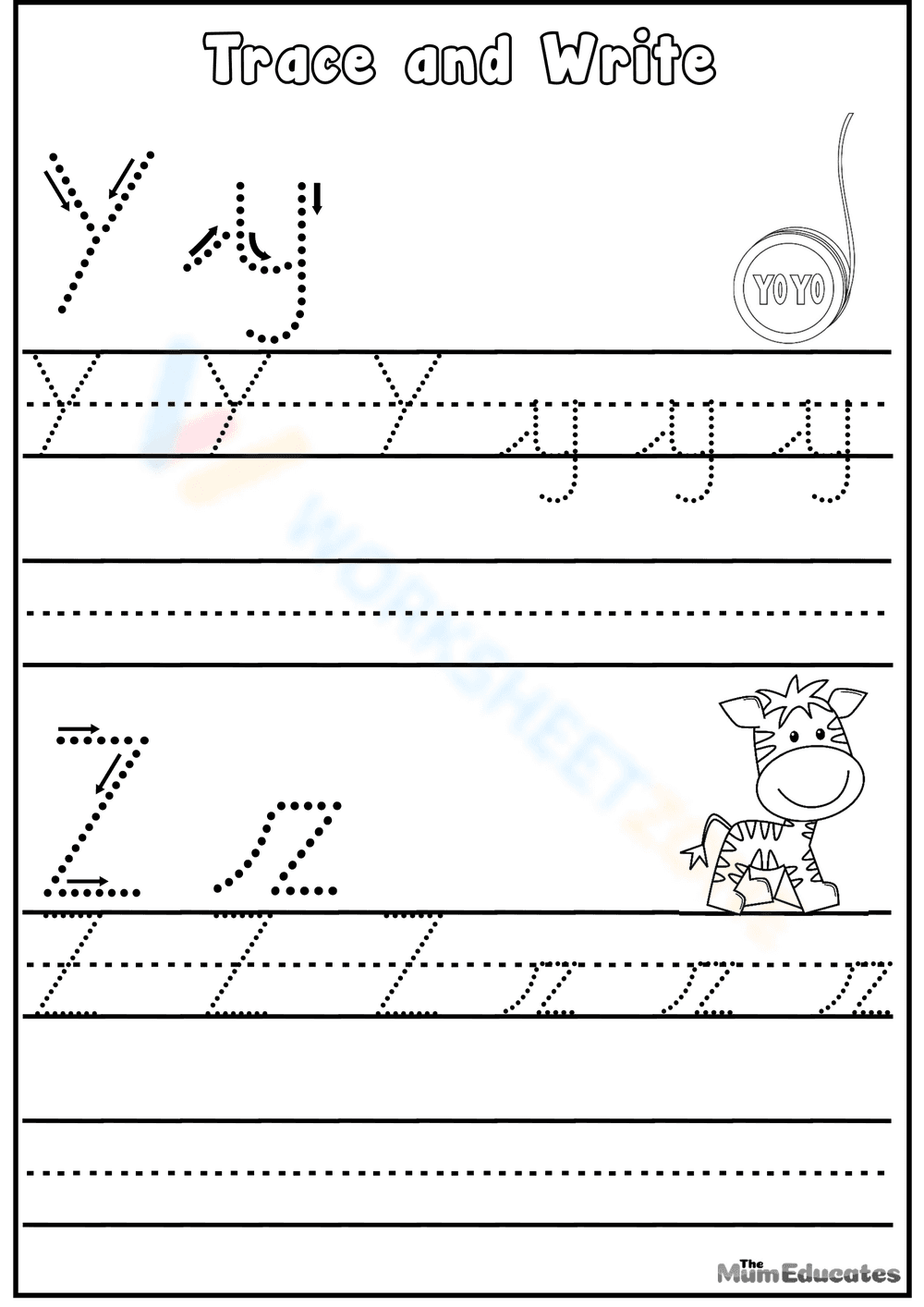

Alphabet Letters Y and Z Tracing | Essential Grade K-1
Paste this activity's link or code into your existing LMS (Google Classroom, Canvas, Teams, Schoology, Moodle, etc.).
Students can open and work on the activity right away, with no student login required.
You'll still be able to track student progress and results from your teacher account.
This Grade K-1 handwriting worksheet provides targeted practice for mastering the formation of uppercase and lowercase letters Y and Z. Students develop essential fine motor control and letter recognition through guided tracing and independent writing. By focusing on the final letters of the alphabet, this resource ensures a complete foundation for early literacy and penmanship.
At a Glance
At a Glance
- Grade: Kindergarten · Subject: English
- Standard:
CCSS.ELA-LITERACY.L.K.1.A— Print many upper- and lowercase letters accurately- Skill Focus: Letter formation for Y and Z
- Format: 1 page · 16 tasks · No-prep · PDF
- Best For: Morning work or literacy centers
- Time: 10–15 minutes
What's Inside
This single-page PDF features clear, large-format tracing guides for both uppercase and lowercase Y and Z. It includes directional arrows to model correct stroke order, 14 dotted-line tracing opportunities, and 2 full lines for independent practice. Visual cues like a yo-yo and a zebra reinforce letter-sound associations while keeping young learners engaged during their handwriting session.
Zero-Prep Workflow
The workflow for this resource is designed for maximum efficiency in busy classrooms. First, print the single-page PDF (30 seconds). Next, distribute the sheets to students during morning work or a literacy rotation (1 minute). Finally, provide immediate verbal feedback as you circulate the room to check for proper grip and stroke direction (ongoing). Total teacher preparation time is under 2 minutes.
Standards Alignment
This resource is directly aligned with `CCSS.ELA-LITERACY.L.K.1.A`, which requires students to print many upper- and lowercase letters. It also supports foundational fine motor development necessary for later writing fluency. Both standard codes can be copied directly into lesson plans, IEP goals, or district curriculum mapping tools.
How to Use It
Use this worksheet during the "You Do" phase of a handwriting lesson after demonstrating the strokes on a whiteboard. It is also an excellent formative assessment tool; observe students as they transition from the dotted lines to the blank lines to identify who needs additional intervention with pencil pressure or spatial awareness. Completion typically takes 10 to 15 minutes.
Who It's For
This worksheet is designed for Kindergarten and Grade 1 students who are refining their alphabet production. It is particularly helpful for English Language Learners (ELLs) and students receiving occupational therapy support for fine motor delays. Pair this with an alphabet anchor chart or a tactile sand-tracing activity for a multi-sensory learning experience.
Handwriting remains a critical component of early literacy, as the physical act of letter formation is linked to better letter recognition and reading outcomes. This worksheet targets CCSS.ELA-LITERACY.L.K.1.A by providing structured practice for letters Y and Z, which are often less frequently practiced than earlier letters in the alphabet. According to Fisher & Frey (2014), the gradual release of responsibility—moving from guided tracing with directional arrows to independent production on blank lines—is essential for student mastery of complex motor tasks. By providing 16 specific tasks on a single page, this resource allows for high-repetition practice within a short instructional window. Research from the NAEP suggests that early fluency in letter writing predicts later writing quality in elementary school. This printable tool offers a reliable, evidence-based method for ensuring students achieve the necessary penmanship benchmarks required for Kindergarten and first-grade success.


