


























Views
Downloads

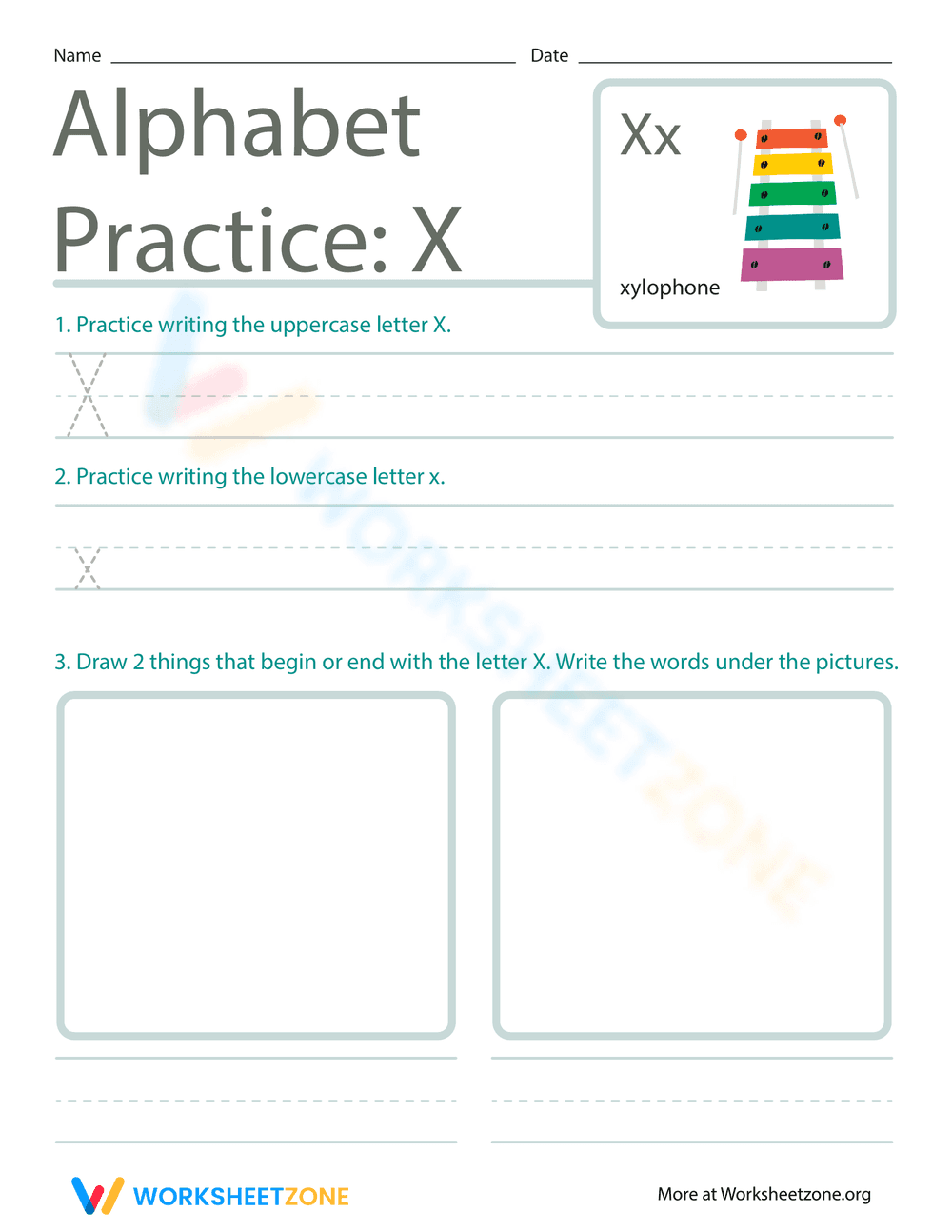

Printable Letter W and X Handwriting Practice Worksheet
Paste this activity's link or code into your existing LMS (Google Classroom, Canvas, Teams, Schoology, Moodle, etc.).
Students can open and work on the activity right away, with no student login required.
You'll still be able to track student progress and results from your teacher account.
This printable handwriting worksheet helps young learners master letter formation for W and X. Students practice fine motor control by tracing uppercase and lowercase letters before drawing objects that start with each letter. This resource builds foundational writing skills and phonics awareness, ensuring students connect letter shapes to their corresponding beginning sounds.
At a Glance
- Grade: Kindergarten and First Grade · Subject: English Language Arts
- Standard:
CCSS.ELA-LITERACY.L.K.1.A— Print uppercase and lowercase letters independently- Skill Focus: Alphabet tracing, letter formation, and beginning sounds
- Format: 2 printable pages · 6 structured tasks · PDF format
- Best For: Daily morning work and independent handwriting practice
- Time: 15–20 minutes per page
The resource contains 2 pages focusing on letters W and X. Each page features structured tracing lines with guided arrows to support correct stroke order. Students trace uppercase and lowercase letters, then transition to independent writing. A creative drawing section prompts students to illustrate 2 items starting with the target letter, reinforcing phonics connections.
This resource requires zero teacher preparation. First, print the 2 pages in under 1 minute. Second, distribute the sheets to students during morning arrival or writing centers, taking less than 1 minute. Finally, review student work by checking letter stroke accuracy and beginning sound drawings. The total teacher preparation time is under 2 minutes, making this packet an ideal choice for emergency substitute plans or quick independent practice sessions.
This activity aligns directly with the primary standard `CCSS.ELA-LITERACY.L.K.1.A`, which requires students to print many uppercase and lowercase letters. Additionally, it supports `CCSS.ELA-LITERACY.RF.K.1.D` by helping students recognize and name lowercase and uppercase letters of the alphabet. Both standard codes can be copied directly into lesson plans, IEP goals, or district curriculum mapping tools.
Use this worksheet during the independent practice phase of your writing lesson. After demonstrating the stroke order for letter W on the board, distribute the page for students to complete individually. Alternatively, use it as a formative assessment tool at the end of the week. Observe students as they write to ensure they start their strokes from the top line. Expect completion within 15 to 20 minutes.
This resource is designed for kindergarteners learning letter formation and first graders needing remedial handwriting support. It accommodates diverse learners through visual tracing guides and open-ended drawing prompts. Pair this worksheet with an alphabet anchor chart or a shared reading passage focusing on the letter W to create a comprehensive phonics lesson.
This handwriting resource aligns with early literacy research emphasizing the connection between motor skills and reading development. According to a study by Fisher & Frey (2014), explicit instruction in letter formation combined with phonics practice accelerates orthographic mapping in young learners. By practicing the specific standard `CCSS.ELA-LITERACY.L.K.1.A`, students build the muscle memory required for fluent writing, which directly correlates with later reading comprehension success. The inclusion of drawing tasks reinforces phonemic awareness by asking students to identify and represent beginning sounds. This dual-sensory approach ensures that students do not just copy shapes, but actively associate the visual letter with its auditory phoneme. Educators can confidently integrate this structured practice into daily routines to support foundational writing standards, track individual student progress over time, and foster early literacy confidence in kindergarten classrooms.


