


























Views
Downloads


Grade 1 Adverbs Worksheet | Essential Printable Practice
Paste this activity's link or code into your existing LMS (Google Classroom, Canvas, Teams, Schoology, Moodle, etc.).
Students can open and work on the activity right away, with no student login required.
You'll still be able to track student progress and results from your teacher account.
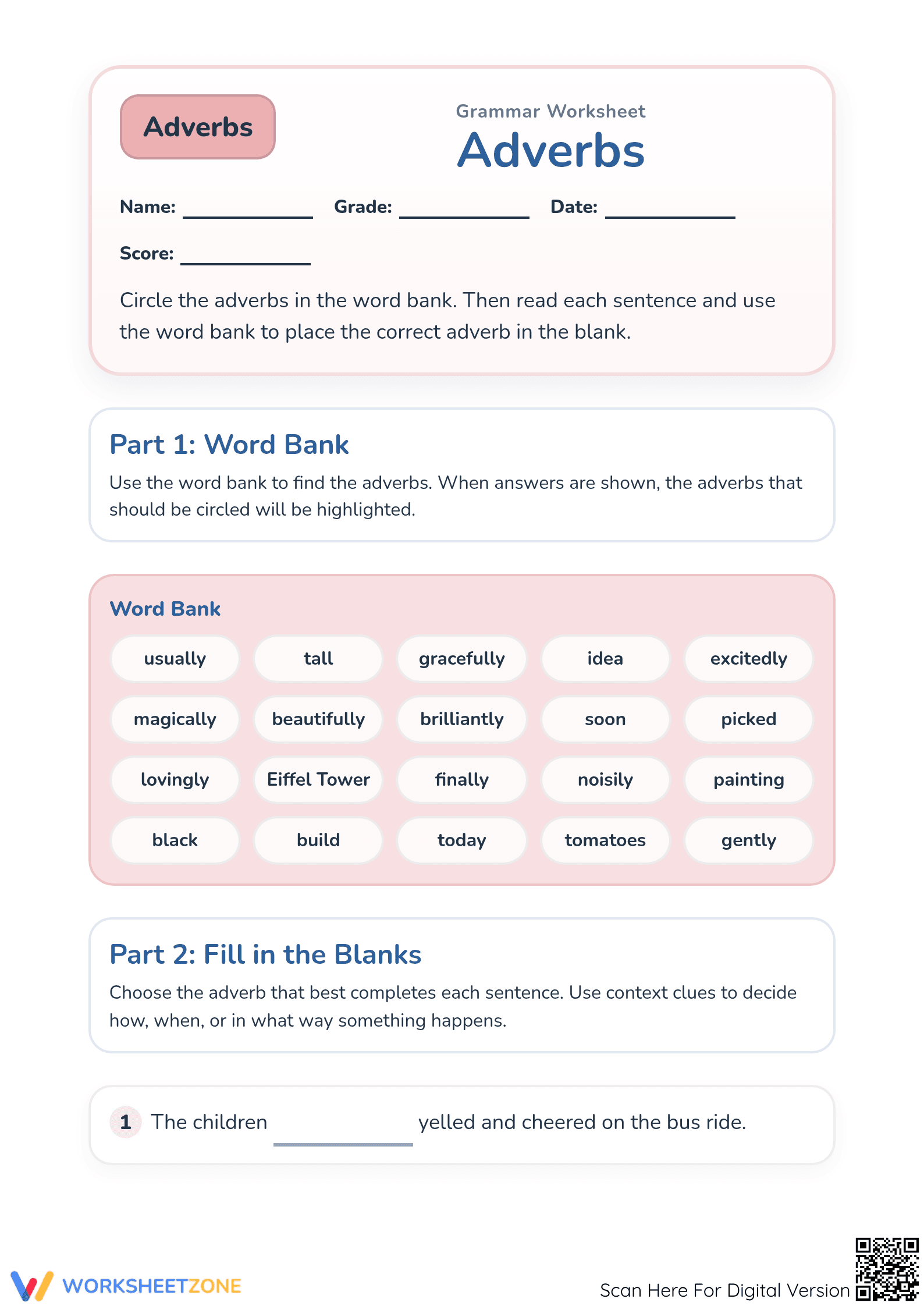
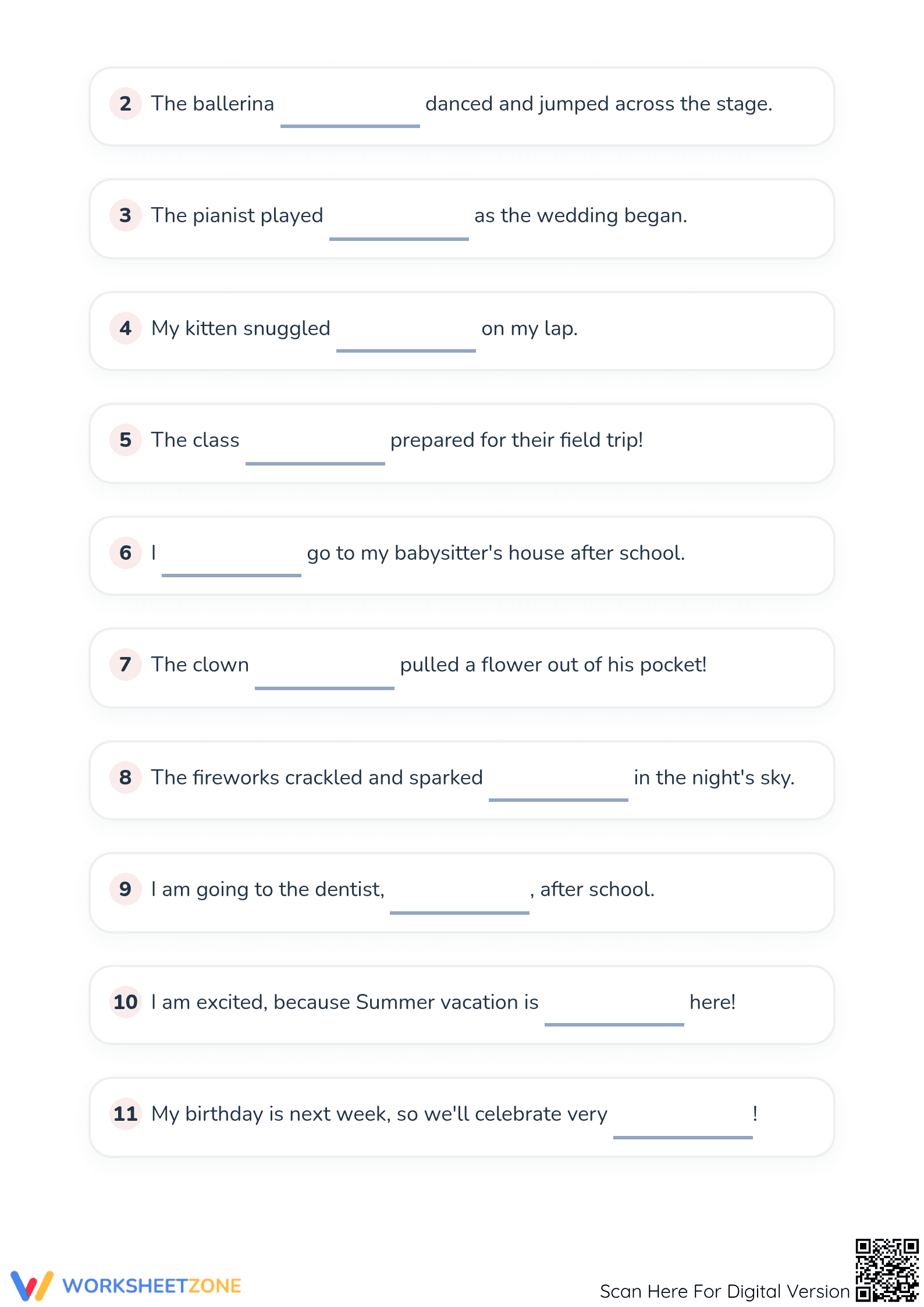
This Grade 1 adverbs worksheet provides students with 12 structured sentence completion tasks to master how describing words modify actions. By identifying adverbs in a word bank and applying them to context-rich sentences, learners develop a foundational understanding of lexical word classes. This resource ensures students can accurately describe how, when, and where actions occur.
At a Glance
- Grade: 1 · Subject: ELA
- Standard:
CCSS.ELA-LITERACY.L.1.1— Use frequently occurring nouns, verbs, and describing words in sentences- Skill Focus: Adverb identification and usage
- Format: 3 pages · 12 problems · Answer key included · PDF
- Best For: Independent grammar practice or homework
- Time: 15–20 minutes
This comprehensive 3-page PDF features a dual-part instructional design. Part 1 includes a 20-word bank where students must distinguish adverbs from other parts of speech. Part 2 consists of 12 fill-in-the-blank sentences that require students to use context clues to select the most appropriate adverb. A full 3-page answer key is provided for immediate feedback and easy grading.
Zero-Prep Workflow:
- Print: Select the three activity pages and the corresponding answer keys (30 seconds).
- Distribute: Hand out the packets to students for independent work or literacy centers (1 minute).
- Review: Use the provided answer key for rapid grading or whole-class correction (30 seconds).
This workflow minimizes teacher preparation while maximizing student engagement with grammar. It is an ideal resource for substitute folders or last-minute morning work.
Standards Alignment: This resource is primarily aligned with `CCSS.ELA-LITERACY.L.1.1`, which requires students to demonstrate command of the conventions of standard English grammar. By focusing on adverbs, it also supports the transition to more complex parts of speech. Both standard codes can be copied directly into lesson plans, IEP goals, or district curriculum mapping tools.
How to Use It: Assign this worksheet during the independent practice phase of a lesson on parts of speech. It serves as an excellent formative assessment to check if students can differentiate between adjectives and adverbs. Expect students to complete the 12 sentences in approximately 15 to 20 minutes depending on their current reading level and vocabulary depth.
Who It's For: This activity is designed for first-grade students beginning their journey with lexical word classes. It is also suitable for second-grade review or English Language Learners (ELL) who need visual word banks to support vocabulary acquisition. Pair this with a verbs and adverbs anchor chart for maximum instructional impact during small group rotations.
According to the RAND AIRS 2024 report, structured grammar practice that utilizes word banks and contextual application significantly improves early literacy outcomes. This worksheet targets the CCSS.ELA-LITERACY.L.1.1 standard by requiring students to identify and use adverbs to describe the manner and timing of actions. Research from Fisher & Frey (2014) emphasizes that scaffolded tasks, such as moving from word identification to sentence completion, help solidify the gradual release of responsibility. By engaging with 12 distinct sentence contexts, Grade 1 students build the linguistic flexibility needed for complex writing. This resource provides the necessary repetition for mastery while maintaining engagement through varied sentence structures. Educators can confidently integrate this tool into their curriculum to meet rigorous state and national standards for language conventions and lexical development.


