


























Views
Downloads

Adverbs Practice Worksheet | Grade 1 Essential
Paste this activity's link or code into your existing LMS (Google Classroom, Canvas, Teams, Schoology, Moodle, etc.).
Students can open and work on the activity right away, with no student login required.
You'll still be able to track student progress and results from your teacher account.
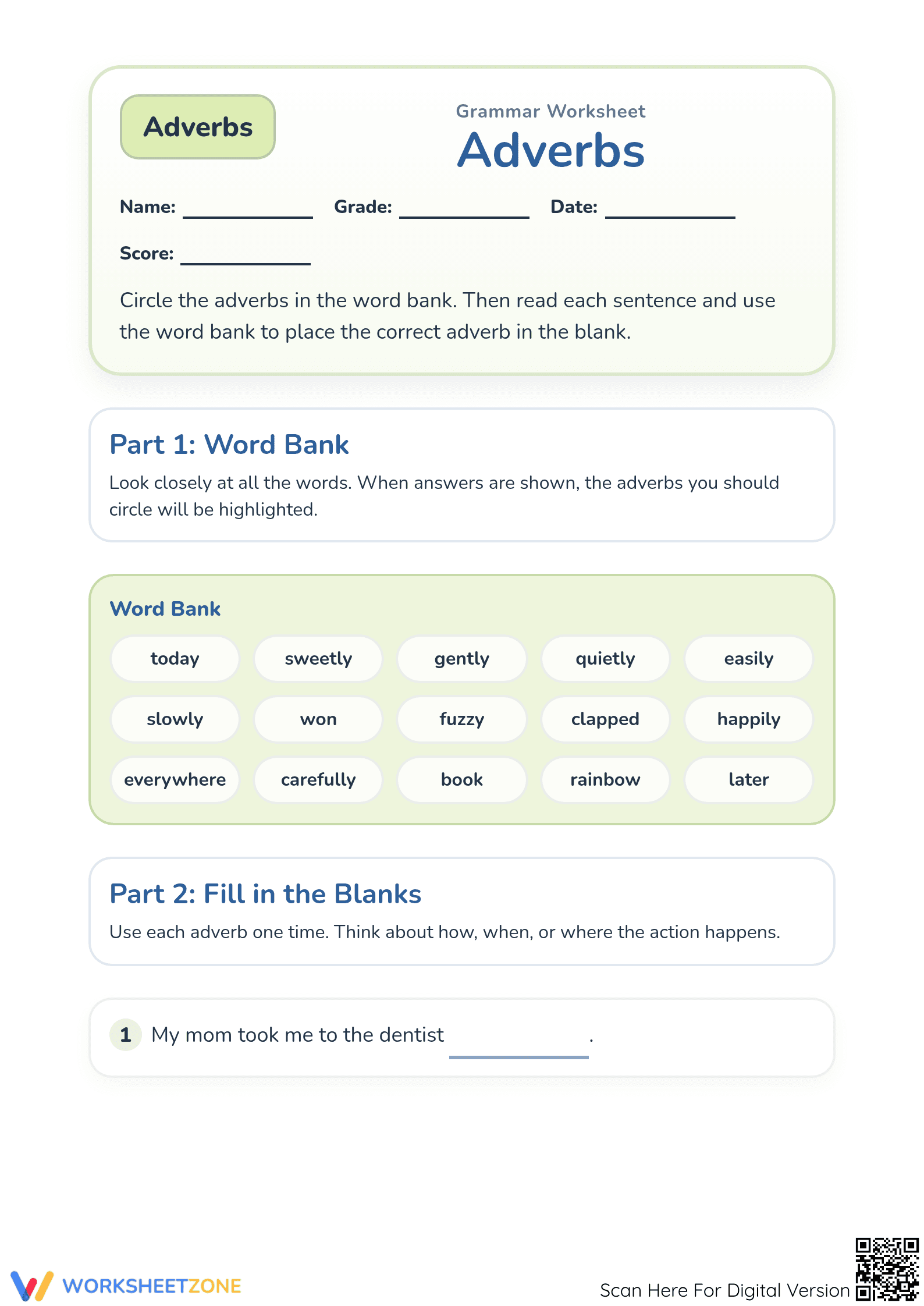
This Grade 1 adverbs worksheet provides students with focused practice in identifying and applying descriptive words that modify actions. By engaging with a curated word bank and contextual sentences, learners develop a foundational understanding of how, when, and where actions occur. This resource ensures students can accurately enhance their writing and reading comprehension through grammar mastery.
At a Glance
- Grade: 1 · Subject: ELA
- Standard:
CCSS.ELA-LITERACY.L.1.1— Demonstrate command of the conventions of standard English grammar and usage when writing- Skill Focus: Adverb identification and usage
- Format: 2 pages · 10 problems · Answer key included · PDF
- Best For: Independent grammar practice and homework
- Time: 15–20 minutes
What's Inside
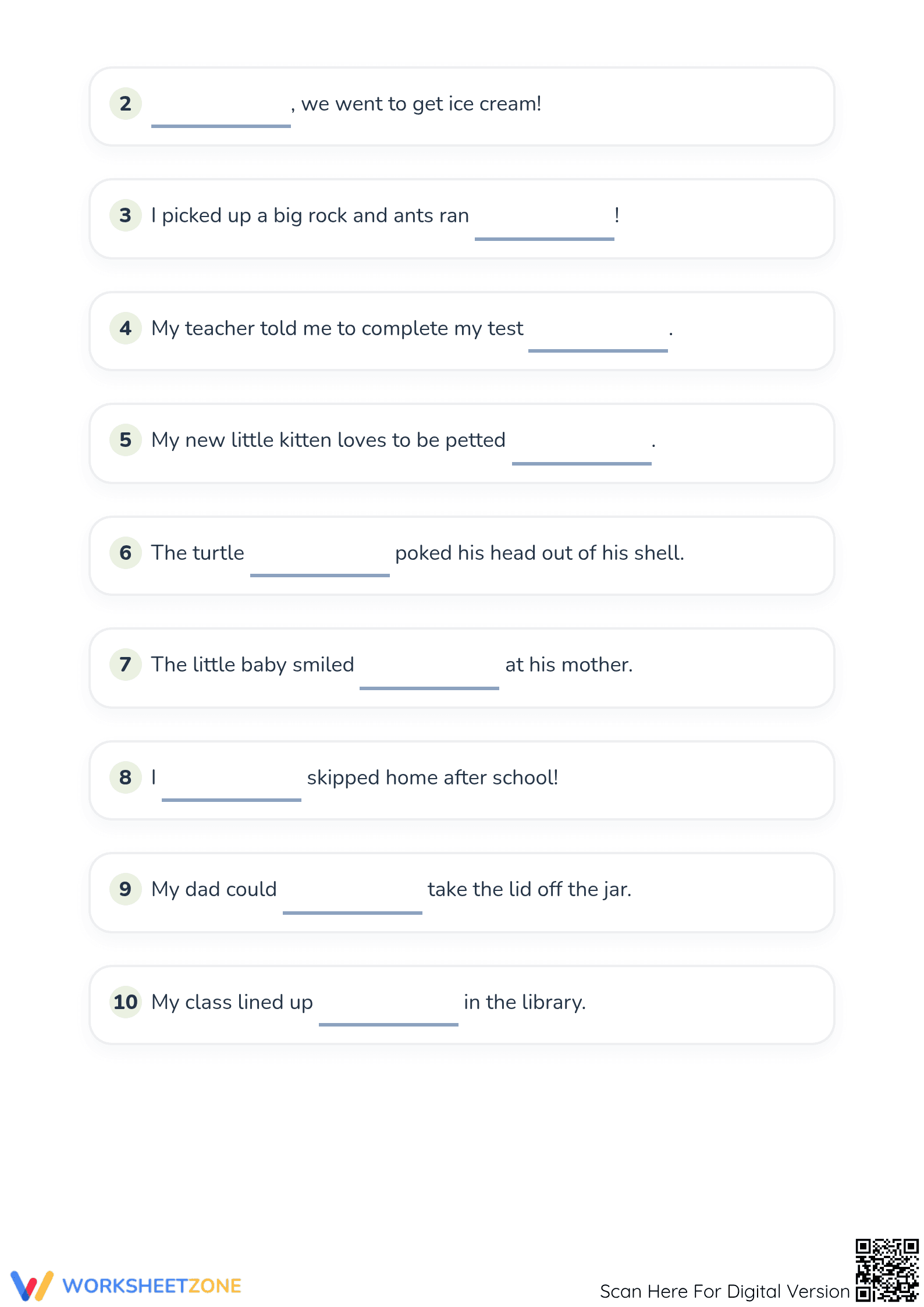
This 2-page PDF includes a comprehensive word bank containing 15 distinct terms where students must distinguish adverbs from other parts of speech. Following the identification phase, the worksheet presents 10 fill-in-the-blank sentences designed to test contextual application. A full answer key is provided to facilitate quick grading or student self-correction.
Skill Progression
- Guided Practice: The activity begins with identification in the word bank, serving as a guided recognition phase where students filter adverbs from nouns and verbs.
- Supported Practice: Students then move to supported application, selecting the most appropriate adverb from their identified list to complete specific sentences.
- Independent Practice: Finally, independent mastery is achieved as students evaluate the meaning of each sentence to ensure the chosen adverb logically describes the verb.
This gradual-release model builds student confidence by moving from simple recognition to complex contextual usage.
Standards Alignment
This resource is aligned with `CCSS.ELA-LITERACY.L.1.1`, which requires students to demonstrate command of the conventions of standard English grammar and usage. Specifically, it supports the development of lexical variety and sentence structure by introducing words that describe how actions are performed. Both standard codes can be copied directly into lesson plans, IEP goals, or district curriculum mapping tools.
How to Use It
Use this worksheet during the independent practice portion of a grammar lesson after introducing the concept of adverbs. It also serves as an excellent formative assessment tool; observe if students can distinguish between adverbs and nouns (like "book" or "rainbow") in the word bank. Expected completion time ranges from 15 to 20 minutes depending on reading level.
Who It's For
This is ideal for first-grade students or second-grade learners requiring remedial support. It pairs naturally with an anchor chart displaying "How, When, and Where" categories for adverbs and can be used as a standalone homework assignment or a quick sub-plan activity.
According to the RAND AIRS 2024 report, structured grammar practice that combines identification with contextual application significantly improves early literacy outcomes. This worksheet targets CCSS.ELA-LITERACY.L.1.1 by requiring students to recognize and use adverbs to describe actions, a key component of standard English conventions. Research from Fisher & Frey (2014) emphasizes that the gradual release of responsibility—moving from word bank recognition to sentence completion—helps solidify linguistic patterns in young learners. By isolating adverbs within a controlled vocabulary set, this resource reduces cognitive load while maximizing skill acquisition. Educators can utilize the 10-task structure to gather measurable data on student progress toward mastery. This evidence-based approach ensures that Grade 1 students develop the necessary syntactic awareness to transition from simple sentences to more descriptive, complex writing as they progress through the primary grades.


