




























Views
Downloads

Comparative Adjectives Worksheet | Grade 2 Essential

Paste this activity's link or code into your existing LMS (Google Classroom, Canvas, Teams, Schoology, Moodle, etc.).
Students can open and work on the activity right away, with no student login required.
You'll still be able to track student progress and results from your teacher account.
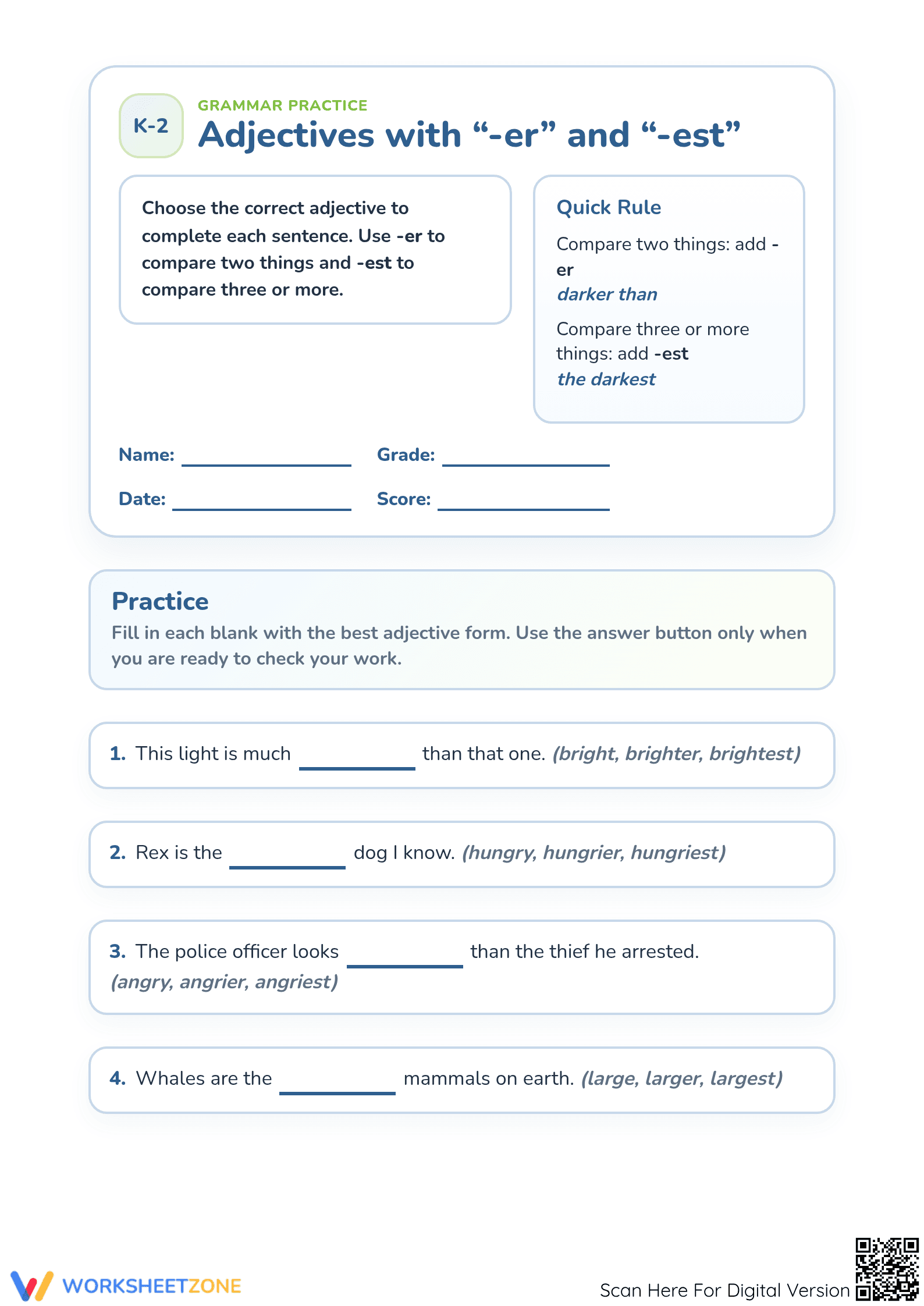
This Grade 2 grammar worksheet provides targeted practice for students learning to describe and compare nouns using comparative and superlative suffixes. By applying the correct adjective forms in context, learners develop a concrete understanding of how to modify words when comparing two items versus three or more. This resource ensures students can accurately communicate relative qualities in their writing.
At a Glance
- Grade: 2 · Subject: English Language Arts
- Standard:
CCSS.ELA-LITERACY.L.2.1.E— Use adjectives and adverbs to modify nouns and verbs correctly in sentences- Skill Focus: Comparative (-er) and Superlative (-est) Adjectives
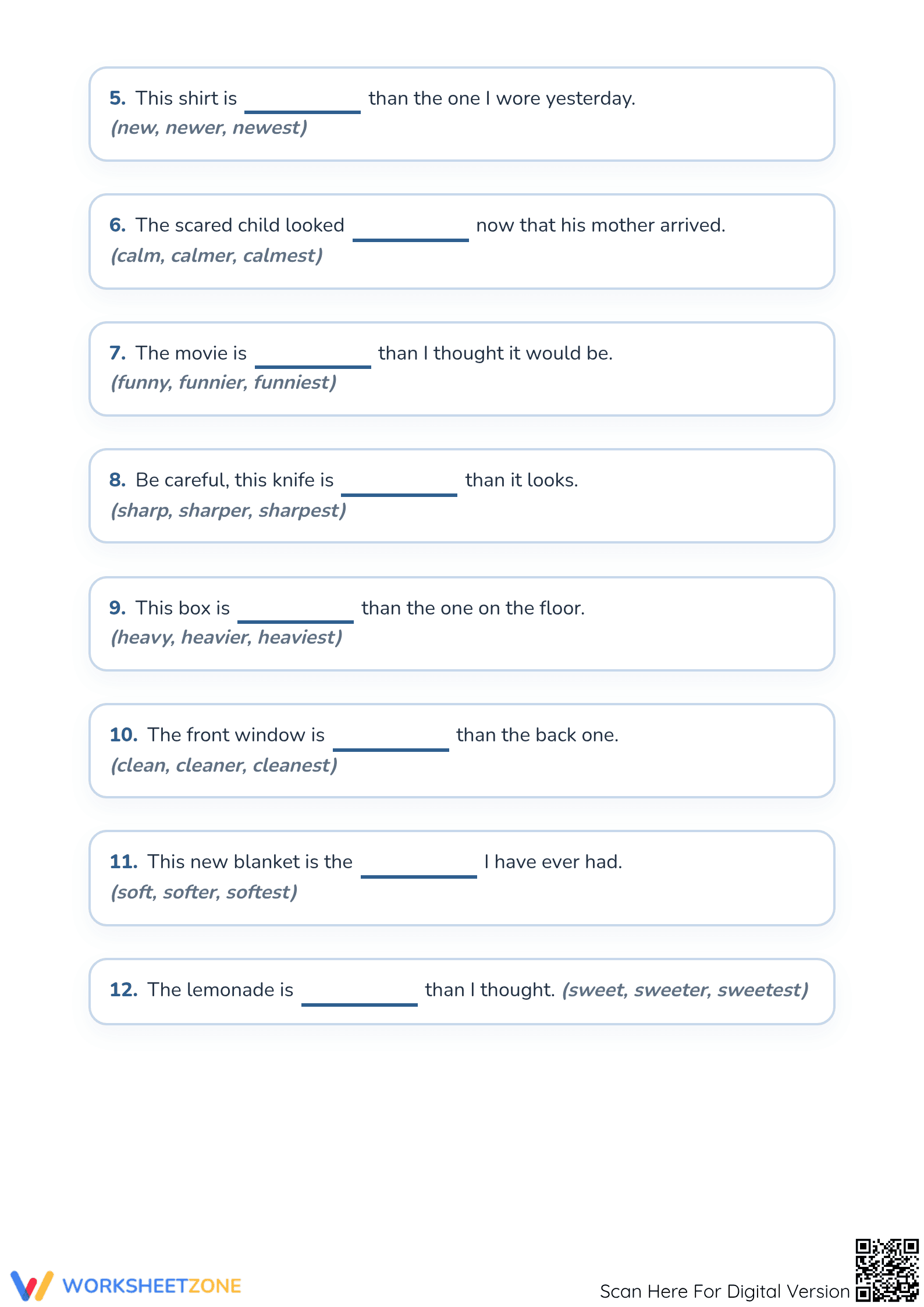
- Format: 2 pages · 12 problems · Answer key included · PDF
- Best For: Independent grammar practice or morning work
- Time: 15–20 minutes
The worksheet is structured to support independent student work. It features a "Quick Rule" reference box at the top of the first page, which serves as a permanent scaffold for students as they work through the exercises. The layout includes 12 fill-in-the-blank sentences, each paired with three adjective choices in parentheses (the base word, the comparative form, and the superlative form). This design reduces cognitive load while focusing strictly on the grammatical application of suffixes.
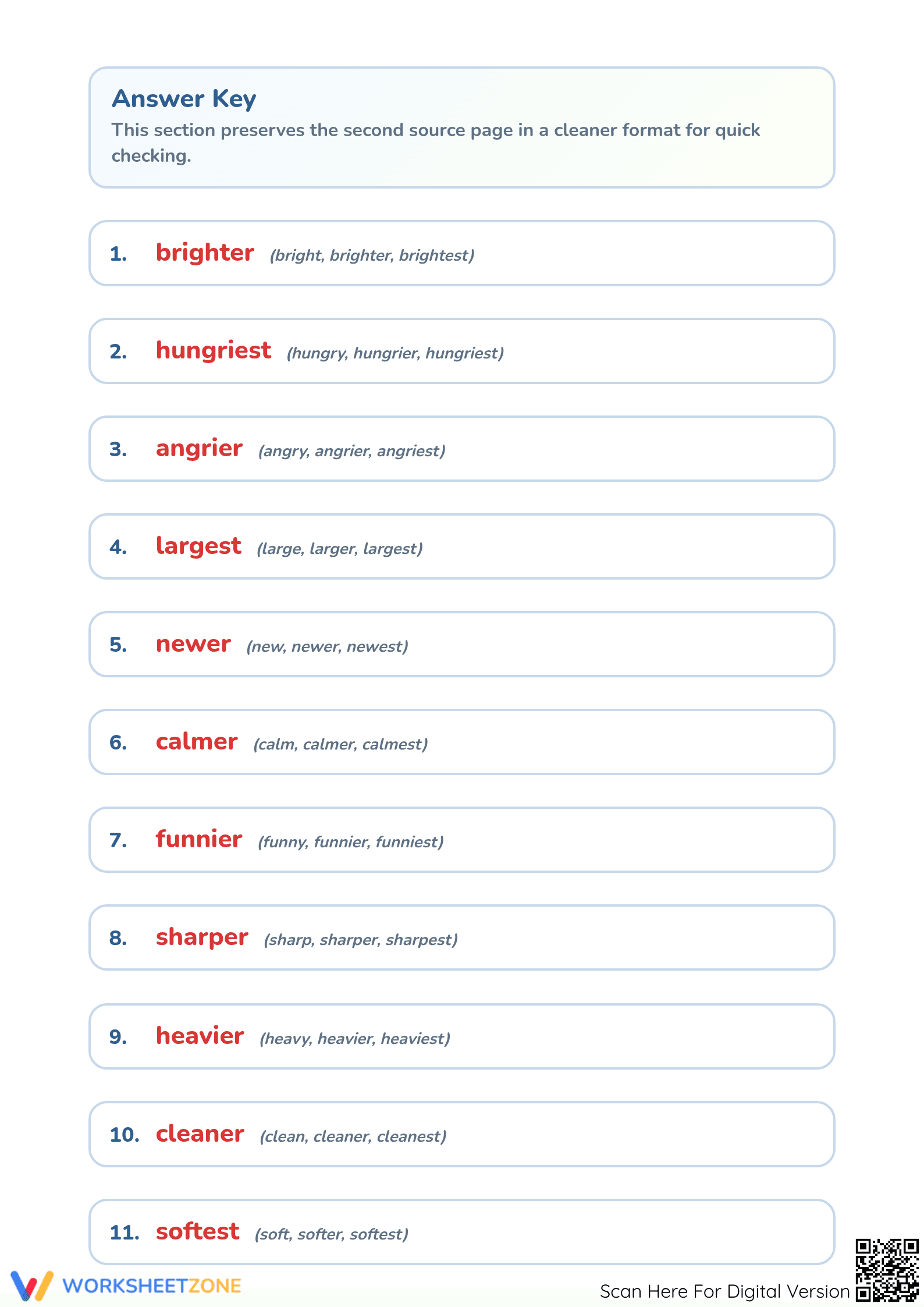
This resource follows a zero-prep workflow designed for busy educators. First, print the two-page document for your class. Second, distribute the sheets; the clear instructions and "Quick Rule" box mean students can begin immediately without a lengthy teacher introduction. Finally, review the work using the included full-page answer key, which allows for a 5-minute whole-class check or rapid individual grading. The entire process requires minimal preparation, making it an ideal choice for substitute plans or unexpected schedule shifts.
The content is strictly aligned to CCSS.ELA-LITERACY.L.2.1.E, which requires students to use adjectives and adverbs and choose between them depending on what is to be modified. While Grade 2 focuses on general usage, this worksheet introduces the formal mechanics of comparison that bridge the gap toward Grade 3 mastery. This standard code can be copied directly into lesson plans or district curriculum mapping tools to document evidence of standards-based instruction.
To maximize the impact of this worksheet, use it as a formative assessment after a direct instruction lesson on suffixes. As students work, circulate and observe if they are looking back at the "Quick Rule" box; this indicates they are utilizing available resources to solve problems. Alternatively, assign this as a homework reinforcement task. Most students will complete the 12 items within a 15-to-20-minute window, providing a clear snapshot of their ability to distinguish between comparing two things and comparing a group.
This resource is specifically designed for second-grade students, but it also serves as an excellent intervention tool for third graders who need a refresher on basic suffix rules. It is particularly helpful for English Language Learners (ELLs) who are navigating the nuances of English word endings. Pair this worksheet with a visual anchor chart or a short reading passage where students can highlight adjectives to deepen their comprehension.
Research emphasizes the importance of scaffolded grammar instruction where students move from guided rules to independent application. This worksheet facilitates that transition by providing a clear rule-based anchor alongside 12 contextualized practice items. By focusing on the specific standard CCSS.ELA-LITERACY.L.2.1.E, the resource ensures that students are not just memorizing endings but are applying them to modify nouns within logical sentence structures. Consistent practice with comparative and superlative forms is a recognized predictor of improved descriptive writing quality in early elementary grades.


