


























Views
Downloads

Printable Adjectives and Similes Worksheet | Grade 3 ELA
Paste this activity's link or code into your existing LMS (Google Classroom, Canvas, Teams, Schoology, Moodle, etc.).
Students can open and work on the activity right away, with no student login required.
You'll still be able to track student progress and results from your teacher account.
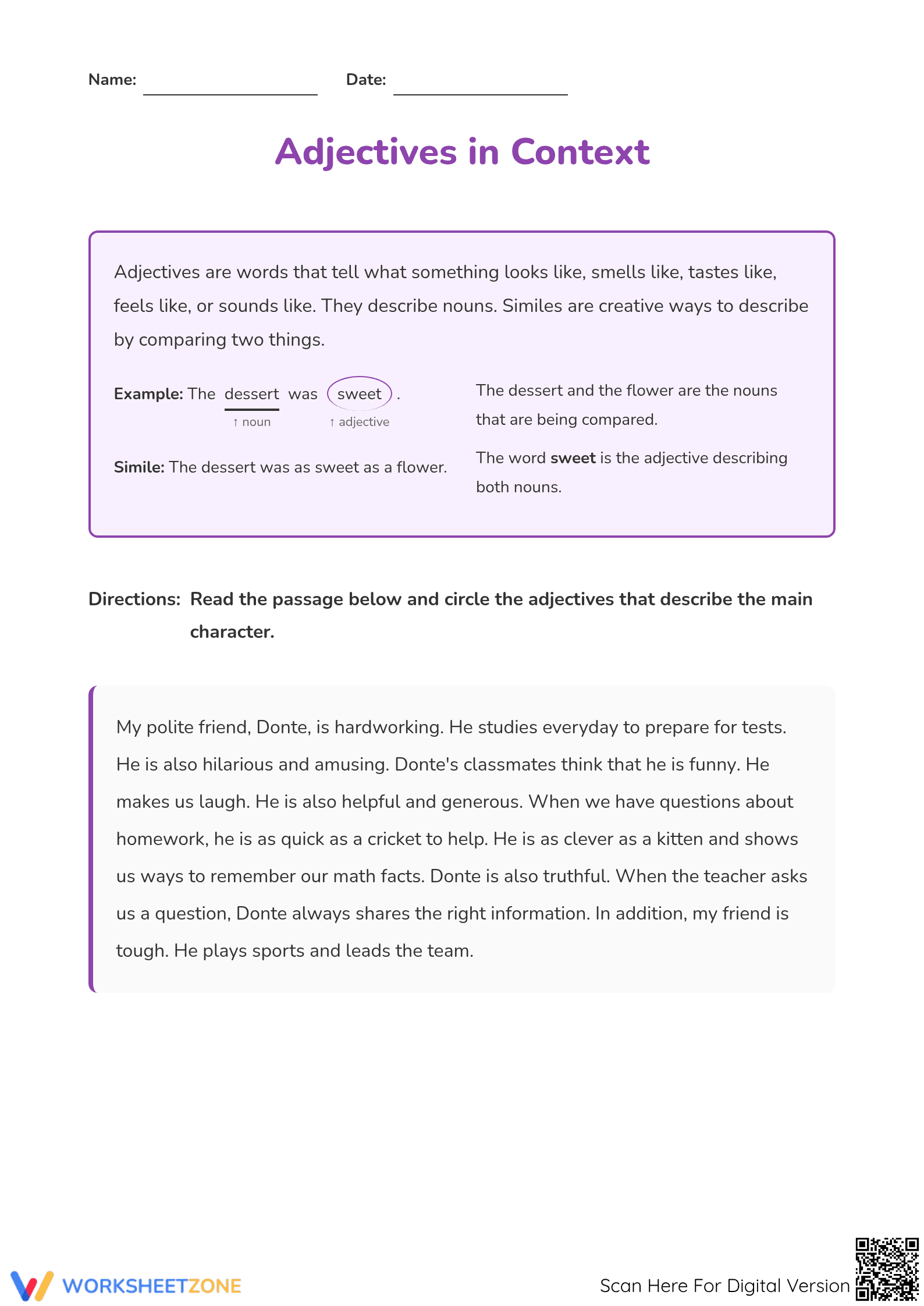
Students master the art of descriptive language with this targeted practice set. By identifying adjectives and similes within a narrative context, learners strengthen their ability to recognize how authors build character profiles. This two-page resource ensures third graders can distinguish between simple descriptors and figurative comparisons while organizing their findings for better retention.
At a Glance
- Grade: 3 · Subject: English Language Arts
- Standard:
L.3.1.A— Explain the function of adjectives and their effects in sentences- Skill Focus: Adjectives and Similes in Context
- Format: 2 pages · 9 problems · Answer key included · PDF
- Best For: Literacy centers and independent practice
- Time: 15–20 minutes
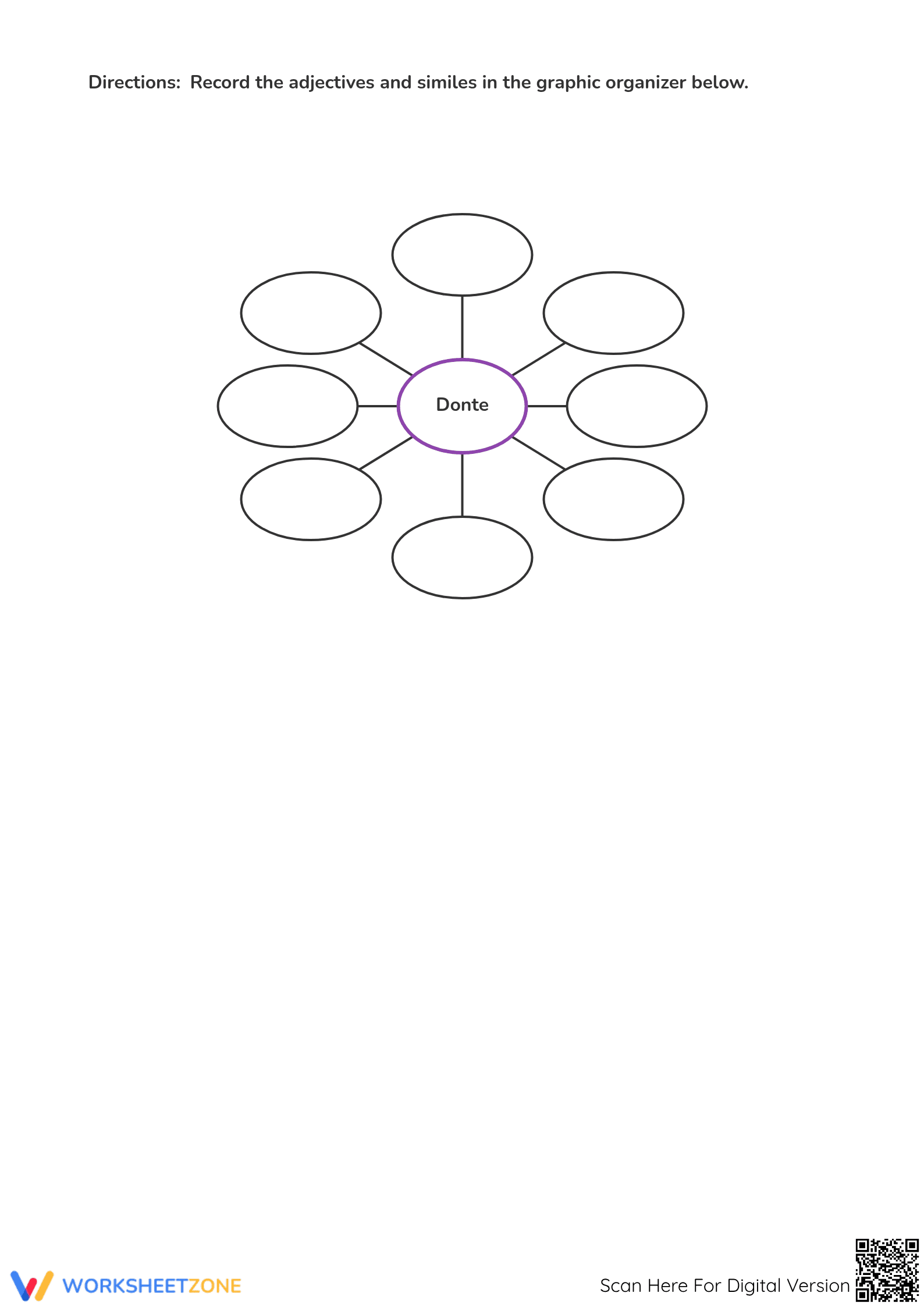
This comprehensive PDF includes a mentor text featuring a character named Donte, specifically designed to model high-frequency adjectives and relatable similes. The first page provides a clear definition block to anchor student understanding, followed by the character-driven passage. The second page features a radial graphic organizer where students transcribe their evidence, creating a visual map of the character's traits and descriptive comparisons.
- Guided Practice: Students review definitions and identify noun-adjective relationships in a worked example.
- Supported Practice: Learners read a passage about Donte, circling words that describe his personality.
- Independent Practice: Students extract findings and categorize them within a radial graphic organizer.
This resource follows a gradual-release model, moving from explicit definition to contextual identification and independent synthesis.
The primary focus is L.3.1.A, which requires students to explain the function of adjectives in particular sentences. Additionally, the inclusion of figurative language supports L.3.5.A, focusing on distinguishing literal and nonliteral meanings in context. Both standard codes can be copied directly into lesson plans, IEP goals, or district curriculum mapping tools.
Use this worksheet as a mid-lesson check after introducing character traits. It works exceptionally well in literacy rotations where students can work independently to apply their knowledge of modifiers. For a formative assessment, observe if students correctly identify the "quick as a cricket" simile; this indicates their readiness to move from literal adjectives to more complex figurative language. Completion typically takes 15 to 20 minutes.
This activity is designed for general education third graders, though the clear character-based narrative makes it an excellent choice for English Language Learners (ELLs) practicing personality vocabulary. Pair this worksheet with a character-study anchor chart or a short narrative passage to provide students with additional context for how adjectives function in professional writing.
According to a RAND AIRS 2024 analysis, integrating graphic organizers with contextual reading improves the retention of grammatical concepts in elementary learners. This worksheet leverages that research by requiring students to identify adjectives like "polite" and "hardworking" and map them visually. By focusing on standard L.3.1.A, the resource ensures Grade 3 students understand how descriptors function to create vivid mental images. The inclusion of similes provides a bridge to higher-order figurative language. Educational practitioners find that these structured interventions reduce the cognitive load of abstract grammar rules. This printable PDF serves as a tool for building the foundational mechanics required for narrative writing and comprehension. It provides evidence of student mastery for portfolios or progress monitoring.


