


























Views
Downloads

Essential Adjectives Practice | Grade 1 ELA Worksheet
Paste this activity's link or code into your existing LMS (Google Classroom, Canvas, Teams, Schoology, Moodle, etc.).
Students can open and work on the activity right away, with no student login required.
You'll still be able to track student progress and results from your teacher account.
This Grade 1 adjectives worksheet helps students master the art of description by identifying and using frequently occurring adjectives. Students move beyond simple naming to providing vivid details about nouns, improving their overall sentence structure and reading comprehension. By completing these exercises, learners gain confidence in selecting the right words to describe the world around them.
At a Glance
- Grade: 1 · Subject: ELA
- Standard:
CCSS.ELA-LITERACY.L.1.1.F— Use frequently occurring adjectives to describe people, places, and things- Skill Focus: Adjective identification and usage
- Format: 3 pages · 21 problems · Answer key included · PDF
- Best For: Independent practice or morning work
- Time: 20–30 minutes
What's Inside
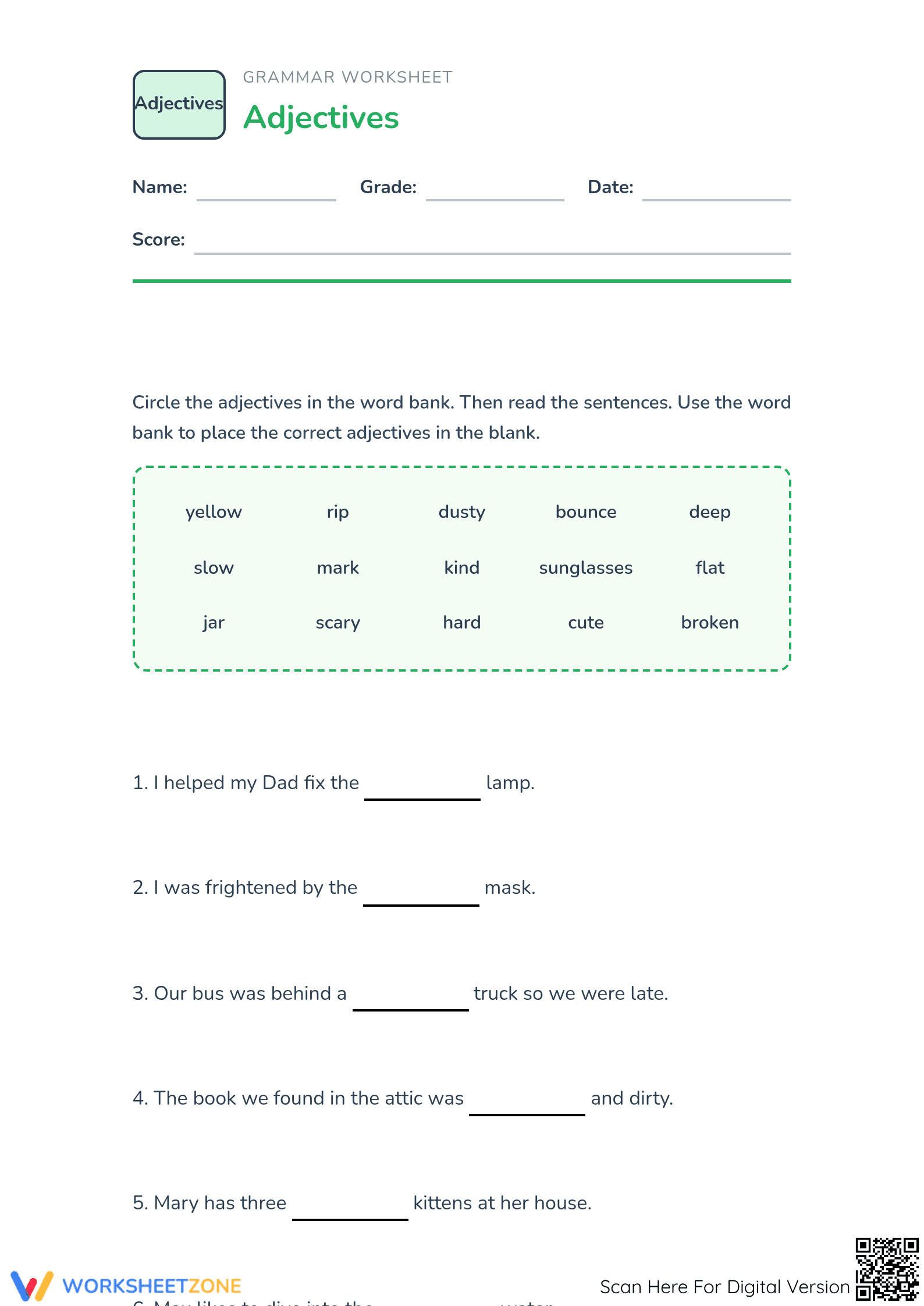
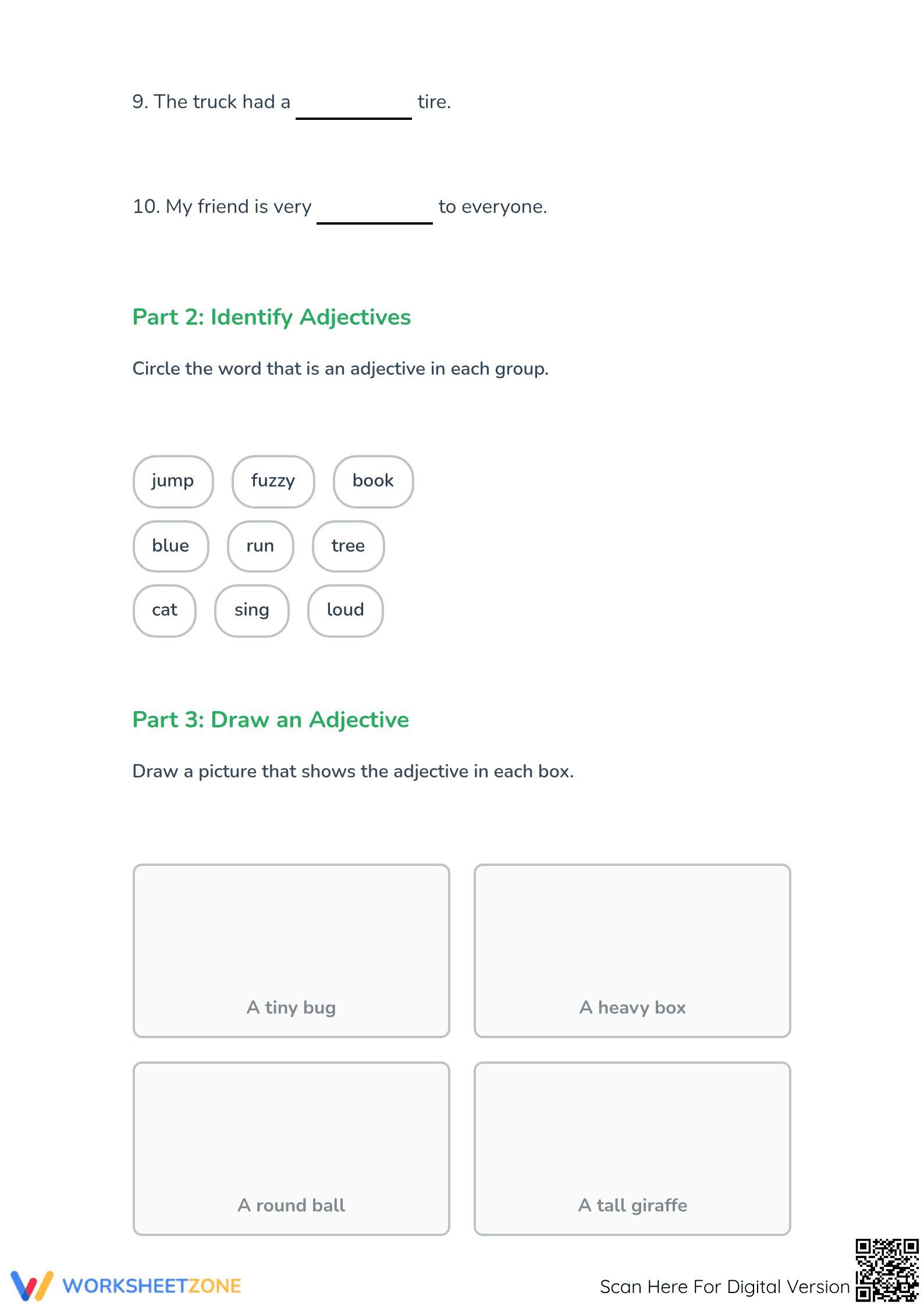
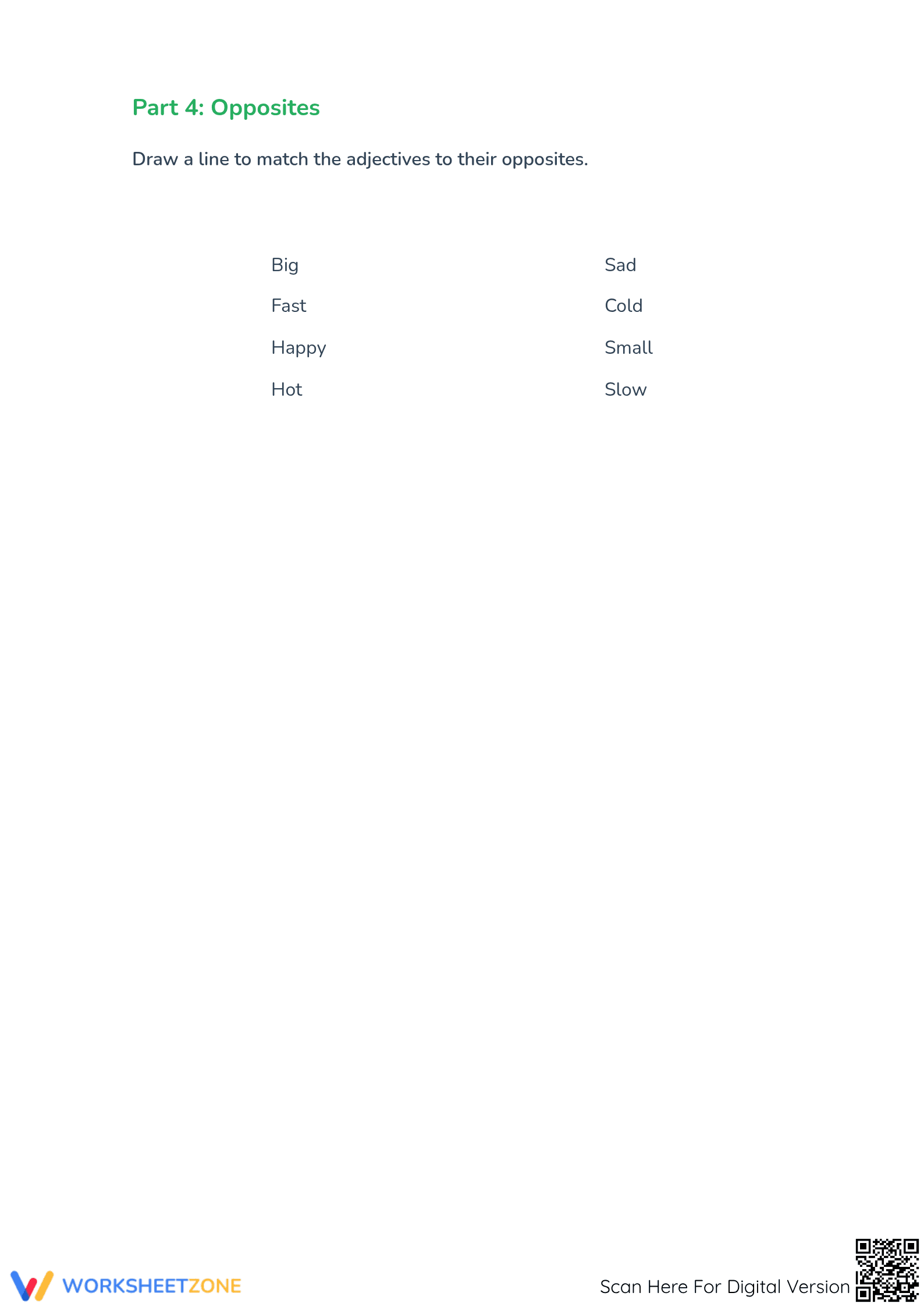
This comprehensive 3-page PDF includes a variety of engaging activities. Page one features a word bank where students must distinguish adjectives from other parts of speech before completing 10 fill-in-the-blank sentences. The second page continues with identification drills and a creative drawing section where students illustrate descriptive phrases. The final page focuses on semantic relationships through an opposites matching task. A full answer key is provided for quick grading and immediate feedback.
Zero-Prep Workflow
- Print: Select the three-page document and print enough copies for your class (approx. 30 seconds).
- Distribute: Hand out the packets for independent work, morning warm-ups, or as a reliable sub plan (approx. 30 seconds).
- Review: Use the included answer key to review the 21 tasks as a whole class or for individual grading (approx. 1 minute).
Total teacher preparation time is under 2 minutes, making this an ideal resource for busy classrooms.
Standards Alignment
The primary focus is `CCSS.ELA-LITERACY.L.1.1.F`, which requires students to use frequently occurring adjectives. By requiring students to match adjectives to nouns in context and identify them within word groups, the worksheet provides direct evidence of mastery. This standard code can be copied directly into lesson plans, IEP goals, or district curriculum mapping tools.
How to Use It
Use this worksheet during the independent practice phase of a gradual release lesson on grammar. It works exceptionally well as a formative assessment after a direct instruction session on describing words. Teachers should observe students during the "Draw an Adjective" section to ensure they understand the conceptual meaning of words like "heavy" or "tiny." Completion typically takes 20 to 30 minutes depending on the student's reading level.
Who It's For
This resource is tailored for first-grade students but serves as an excellent scaffold for second graders needing review or English Language Learners (ELLs) building their descriptive vocabulary. It pairs naturally with a mentor text rich in sensory language or a classroom anchor chart displaying common adjectives like colors, sizes, and feelings.
According to the RAND AIRS 2024 report on elementary literacy, structured grammar practice that combines identification with creative application, such as drawing or matching, significantly improves long-term retention of word classes. This worksheet aligns with those findings by targeting CCSS.ELA-LITERACY.L.1.1.F through multi-modal tasks. By engaging students in 21 distinct problems across three pages, the material ensures that the plain-English skill of using adjectives to describe people, places, and things is reinforced through repetition and varied cognitive demands. Research from Fisher & Frey (2014) suggests that such scaffolded practice is essential for moving students toward independent writing proficiency. This resource provides the necessary repetition for Grade 1 learners to internalize grammar rules without overwhelming them, making it a reliable tool for standard-aligned instruction and progress monitoring in early childhood ELA settings.


