


























Views
Downloads

Grade 1 Adjectives — Printable No-Prep Worksheet
Paste this activity's link or code into your existing LMS (Google Classroom, Canvas, Teams, Schoology, Moodle, etc.).
Students can open and work on the activity right away, with no student login required.
You'll still be able to track student progress and results from your teacher account.
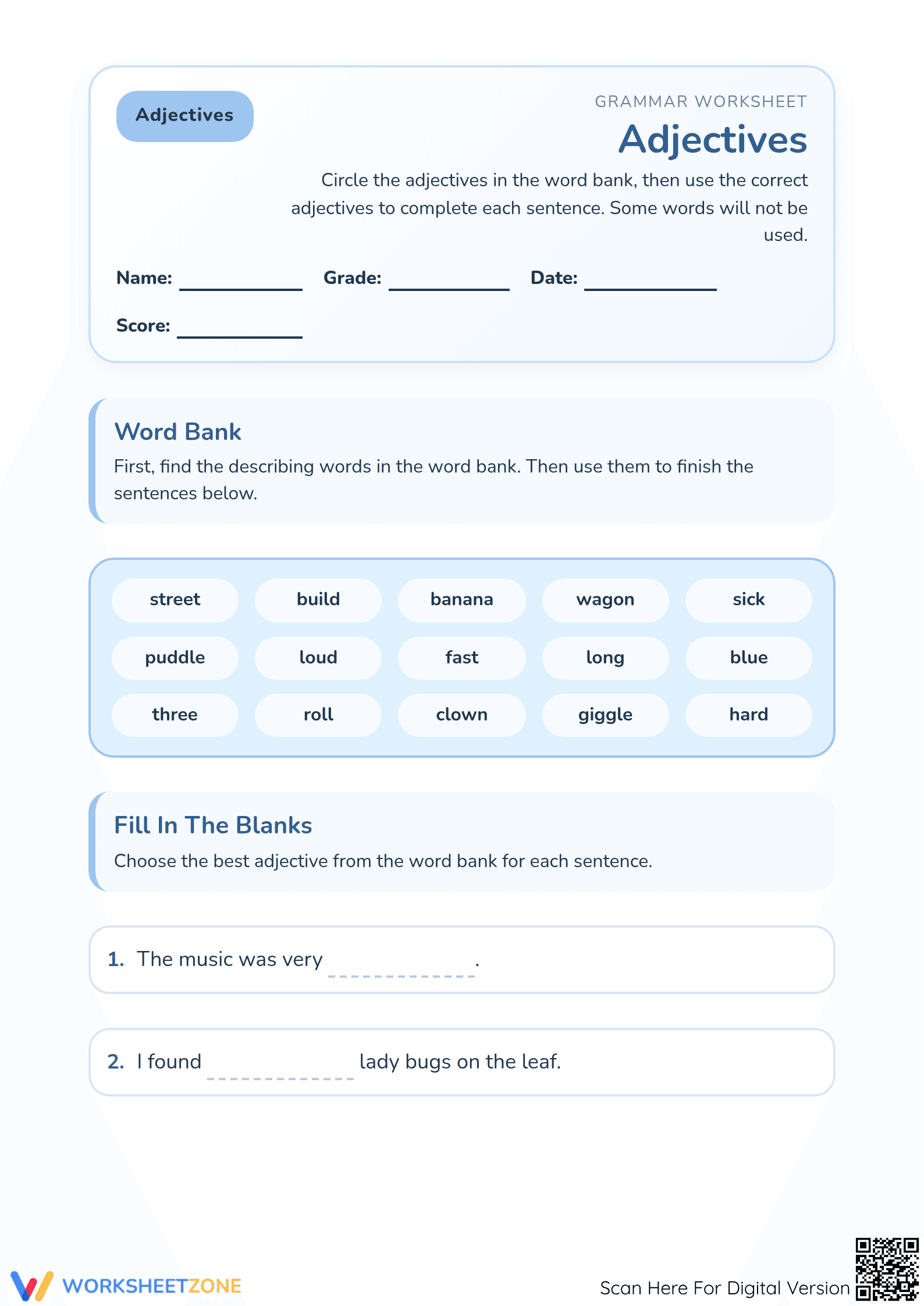
This Grade 1 adjectives worksheet helps students identify and apply descriptive words to enhance their writing and reading comprehension. By distinguishing adjectives from other parts of speech, learners build a foundation for expressive language. Students will practice selecting the most appropriate word to complete a thought, ensuring they understand how adjectives modify nouns effectively.
At a Glance
- Grade: 1 · Subject: ELA
- Standard:
CCSS.ELA-LITERACY.L.1.1.F— Use frequently occurring adjectives to describe people, places, and things- Skill Focus: Adjective identification and sentence completion
- Format: 2 pages · 20 tasks · Answer key included · PDF
- Best For: Independent practice or morning work
- Time: 15–20 minutes
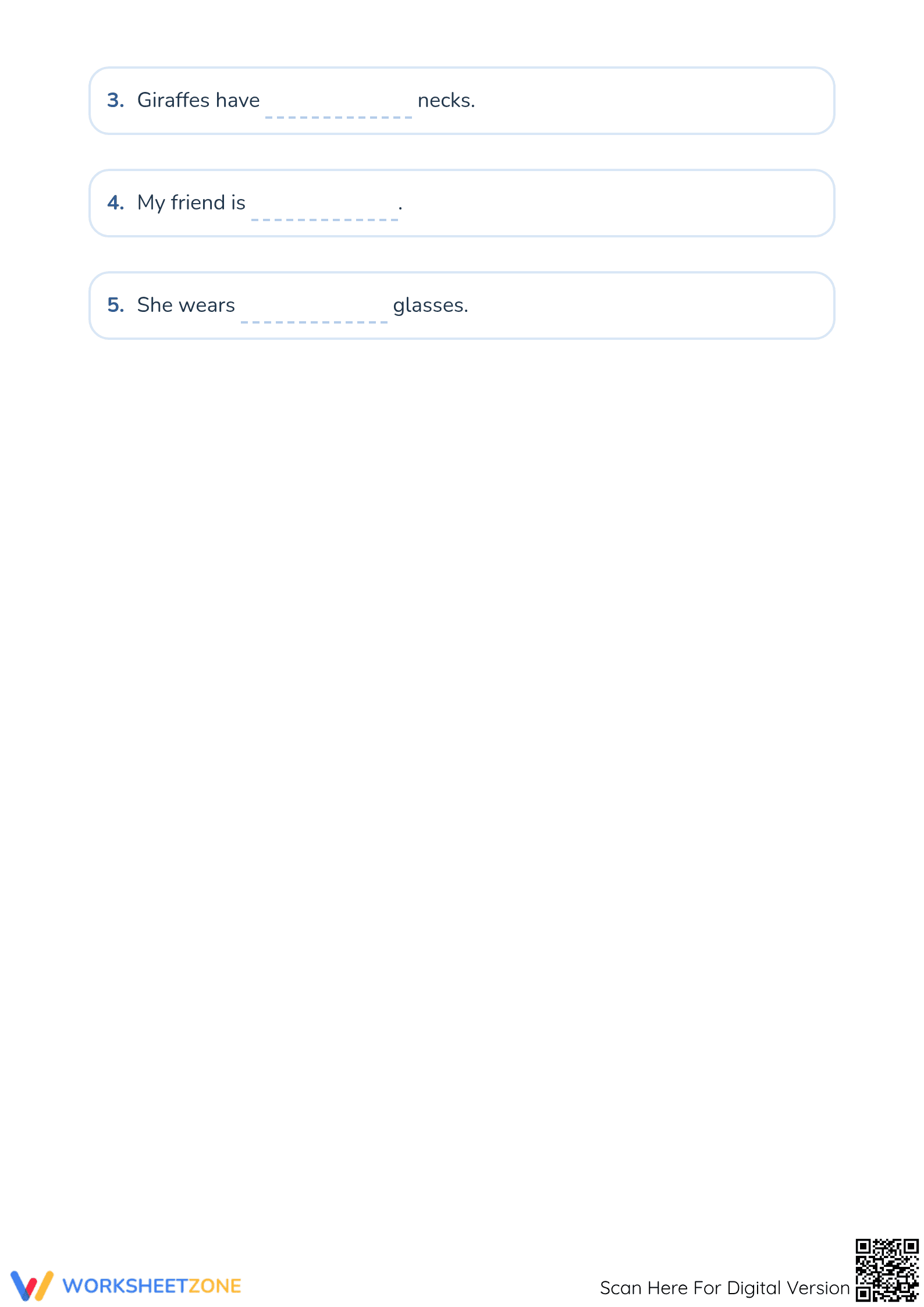
The resource contains two pages of focused grammar practice. It features a comprehensive word bank containing 15 distinct terms, including nouns, verbs, and adjectives. Students must first filter the list to find the describing words. Following this identification task, they encounter 5 contextual sentences with blanks designed for specific adjective placement. A clear answer key is provided for rapid grading and immediate student feedback.
Zero-Prep Workflow
- Print: Select the PDF and print enough copies for your class in under 30 seconds.
- Distribute: Hand out the two-page set; the clear instructions allow students to start immediately without a lengthy introduction.
- Review: Use the included answer key to check work in less than 1 minute per student, or review as a whole group to discuss why certain words fit better than others.
Standards Alignment
This activity is primary aligned with CCSS.ELA-LITERACY.L.1.1.F, which requires students to use frequently occurring adjectives. By requiring students to choose between adjectives and non-adjectives in the word bank, it also supports general language conventions and parts-of-speech categorization. Both standard codes can be copied directly into lesson plans, IEP goals, or district curriculum mapping tools.
How to Use It
Use this as a formative assessment after an introductory lesson on "describing words." It works well as a quiet independent practice activity while the teacher works with small groups. Alternatively, assign it as a homework task to reinforce the day's grammar focus. Expect students to spend 15 to 20 minutes completing both the sorting and the sentence completion phases. You can observe students during the circling phase to see who can distinguish between nouns like "wagon" and adjectives like "blue."
Who It's For
This worksheet is designed for first-grade students but serves as an excellent review for second graders or a scaffolded resource for English Language Learners (ELLs). It pairs perfectly with a classroom anchor chart listing common adjectives for colors, sizes, and feelings. The simple layout ensures that students with processing needs are not overwhelmed by visual clutter.
Research from Fisher & Frey (2014) emphasizes the importance of scaffolded vocabulary instruction, particularly the transition from word recognition to contextual application. This worksheet implements these findings by requiring students to first identify adjectives within a mixed list before applying them to complete meaningful sentences. By focusing on CCSS.ELA-LITERACY.L.1.1.F, the resource ensures that Grade 1 learners are mastering the frequently occurring adjectives necessary for early literacy success. The 20-task structure provides sufficient repetition to move the concept of describing words from short-term memory to long-term mastery. Such targeted practice is essential for developing the syntactic awareness required for more complex writing tasks in later primary grades. Educators can rely on this structured approach to provide evidence of student progress toward foundational ELA standards.


