


























Views
Downloads

Adjective Mastery Worksheet | Grade 2 Essential Printable
Paste this activity's link or code into your existing LMS (Google Classroom, Canvas, Teams, Schoology, Moodle, etc.).
Students can open and work on the activity right away, with no student login required.
You'll still be able to track student progress and results from your teacher account.
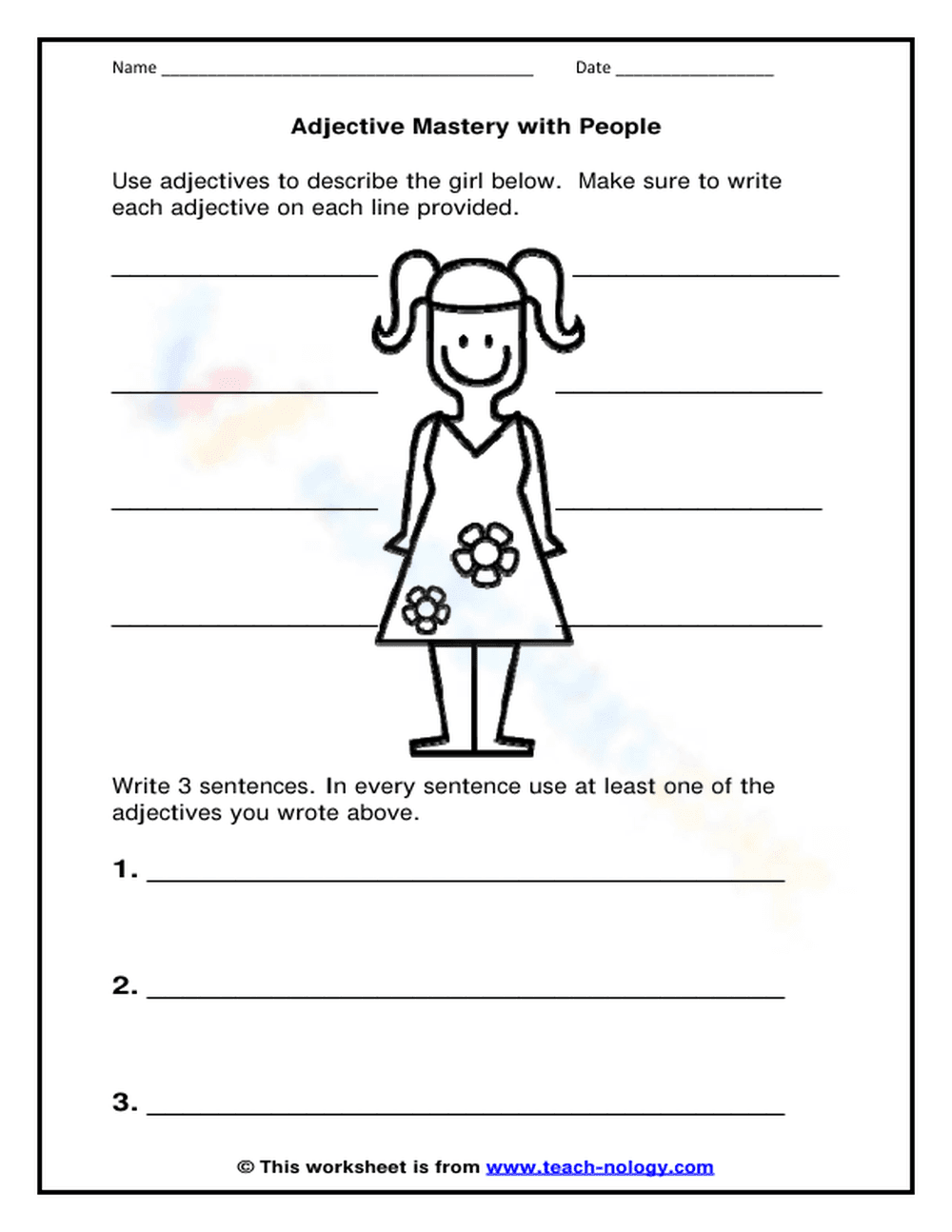
Strengthen your students' descriptive writing and grammar skills with this focused practice page designed to build confidence in using parts of speech. This Adjective Mastery worksheet provides a clear, structured path for learners to identify descriptive words and apply them in original sentences, ensuring they understand how adjectives modify nouns to create vivid imagery for the reader.
At a Glance
- Grade: 2 · Subject: English Language Arts
- Standard:
CCSS.ELA-LITERACY.L.2.1.E— Use adjectives and adverbs to modify nouns and verbs accurately- Skill Focus: Descriptive Adjectives
- Format: 1 page · 11 tasks · Answer key included · PDF
- Best For: Small group grammar practice or warm-ups
- Time: 15–20 minutes
Inside this resource, you will find a single-page layout featuring a central visual prompt of a character named Suzy. The worksheet is divided into two distinct sections: an eight-line brainstorming area for isolated adjective practice and a three-line section for sentence-level application. The clean design includes a word-level scaffold that helps students organize their thoughts before moving into more complex writing, accompanied by a full answer key for teacher reference.
- Guided Brainstorming: Students begin with 8 lines of brainstorming, identifying specific traits to describe the provided character, which encourages vocabulary expansion and word-choice precision.
- Supported Sentence Building: After selecting their best descriptive words, students transition to writing 3 original sentences, ensuring they can move from isolated parts of speech to functional syntax.
- Independent Application: The final task requires students to self-select and integrate their chosen adjectives into coherent sentences, demonstrating a complete grasp of the descriptive writing process.
This resource is fully aligned to CCSS.ELA-LITERACY.L.2.1.E, which requires students to use adjectives and adverbs and choose between them depending on what is to be modified. It also supports introductory work for higher-grade standards involving the order of adjectives and sensory language. Both standard codes can be copied directly into lesson plans, IEP goals, or district curriculum mapping tools.
To use this worksheet effectively, assign it as a morning warm-up after introducing the concept of adjectives to reinforce the "I Do, We Do, You Do" instructional model. Teachers should observe students during the brainstorming phase to ensure they are selecting descriptive adjectives rather than nouns or verbs. This worksheet typically takes 15 to 20 minutes to complete and serves as an excellent formative assessment for tracking descriptive writing progress.
This resource is ideal for Grade 2 and Grade 3 students, as well as English Language Learners (ELL) who need visual support to understand word-to-object relationships. It pairs naturally with a character-based reading passage or an anchor chart displaying common sensory adjectives to provide additional scaffolding for struggling writers.
According to the RAND AIRS 2024 report on elementary literacy, structured grammar interventions that bridge isolated word identification with sentence-level application are critical for early writing fluency. This Adjective Mastery worksheet addresses the CCSS.ELA-LITERACY.L.2.1.E standard by requiring students to move beyond simple recall toward descriptive precision. By identifying eight distinct traits for a single subject, learners develop a robust internal lexicon that supports more complex narrative and informational writing tasks in later grades. Research from Fisher & Frey (2014) emphasizes that the gradual release of responsibility—moving from guided brainstorming to independent sentence construction—ensures that grammatical concepts are internalized rather than merely memorized. This resource provides the necessary scaffolding to ensure that students can confidently utilize adjectives to modify nouns in diverse linguistic contexts, satisfying core curriculum requirements while fostering creative expression through evidence-based instructional design and focused vocabulary practice.


