


























Views
Downloads

Essential Grade 2 Math: Addition without Regrouping Worksheet
Paste this activity's link or code into your existing LMS (Google Classroom, Canvas, Teams, Schoology, Moodle, etc.).
Students can open and work on the activity right away, with no student login required.
You'll still be able to track student progress and results from your teacher account.
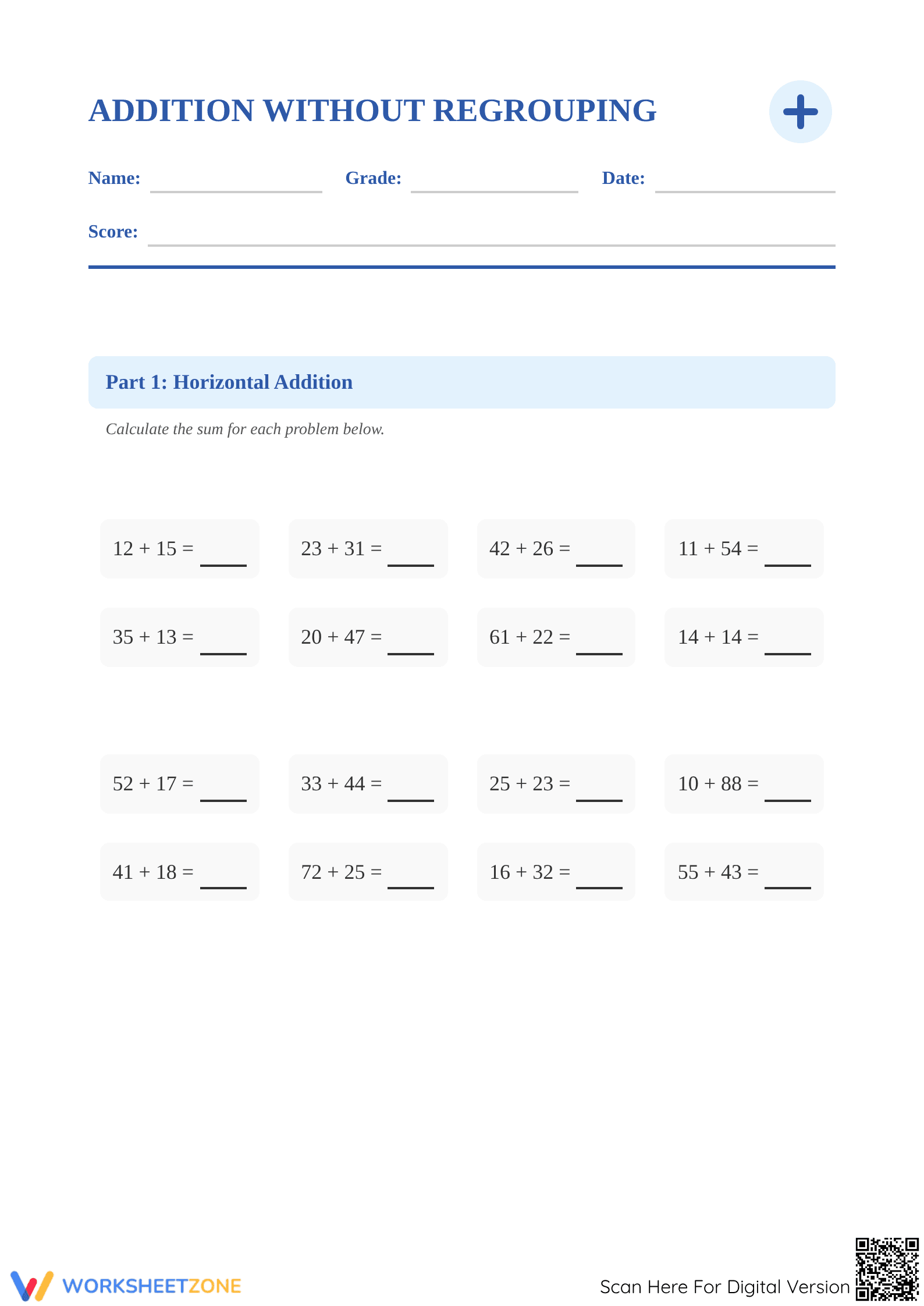
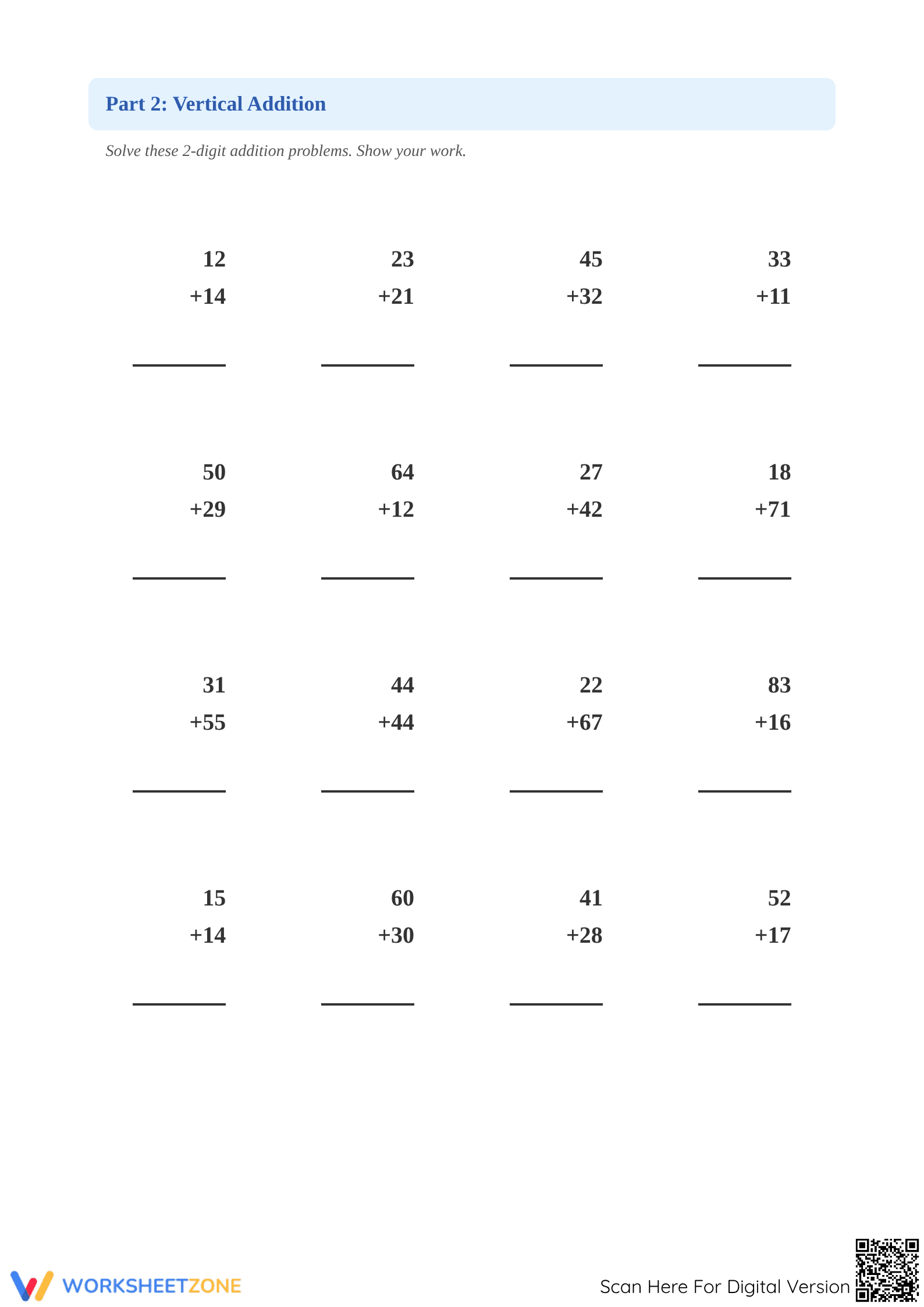
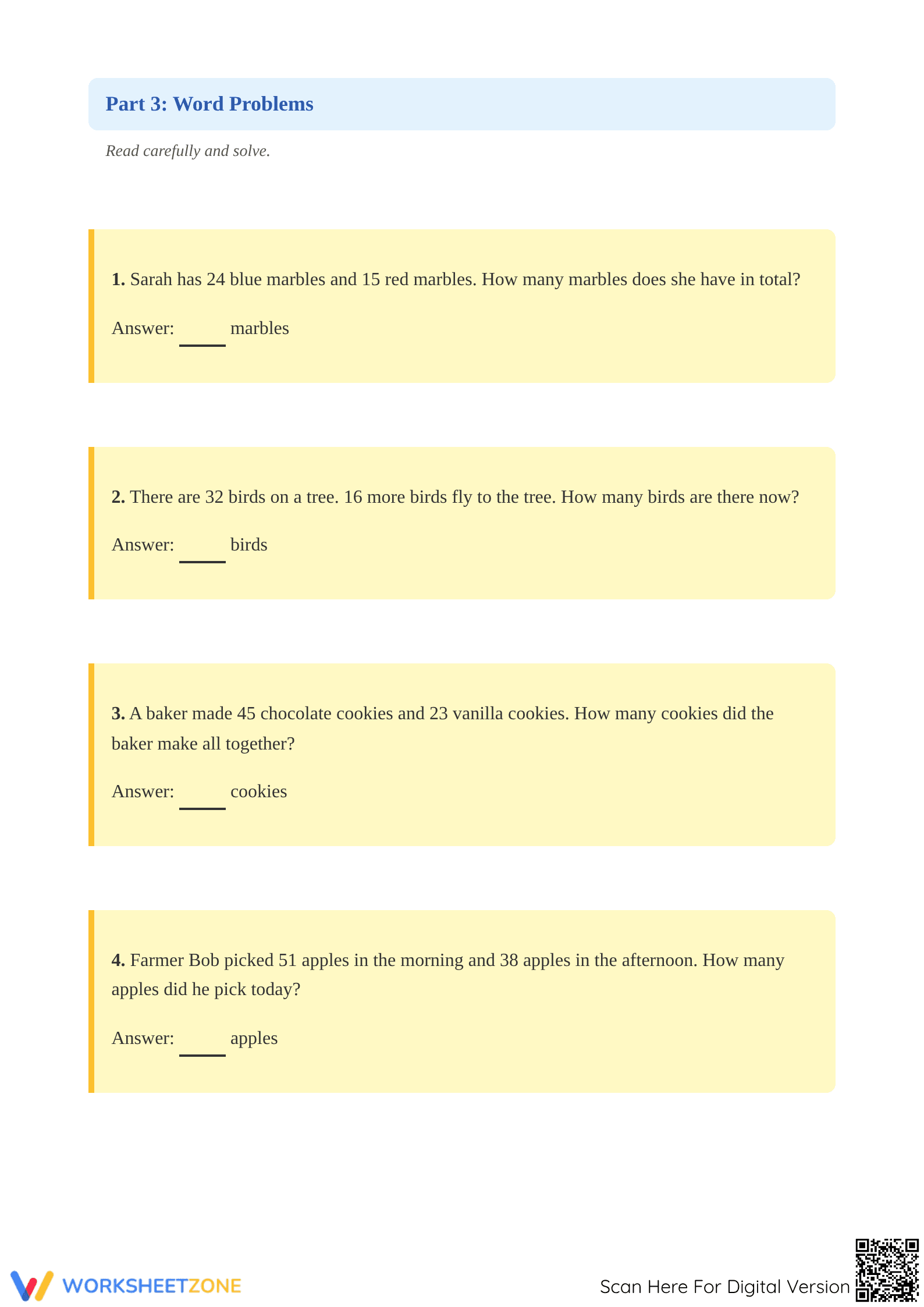
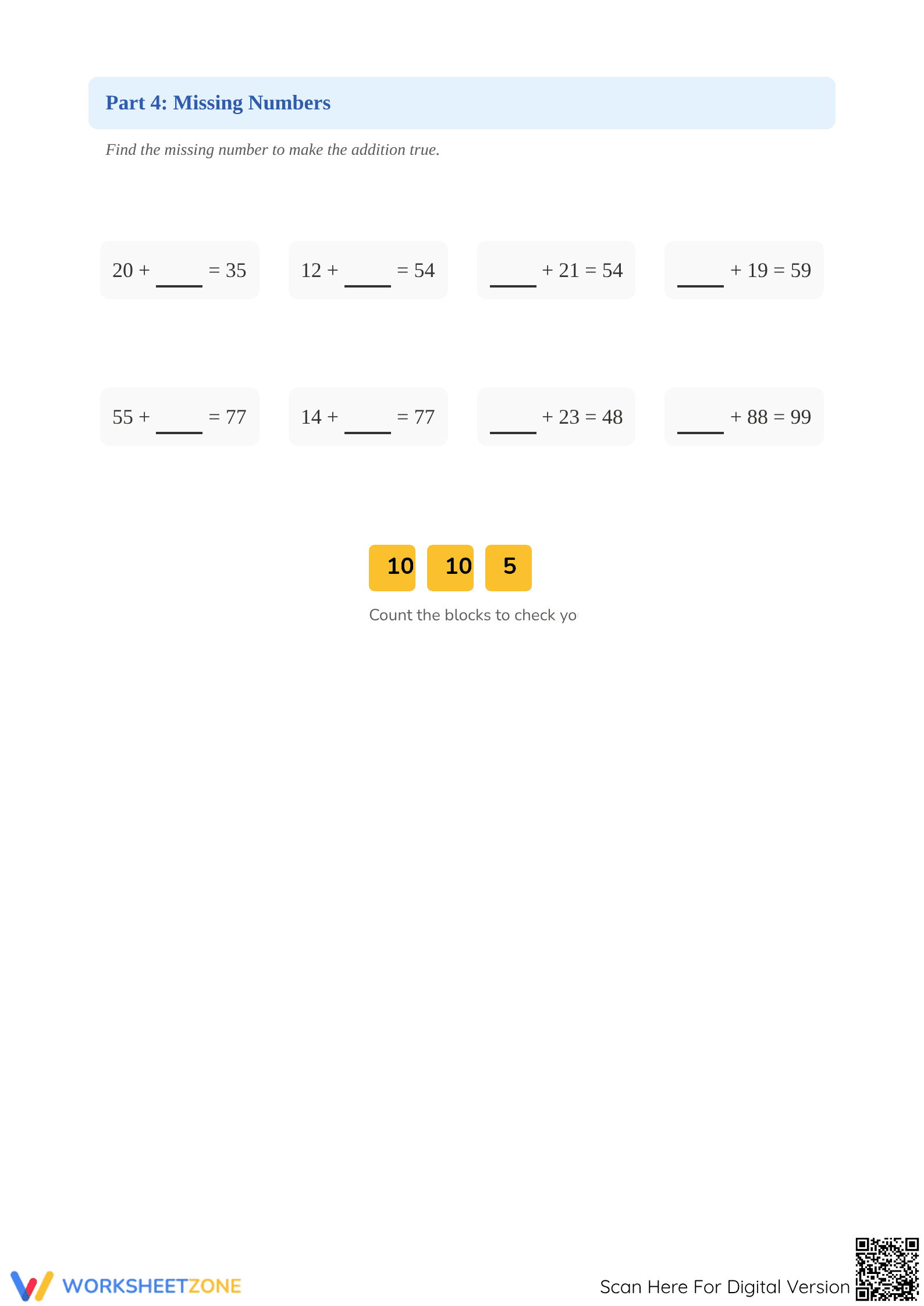
This Grade 2 addition without regrouping worksheet provides students with comprehensive practice to master two-digit addition using place value strategies. Students transition from horizontal and vertical formats to real-world word problems and missing number logic. This structured approach ensures fluency and builds a strong foundation for future regrouping concepts.
At a Glance
- Grade: 2 · Subject: Math
- Standard:
CCSS.MATH.CONTENT.2.NBT.B.5— Fluently add within 100 using place value strategies- Skill Focus: 2-digit addition without regrouping
- Format: 4 pages · 44 problems · Answer key included · PDF
- Best For: Independent practice or morning work packets
- Time: 30–45 minutes
This 4-page PDF packet includes 44 targeted addition problems across four distinct sections. Students begin with 16 horizontal equations, move to 16 vertical problems to practice alignment, solve 4 context-heavy word problems, and finish with 8 missing number challenges. A full answer key is provided for quick grading or student self-correction.
Zero-Prep Workflow
- Print: Select all 4 pages or specific sections for focused practice (30 seconds).
- Distribute: Hand out to students for morning work, sub plans, or homework (1 minute).
- Review: Use the included answer key for immediate feedback or peer-grading sessions (2 minutes).
This resource requires zero teacher preparation time and is designed for immediate classroom implementation in any Grade 2 setting.
Standards Alignment
CCSS.MATH.CONTENT.2.NBT.B.5 — "Fluently add and subtract within 100 using strategies based on place value, properties of operations, and/or the relationship between addition and subtraction." This worksheet specifically targets the addition fluency aspect of the standard by isolating place value addition without the complexity of carrying. Both standard codes can be copied directly into lesson plans, IEP goals, or district curriculum mapping tools.
How to Use It
Use this worksheet as a formative assessment after introducing two-digit addition concepts to verify place value understanding. It also serves as an excellent "early finisher" packet or a reliable sub-plan resource due to its self-explanatory instructions. Monitor for alignment errors in vertical problems to catch common place-value misconceptions early. Completion typically takes 30 to 45 minutes.
Who It's For
This resource is ideal for Grade 2 students working toward fluency, or Grade 1 advanced learners ready for two-digit numbers. It provides necessary scaffolding for students who struggle with regrouping by allowing them to focus purely on operation logic. Pair this with base-ten blocks or a hundreds chart for additional visual support during instruction.
The CCSS.MATH.CONTENT.2.NBT.B.5 standard emphasizes the importance of strategy-based fluency in early mathematics. Research from Fisher & Frey (2014) indicates that scaffolding from isolated skills to applied word problems, as seen in these 44 tasks, significantly improves long-term retention of operational procedures. By removing the cognitive load of regrouping, students can focus on the underlying structure of the base-ten system. This worksheet aligns with EdReports 2024 recommendations for high-quality, targeted practice materials that balance procedural skill with conceptual understanding. Educators can use the variety of horizontal, vertical, and logical missing-number tasks to identify specific gaps in place value comprehension. The inclusion of word problems ensures that students don't just memorize algorithms but understand the application of addition in real-world contexts, making it a robust tool for meeting core curriculum requirements.


