


























Views
Downloads

Printable Grade 2 Math: Brunei Notes Addition & Subtraction
Paste this activity's link or code into your existing LMS (Google Classroom, Canvas, Teams, Schoology, Moodle, etc.).
Students can open and work on the activity right away, with no student login required.
You'll still be able to track student progress and results from your teacher account.
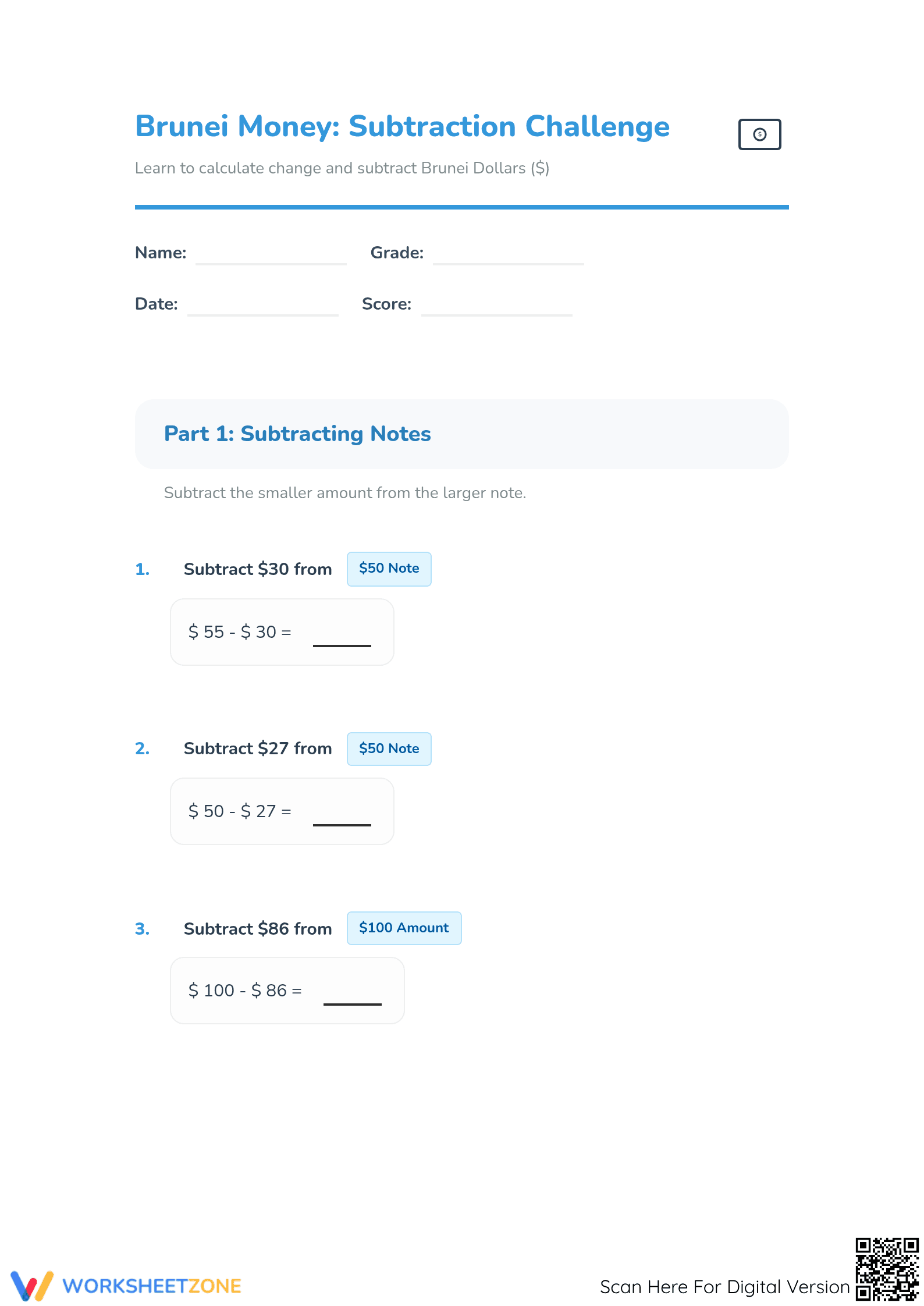
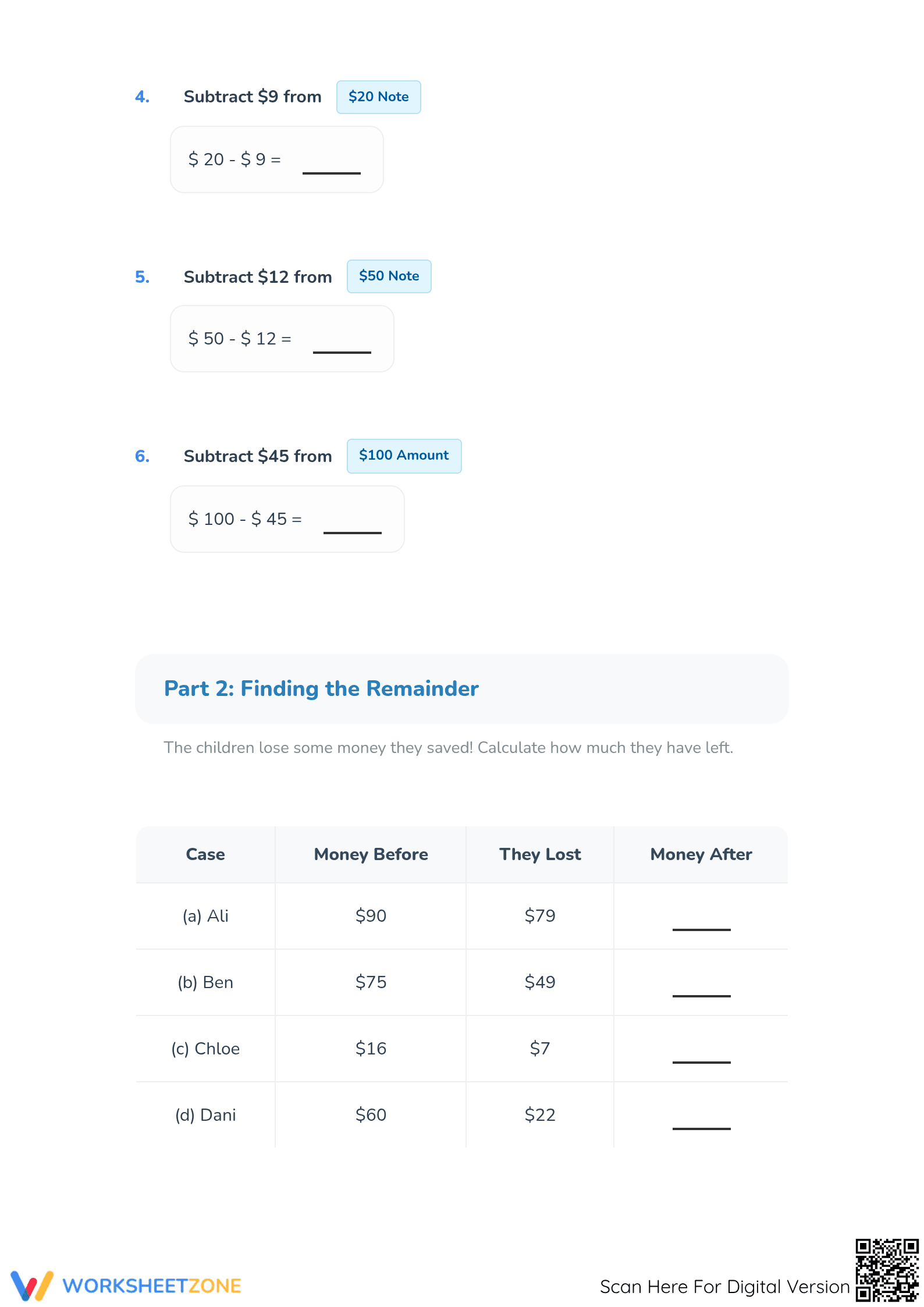
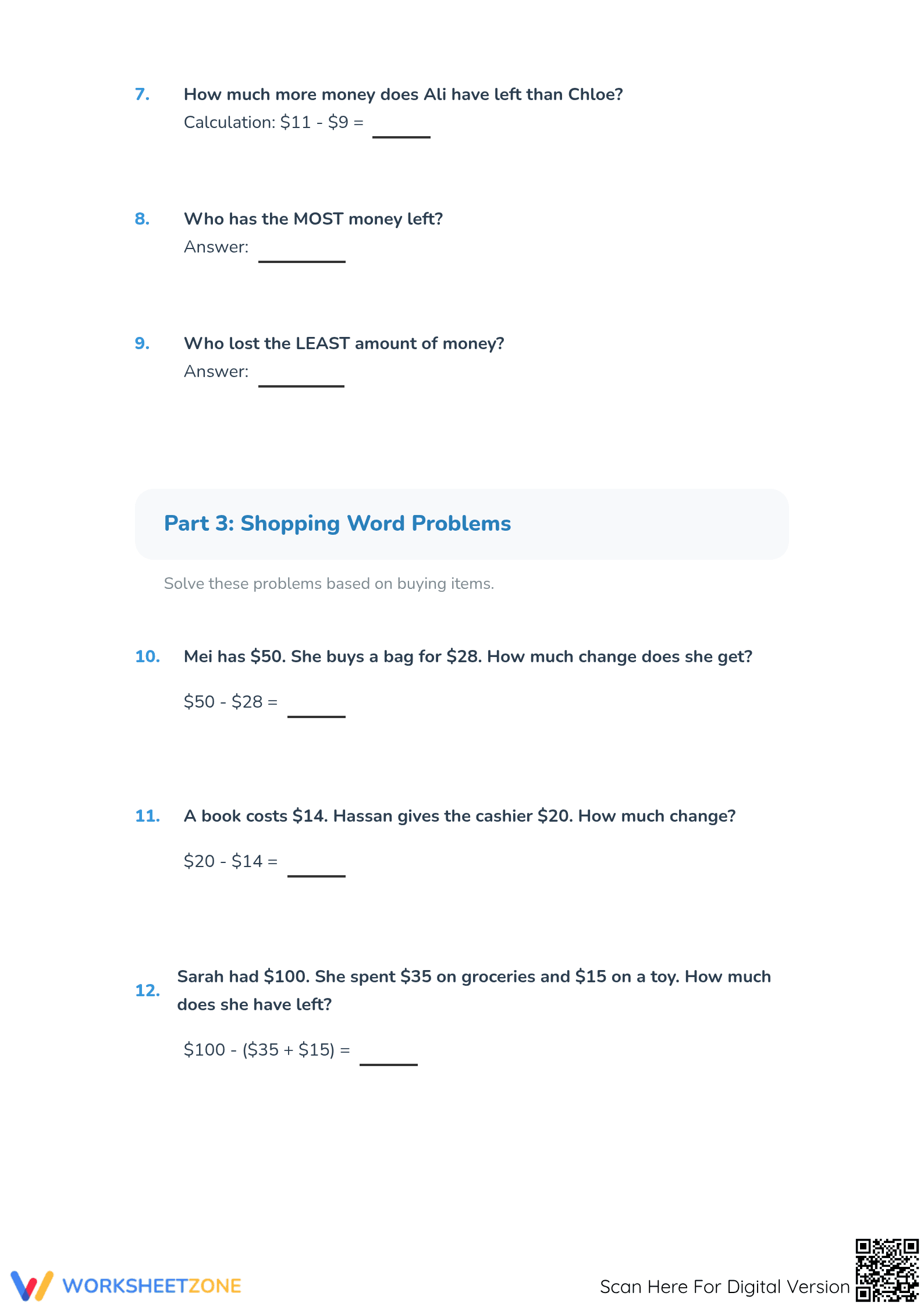
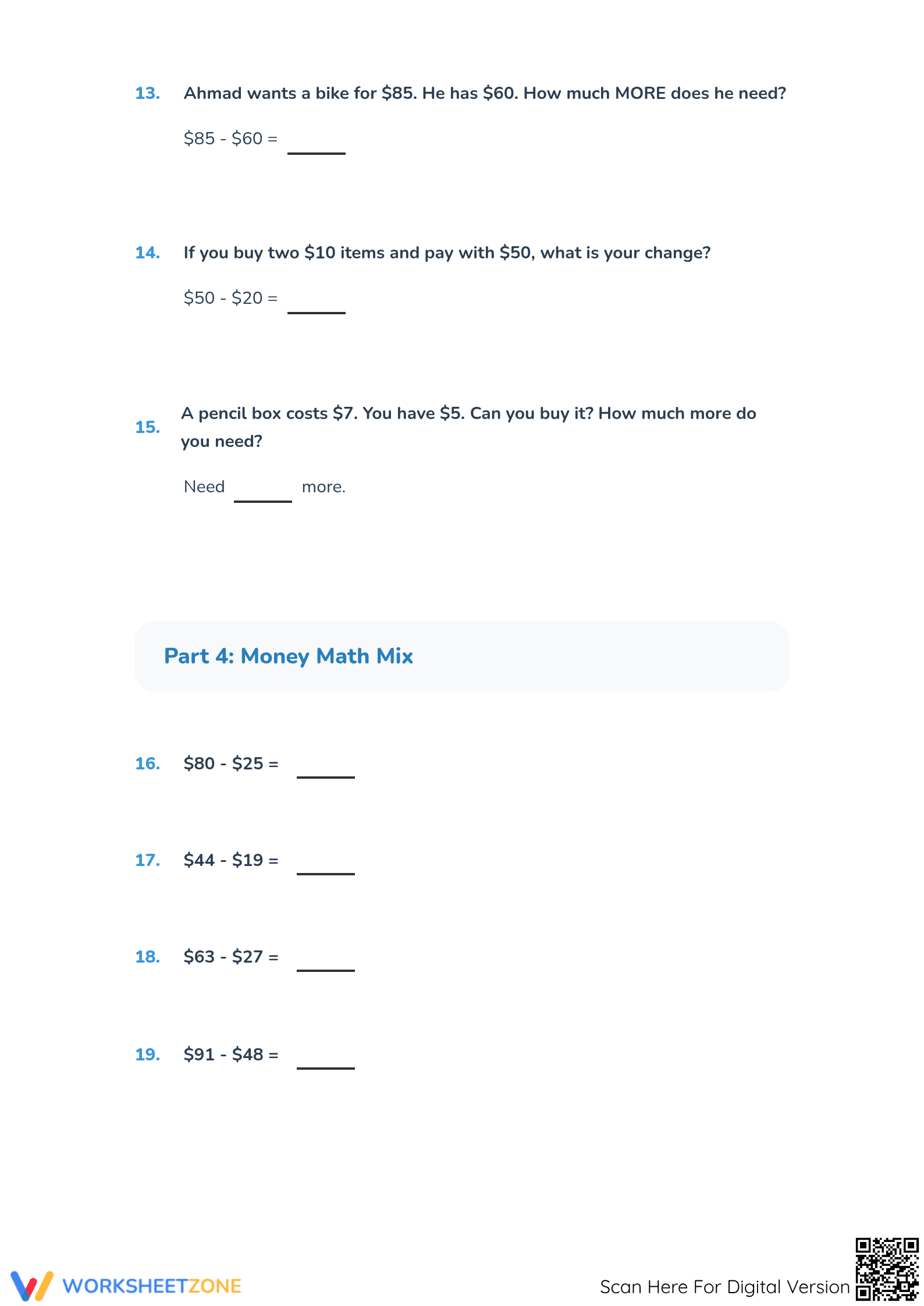
This Addition and Subtraction of Brunei Notes worksheet provides Grade 1 and Grade 2 students with essential practice in performing arithmetic operations with international currency. Students will calculate totals and differences using various denominations of Brunei currency notes, developing both numerical fluency and real-world financial literacy in a structured format.
At a Glance
- Grade: 2 · Subject: Math
- Standard:
CCSS.MATH.CONTENT.2.MD.C.8— Solve word problems involving money to find totals and differences- Skill Focus: Currency arithmetic
- Format: 5 pages · 25 problems · Answer key included · PDF
- Best For: Independent math centers or homework
- Time: 30–45 minutes
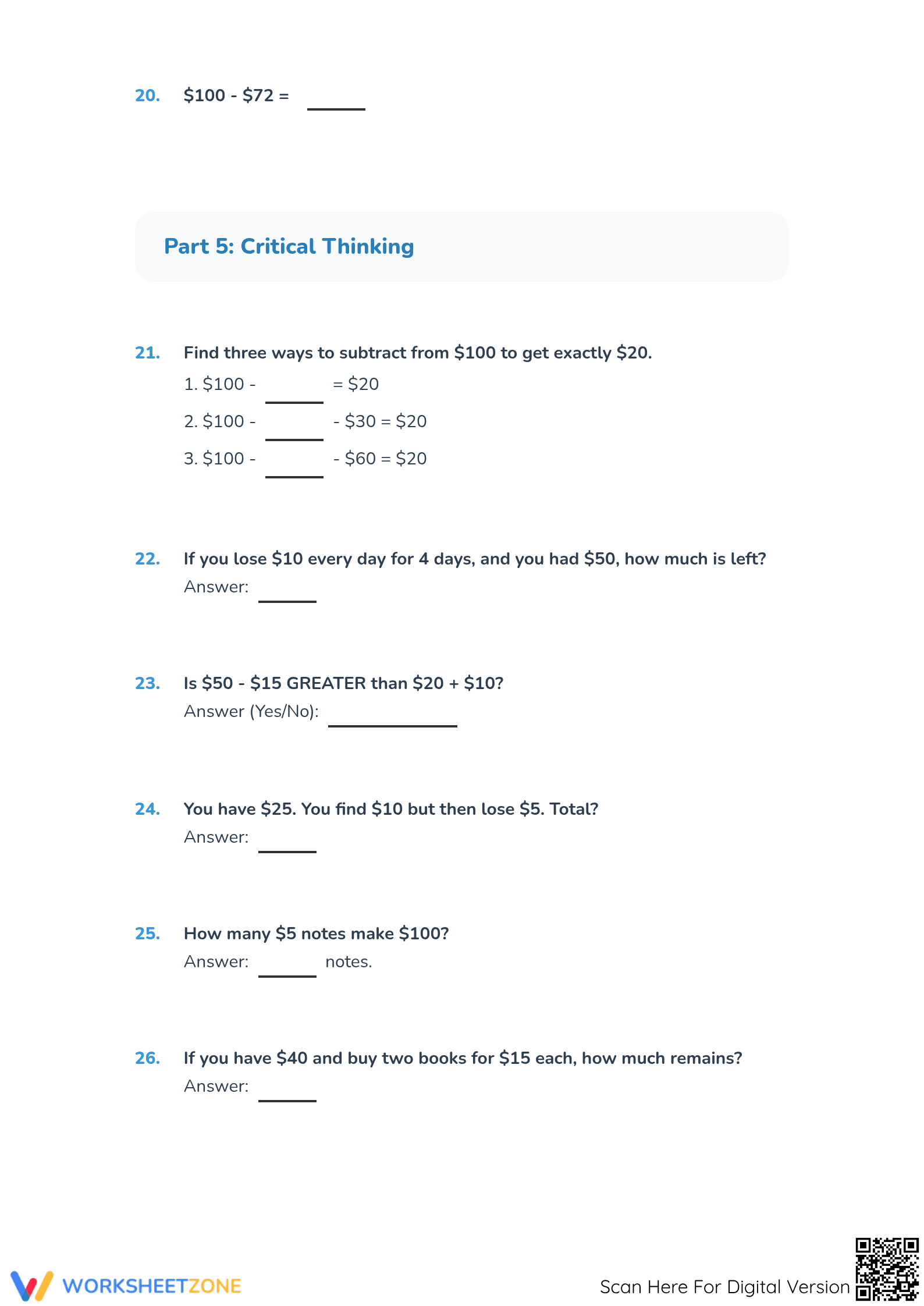
This comprehensive 5-page PDF contains 25 unique problems focused on the addition and subtraction of Brunei currency. The layout includes clear visuals of notes to assist in identification, followed by vertical and horizontal equation formats. A full answer key is provided on the final page, allowing for rapid grading or student self-correction.
Zero-Prep Workflow
This resource is designed for immediate classroom implementation with a simple three-step workflow. First, print the desired number of copies for your class (30 seconds). Second, distribute the worksheets to students as a morning warm-up or transition activity (1 minute). Third, review the answers using the included key for immediate feedback (5 minutes). Total teacher preparation time is less than two minutes, making this an ideal solution for emergency substitute plans.
Standards Alignment
Aligned to CCSS.MATH.CONTENT.2.MD.C.8, this worksheet requires students to solve word problems and equations involving money. While the standard specifically references US denominations, the underlying mathematical requirement of adding and subtracting whole-number currency values is directly applicable here. This standard code can be copied directly into lesson plans, IEP goals, or district curriculum mapping tools to document mastery of measurement and data concepts.
How to Use It
Use this worksheet as a formative assessment after introducing multi-digit addition and subtraction. During instruction, observe how students align place values when working with currency symbols. It also serves as an excellent enrichment activity for students exploring international finance or global geography. Completion time typically ranges from 30 to 45 minutes depending on student proficiency with two-digit operations and regrouping.
Who It's For
This resource is tailored for early elementary students in Grade 1 and Grade 2 who are mastering addition and subtraction within 100. It is especially useful for ESL/ELL students to learn currency terminology or for homeschooled learners seeking global perspectives in mathematics. Pair this with physical play money or an anchor chart showing Brunei note values to provide extra support for visual learners.
The mastery of currency-based arithmetic is a foundational component of financial literacy, as emphasized by RAND AIRS 2024. This worksheet aligns with CCSS.MATH.CONTENT.2.MD.C.8 by requiring students to apply addition and subtraction skills to the specific context of Brunei notes. Research from the NAEP highlights that contextualizing math problems within real-world scenarios, such as handling money, significantly improves student engagement and long-term retention of computational procedures. By practicing with international denominations, students not only refine their arithmetic accuracy but also broaden their understanding of global economic systems. This 5-page resource provides the necessary repetition required to move from guided practice to independent mastery. Educators can utilize the structured layout to identify common errors in regrouping or place value alignment. The inclusion of a comprehensive answer key ensures that feedback is immediate, which is critical for correcting misconceptions during the formative stages of learning arithmetic operations.


