


























Views
Downloads


Adding Mixed Numbers Worksheet | Grade 4-5 Essential
Paste this activity's link or code into your existing LMS (Google Classroom, Canvas, Teams, Schoology, Moodle, etc.).
Students can open and work on the activity right away, with no student login required.
You'll still be able to track student progress and results from your teacher account.
Mastering fraction addition requires a strong visual foundation. This worksheet guides students through adding mixed numbers and improper fractions using interactive number lines. By representing numerical values as physical distances, learners move beyond rote memorization to a conceptual understanding of sum composition. This resource ensures students can confidently visualize how whole numbers and fractional parts combine into a final sum.
At a Glance
- Grade: Grade 4 · Subject: Math
- Standard:
4.NF.B.3— Add mixed numbers with like denominators using visual models and equivalent fractions- Skill Focus: Visual fraction addition
- Format: 5 pages · 9 problems · Answer key included · PDF
- Best For: Independent practice and visual learners
- Time: 25–35 minutes
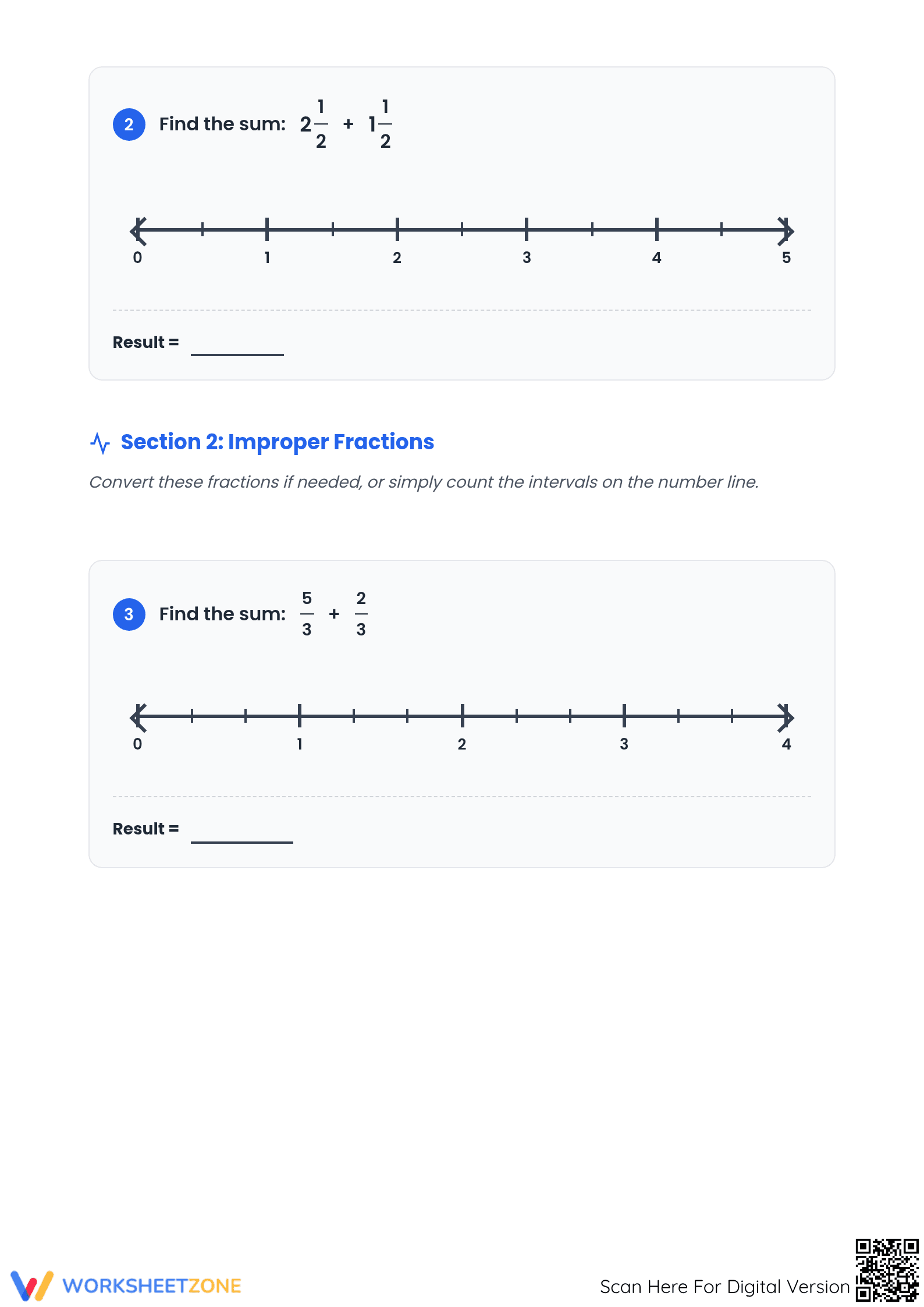
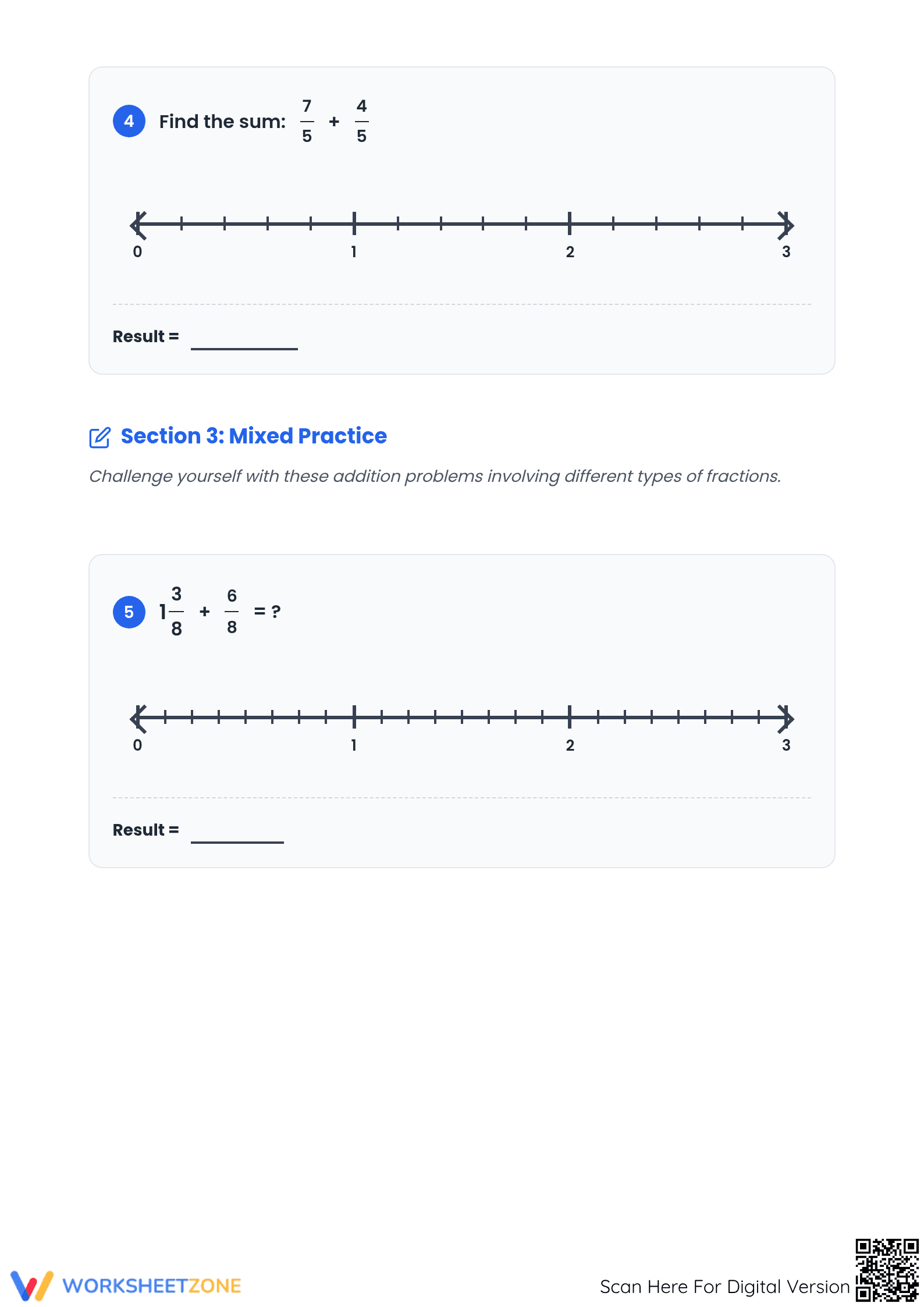
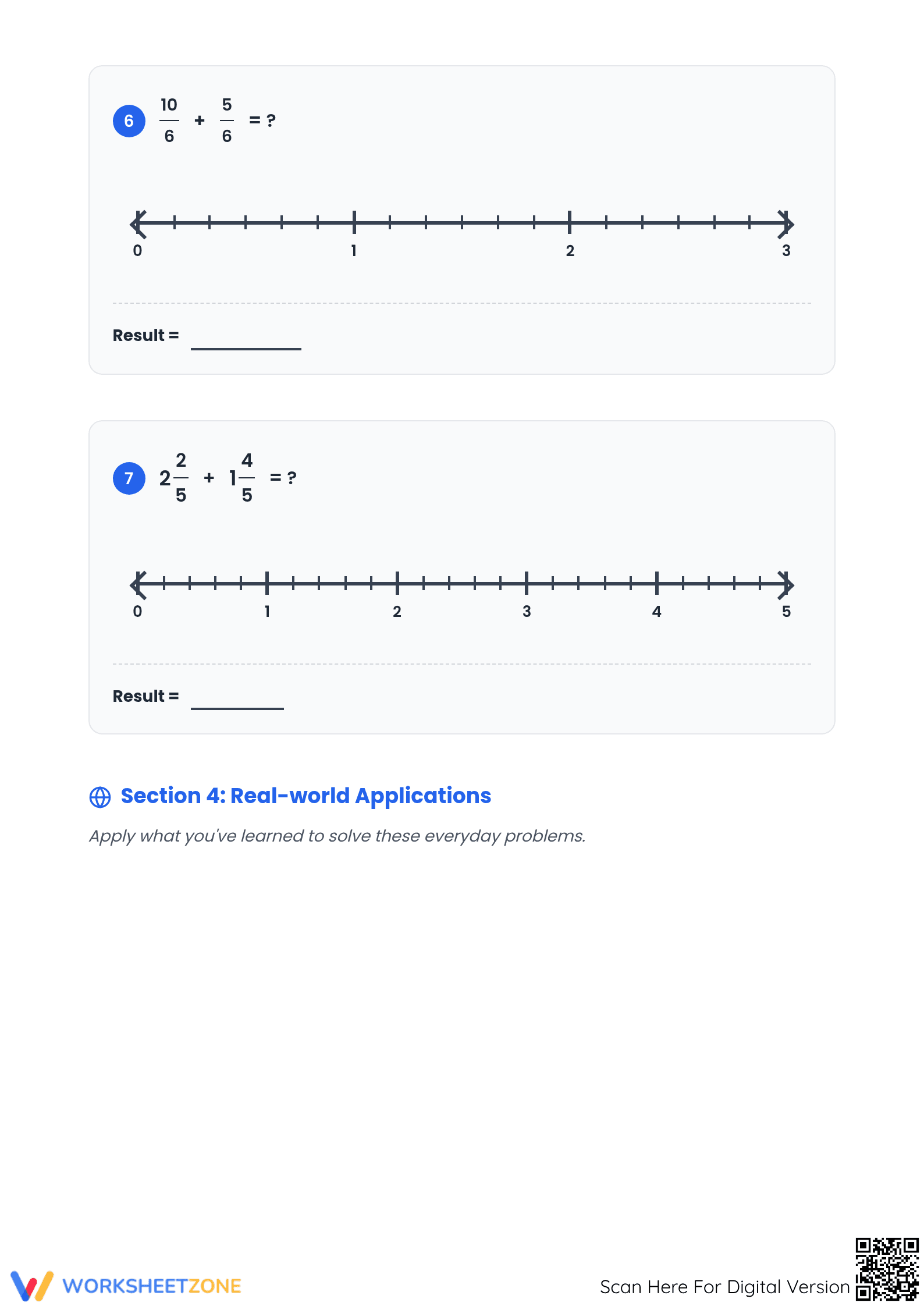
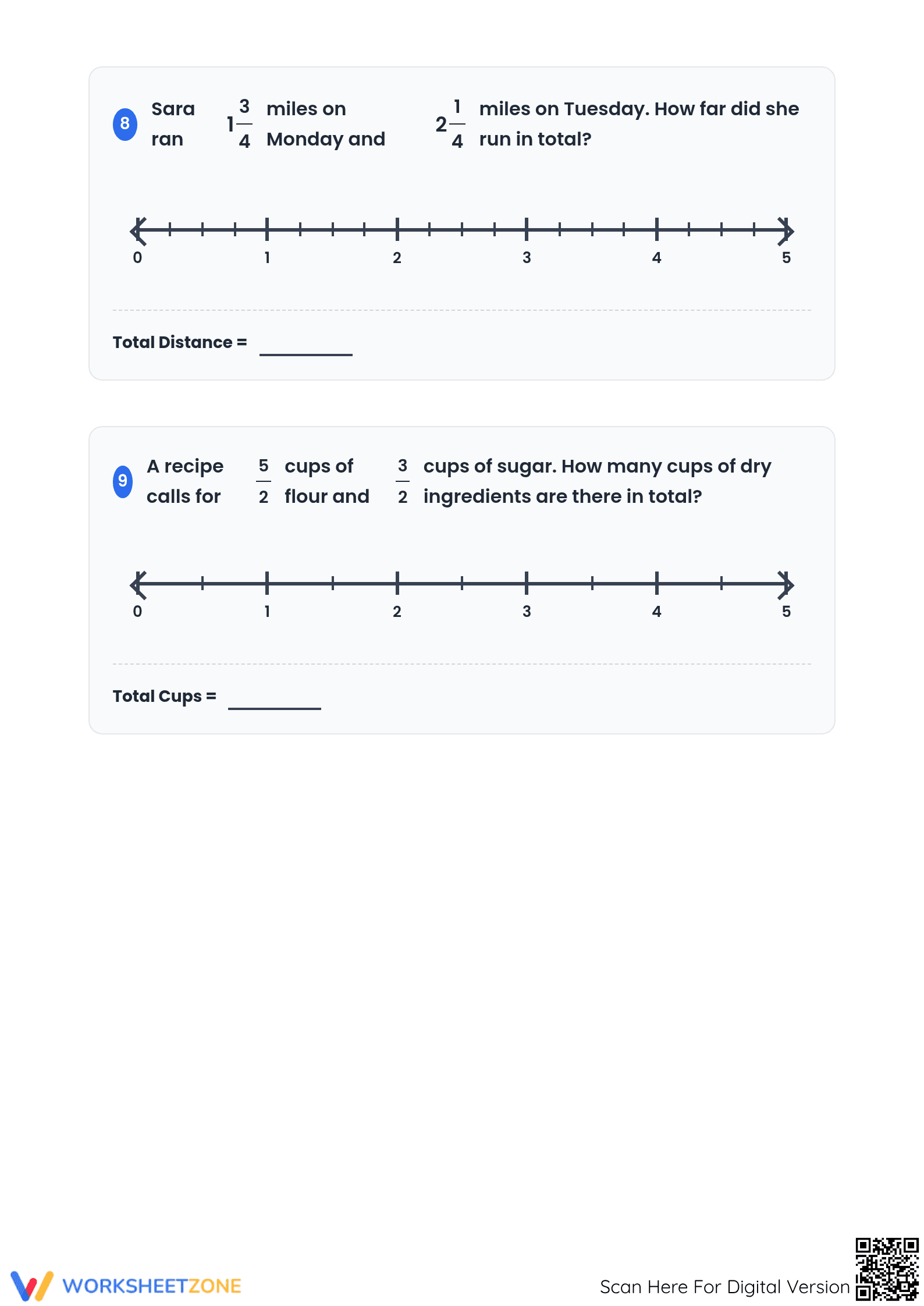
The packet contains five structured pages organized into four instructional segments. It begins with basic mixed number addition, transitions into improper fraction sums, and concludes with a mixed practice section. A dedicated real-world application page challenges students to apply their skills to word problems. Each problem features a calibrated number line and a clear space for recording results.
This zero-prep resource is designed for immediate classroom utility. The workflow is simple: first, print the five-page PDF (30 seconds); second, distribute the packets to students for independent or small-group work (1 minute); and third, use the included answer key for rapid checking or student self-correction (5 minutes). With a total teacher preparation time of under two minutes, it serves as an ideal emergency sub plan or a supplemental homework assignment.
This resource aligns directly with the primary standard `4.NF.B.3`. Students demonstrate mastery by adding mixed numbers with like denominators and converting between improper fractions and mixed numbers. The visual evidence provided by the number lines supports the standard's emphasis on conceptual understanding. This standard code can be copied directly into lesson plans, IEP goals, or district curriculum mapping tools.
Incorporate this worksheet after a direct instruction lesson on fraction parts. Use it as a formative assessment by observing students as they mark intervals on the number line; if a student struggles to locate the starting point, it indicates a need for remediation on whole-number placement. Expect students to complete the full 9-problem set within a single 30-minute instructional block.
This worksheet is intended for fourth and fifth-grade students developing fraction fluency. It is particularly effective for students who benefit from visual scaffolds and spatial reasoning. Pair this resource with a short instructional video on number line intervals or a physical manipulative set for a comprehensive multi-sensory learning experience.
Educational research highlights the importance of visual models in developing mathematical literacy. According to the RAND AIRS 2024 analysis, students who utilize number lines to represent fraction operations show significantly higher retention rates compared to those who rely solely on algorithmic procedures. This worksheet targets standard 4.NF.B.3 by providing a structured environment where students must physically map the addition of mixed numbers and improper fractions. By translating abstract symbols into spatial distances, the resource reinforces the part-to-whole relationship fundamental to grade-level proficiency. The inclusion of real-world application problems ensures that students can transfer these skills to practical contexts, such as measuring distances or quantities. This comprehensive approach aligns with evidence-based practices that prioritize "seeing" the math before calculating the results. Teachers can use the data from these nine tasks to pinpoint specific misconceptions regarding interval counting or fraction equivalence, making it a powerful tool for data-driven instruction.


