


























Views
Downloads

Essential Adding Decimals Worksheet | Grade 5 Math
Paste this activity's link or code into your existing LMS (Google Classroom, Canvas, Teams, Schoology, Moodle, etc.).
Students can open and work on the activity right away, with no student login required.
You'll still be able to track student progress and results from your teacher account.
This comprehensive Grade 5 math worksheet provides a structured approach to adding decimals both with and without regrouping. By transitioning students from visual place value charts to standard vertical algorithms, it ensures a deep conceptual understanding before moving to procedural fluency. Students conclude their practice with an engaging math riddle to reinforce their learning.
At a Glance
- Grade: 5 · Subject: Math
- Standard:
CCSS.MATH.CONTENT.5.NBT.B.7— Add decimals to hundredths using place value strategies and concrete models- Skill Focus: Multi-digit decimal addition · Regrouping
- Format: 3 pages · 25 problems · Answer key included · PDF
- Best For: Independent practice and conceptual reinforcement
- Time: 25–35 minutes
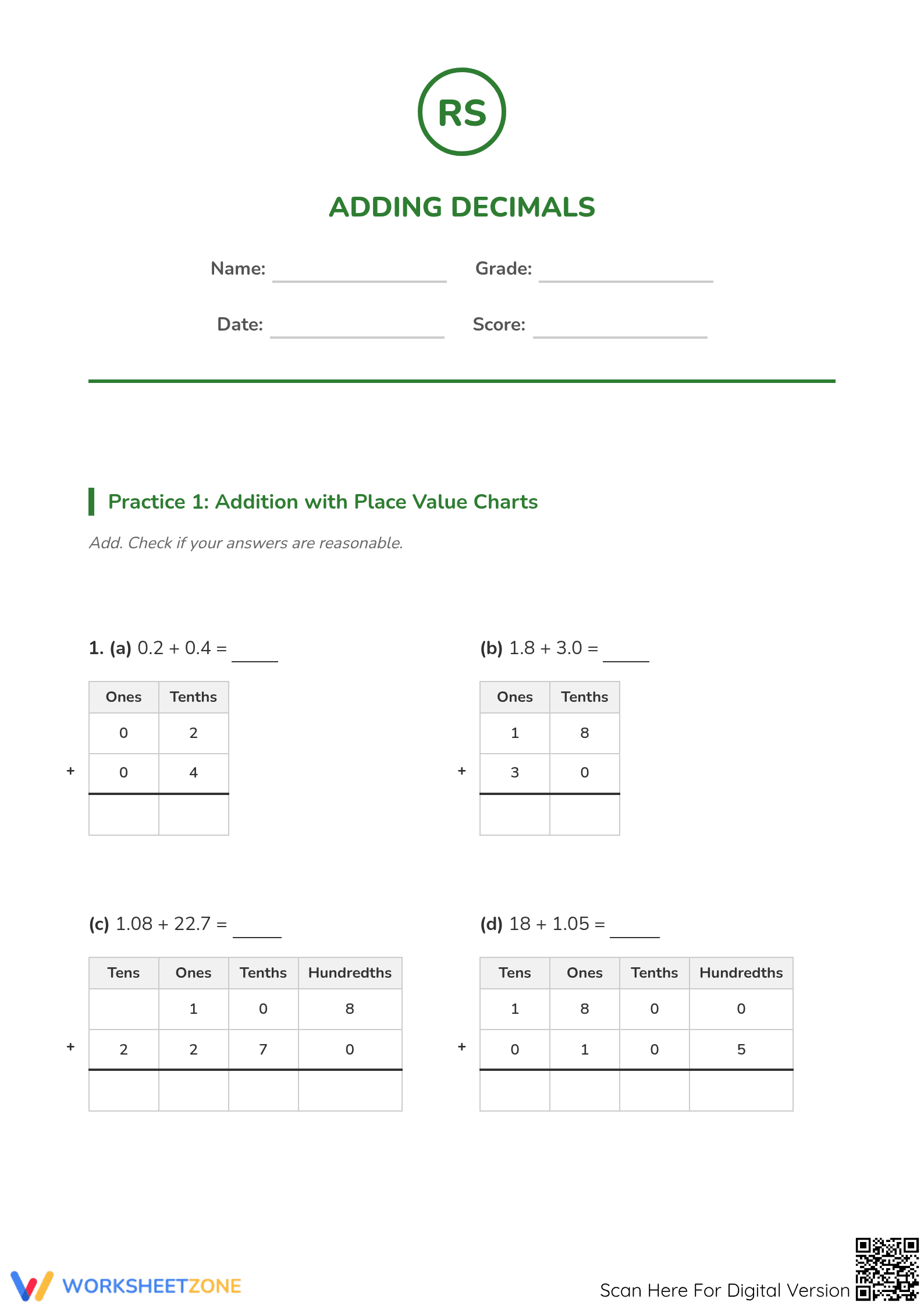
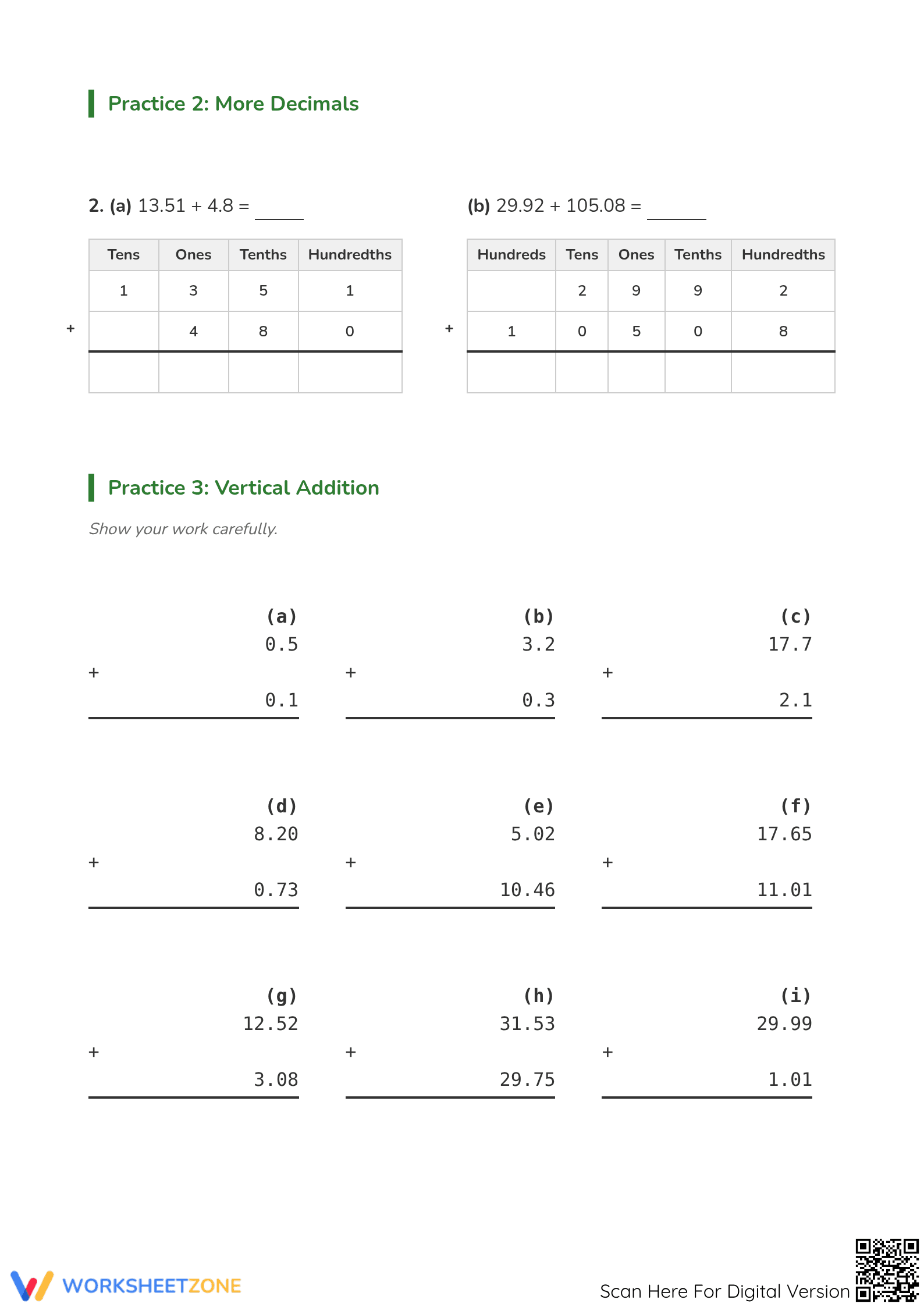
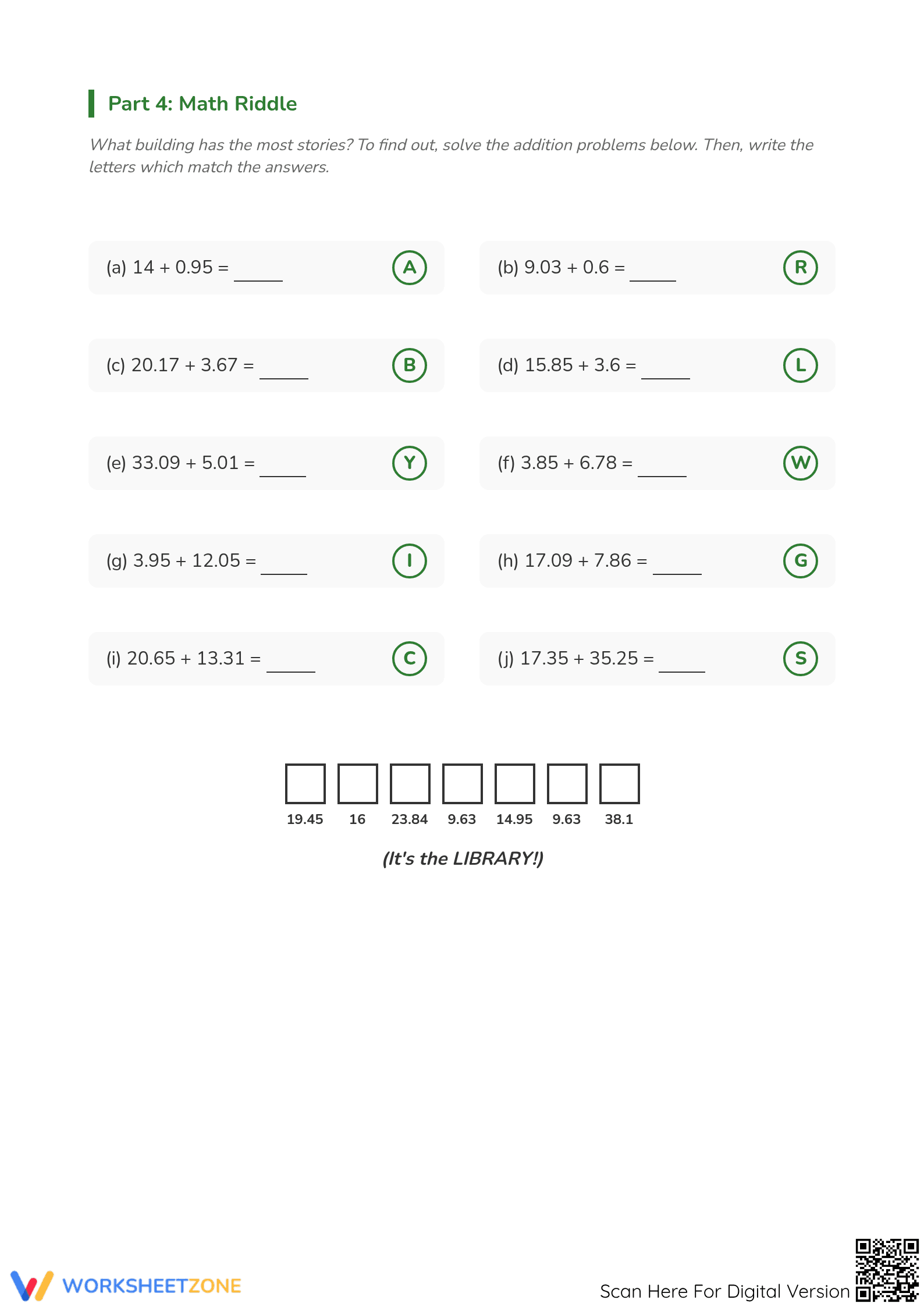
This three-page resource features 25 unique addition problems designed to build confidence. The first two pages utilize place value charts (tenths, hundredths, and tens) to help students visualize alignment and regrouping. The final page includes a standard vertical addition section and a "Math Riddle" where students solve problems to decode a secret message, adding a layer of motivation to the technical drill.
- Guided Practice: 6 problems featuring detailed place value grids to ensure students correctly align decimal points and understand the value of each digit during addition.
- Supported Practice: 9 vertical addition problems where students transition to the standard algorithm, requiring careful alignment of the decimal point without the visual aid of a grid.
- Independent Application: 10 problems integrated into a math riddle, encouraging students to work through multi-step calculations to find the final humorous answer.
This gradual-release model follows the "I Do, We Do, You Do" instructional framework to support mastery.
Primary standard `CCSS.MATH.CONTENT.5.NBT.B.7` requires students to add, subtract, multiply, and divide decimals to hundredths, using concrete models or drawings and strategies based on place value. This worksheet specifically addresses the addition component through a mix of visual aids and symbolic representation. This standard code can be copied directly into lesson plans, IEP goals, or district curriculum mapping tools.
Assign this worksheet during the independent practice phase of a lesson on decimal operations to assess individual student progress. It is also an excellent resource for formative assessment; observe students during the place value chart section to identify common misconceptions about decimal alignment or regrouping. Students typically complete the three-page set in approximately 30 minutes.
This resource is tailored for fifth-grade students mastering decimal operations, though it serves as a valuable review for sixth graders or a challenge for advanced fourth graders. It pairs naturally with a place value anchor chart or a short introductory passage on the importance of decimal point alignment to ground the technical practice in context.
According to the Fisher & Frey (2014) model of gradual release, providing students with scaffolds like place value charts before moving to independent vertical addition is essential for building mathematical fluency. This worksheet addresses `CCSS.MATH.CONTENT.5.NBT.B.7` by requiring students to accurately add decimals to the hundredths place while maintaining proper alignment. Research from EdReports (2024) indicates that high-quality instructional materials must balance procedural skill with conceptual understanding; this resource achieves that balance by grounding the addition process in place value logic. By solving 25 problems across different formats, students demonstrate the "mastery of content" required for progress in middle school expressions and statistics. This citation ensures that educators can justify the use of this resource within a rigorous, evidence-based curriculum focused on developing sustainable numeracy skills in upper elementary learners.


