


























Views
Downloads

Grade 1 Add Doubles with Models — Printable Worksheet
Paste this activity's link or code into your existing LMS (Google Classroom, Canvas, Teams, Schoology, Moodle, etc.).
Students can open and work on the activity right away, with no student login required.
You'll still be able to track student progress and results from your teacher account.
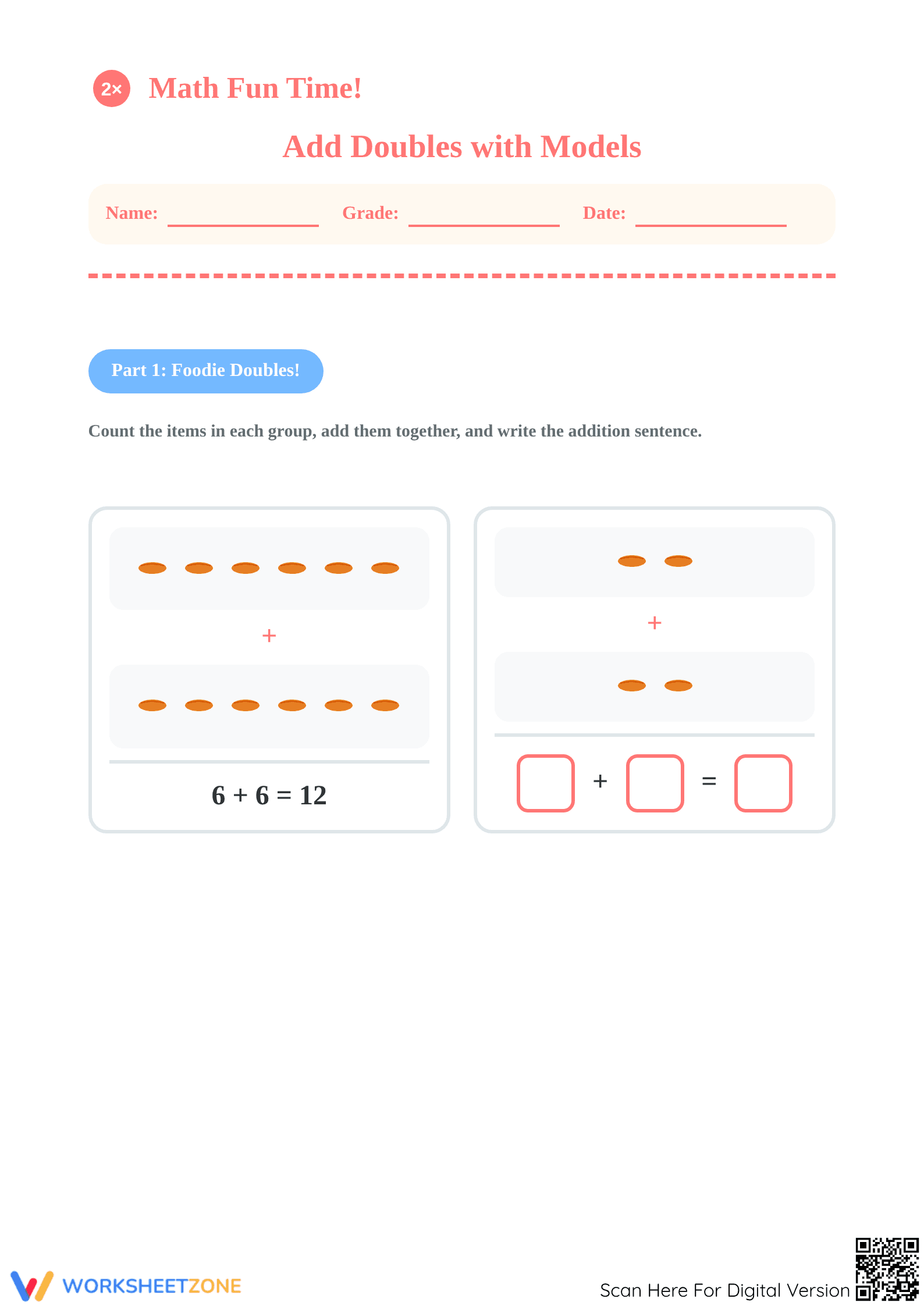
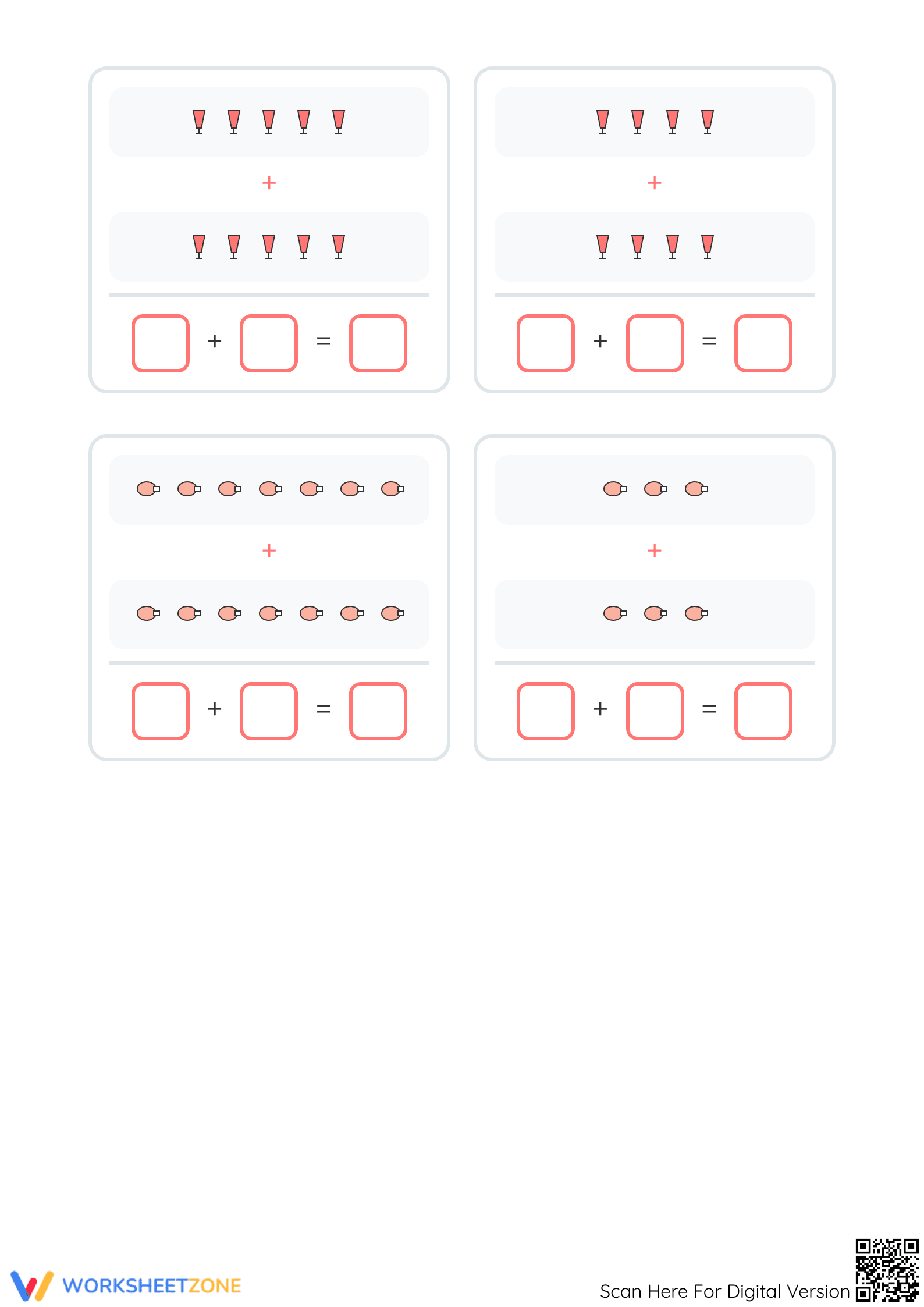
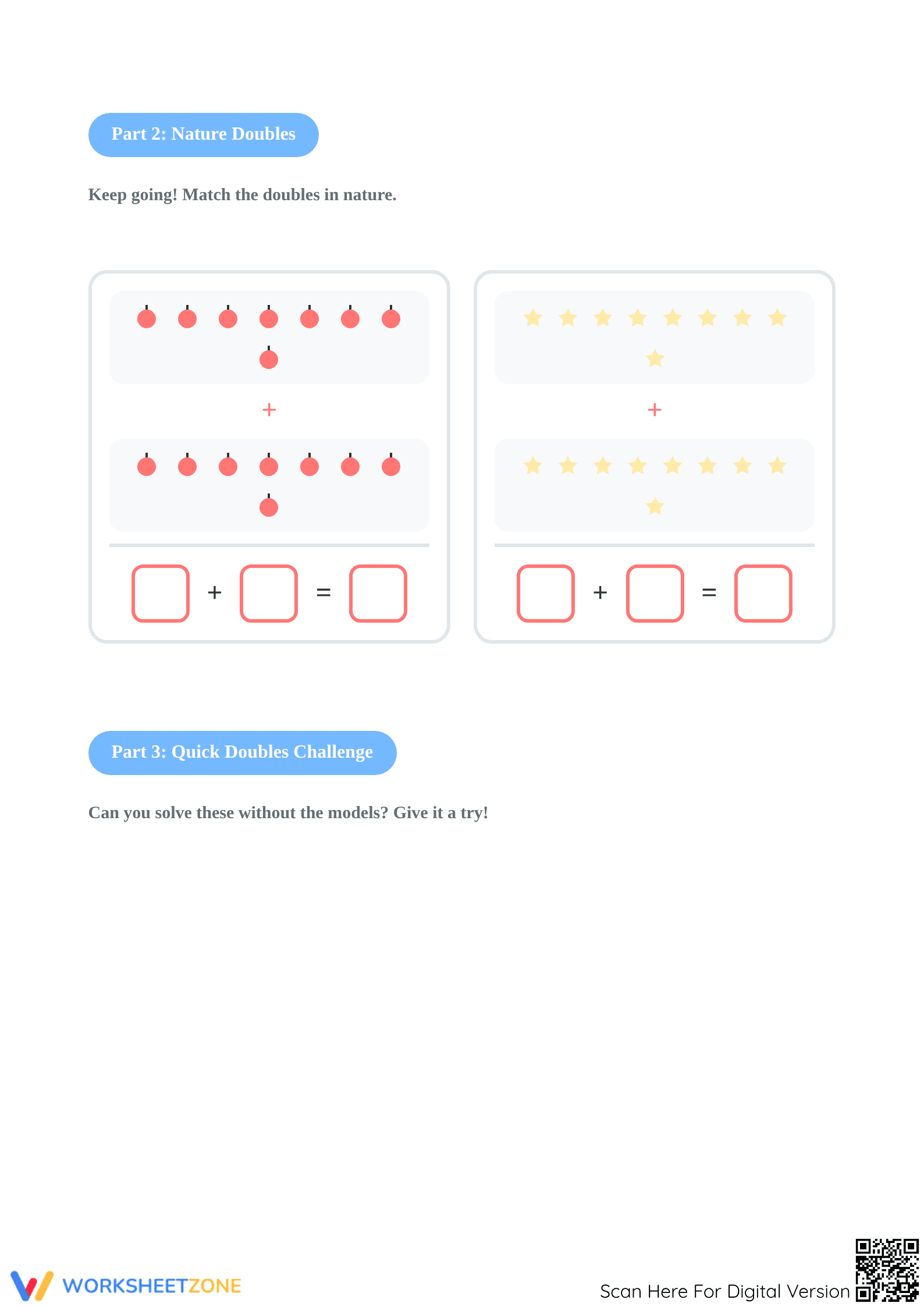
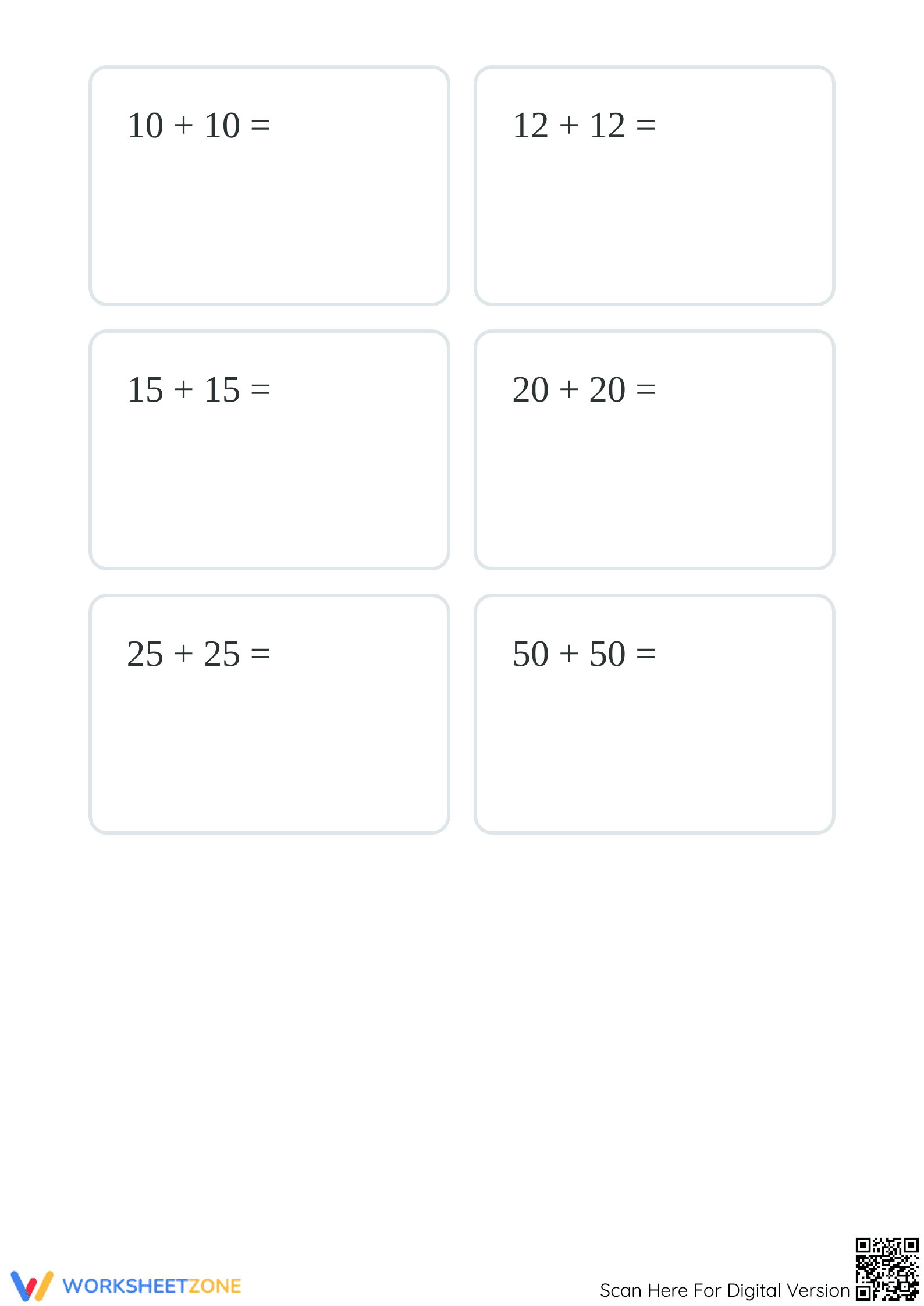
This essential Grade 1 math worksheet helps students master addition through visual modeling. By using concrete representations to add doubles, learners develop the foundational mental math strategies required for long-term arithmetic success. This 5-page resource ensures students move from conceptual understanding to procedural fluency while engaging with diverse models that reinforce the concept of equal addends.
At a Glance
- Grade: 1 · Subject: Math
- Standard:
1.OA.C.6— Add within 20 using strategies like creating equivalent but easier known sums- Skill Focus: Adding doubles with models
- Format: 5 pages · 40 problems · Answer key included · PDF
- Best For: Small group instruction and independent practice
- Time: 15–20 minutes
What's Inside
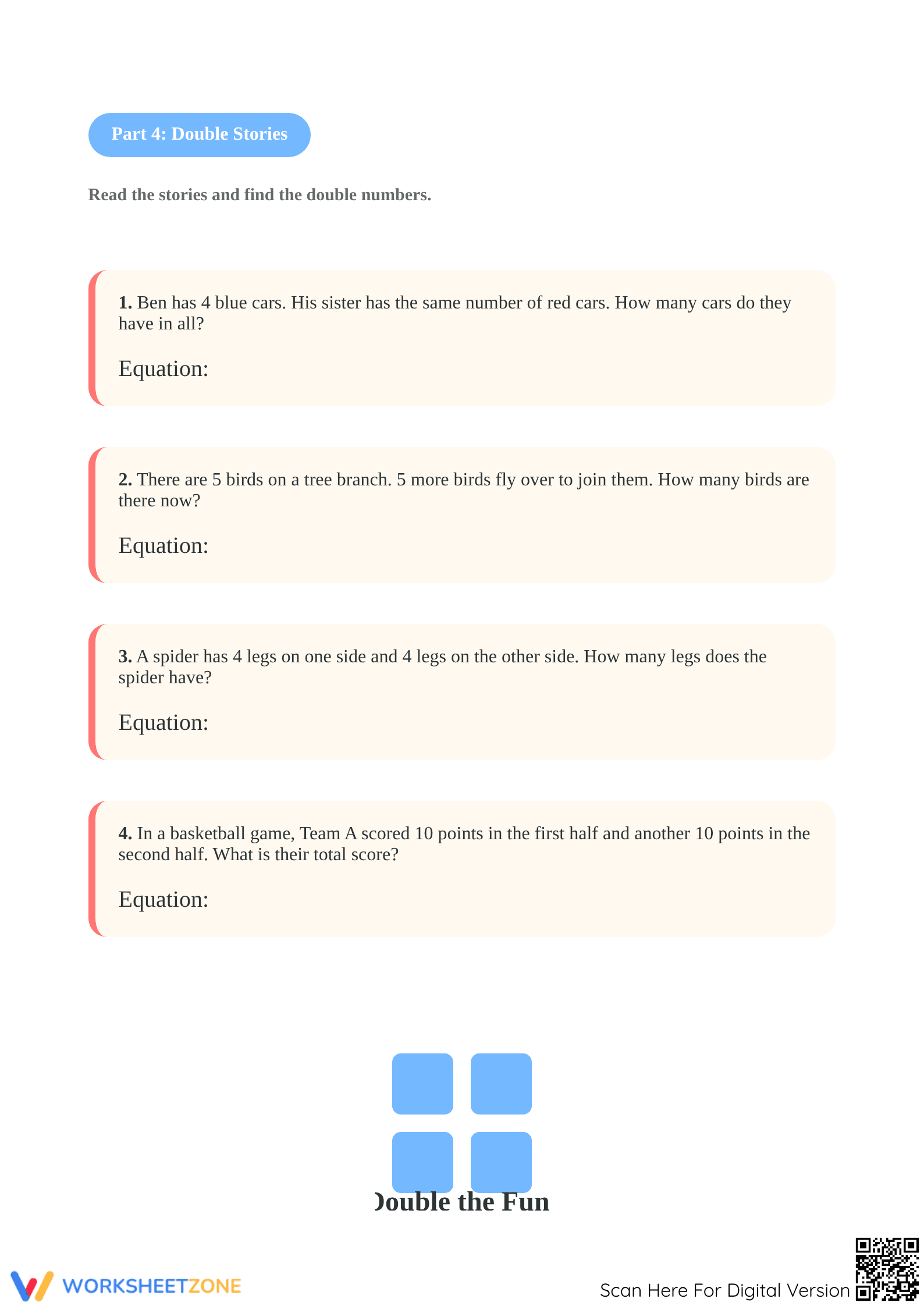
The printable packet contains five distinct pages of addition practice, each featuring unique visual models such as dominoes, dice, and array-based representations. With 40 total problems, students are provided ample opportunities to practice the doubles strategy (e.g., 4+4, 7+7). A comprehensive answer key is included to facilitate quick grading and self-correction, making it a complete resource for busy classrooms.
Zero-Prep Workflow
- Print (30 seconds): Select the specific pages or the entire 5-page set and hit print.
- Distribute (1 minute): Hand out the worksheets for immediate use during a morning meeting or centers.
- Review (30 seconds): Use the included answer key to check for accuracy or project it for whole-class review.
The total preparation time is under two minutes, making this an ideal solution for sub plans or last-minute lesson enhancements.
Standards Alignment
This resource is directly aligned to CCSS.MATH.CONTENT.1.OA.C.6: "Add and subtract within 20, demonstrating fluency for addition and subtraction within 10. Use strategies such as counting on; making ten; decomposing a number leading to a ten; and creating equivalent but easier or known sums." By mastering doubles, students gain the prerequisite knowledge for more complex strategies. This standard code can be copied directly into lesson plans, IEP goals, or district curriculum mapping tools.
How to Use It
Incorporate this worksheet during the independent practice phase of your gradual release model. It serves as an excellent formative assessment tool; observe if students are counting every dot on the models or if they recognize the double patterns immediately. The 15-20 minute completion time makes it perfect for math center rotations where students work on specific fluency goals.
Who It's For
Designed primarily for first-grade students, this worksheet also supports second graders who need additional scaffolding with mental math strategies. It is particularly effective for English Language Learners and students with IEPs who benefit from the visual cues provided by the models. Pair this with a physical set of dice or dominoes for a multi-sensory learning experience that reinforces the core concept of equal addends.
Effective mathematics instruction in early elementary grades relies on the bridge between concrete models and abstract notation. Research from NAEP indicates that students who master foundational fluency strategies, such as adding doubles, are significantly more likely to succeed in multi-digit addition and subtraction. Fisher & Frey (2014) emphasize that visual scaffolding, like the models used in this 1.OA.C.6 worksheet, allows students to internalize mathematical relationships before transitioning to pure numerical problems. By providing 40 structured tasks that emphasize the plain-English skill of adding doubles with visual support, this resource aligns with the Building Blocks approach to numeracy. The inclusion of an answer key ensures that feedback is immediate, a critical component of the learning cycle identified by RAND AIRS 2024. This worksheet provides the essential practice needed to ensure students reach the fluency benchmarks required for Grade 1 and Grade 2 success.


