




























1 / 4
0
Views
0
Downloads


0.0
0
Save
0 Likes
Share
Identify Biotic and Abiotic Factors
0 Views
0 Downloads

Paste this activity's link or code into your existing LMS (Google Classroom, Canvas, Teams, Schoology, Moodle, etc.).
Students can open and work on the activity right away, with no student login required.
You'll still be able to track student progress and results from your teacher account.
Information
Description
What It Is:
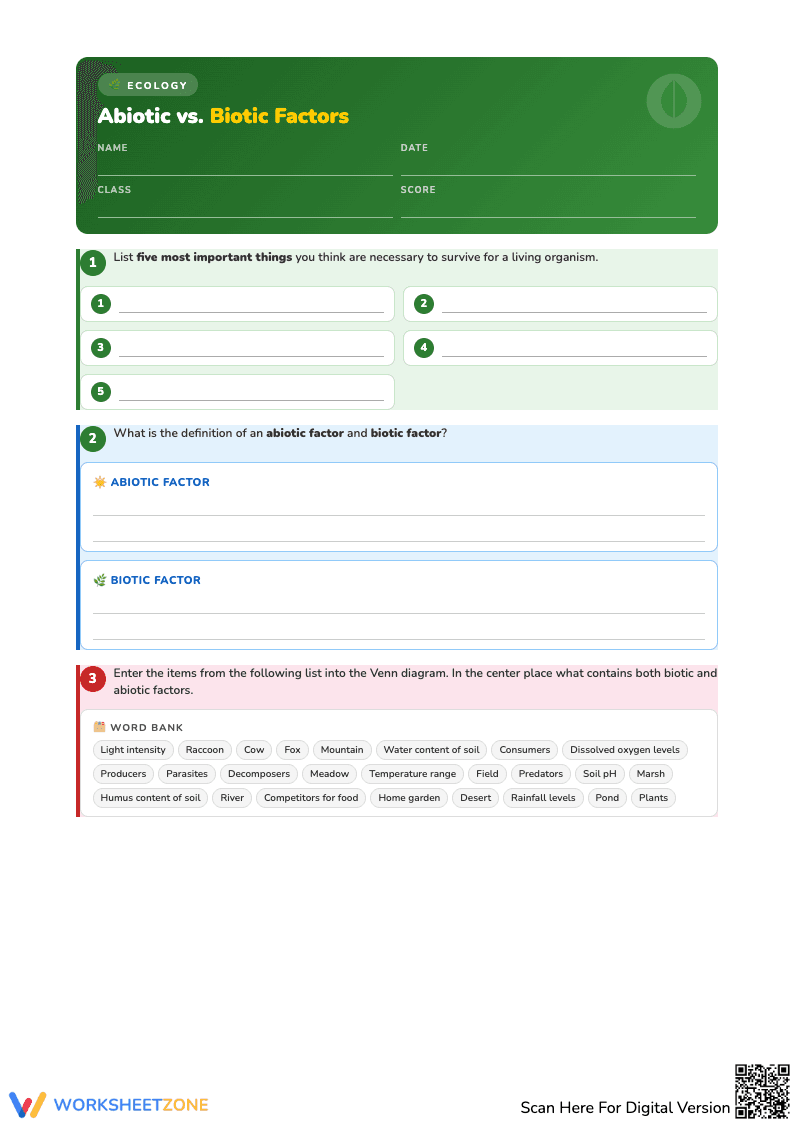
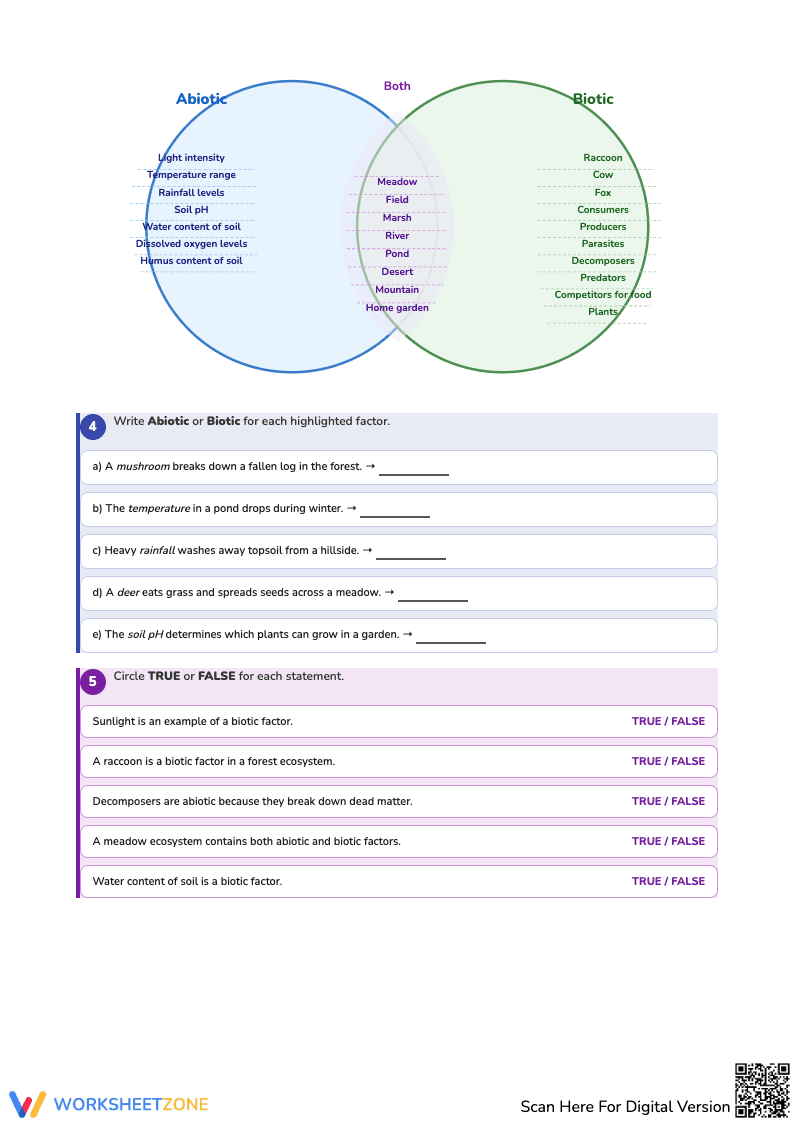
This is an ecology worksheet focusing on abiotic and biotic factors. It includes three main activities: listing five essential survival needs, defining abiotic and biotic factors, and categorizing a list of items (like light intensity, raccoons, mountains, fungi, etc.) into a Venn diagram distinguishing between abiotic, biotic, and combined factors.
Grade Level Suitability:
This worksheet is suitable for grades 6-9. The concepts of abiotic and biotic factors are typically introduced in middle school science. The Venn diagram activity requires analytical and classification skills appropriate for these grade levels.
Why Use It:
This worksheet reinforces understanding of key ecological concepts by requiring students to define and differentiate between abiotic and biotic elements. The Venn diagram encourages critical thinking and application of knowledge to real-world examples, promoting a deeper understanding of ecosystems.
How to Use It:
Begin by having students define abiotic and biotic factors. Then, instruct them to analyze the provided list of items and place each item in the appropriate section of the Venn diagram: abiotic, biotic, or both. Encourage discussion about why each item belongs in its designated category.
Target Users:
This worksheet is designed for middle school science students learning about ecology and ecosystems. It is also beneficial for students who need reinforcement in understanding the difference between living and non-living components of the environment.
This is an ecology worksheet focusing on abiotic and biotic factors. It includes three main activities: listing five essential survival needs, defining abiotic and biotic factors, and categorizing a list of items (like light intensity, raccoons, mountains, fungi, etc.) into a Venn diagram distinguishing between abiotic, biotic, and combined factors.
Grade Level Suitability:
This worksheet is suitable for grades 6-9. The concepts of abiotic and biotic factors are typically introduced in middle school science. The Venn diagram activity requires analytical and classification skills appropriate for these grade levels.
Why Use It:
This worksheet reinforces understanding of key ecological concepts by requiring students to define and differentiate between abiotic and biotic elements. The Venn diagram encourages critical thinking and application of knowledge to real-world examples, promoting a deeper understanding of ecosystems.
How to Use It:
Begin by having students define abiotic and biotic factors. Then, instruct them to analyze the provided list of items and place each item in the appropriate section of the Venn diagram: abiotic, biotic, or both. Encourage discussion about why each item belongs in its designated category.
Target Users:
This worksheet is designed for middle school science students learning about ecology and ecosystems. It is also beneficial for students who need reinforcement in understanding the difference between living and non-living components of the environment.


