




























Views
Downloads

Grade 3 Sound Speed — Printable No-Prep Worksheet

Paste this activity's link or code into your existing LMS (Google Classroom, Canvas, Teams, Schoology, Moodle, etc.).
Students can open and work on the activity right away, with no student login required.
You'll still be able to track student progress and results from your teacher account.
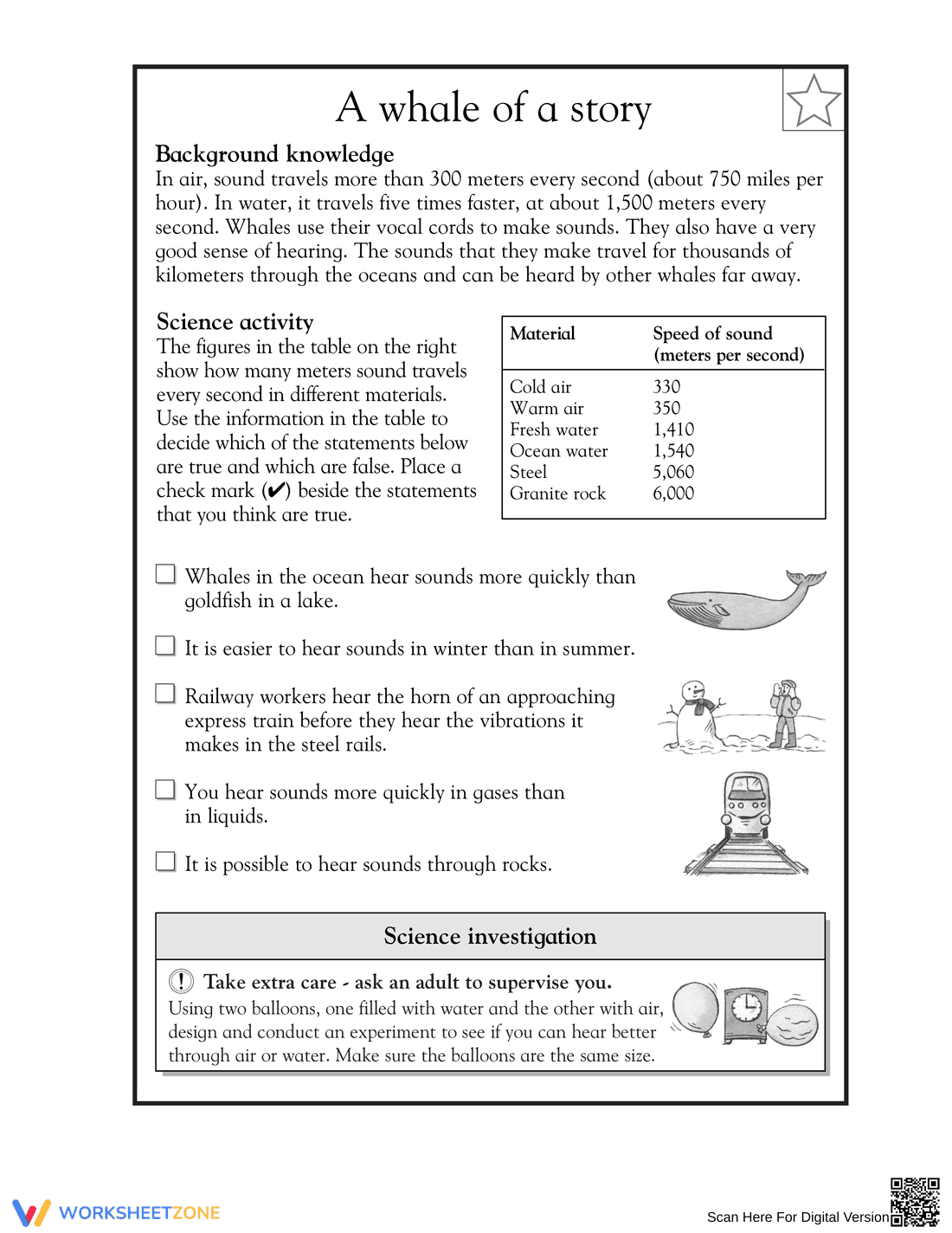
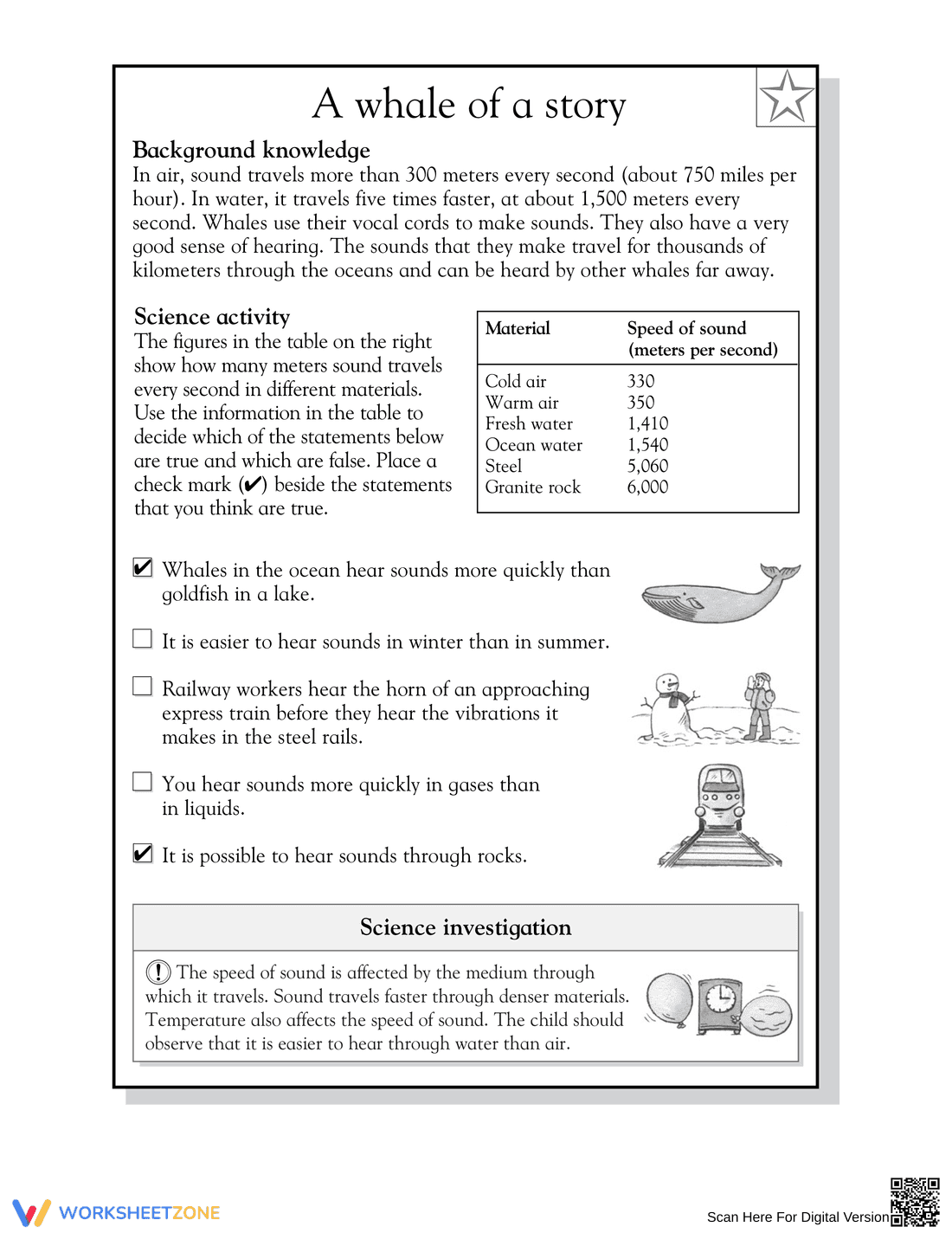
This Grade 3 science worksheet provides targeted practice in analyzing and interpreting data. Students use a table of information showing the speed of sound through different materials to evaluate five statements as true or false. It's a focused activity designed to strengthen scientific reasoning and data literacy skills.
At a Glance
- Grade: 3 · Subject: Science
- Standard:
3-5-ETS1-2— Compare solutions to a problem by evaluating how well they meet specific criteria.- Skill Focus: Analyzing and Interpreting Data
- Format: 2 pages · 5 problems · Answer key included · PDF
- Best For: Independent practice, science centers, or a substitute plan
- Time: 15–20 minutes
What's Inside
This two-page PDF includes the single-page student worksheet and a corresponding answer key. The worksheet features a background text, a data table on sound speed, five analysis questions, and an optional hands-on investigation. The answer key provides clear, correct answers for easy grading.
Zero-Prep Workflow
This worksheet is a true "print-and-go" activity. 1. Print: The single-page format is ready for immediate printing. 2. Distribute: Self-contained directions allow students to start work independently. 3. Review: Use the included answer key for a quick class review or self-correction. Total prep time is under two minutes, making it perfect for sub plans or independent work packets.
Standards Alignment
This worksheet supports key NGSS skills. It primarily aligns with 3-5-ETS1-2, as students use data to compare how well different materials (the solutions) transmit sound (the criteria). It also introduces concepts from PS4.A: Wave Properties, showing how a wave's behavior depends on its medium. These codes can be copied directly into lesson plans or curriculum maps.
How to Use It
Use this worksheet as a pre-assessment before a unit on sound, or as an independent practice activity after a lesson on data tables. For a quick formative check, observe if students can find the relevant data for each question efficiently. Most students will complete the task in about 15 minutes.
Who It's For
Designed for third-grade science students, this resource's clear layout and data focus are accessible to most learners. For extra support, pre-teach vocabulary like "medium" and "material." This activity pairs well with a visual anchor chart defining solids, liquids, and gases.
This Grade 3 activity builds foundational skills in scientific data analysis, a practice identified as critical for STEM readiness. By requiring students to interpret a data table and draw conclusions, the worksheet aligns with the principles of NGSS standard 3-5-ETS1-2. The core task—evaluating claims based on provided evidence—is a simplified form of argumentation that is central to scientific literacy. Research highlights the importance of such structured inquiry; a major study by the RAND Corporation found that students who frequently engage with data are better equipped to handle complex information (RAND AIRS 2024). This worksheet provides a concrete, age-appropriate exercise in this domain. Students analyze the speeds of sound in different media (solid, liquid, gas), directly engaging with the physical science concept that wave properties depend on the medium. This targeted practice offers a measurable way to assess a student's ability to interpret scientific data.


