


























Views
Downloads
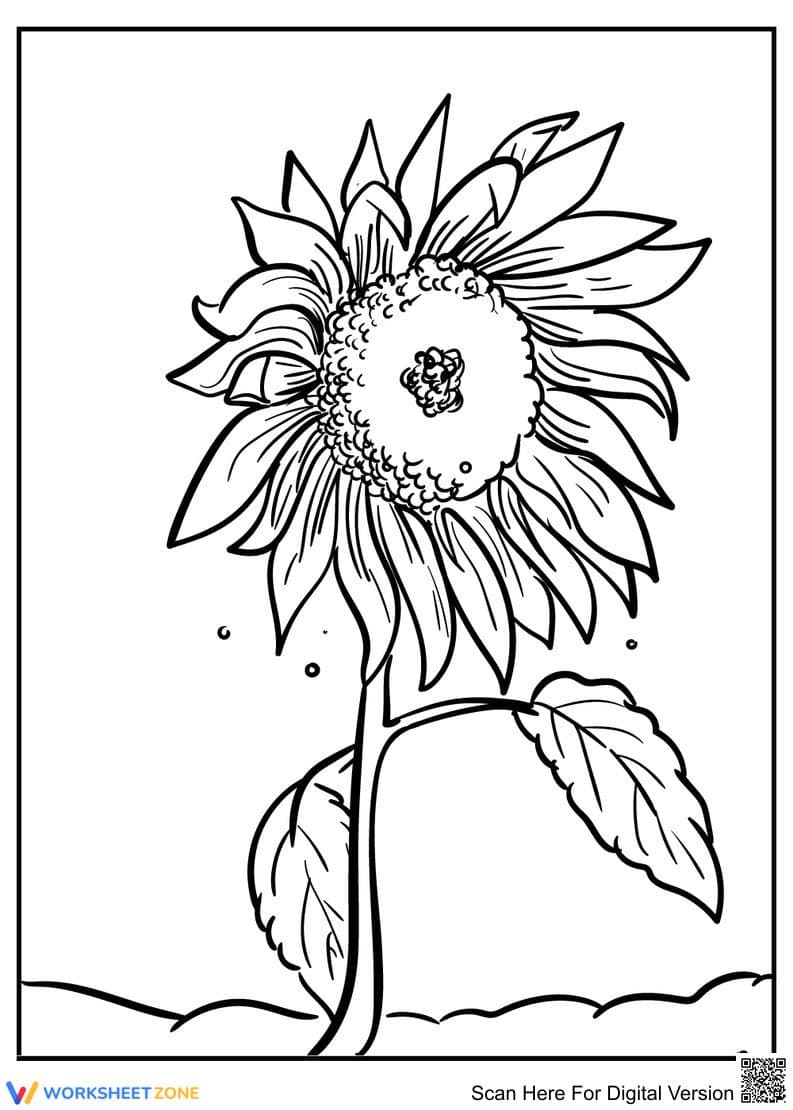

Sunflower Coloring Page | Essential Nature Worksheet
Paste this activity's link or code into your existing LMS (Google Classroom, Canvas, Teams, Schoology, Moodle, etc.).
Students can open and work on the activity right away, with no student login required.
You'll still be able to track student progress and results from your teacher account.
This sunflower coloring worksheet provides a detailed botanical illustration for students to color, helping them develop fine motor control and artistic expression. By engaging with the intricate petals and seeds, learners improve their focus and hand-eye coordination while exploring the structure of a common garden plant in a relaxed setting.
At a Glance
- Grade: K-5 · Subject: Arts & Nature
- Standard:
K-LS1-1— Use observations to describe patterns of what plants need to survive- Skill Focus: Fine motor skills & botanical observation
- Format: 1 page · 1 task · No answer key · PDF
- Best For: Morning work or science centers
- Time: 15–20 minutes
Inside this resource, you will find one high-quality, full-page printable illustration of a sunflower. The drawing features clear, bold outlines of the flower head, stem, and leaves, making it accessible for younger students while offering enough detail for older children to practice advanced shading and color blending techniques.
Zero-Prep Workflow
The zero-prep workflow is designed for immediate classroom integration. First, print the single-page PDF (30 seconds). Second, distribute the sheets along with crayons, markers, or colored pencils (1 minute). Third, review the completed work to assess student attention to detail and color choice (1 minute). Total teacher preparation time is under 3 minutes.
Standards Alignment
This activity aligns with `K-LS1-1`, as it encourages students to observe the physical characteristics of a plant. By identifying the stem, leaves, and seeds, students build a foundation for understanding plant life cycles. Both standard codes can be copied directly into lesson plans, IEP goals, or district curriculum mapping tools.
How to Use It
Use this worksheet as a quiet-time activity after a science lesson on photosynthesis or as a creative supplement to a unit on the seasons. For a formative assessment, observe how students distinguish between different parts of the plant using color. Expected completion typically takes 15 to 20 minutes depending on the medium used.
Who It's For
This resource is ideal for elementary students in grades K-5, particularly those needing sensory-friendly activities or fine motor practice. It pairs naturally with a nature-themed anchor chart or a read-aloud book about garden habitats to reinforce vocabulary and observational skills.
Research from Fisher & Frey (2014) emphasizes the importance of visual representation and fine motor engagement in early childhood development. Coloring activities like this sunflower worksheet serve as a low-stakes entry point for scientific observation, allowing students to internalize botanical structures through tactile interaction. By focusing on a single, detailed subject, learners develop the sustained attention required for more complex academic tasks. According to the RAND AIRS 2024 report, integrating creative arts into core subjects like science improves student retention of vocabulary and conceptual frameworks. This worksheet provides a structured yet flexible environment for such integration, meeting the K-LS1-1 standard through observational drawing. It is a practical tool for teachers looking to bridge the gap between artistic expression and scientific inquiry without increasing their daily preparation workload or requiring expensive materials.


