


























Views
Downloads
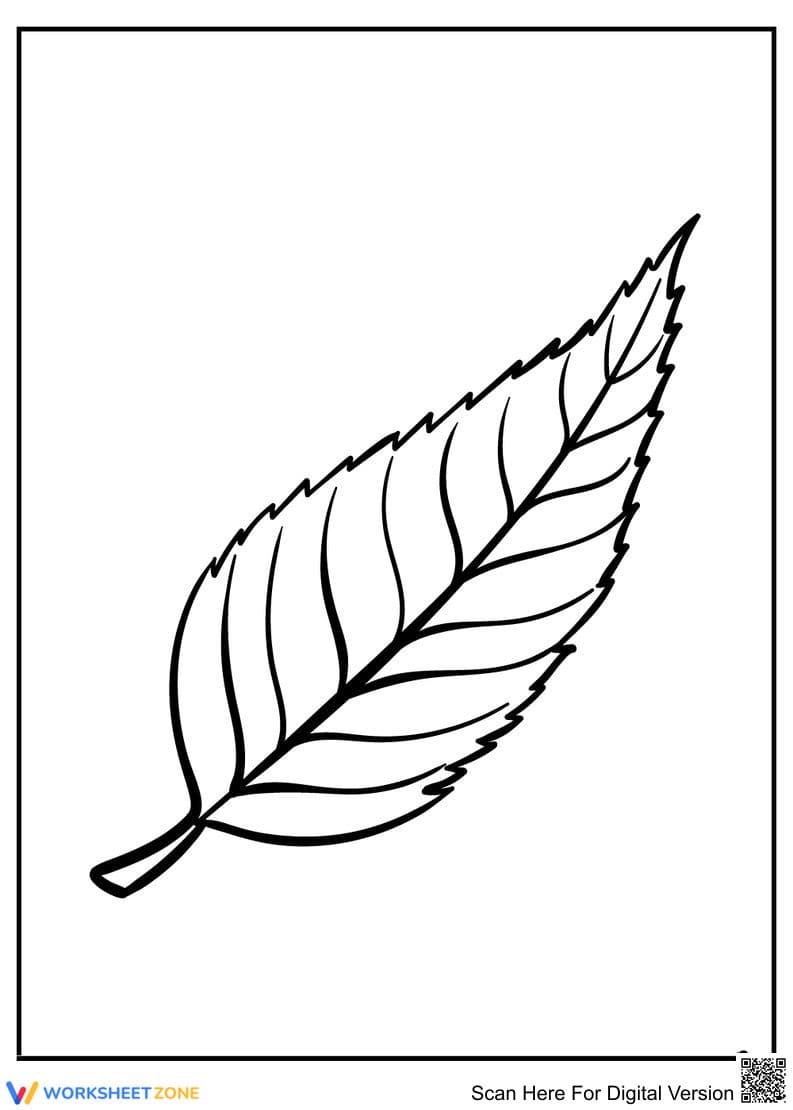

Leaf Coloring Worksheet | Grade K-2 Essential
Paste this activity's link or code into your existing LMS (Google Classroom, Canvas, Teams, Schoology, Moodle, etc.).
Students can open and work on the activity right away, with no student login required.
You'll still be able to track student progress and results from your teacher account.
This Grade K-2 leaf coloring worksheet provides a focused creative outlet for students to practice fine motor control while exploring nature themes. By coloring the intricate veins and margins of the leaf, learners develop the hand-eye coordination necessary for early writing. It is an ideal supplement for seasonal science units or autumn-themed literacy centers.
At a Glance
- Grade: K-2 · Subject: Arts & Nature
- Standard:
CCSS.ELA-LITERACY.L.K.5.C— Identify real-life connections between words and their use- Skill Focus: Fine motor development
- Format: 1 page · 1 task · No answer key required · PDF
- Best For: Morning work or seasonal science centers
- Time: 10–15 minutes
This resource features a single, high-resolution printable page containing a large, detailed leaf outline. The design includes clear internal vein structures to encourage precision coloring. There are no complex instructions, making it a truly independent activity. The PDF format ensures crisp printing for classroom-wide distribution or individual home use during seasonal breaks.
The workflow for this worksheet is designed for maximum efficiency. First, print the single-page PDF (30 seconds). Second, distribute the sheets along with crayons, markers, or colored pencils (1 minute). Third, allow students to work independently while you conduct small-group interventions or organize the next lesson (15 minutes). Total teacher preparation time is under two minutes.
This activity aligns with `CCSS.ELA-LITERACY.L.K.5.C`, which asks students to identify real-life connections between words and their use, such as color words and natural objects. By focusing on the physical characteristics of a leaf, students engage in the first step of scientific and linguistic observation. This standard code can be copied directly into lesson plans, IEP goals, or district curriculum mapping tools.
Use this worksheet during a "Fall" or "Plants" unit to reinforce the parts of a plant. It works exceptionally well as a calming transition activity after recess or as a quiet-time task for early finishers. For a formative assessment, observe how students choose colors—ask them to justify their choices based on real-world leaf changes they have seen outside.
This worksheet is primarily designed for Kindergarten and First Grade students, though it remains a popular choice for older students needing a mindfulness break. It is particularly effective for English Language Learners (ELLs) when paired with a vocabulary anchor chart labeling the stem, veins, and blade of the leaf to build descriptive language skills.
According to the RAND AIRS 2024 report on early childhood development, integrating tactile activities like coloring into the curriculum significantly improves fine motor precision, which is a prerequisite for legible handwriting. This leaf coloring worksheet addresses the CCSS.ELA-LITERACY.L.K.5.C standard by encouraging students to observe and represent natural structures through color. Research from Fisher & Frey (2014) suggests that such creative tasks reduce cognitive load, allowing younger learners to process scientific concepts like seasonal change more effectively. By providing a clear, 1-page format, this resource ensures that instructional time is spent on student engagement rather than complex setup. It serves as a foundational tool for building the hand strength and visual-spatial awareness necessary for meeting National Assessment of Educational Progress (NAEP) benchmarks in early literacy and science. The simplicity of the task allows for immediate success, fostering student confidence.


