


























Views
Plays

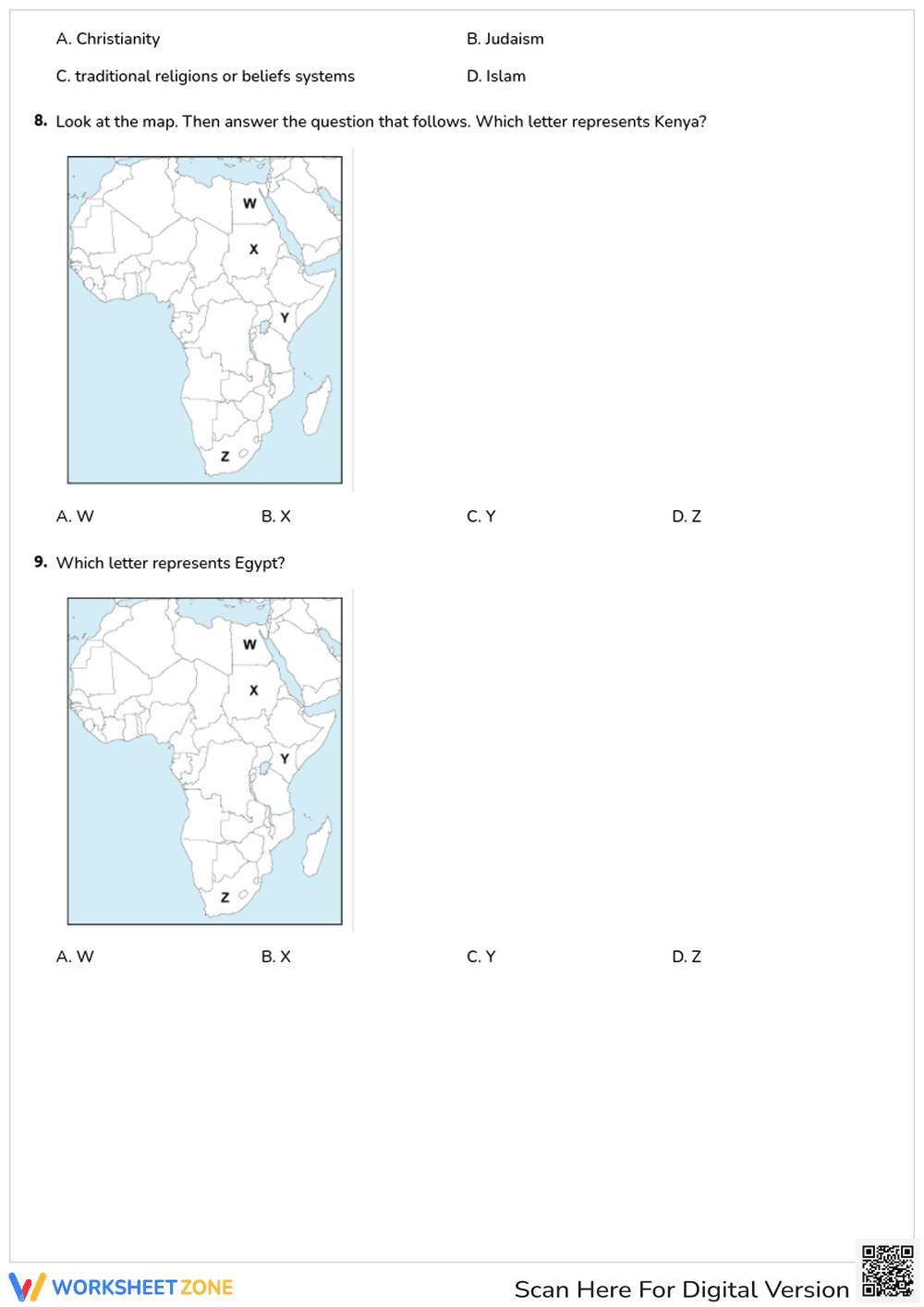
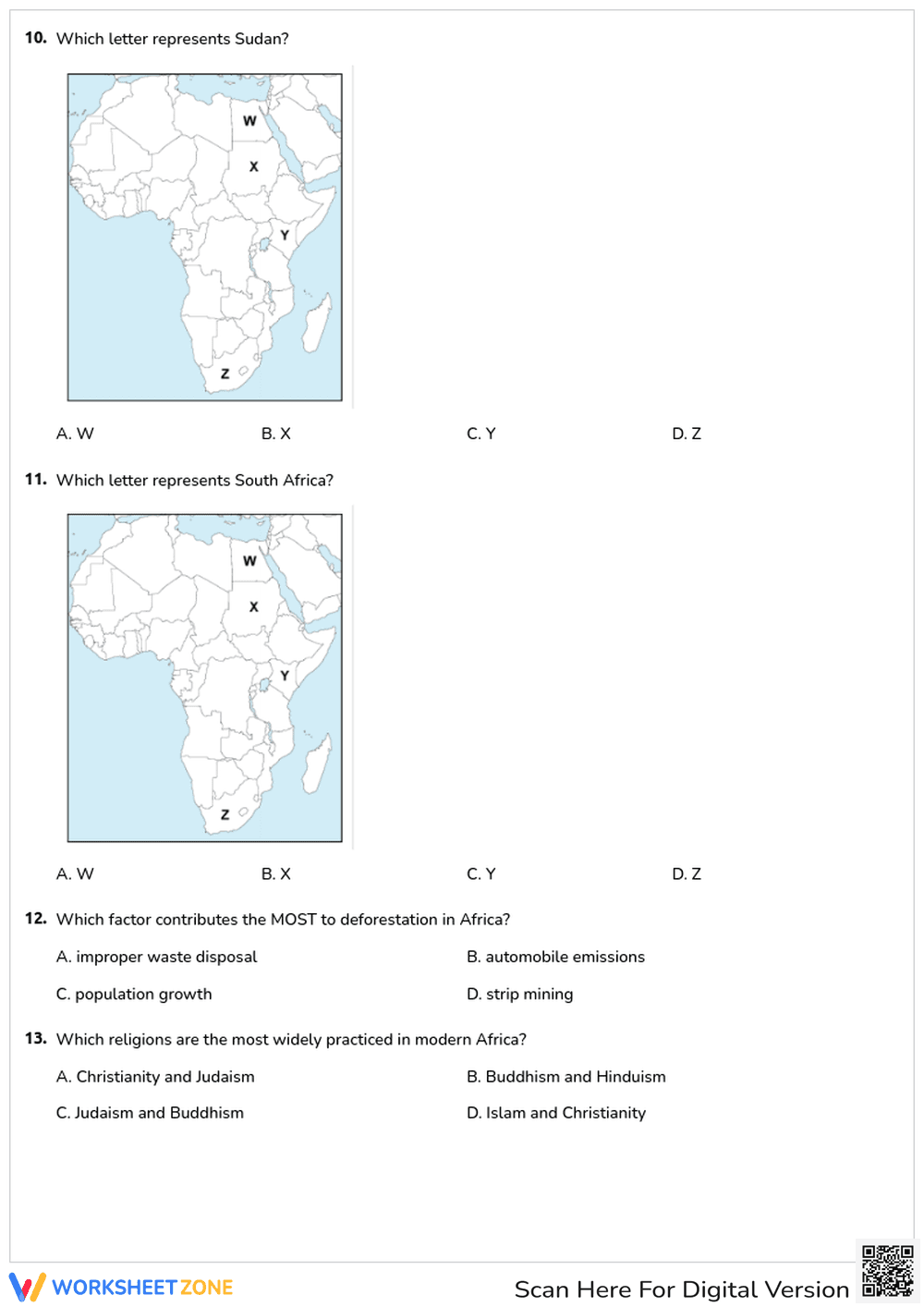


Grade 7 African Geography — Printable No-Prep Worksheet
Paste this activity's link or code into your existing LMS (Google Classroom, Canvas, Teams, Schoology, Moodle, etc.).
Students can open and work on the activity right away, with no student login required.
You'll still be able to track student progress and results from your teacher account.
This Grade 7 geography and environmental science worksheet provides students with targeted practice on African physical geography, climate impacts, and cultural distributions. By completing this comprehensive study guide, students will demonstrate their understanding of how desertification, water pollution, and population growth affect regional ecosystems and human settlements across the continent.
At a Glance
- Grade: 7 · Subject: Geography
- Standard:
MS-ESS3-4— Analyze human impacts on Earth's systems- Skill Focus: Map reading and environmental analysis
- Format: 4 pages · 18 problems · Answer key included · PDF
- Best For: Test prep and review
- Time: 25–35 minutes
What's Inside
Inside this resource, educators will find a robust 18-question multiple-choice assessment spanning four pages. The task types include map-based identification questions, cause-and-effect scenarios regarding environmental changes, and demographic fact recall. A complete answer key is provided to ensure accurate grading and immediate feedback. The structured format mirrors standardized testing layouts, making it an excellent tool for familiarizing students with formal assessment styles.
Zero-Prep Workflow
- Print (1 minute): Simply download the PDF and print the four-page student packet. No special formatting or additional materials are required.
- Distribute (1 minute): Hand out the study guide to students as a bell-ringer, independent assignment, or collaborative review activity.
- Review (3 minutes): Use the included answer key to quickly grade submissions or guide a whole-class review session.
With a total teacher prep time of under two minutes, this resource is highly suitable for emergency sub plans or last-minute instructional adjustments.
Standards Alignment
This worksheet is aligned to MS-ESS3-4: Construct an argument supported by evidence for how increases in human population and per-capita consumption of natural resources impact Earth's systems. It also supports general middle school geography standards related to spatial reasoning and map skills. Both standard codes can be copied directly into lesson plans, IEP goals, or district curriculum mapping tools.
How to Use It
End-of-Unit Review: Assign this worksheet after direct instruction on African geography to consolidate knowledge before a final exam. It serves as an effective diagnostic tool to identify areas needing reteaching.
Formative Assessment: While students work independently, circulate the room and observe their map-reading strategies. If students struggle to locate Kenya or Egypt, pause for a brief whole-class map review. Expect students to complete the 18 problems in 25 to 35 minutes.
Who It's For
This material is designed primarily for 7th-grade social studies and geography students. It naturally differentiates itself by providing clear, multiple-choice options that support English Language Learners and students needing structured choices. Pair this study guide with a physical map of Africa or an anchor chart detailing the causes of desertification to maximize student success.
Aligning instructional materials to rigorous standards like MS-ESS3-4 ensures students can accurately analyze human impacts on Earth's systems while building essential spatial reasoning skills. According to a recent EdReports 2024 analysis, high-quality, standards-aligned review materials significantly improve student retention of complex geographical and environmental concepts. When middle school students engage with structured practice that combines map reading with environmental science, they develop a much more holistic understanding of pressing regional challenges, such as rapid deforestation, desertification, and severe water scarcity. This targeted approach to test preparation not only builds foundational content mastery but also actively reduces cognitive load during high-stakes summative assessments. By integrating visual map skills with critical thinking questions about human-environment interactions, educators can foster deeper geographical literacy. Ultimately, this evidence-based strategy helps better prepare students for advanced social studies coursework and promotes long-term academic success in cross-curricular subjects.


