




























Views
Downloads
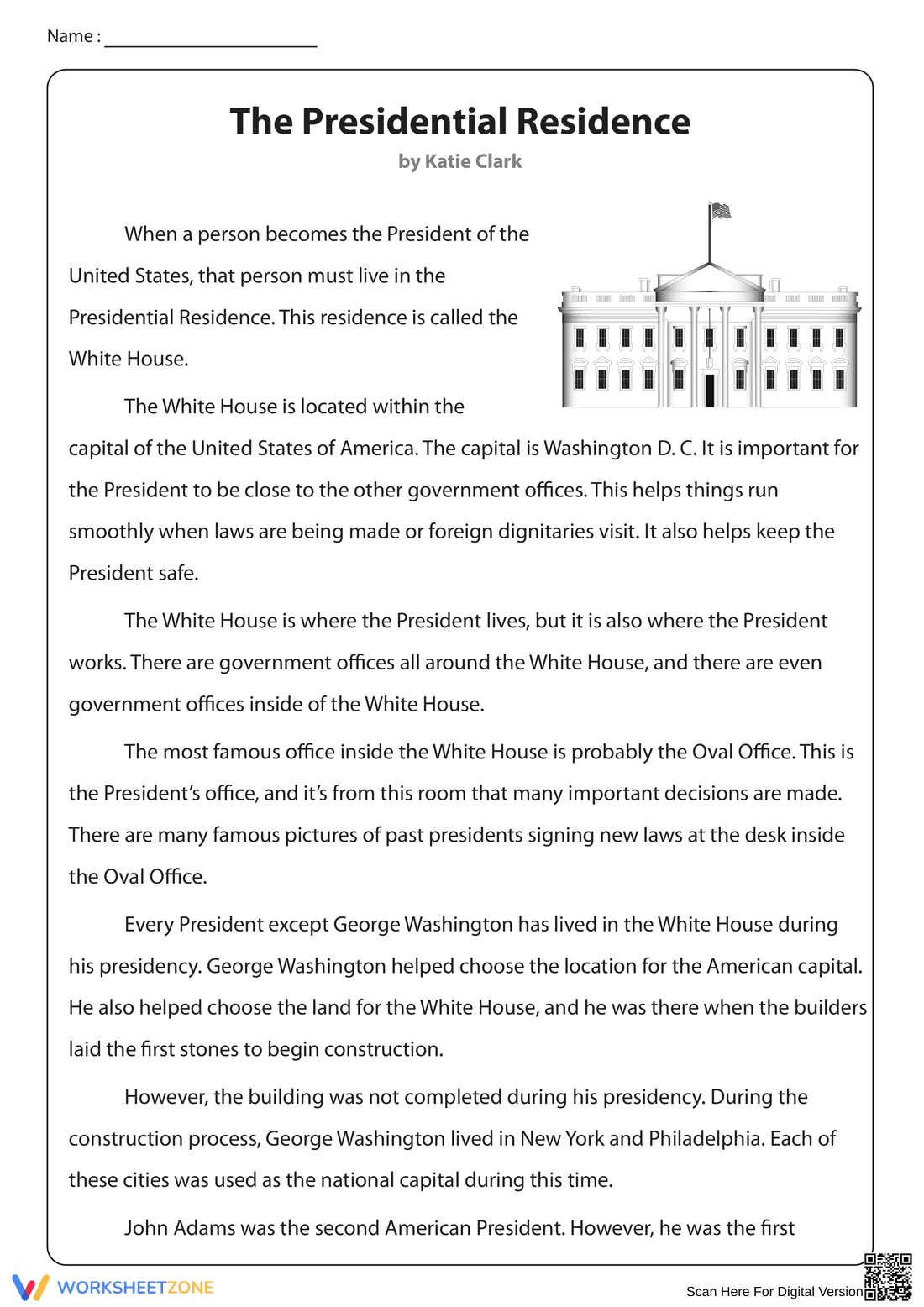
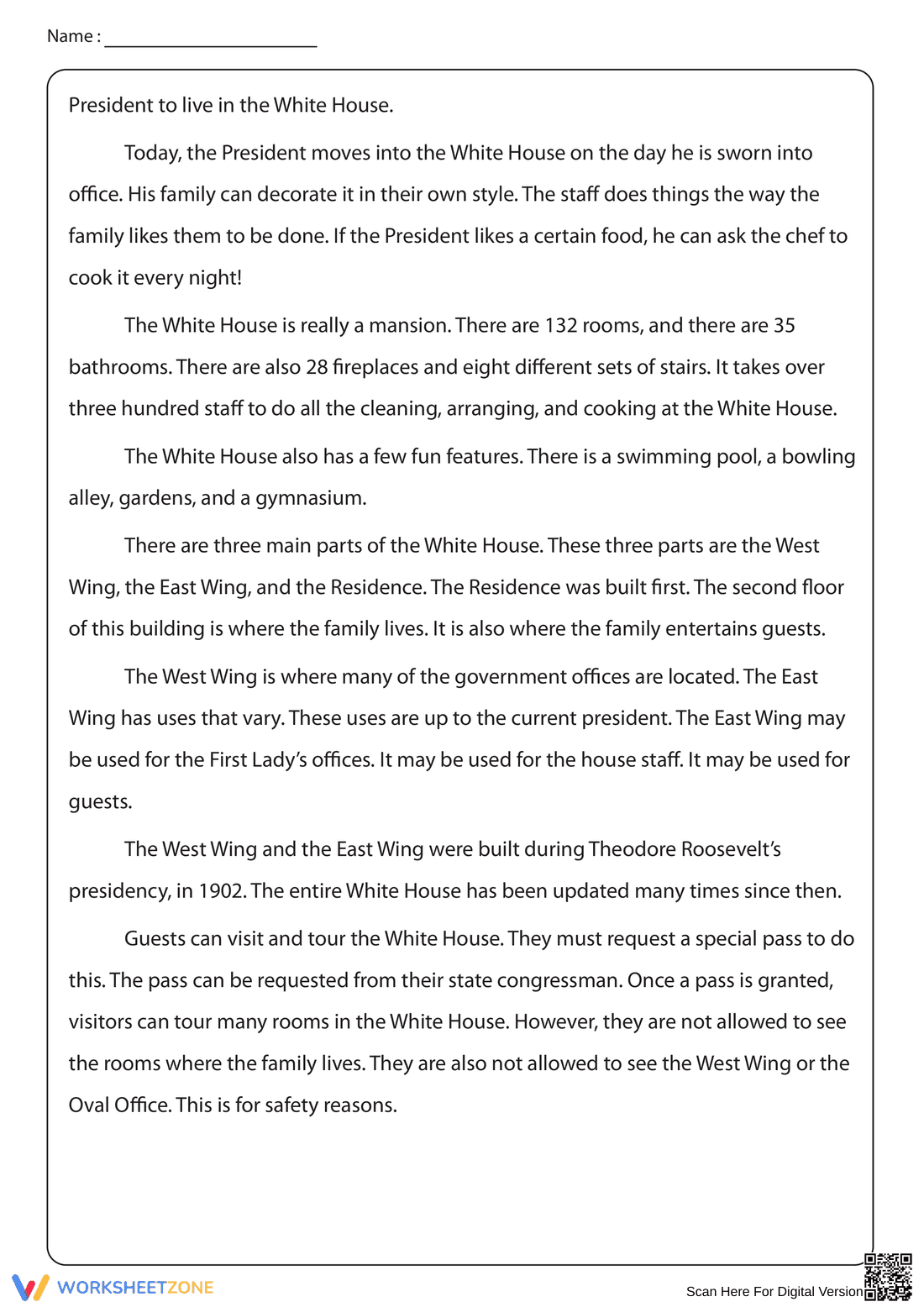
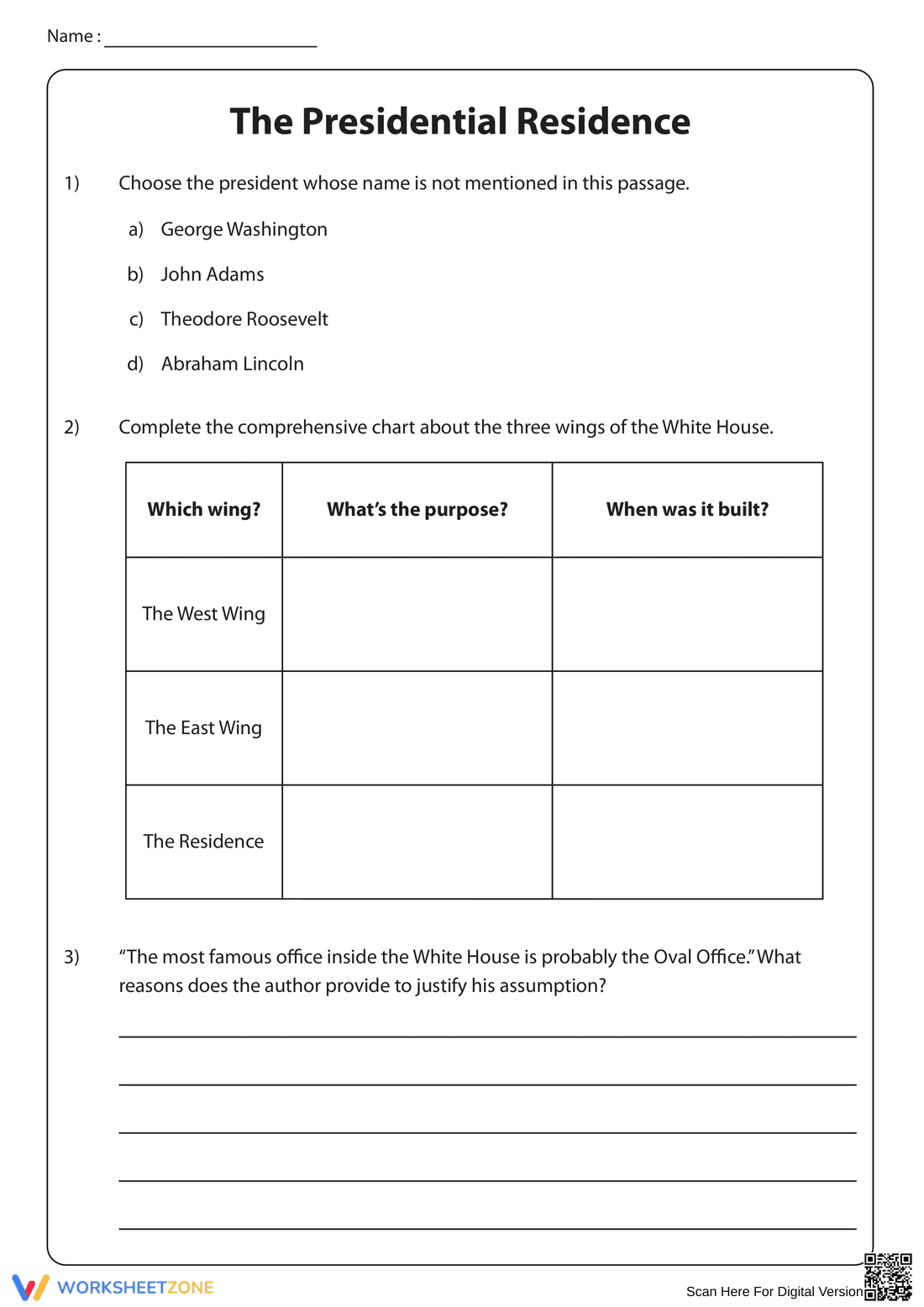
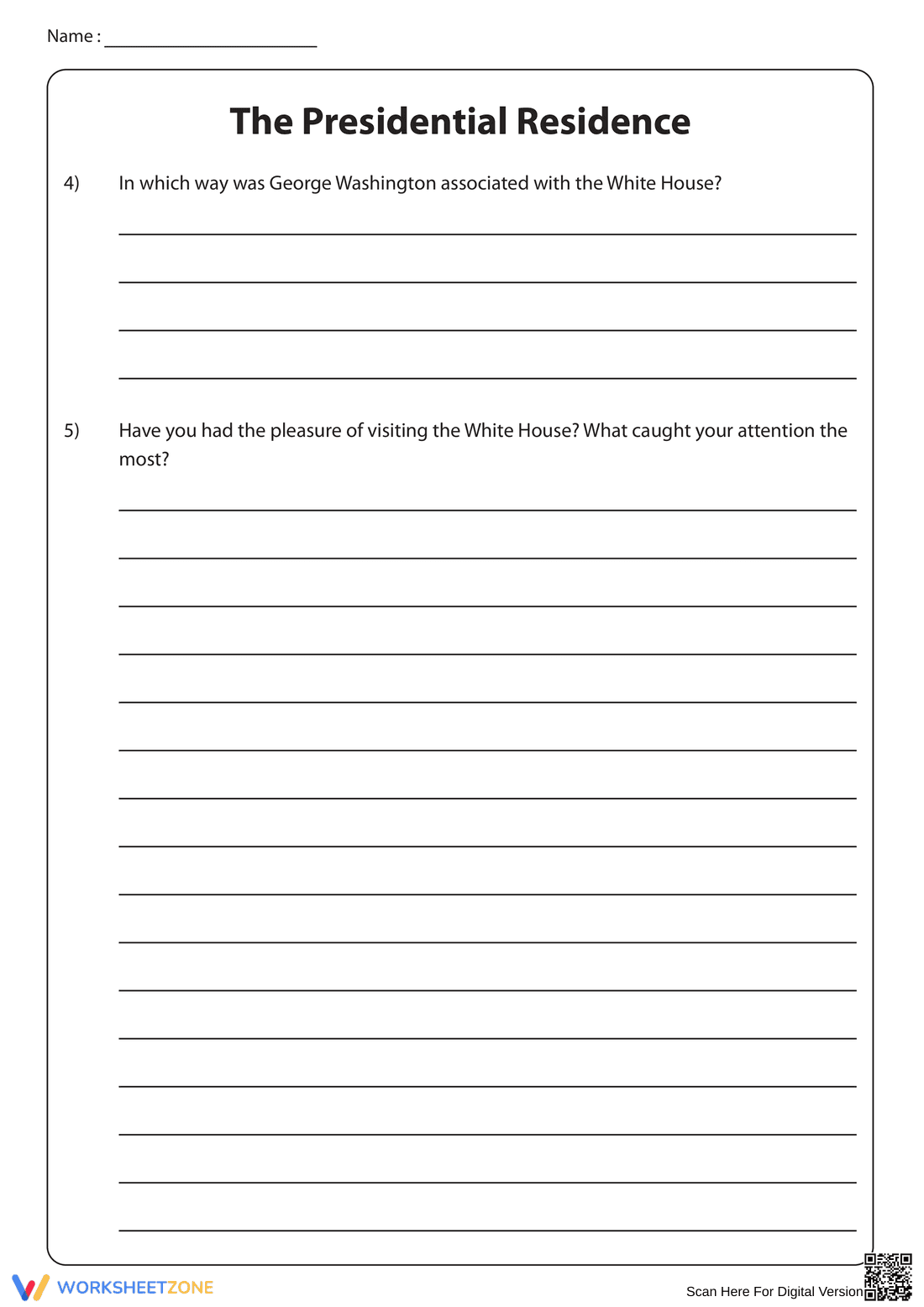

Grade 6 Reading Comprehension — Printable No-Prep Worksheet

Paste this activity's link or code into your existing LMS (Google Classroom, Canvas, Teams, Schoology, Moodle, etc.).
Students can open and work on the activity right away, with no student login required.
You'll still be able to track student progress and results from your teacher account.
This Grade 6 reading comprehension worksheet builds essential informational text analysis skills. Students read an engaging passage about the White House and answer targeted questions to demonstrate their understanding. This resource helps learners extract key facts, identify main ideas, and cite textual evidence effectively.
At a Glance
- Grade: 6 · Subject: ELA
- Standard:
CCSS.ELA-LITERACY.RI.6.1— Cite textual evidence to support analysis of what the text says explicitly.- Skill Focus: Reading Comprehension
- Format: 2 pages · 5 problems · Answer key included · PDF
- Best For: Independent practice and sub plans
- Time: 15–20 minutes
This resource features a high-interest informational passage titled "The Presidential Residence," detailing the history and function of the White House. Following the text, students tackle 5 comprehension problems that require them to return to the passage for evidence. The download includes a complete answer key for quick grading, ensuring educators have everything needed for immediate classroom implementation.
Zero-Prep Workflow
- Print (1 minute): Generate copies of the two-page PDF directly from your device. No special formatting or cutting required.
- Distribute (1 minute): Hand out the passage and question sheet to students during your designated reading block.
- Review (3 minutes): Use the provided answer key to quickly check student responses or facilitate a whole-class discussion on finding text evidence.
Total teacher prep time is under two minutes, making this an ideal, reliable option for emergency sub plans or unexpected schedule changes.
Standards Alignment
This worksheet is strictly aligned to CCSS.ELA-LITERACY.RI.6.1: "Cite textual evidence to support analysis of what the text says explicitly as well as inferences drawn from the text." It also supports cross-curricular social studies connections by building background knowledge on US government structures. Both standard codes can be copied directly into lesson plans, IEP goals, or district curriculum mapping tools.
How to Use It
Deploy this worksheet during independent reading stations to reinforce informational text strategies. It works perfectly as a quiet, focused activity after direct instruction on citing evidence. Alternatively, use it as a formative assessment tool; observe whether students are physically underlining or highlighting key details in the passage before answering the questions. Most sixth graders will complete the reading and questions within a 15 to 20-minute timeframe.
Who It's For
This material is designed for sixth-grade general education students, but its clear structure makes it accessible for advanced fifth graders or seventh graders needing review. For students requiring accommodations, teachers can pre-highlight key vocabulary words like "dignitaries" or "residence" within the text. Pair this passage with an anchor chart on finding text evidence to maximize student success.
Mastering informational text analysis is a critical milestone in middle school literacy development. According to a RAND AIRS 2024 report, students who regularly practice extracting explicit facts from non-fiction texts show significant improvements in cross-curricular academic performance and standardized testing outcomes. This worksheet directly targets CCSS.ELA-LITERACY.RI.6.1, requiring learners to cite textual evidence to support analysis of what the text says explicitly. By engaging with historical content about the White House, students not only build essential reading comprehension skills but also expand their civic vocabulary and background knowledge. Consistent exposure to structured, evidence-based questioning helps bridge the gap between basic recall and higher-order analytical thinking. Providing targeted, standards-aligned practice materials ensures that educators can effectively measure student progress, identify learning gaps early, and adjust instruction to meet rigorous academic demands.


