


























Views
Downloads

Grade 1 Synonym Matching Worksheet | Printable Essential
Paste this activity's link or code into your existing LMS (Google Classroom, Canvas, Teams, Schoology, Moodle, etc.).
Students can open and work on the activity right away, with no student login required.
You'll still be able to track student progress and results from your teacher account.
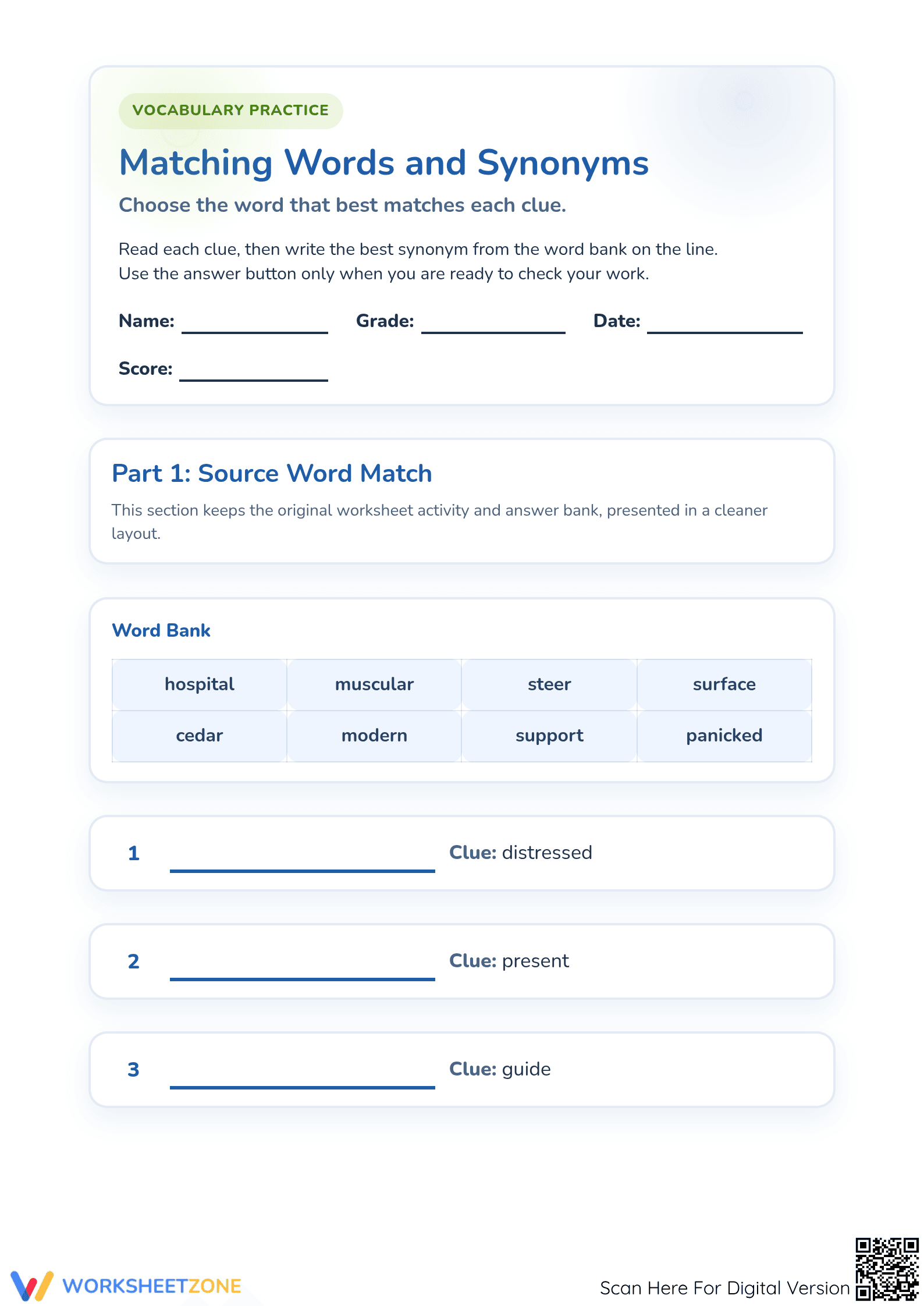
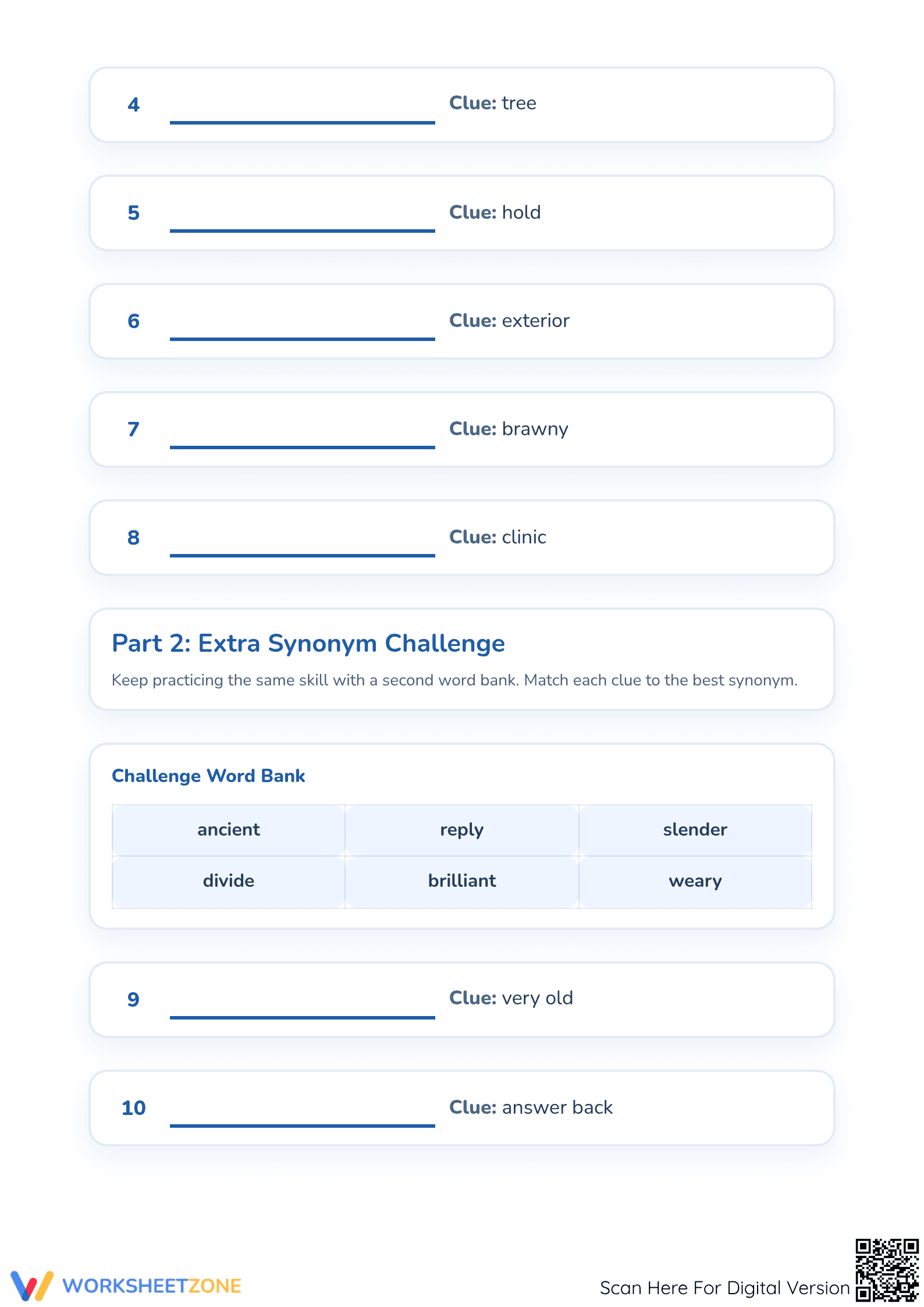
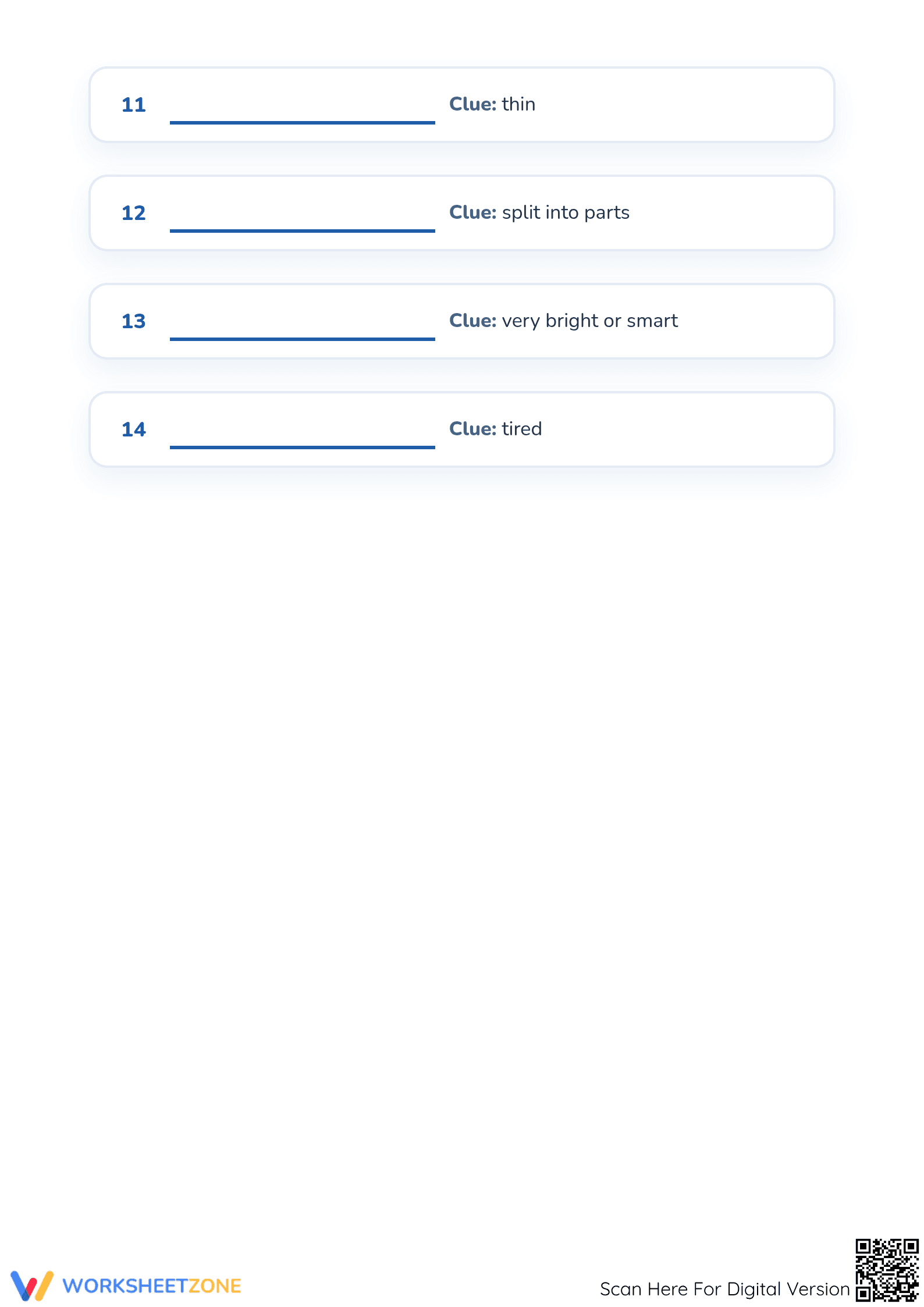
This Grade 1 synonym matching worksheet empowers students to identify and connect words with similar meanings through context-rich clues. By engaging with 14 distinct vocabulary pairs, learners strengthen their lexical flexibility and semantic understanding. This resource provides immediate practice with synonyms, ensuring students can effectively expand their expressive language skills.
At a Glance
- Grade: 1 · Subject: English Language Arts
- Standard:
CCSS.ELA-LITERACY.L.1.5— Identify word relationships and nuances in word meanings- Skill Focus: Synonym matching and vocabulary acquisition
- Format: 3 pages · 14 problems · Answer key included · PDF
- Best For: Independent vocabulary practice and lexical reinforcement
- Time: 15–20 minutes
What's Inside
This three-page PDF features 14 structured matching problems divided into two clear sections. Part 1 focuses on source word matching with an eight-word bank, while Part 2 offers an extra synonym challenge with six additional pairs. The layout includes spacious writing lines, clear clues like "distressed" or "brawny," and dedicated word banks to scaffold the identification process for early learners.
Zero-Prep Workflow
The instructional workflow is designed for maximum efficiency, requiring less than two minutes of teacher preparation. Simply print the three-page set and distribute it to students; no supplemental materials or complex setup is required. Students can independently navigate the word banks and clues, making this an ideal resource for substitute folders or morning work transitions.
Standards Alignment
This resource aligns directly with CCSS.ELA-LITERACY.L.1.5, which focuses on vocabulary acquisition and the identification of word relationships. By matching synonyms, students demonstrate their ability to define words and understand subtle shades of meaning within the lexical system. This standard code can be copied directly into lesson plans, IEP goals, or district curriculum mapping tools.
How to Use It
Deploy this worksheet during the independent practice phase of a vocabulary lesson to reinforce newly introduced terms. Teachers should observe students as they cross off words in the bank to identify those struggling with process-of-elimination strategies. This activity serves as a reliable formative assessment, typically requiring 15 to 20 minutes for complete student mastery and review.
Who It's For
This worksheet is ideal for first-grade students working on foundational ELA skills, as well as English Language Learners requiring visual word banks for support. It pairs naturally with a synonym anchor chart or a short narrative passage that highlights the target vocabulary. The structured format provides necessary scaffolding for students who need clear boundaries and repetitive practice patterns.
According to Fisher & Frey (2014), the use of word banks and clue-based matching provides the essential cognitive scaffolding needed for primary students to internalize new vocabulary relationships. This worksheet facilitates the identification of synonyms, a core component of CCSS.ELA-LITERACY.L.1.5, by requiring students to evaluate word meanings against descriptive clues. Research indicated by EdReports (2024) suggests that high-quality, aligned vocabulary practice significantly improves reading comprehension scores by reducing the cognitive load during text decoding. By engaging with 14 targeted synonym pairs across three pages, students build the lexical stamina required for more complex grade-level texts. This systematic approach to synonym identification ensures that learners are not merely memorizing words but are developing a functional understanding of semantic networks. Educators can rely on this printable resource as a verified tool for building vocabulary mastery in early elementary classrooms.


