


























Views
Downloads

Printable Five Senses Poetry Worksheet | Grade K-1 ELA
Paste this activity's link or code into your existing LMS (Google Classroom, Canvas, Teams, Schoology, Moodle, etc.).
Students can open and work on the activity right away, with no student login required.
You'll still be able to track student progress and results from your teacher account.
Introductory Sensory Poetry
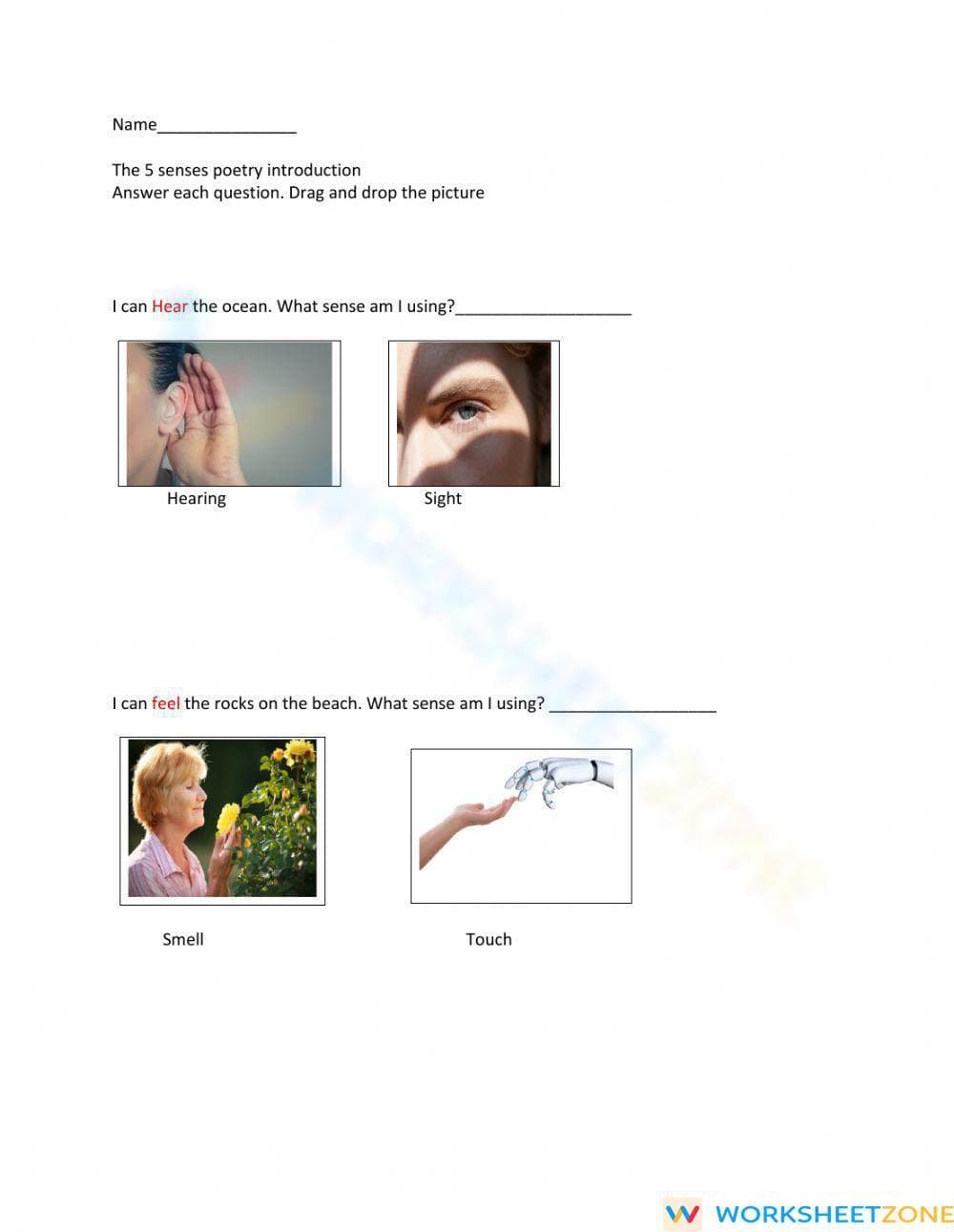
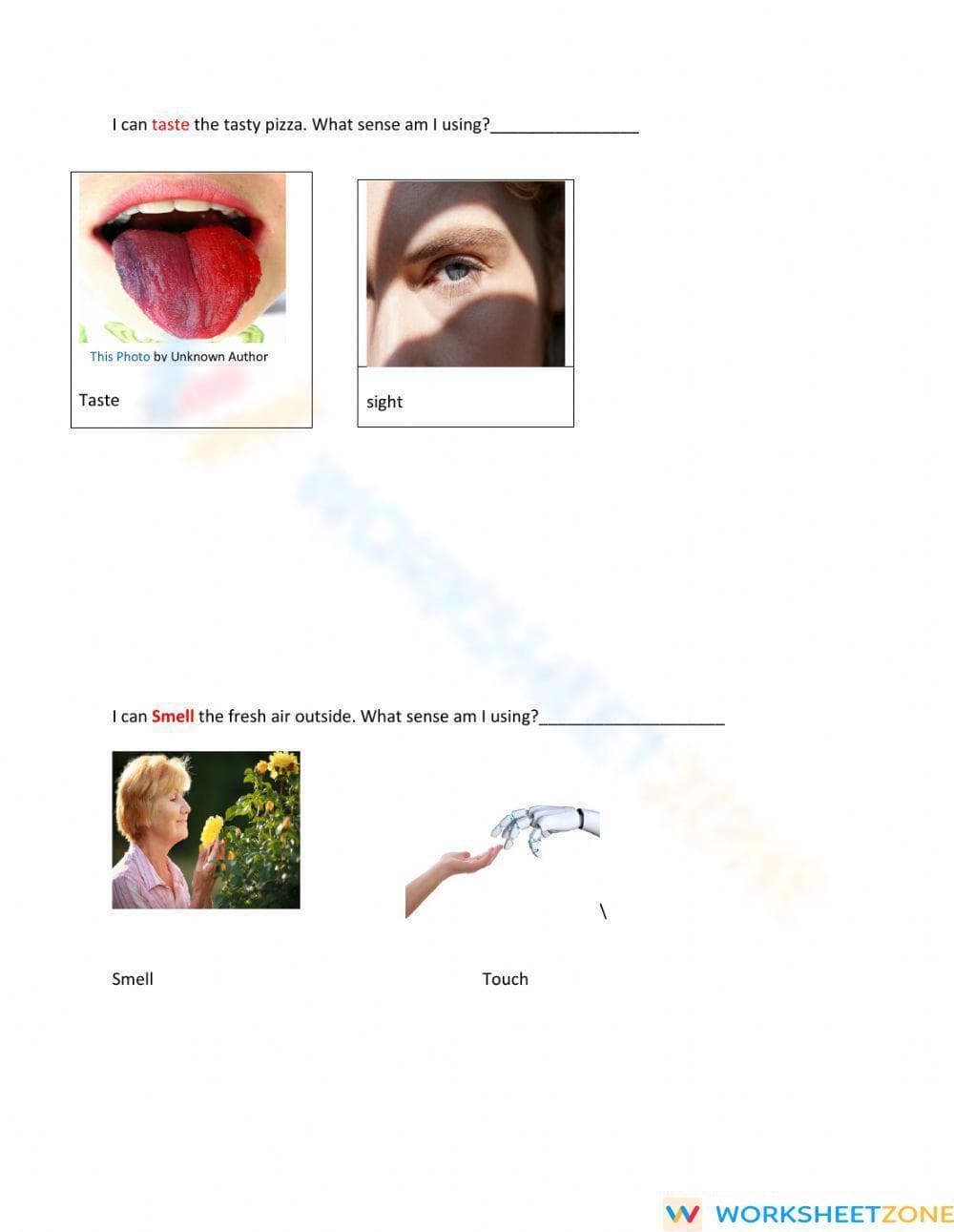
This Grade K-1 sensory poetry worksheet introduces students to the five senses through engaging rhymes. By identifying words related to hearing, sight, touch, taste, and smell, young learners build vocabulary. Students connect descriptive language to real-world objects, fostering appreciation for sensory details.
At a Glance
- Grade: K–1 · Subject: ELA
- Standard:
CCSS.ELA-LITERACY.RL.K.4— Identify words and phrases in poems that appeal to the five senses- Skill Focus: Sensory Language Recognition
- Format: 3 pages · 5 problems · Answer key included · PDF
- Best For: Introductory poetry lessons and formative assessment
- Time: 15–20 minutes
What's Inside
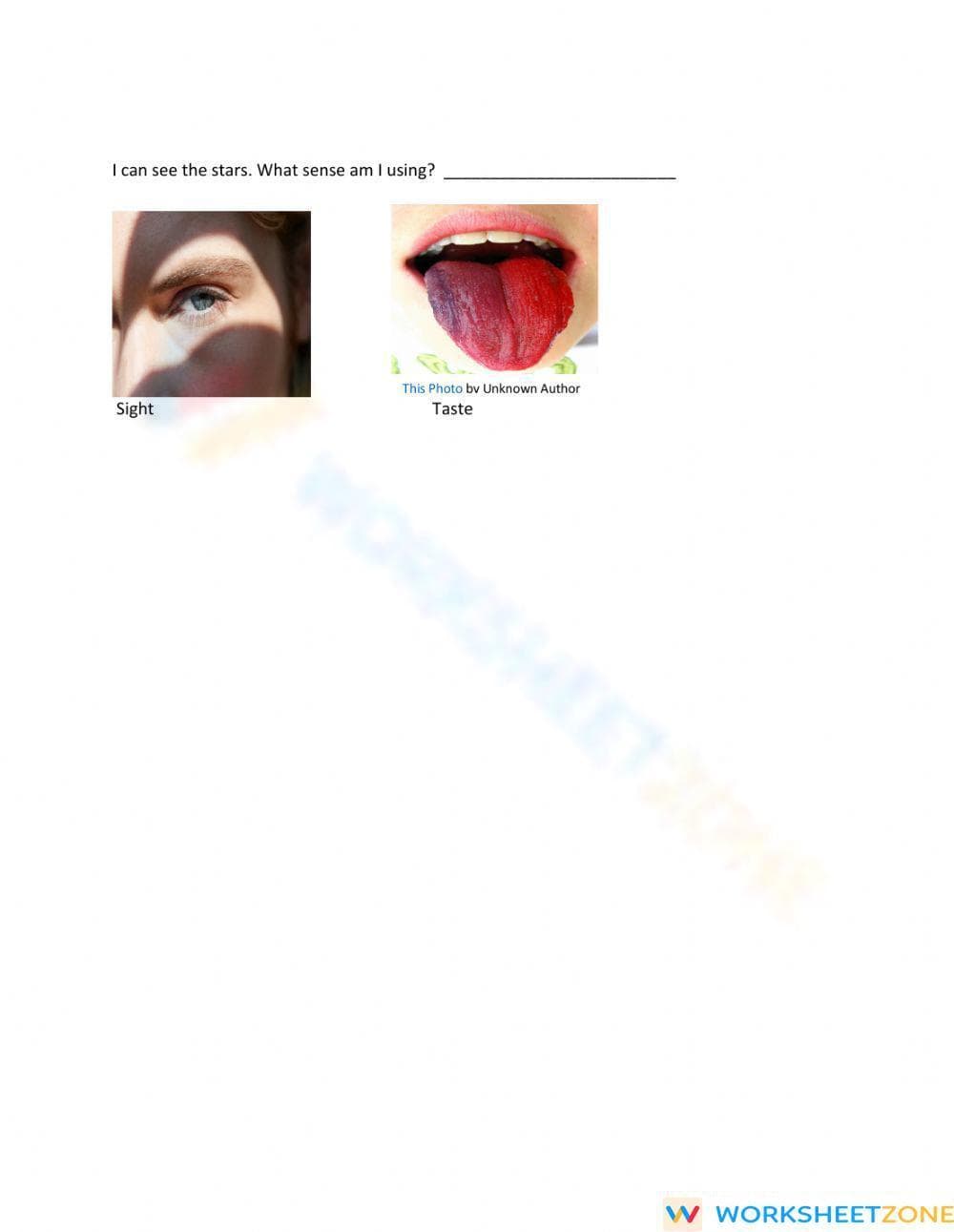
This 3-page resource features five tasks designed to reinforce sensory awareness. Each page presents a clear sentence using a specific sense with the action word highlighted. Students select the corresponding sense from visual options. The worksheet includes an answer key, clear font for early readers, and high-quality images to support English Language Learners.
Skill Progression
The worksheet follows a structured gradual-release model to ensure student success:
- Guided Practice: Tasks 1 and 2 introduce the senses of hearing and sight using high-interest oceanic imagery to model the identification process.
- Supported Practice: Tasks 3 and 4 expand to touch and taste, grounding abstract concepts in concrete real-world experiences like beach rocks and pizza.
- Independent Practice: The final task requires students to identify the sense of sight autonomously, demonstrating mastery of the lesson's core objectives.
This structure aligns with the I Do, We Do, You Do framework for optimal student mastery.
Standards Alignment
This resource is aligned to CCSS.ELA-LITERACY.RL.K.4, which requires students to identify words that appeal to the senses. It also supports CCSS.ELA-LITERACY.RL.1.4 by helping learners identify phrases in poems that suggest feelings. Both standard codes can be copied directly into lesson plans, IEP goals, or district curriculum mapping tools, ensuring that educators meet state and federal mandates for foundational literacy instruction.
How to Use It
Use this during a poetry unit after reading sensory-rich texts aloud. It serves as an excellent formative assessment to check if students differentiate between the five senses. Allow 15–20 minutes for completion. Teachers should observe if students associate "ocean" with "hearing" to gauge understanding. This provides immediate data to inform subsequent small-group instruction or whole-class review sessions.
Who It's For
This worksheet is ideal for Kindergarten and First Grade students exploring descriptive language. It is effective for visual learners and ESL students who benefit from clear image-to-text associations. This resource pairs naturally with sensory bins or a "five senses" anchor chart to provide a multi-sensory learning experience in the classroom, supporting diverse learning needs and styles.
According to the RAND AIRS 2024 report, early exposure to sensory-rich vocabulary is a critical predictor of later reading comprehension success in primary education. This worksheet leverages that research by targeting the CCSS.ELA-LITERACY.RL.K.4 standard, focusing on the plain-English skill of identifying words that appeal to the senses. By providing 5 structured tasks, it allows educators to monitor student progress in vocabulary acquisition and literary analysis. The inclusion of visual scaffolds supports the "I Do, We Do, You Do" instructional framework, which Fisher & Frey (2014) identifies as essential for mastering complex literacy concepts in the early years. This resource provides a reliable, data-informed way to bridge the gap between abstract sensory concepts and concrete reading tasks, ensuring that all learners can access the curriculum and achieve mastery in foundational ELA standards.


