


























Views
Downloads

Grade 4 Synonym Crossword — Printable No-Prep Worksheet
Paste this activity's link or code into your existing LMS (Google Classroom, Canvas, Teams, Schoology, Moodle, etc.).
Students can open and work on the activity right away, with no student login required.
You'll still be able to track student progress and results from your teacher account.
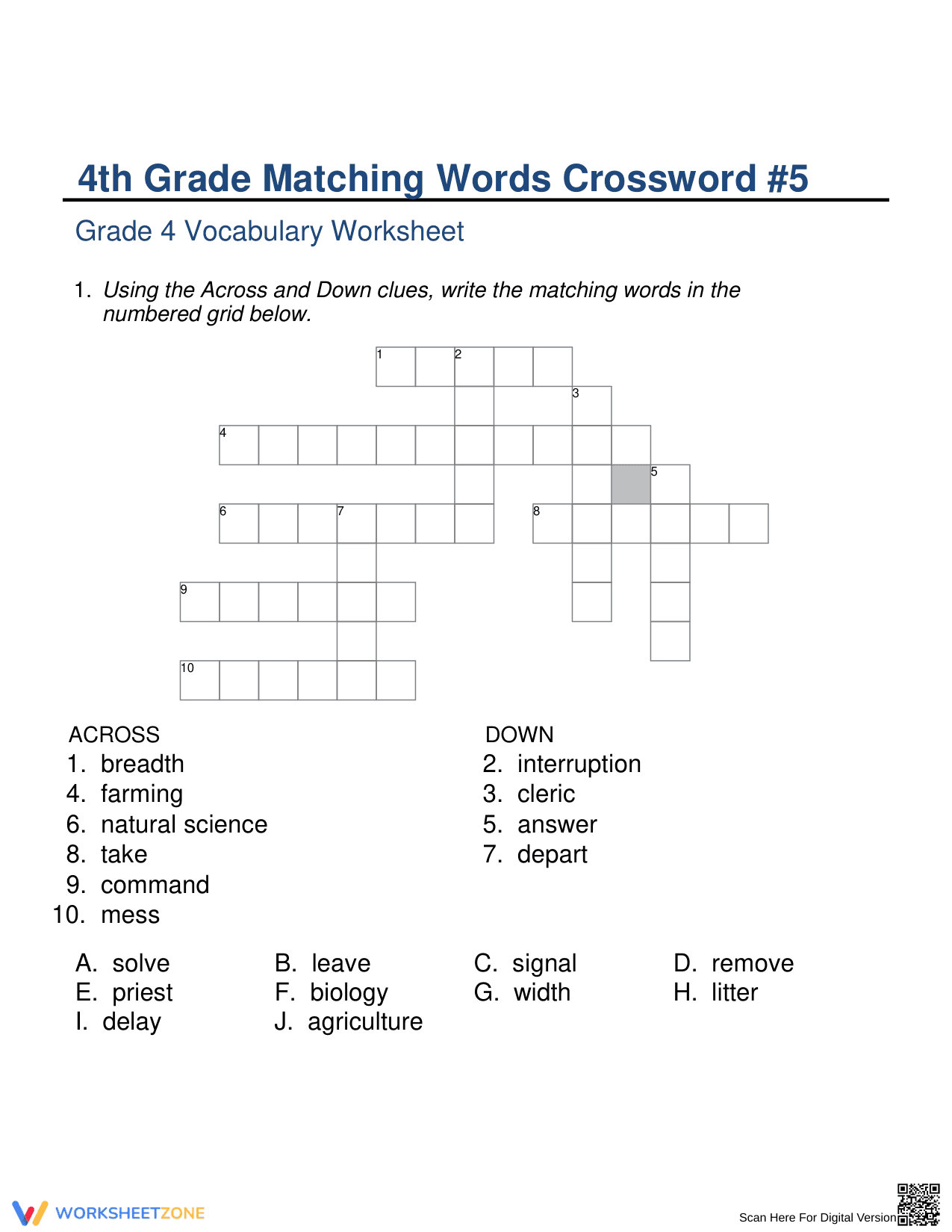
This Grade 4 vocabulary worksheet provides students with targeted practice identifying synonyms through an engaging crossword puzzle format. By matching ten clue words to their corresponding synonyms in the provided word bank, learners strengthen their lexical skills and expand their working vocabulary for reading and writing.
At a Glance
- Grade: 4 · Subject: ELA
- Standard:
CCSS.ELA-LITERACY.L.4.5.C— Relate words to their synonyms- Skill Focus: Synonyms and Vocabulary
- Format: 1 page · 10 problems · Answer key included · PDF
- Best For: Independent practice and review
- Time: 10–15 minutes
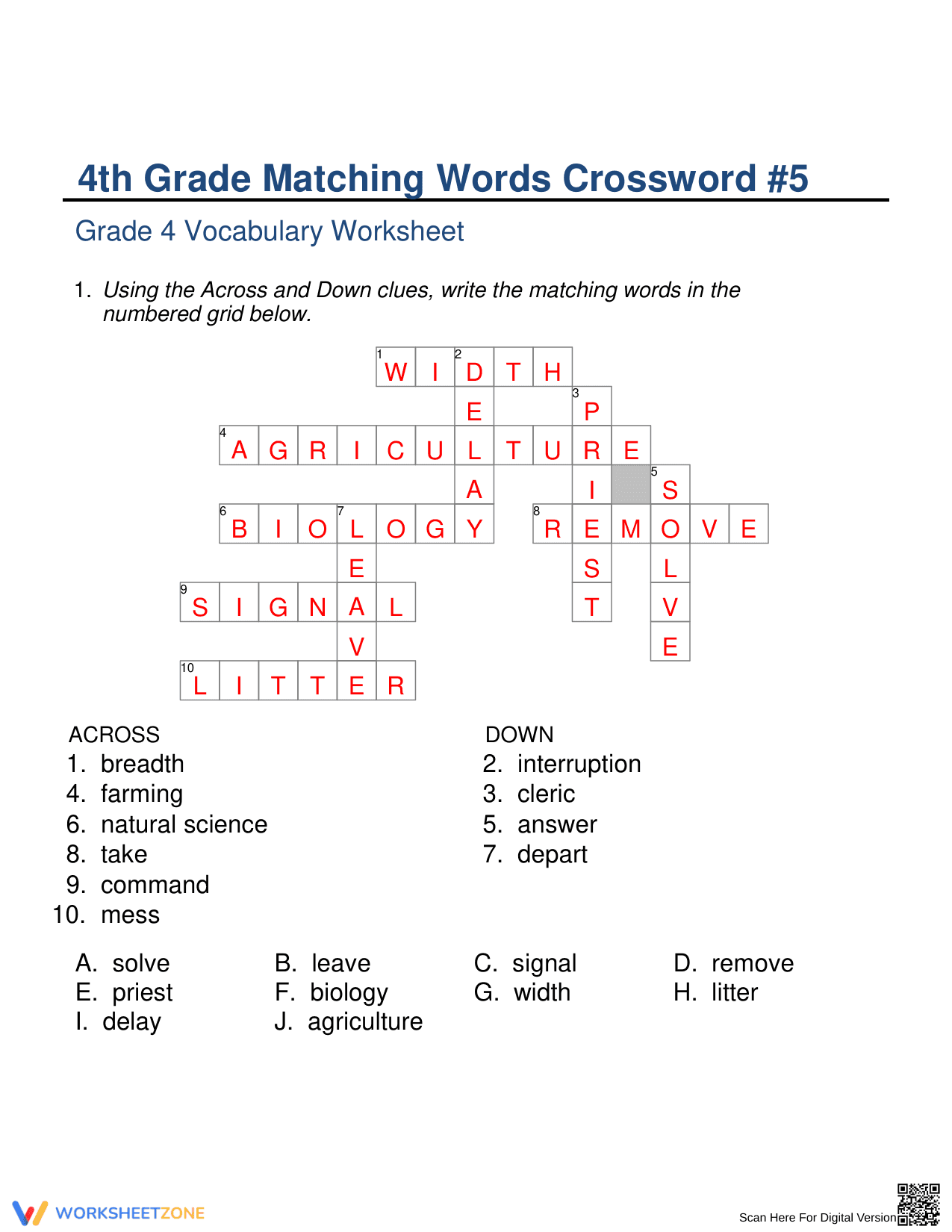
Inside this single-page printable, educators will find a ten-word crossword puzzle focused entirely on synonym recognition. The activity features six "Across" clues and four "Down" clues. A ten-option word bank at the bottom provides the exact synonym matches, including terms like "agriculture" and "leave," ensuring students have the necessary scaffolding. A complete answer key is included for rapid grading.
This resource is designed for a zero-prep workflow, requiring under two minutes of teacher setup. First, print the copies (1 minute). Second, distribute the worksheets (1 minute). Third, review the answers collectively or collect for quick grading (3 minutes). Because the instructions are self-explanatory and a word bank is provided, this puzzle is an excellent option for substitute teacher plans.
This activity is directly aligned to CCSS.ELA-LITERACY.L.4.5.C, which requires students to demonstrate understanding of words by relating them to words with similar but not identical meanings (synonyms). It also supports general vocabulary acquisition standards by exposing students to academic terms like "agriculture" and "biology." Both standard codes can be copied directly into lesson plans, IEP goals, or district curriculum mapping tools.
Teachers can deploy this crossword puzzle as a morning work activity to activate prior knowledge before a language arts lesson. Alternatively, it serves as an effective literacy center station. As a formative assessment tip, observe which words students leave for last; struggling with terms like "breadth" indicates a need for explicit instruction on specific vocabulary tiers. Expected completion time is ten to fifteen minutes.
This worksheet is primarily designed for fourth-grade general education students, though it functions well as a review tool for fifth graders or an extension activity for advanced third graders. For students requiring additional accommodations, teachers can pre-fill one or two letters in the crossword grid to reduce the cognitive load. This puzzle pairs perfectly with a direct instruction lesson on using a thesaurus, allowing students to look up unfamiliar terms from the word bank.
Developing a robust vocabulary is a critical component of reading comprehension and effective written communication. When students practice relating words to their synonyms, as outlined in CCSS.ELA-LITERACY.L.4.5.C, they build the cognitive flexibility required to understand complex texts. According to Fisher & Frey (2014), explicit vocabulary instruction combined with multiple exposures to words in varied contexts significantly improves students' ability to internalize new terms. This crossword puzzle provides one such context, transforming routine synonym practice into an interactive challenge. By actively matching clues to a word bank, learners reinforce their semantic networks and improve their lexical retrieval speed. Regular engagement with targeted vocabulary exercises ensures that students not only recognize words but can also deploy them accurately in their own academic writing, ultimately supporting long-term literacy goals across all subject areas.


