


























Views
Downloads

Grade 3 Aboriginal Myth — Printable No-Prep Worksheet
Paste this activity's link or code into your existing LMS (Google Classroom, Canvas, Teams, Schoology, Moodle, etc.).
Students can open and work on the activity right away, with no student login required.
You'll still be able to track student progress and results from your teacher account.
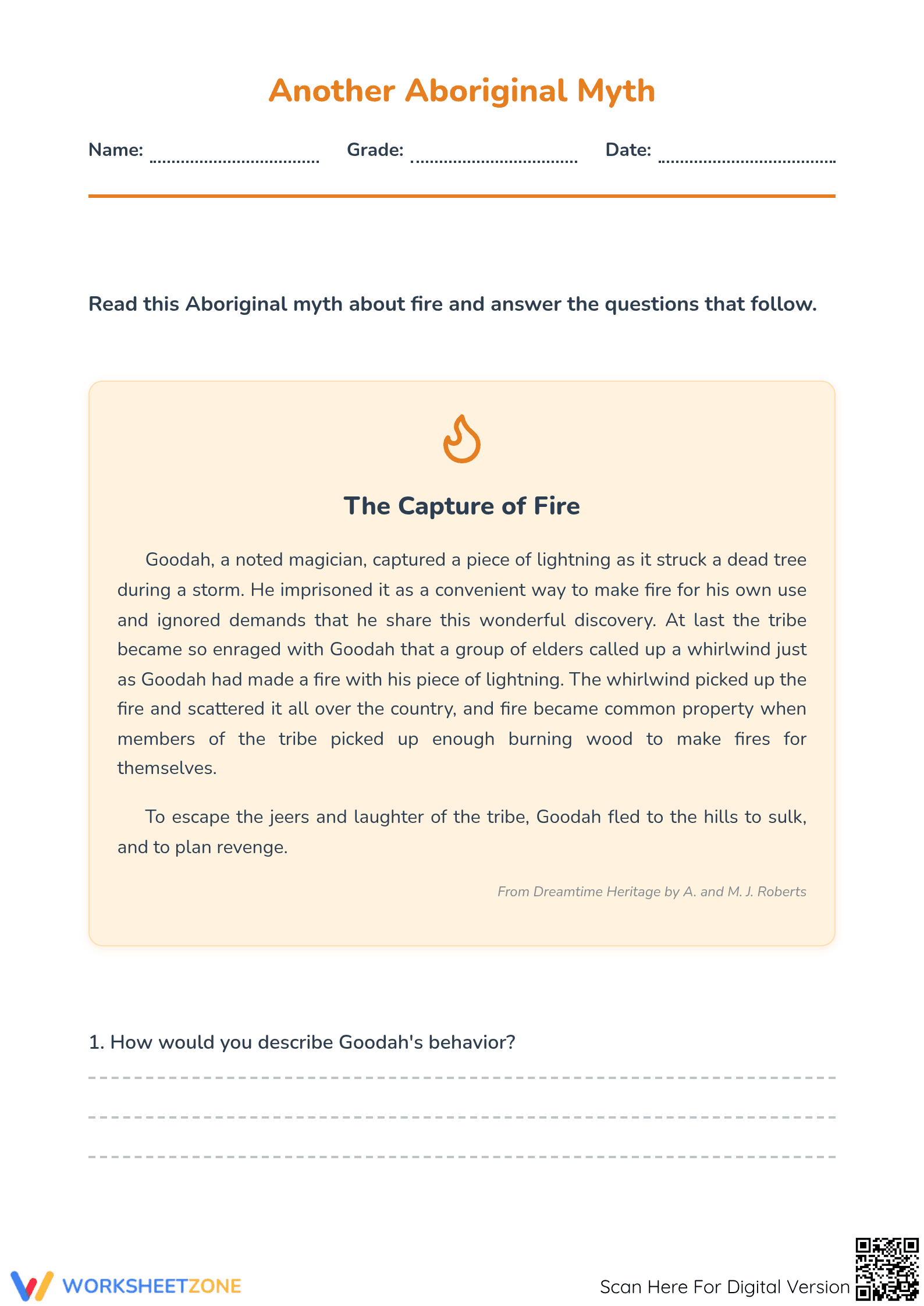
This Grade 3 reading comprehension worksheet provides students with an engaging Aboriginal myth to build essential literacy skills. By reading "The Capture of Fire," learners will analyze character behavior, determine vocabulary meaning in context, and express text-supported opinions, strengthening their overall reading proficiency and critical thinking.
At a Glance
- Grade: 3 · Subject: ELA
- Standard:
CCSS.ELA-LITERACY.RL.3.3— Describe characters in a story and their actions- Skill Focus: Reading Comprehension
- Format: 2 pages · 3 problems · PDF
- Best For: Independent practice and reading centers
- Time: 15–20 minutes
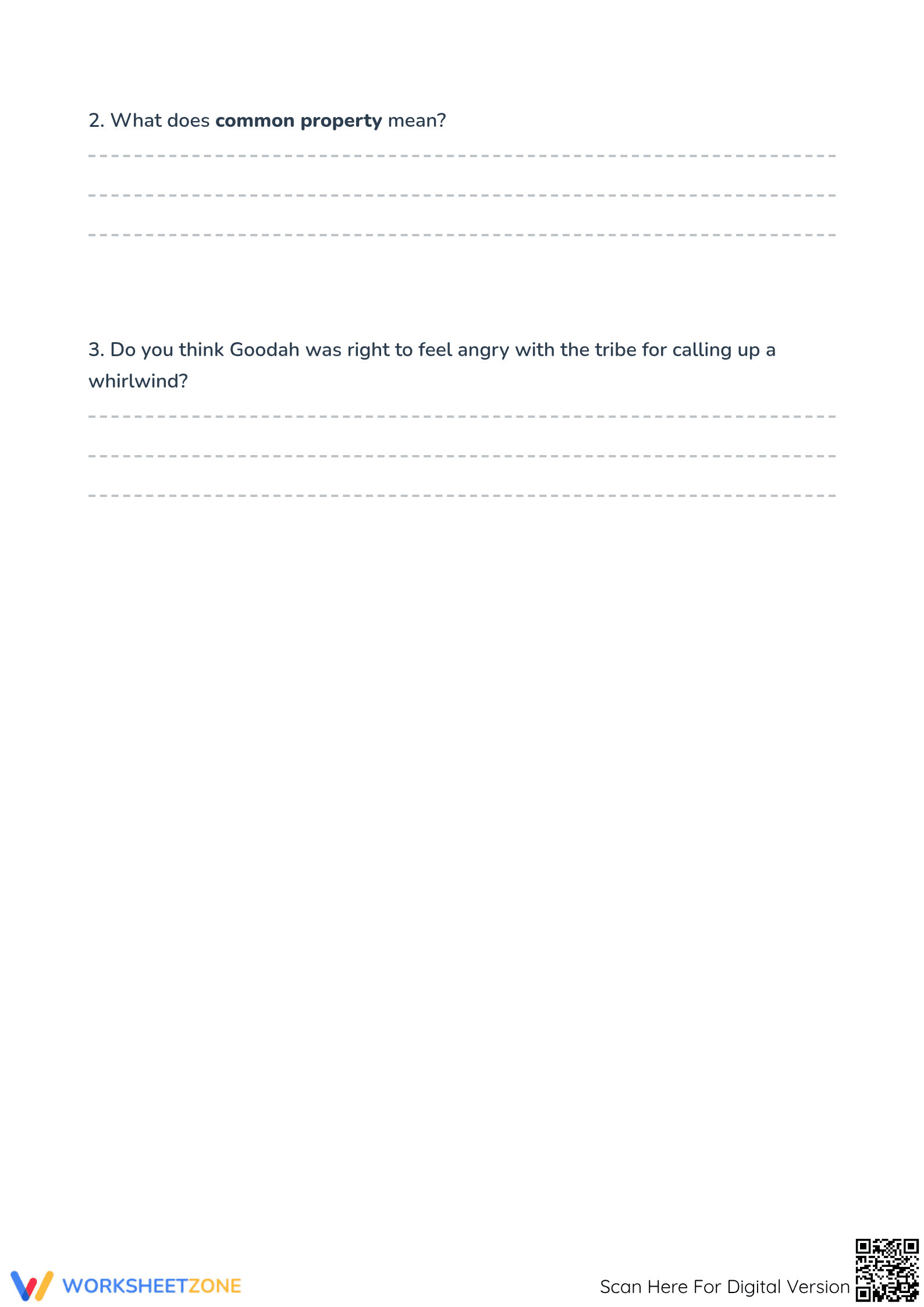
Inside this resource, educators will find a two-page reading activity centered around a short, captivating Aboriginal myth. The text is followed by three open-ended response questions that require students to evaluate character motives, define specific vocabulary terms like "common property," and justify their personal opinions based on the narrative events. The layout provides ample writing space with dotted lines to support neat handwriting.
This resource is designed for immediate classroom implementation with a streamlined workflow:
- Print (1 minute): Download the PDF and print the two-page document.
- Distribute (1 minute): Hand out the passage during your literacy block.
- Review (3 minutes): Introduce the concept of a myth and let students work.
With under two minutes of total teacher prep time, this worksheet is an excellent option for emergency sub plans or quick reading assessments.
This worksheet is aligned to CCSS.ELA-LITERACY.RL.3.3, requiring students to describe characters in a story and explain how their actions contribute to the sequence of events. It also supports CCSS.ELA-LITERACY.RL.3.4 by asking students to determine the meaning of words and phrases as they are used in a text. Both standard codes can be copied directly into lesson plans, IEP goals, or district curriculum mapping tools.
Teachers can utilize this reading passage in multiple instructional moments. It serves as an excellent independent practice assignment after a direct instruction lesson on character traits and motivations. Alternatively, it can be used during small group reading rotations to facilitate guided discussions about traditional myths and folktales. As a formative assessment observation tip, monitor how students use context clues from the story to define the bolded vocabulary word in the second question. Expect students to complete the reading and questions within 15 to 20 minutes.
This worksheet is primarily designed for third-grade students developing their reading comprehension and literary analysis skills. It is highly effective for general education classrooms, as well as for students needing targeted intervention in understanding character dynamics. To differentiate for developing readers, teachers can read the myth aloud before asking students to complete the written responses. This resource pairs naturally with an anchor chart on character traits or a broader unit on global myths and legends.
Developing strong reading comprehension skills requires consistent exposure to diverse texts and targeted questioning. According to Fisher & Frey (2014), providing students with structured opportunities to analyze texts and articulate their understanding significantly improves long-term literacy outcomes. This worksheet supports that pedagogical approach by focusing on CCSS.ELA-LITERACY.RL.3.3, helping students describe characters in a story and their actions. By engaging with an Aboriginal myth, learners not only practice essential comprehension strategies but also broaden their cultural awareness through literature. The combination of narrative reading and open-ended response tasks ensures that students move beyond basic recall, actively processing the text to form evidence-based conclusions. Integrating this type of focused practice builds the critical thinking stamina necessary for advanced reading proficiency and success.


