


























Views
Downloads


The Gecko Reading Comprehension | Essential Grade 3 ELA
Paste this activity's link or code into your existing LMS (Google Classroom, Canvas, Teams, Schoology, Moodle, etc.).
Students can open and work on the activity right away, with no student login required.
You'll still be able to track student progress and results from your teacher account.
Strengthen informational reading skills with this comprehensive four-page packet centered on the fascinating world of geckos. Students engage with a high-interest science-themed passage to build literacy stamina and evidence-based answering skills. This resource ensures students can identify key details and explain biological concepts through structured text interaction and varied question formats.
At a Glance
- Grade: 3 · Subject: English Language Arts
- Standard:
CCSS.ELA-LITERACY.RI.3.1— Ask and answer questions to demonstrate understanding of a text using explicit evidence- Skill Focus: Informational Text Comprehension
- Format: 4 pages · 8 problems · Answer key included · PDF
- Best For: Independent practice or sub plans
- Time: 20–30 minutes
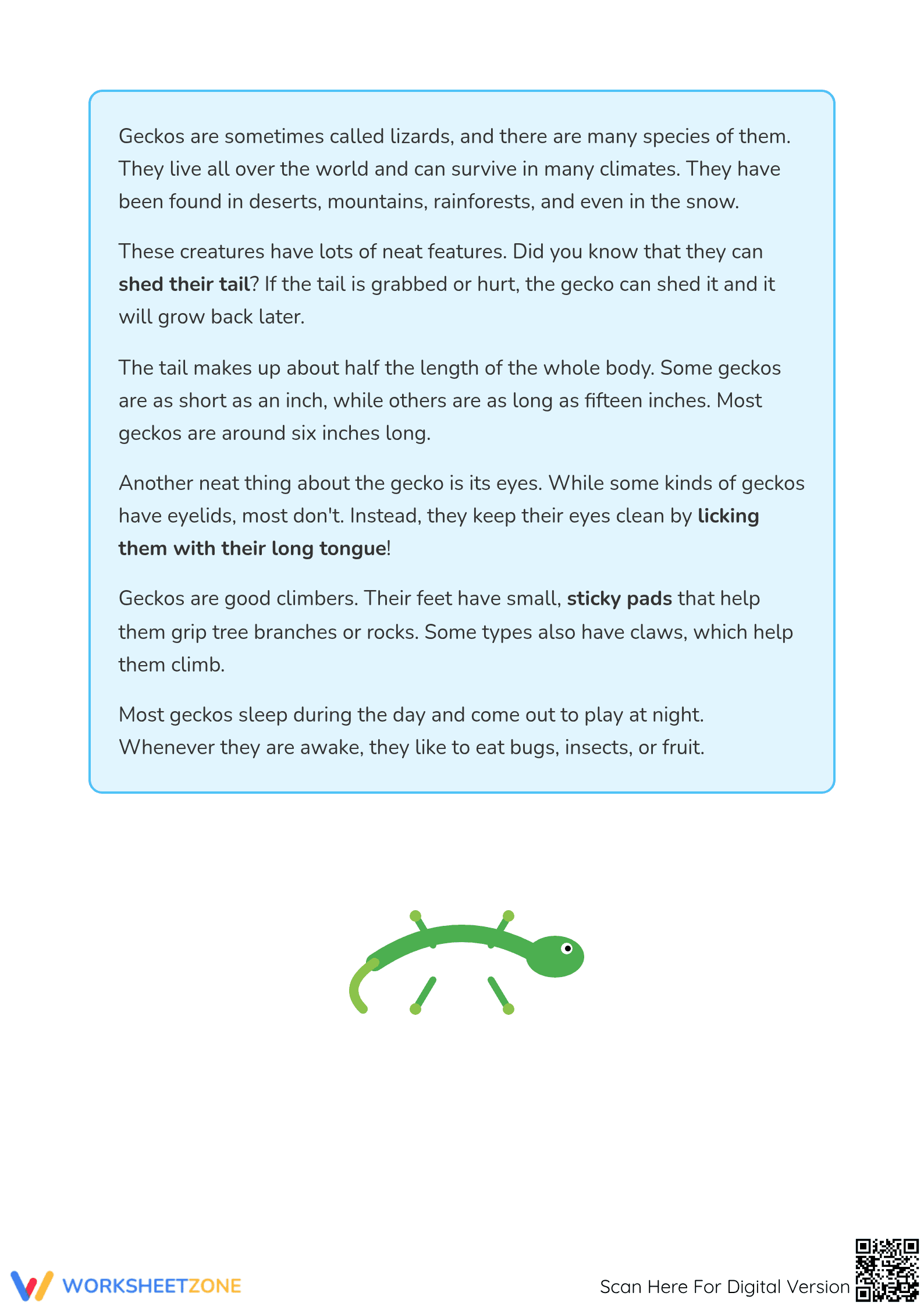
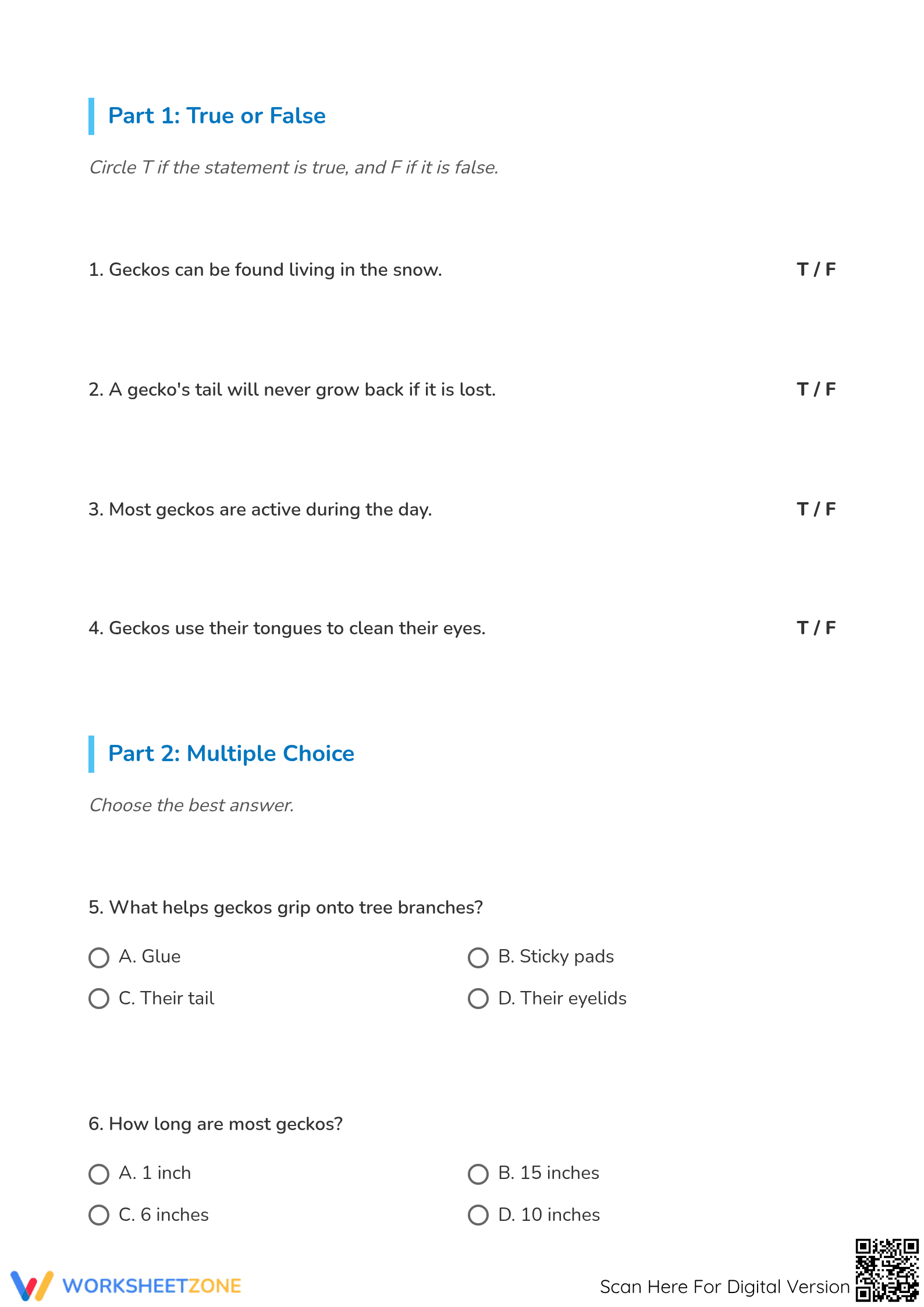
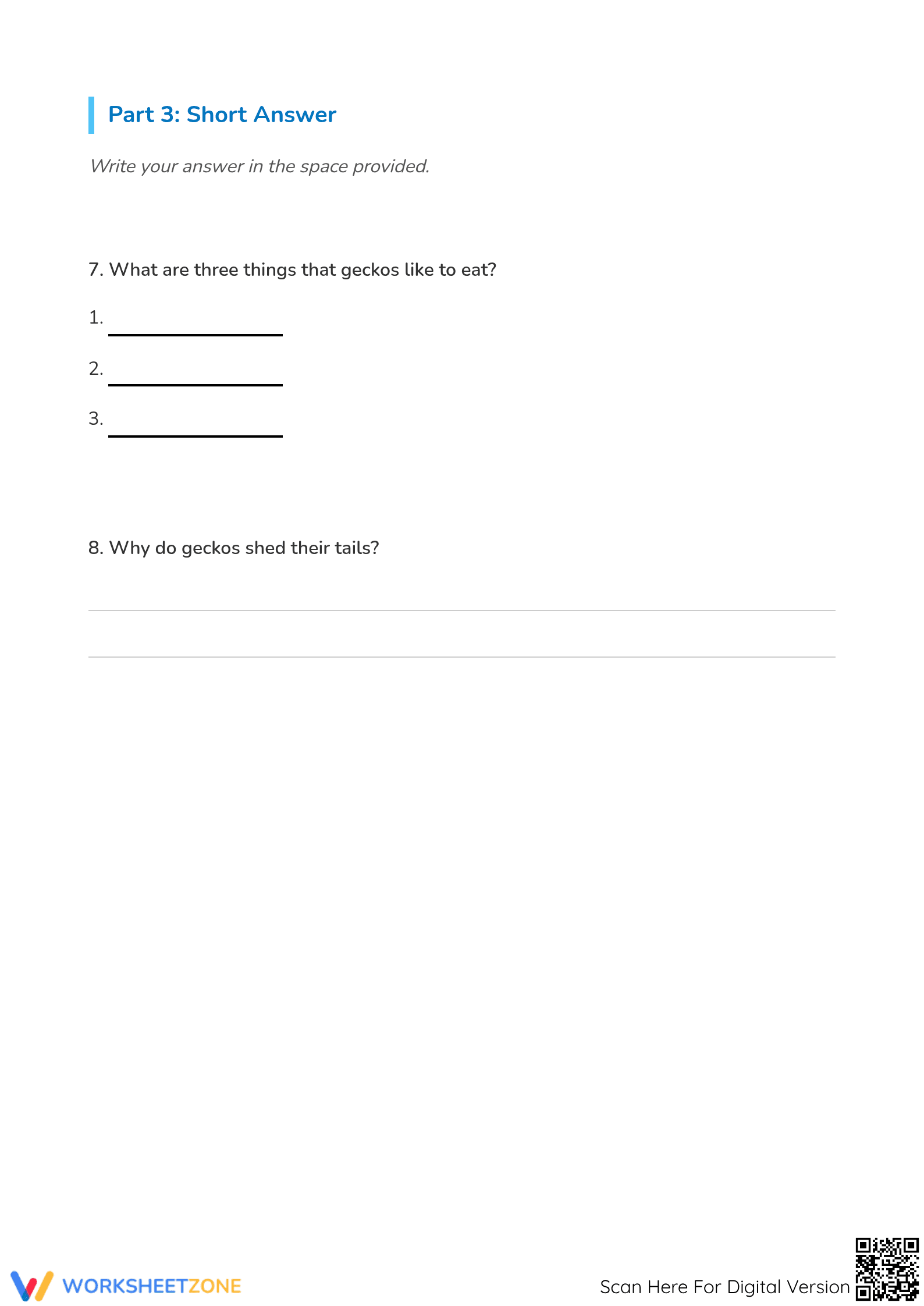
What's Inside: This packet features a dedicated page for student notes, a clear and accessible reading passage about gecko anatomy and behavior, and two pages of assessment. The 8 tasks are divided into three distinct sections: True or False, Multiple Choice, and Short Answer. A complete answer key is provided to facilitate quick grading or student self-correction, making it a complete instructional cycle in one PDF.
Zero-Prep Workflow
- Print (1 minute): Select the four-page PDF and print enough copies for your roster. The layout is optimized for black-and-white printing to save ink.
- Distribute (30 seconds): Hand out the packets as a morning work assignment, literacy center activity, or emergency sub plan.
- Review (30 seconds): Use the included answer key to verify student understanding or project it for a whole-class review session.
Total teacher preparation time is under two minutes, allowing you to focus on individual student needs rather than administrative setup.
Standards Alignment: This worksheet primarily targets `CCSS.ELA-LITERACY.RI.3.1`, requiring students to refer explicitly to the text as the basis for their answers. It also supports RI.3.4 by introducing domain-specific vocabulary like "sticky pads" and "shedding." Both standard codes can be copied directly into lesson plans, IEP goals, or district curriculum mapping tools.
How to Use It: Assign this worksheet during the "You Do" phase of a gradual release model after teaching strategies for finding evidence in a text. It serves as an excellent formative assessment tool; observe how students handle the short-answer section to gauge their ability to synthesize information. Expect most third-grade students to complete the full packet within 25 minutes.
Who It's For: This resource is designed for Grade 3 and Grade 4 students who need practice with non-fiction text structures. It is particularly effective for English Language Learners who benefit from the clear, descriptive language and the note-taking space. Pair this with a short video clip of a gecko or an anchor chart on reptilian traits for a multi-modal lesson.
The use of informational text in early elementary grades is a critical component of literacy development, as highlighted by Fisher & Frey (2014) in their research on the gradual release of responsibility. This worksheet aligns with those findings by providing a structured environment where students move from passive reading to active evidence retrieval. By utilizing the CCSS.ELA-LITERACY.RI.3.1 framework, the resource ensures that students are not merely memorizing facts but are learning the transferable skill of citing textual evidence to support claims. This approach is essential for meeting the rigorous demands of state assessments and building the background knowledge necessary for later scientific inquiry. The inclusion of varied question types—ranging from binary true/false choices to open-ended short answers—allows educators to pinpoint specific comprehension gaps. This systematic approach to reading instruction provides the necessary scaffolding for students to achieve mastery in informational text analysis and evidence-based writing.


